
Best Insoles for Achilles Tendonitis: 2026 Buyer’s Guide
The best insoles for Achilles tendonitis reduce tendon load by correcting the foot mechanics that cause it. Most people reach for heel cushioning and wonder why the pain keeps returning. The reason is that cushioning treats the symptom. Arch support addresses the cause.
Achilles tendonitis is one of the most common overuse injuries, affecting runners, workers who stand all day, and anyone whose feet pronate inward when they walk. That inward roll puts repeated rotational stress on the Achilles tendon with every step. The right insoles interrupt that pattern at the source.
This guide reviews the 10 best insoles for Achilles tendonitis, explains what to look for, and helps you match the right option to your specific situation.
Key Takeaways
- Arch support insoles address the root cause of most Achilles tendonitis (overpronation); heel lifts provide temporary relief only
- Insertional tendonitis (pain at the heel bone) responds better to heel cushioning; mid-portion tendonitis responds better to arch support
- Look for a deep heel cup, firm arch support, and multi-layer cushioning
- ComfortMax flat feet insoles are the top pick for overpronation-driven Achilles pain; silicone gel insoles suit insertional tendonitis and sensitive heels
- Quality over-the-counter insoles at $39.99 perform comparably to custom orthotics ($300-$600) for most presentations
Insertional vs. Mid-Portion Tendonitis: Which Insole You Actually Need
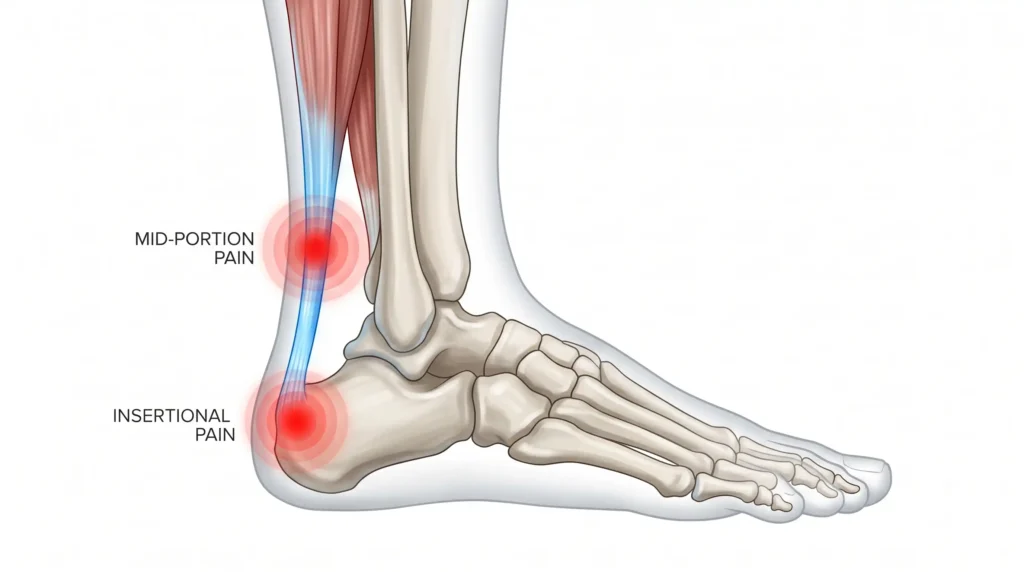
Before picking an insole, you need to know which type of Achilles tendonitis you have. The two types respond differently to treatment, and choosing the wrong insole can slow your recovery.
Insertional Achilles tendonitis causes pain at the very bottom of the tendon, where it attaches to the heel bone. It is more common in older adults and less active people. The tendon is being compressed or pulled at the attachment point. Heel lifts and cushioned insoles help here by reducing the angle of pull on the tendon.
Mid-portion Achilles tendonitis causes pain in the middle section of the tendon, roughly 2 to 6 centimeters above the heel. It is more common in runners and active people. The primary driver is usually overpronation, the inward rolling of the foot that twists the tendon with every step. Arch support insoles are more effective here because they correct the mechanical cause.
If you are unsure which type you have, press along the tendon. Pain right at the heel bone points to insertional tendonitis. Pain higher up the tendon points to mid-portion tendonitis. Many people benefit from insoles that combine both features: firm arch support plus heel cushioning.
Good to Know
Morning stiffness that eases after 10 to 15 minutes of walking is a classic early sign of Achilles tendonitis. If the pain is severe, came on suddenly, or you felt a pop, see a podiatrist before self-treating. These can be signs of a partial tear rather than tendonitis.
Quick Comparison: Top 10 Insoles for Achilles Tendonitis
| Insole | Best For | Arch Support | Heel Cushioning | Price |
|---|---|---|---|---|
| ComfortMax Flat Feet Insoles | Overpronation, mid-portion tendonitis | Firm | Deep heel cup | $39.99 |
| Dr. Scholl’s Pain Relief Orthotics | Everyday walkers, mild cases | Medium | Moderate | ~$15 |
| Samurai Insoles | Flat feet, budget pick | Medium-firm | Moderate | ~$25 |
| Spenco Polysorb Cross Trainer | Runners, high-impact activity | Medium | High | ~$30 |
| SOLE Active Medium | Neutral to low arches | Medium | Moderate | ~$45 |
| Vionic Full-Length Active | Biomechanical correction | Firm | Moderate | ~$50 |
| Walk-Hero Comfort & Support | Workers on their feet all day | Medium | High | ~$20 |
| Tread Labs Stride | Customizable, high-mileage runners | Firm | Moderate | ~$75 |
| Sof Sole Athlete | Runners, shock absorption focus | Low-medium | High | ~$20 |
| Nazaroo Flat Feet Insoles | Flat feet, budget option | Medium | Moderate | ~$15 |
Understanding Achilles Tendonitis
What Is Achilles Tendonitis?
Achilles tendonitis is inflammation of the Achilles tendon, the thick band of tissue connecting your calf muscles to your heel bone. It develops when the tendon is repeatedly stressed beyond its capacity to recover, leading to microscopic tears, inflammation, and pain.
The Achilles tendon is the largest and strongest tendon in the body, but it has a relatively poor blood supply compared to muscle tissue. That is why it heals slowly and why chronic cases are so common.
Causes of Achilles Tendonitis
The most common causes are:
- Overpronation (inward rolling of the foot) that twists the tendon with each step
- Sudden increases in training volume or intensity
- Tight calf muscles that increase tendon tension
- Worn-out footwear that no longer provides adequate support
- Long hours standing on hard surfaces without proper cushioning
Symptoms Associated with Achilles Tendonitis
- Stiffness and pain at the back of the heel or lower calf, especially in the morning
- Pain that worsens during activity and eases slightly when warmed up, then returns afterward
- Tenderness when pressing directly on the tendon
- Mild swelling along the tendon
- A creaking or crackling sensation when moving the ankle
Specific Pain Points of Achilles Tendonitis
Pain location tells you a lot about which type you have. Insertional tendonitis concentrates pain at the heel bone itself. Mid-portion tendonitis produces pain higher up the tendon, in the section that has the poorest blood supply and the slowest healing rate.
How Insoles Help Achilles Tendonitis
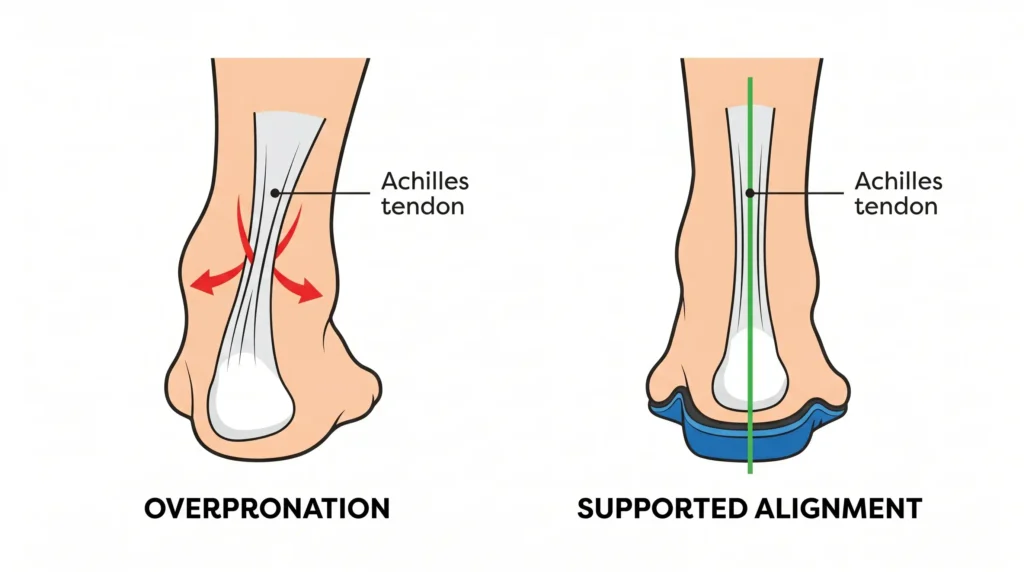
Arch Support: Correcting the Root Cause
For most people with mid-portion Achilles tendonitis, overpronation is the underlying driver. When the arch collapses inward on each step, the ankle rolls in, the shin rotates internally, and the calf muscles work harder to stabilize the movement. That extra calf effort increases tension on the Achilles tendon throughout the gait cycle.
Arch support insoles hold the foot in a more neutral position, reducing the inward roll and the resulting twist on the tendon. The same overpronation pattern also drives plantar fasciitis, so if you have had heel pain alongside your Achilles issues, the root cause is likely the same.
Heel Cushioning: Reducing Impact Load
Every step loads the Achilles tendon. Cushioning in the heel absorbs impact at the moment of ground contact, reducing the shock transmitted up through the tendon. For insertional tendonitis, heel cushioning is the primary mechanism of relief.
Heel Lifts: Temporary Relief, Not a Fix
A heel lift raises the heel inside the shoe, shortening the effective length of the Achilles tendon and reducing the stretch placed on it during walking. This can provide meaningful short-term relief for insertional tendonitis. The limitation is that heel lifts do not address foot mechanics. If overpronation is driving the problem, a heel lift alone will not stop the rotational stress on the tendon.
Important
If your Achilles pain is severe, came on suddenly, or is accompanied by a visible gap or lump in the tendon, stop self-treating and see a podiatrist immediately. These can be signs of a partial or complete tendon rupture. Insoles are not a substitute for professional diagnosis.
How to Choose the Best Insoles for Achilles Tendonitis
Essential Features to Look For
Heel cup depth. A deep heel cup cradles the heel and keeps it centered during each step. This prevents the heel from rolling inward and reduces lateral stress on the Achilles tendon. Shallow heel cups, common in budget insoles, do not provide this stabilization.
Arch support level. For overpronation-driven Achilles tendonitis, you need firm arch support, not soft foam that compresses flat under your weight. Semi-rigid or rigid arch support materials (EVA foam with a firm base, or polypropylene) outperform soft gel insoles for this purpose.
Heel cushioning. Look for multi-layer construction: a firm base for support and a softer top layer for cushioning. Single-layer foam insoles compress quickly and lose their cushioning properties within weeks.
Full-length vs. heel-only. Full-length insoles that run from heel to toe provide better overall foot control than heel-only inserts. They distribute pressure more evenly and prevent the foot from sliding forward in the shoe, which can increase Achilles strain.
Shoe compatibility. The insole needs to fit your shoe type. Running shoes, work boots, and casual shoes have different volume and depth. Most quality insoles are trimmable to fit.
Step 1: Understand Your Foot Type
Flat feet and low arches are the most common foot types associated with Achilles tendonitis. If your arch collapses when you stand, you need firm arch support. If you have a neutral arch, a medium-support insole is usually sufficient. High arches (supination) require a different approach and are less commonly associated with Achilles tendonitis.
Step 2: Identify Your Primary Need
Match your insole choice to your tendonitis type:
- Mid-portion tendonitis + flat feet: Firm arch support insole with deep heel cup
- Insertional tendonitis: Heel cushioning insole with moderate heel lift
- Both types or unsure: Insole combining firm arch support and heel cushioning
Step 3: Select the Right Material
EVA foam with a firm base provides the best combination of support and cushioning for Achilles tendonitis. Gel insoles are softer and better for shock absorption but offer less arch correction. Memory foam compresses too easily for effective arch support.
Step 4: Test for Comfort Level
An insole that causes new pain is the wrong insole. Expect a short break-in period of 3 to 5 days as your foot adjusts to the new support position. If pain increases after a week, try a different arch height.
Step 5: Budget and Quality
Quality over-the-counter insoles at $20 to $50 perform comparably to custom orthotics ($300 to $600) for most common presentations of Achilles tendonitis. Custom orthotics are worth considering for severe overpronation, structural foot abnormalities, or cases that do not respond to conservative treatment.
Top 10 Best Insoles for Achilles Tendonitis
ComfortMax Flat Feet Insoles: Best for Overpronation and Mid-Portion Tendonitis
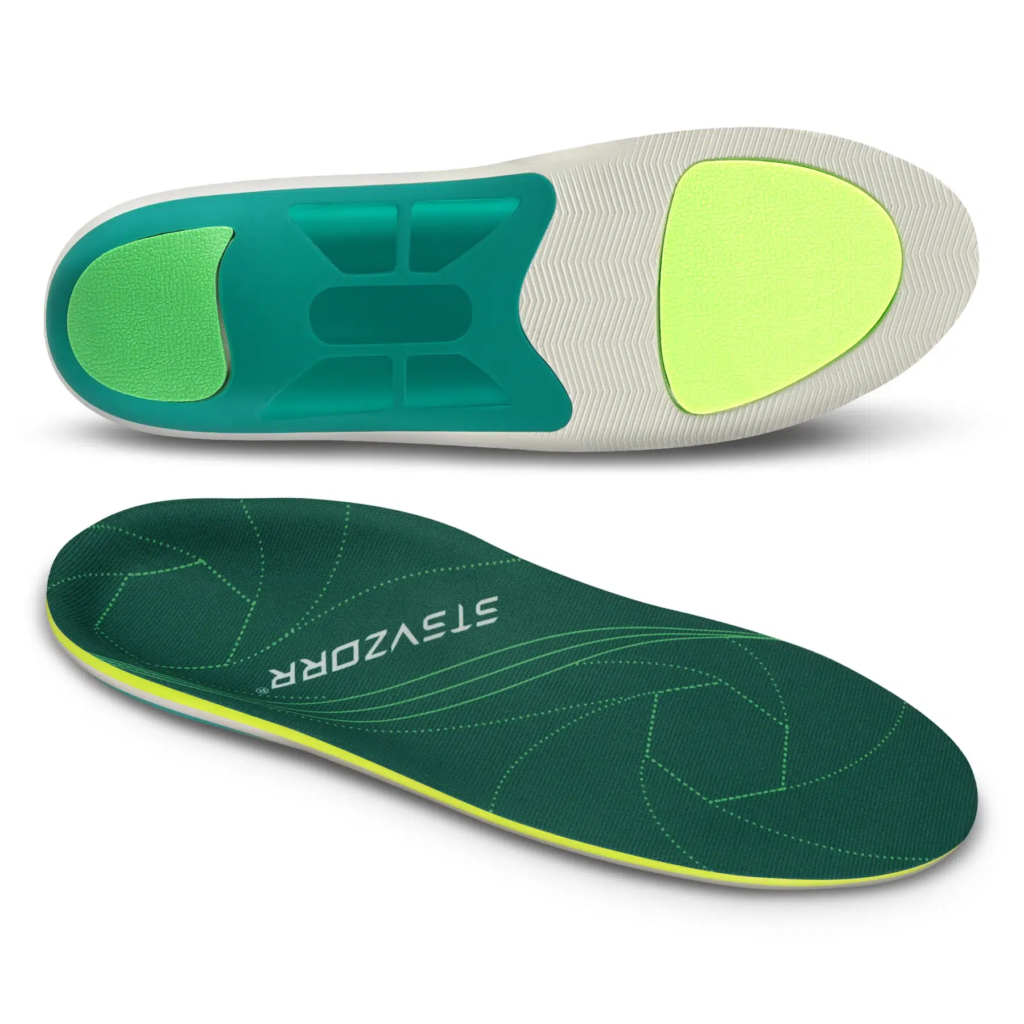
Best for: People with flat feet or low arches whose Achilles pain is driven by overpronation.
The ComfortMax arch support insoles for flat feet are the top pick for mid-portion Achilles tendonitis. The firm EVA base holds the arch in a neutral position throughout the gait cycle, reducing the inward roll that twists the Achilles tendon with each step. The deep heel cup keeps the heel centered and stable.
The multi-layer construction provides cushioning without sacrificing support. At $39.99, they cost a fraction of custom orthotics and work across multiple shoe types. Trimmable to fit most sizes.
Pros: Firm arch support, deep heel cup, durable multi-layer construction, 30-day money-back guarantee
Cons: May feel firm initially during break-in period; not ideal for high arches
Dr. Scholl’s Pain Relief Orthotics: Best Budget Option for Everyday Walkers
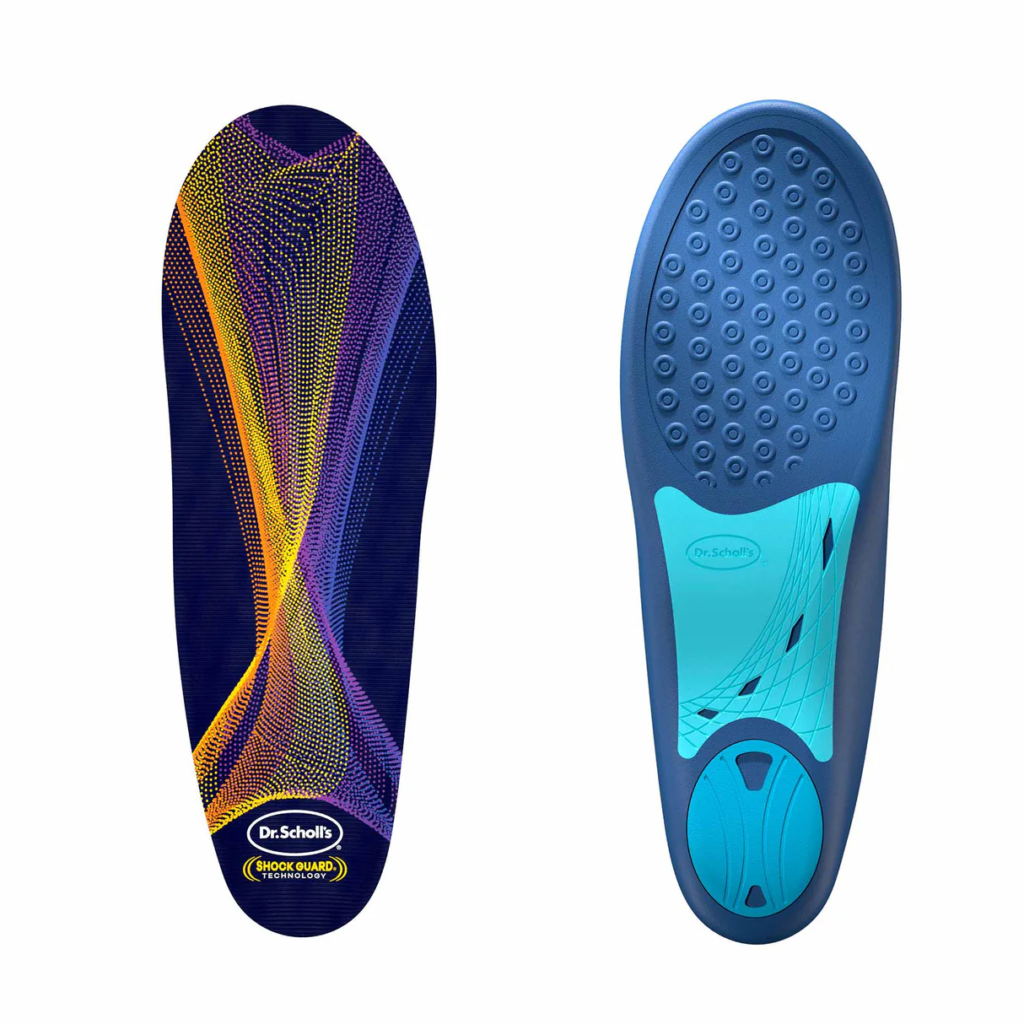
Best for: Mild Achilles tendonitis in everyday walkers who need accessible, affordable relief.
Dr. Scholl’s Pain Relief Orthotics are widely available and provide a reasonable level of arch support and heel cushioning for mild cases. The dual-layer foam construction absorbs impact effectively. They are not as firm as the ComfortMax insoles, which limits their effectiveness for severe overpronation, but they are a solid starting point for people new to insoles.
Pros: Widely available, affordable (~$15), decent cushioning
Cons: Softer foam compresses over time; limited arch correction for moderate to severe overpronation
Samurai Insoles: Best for Flat Feet on a Budget
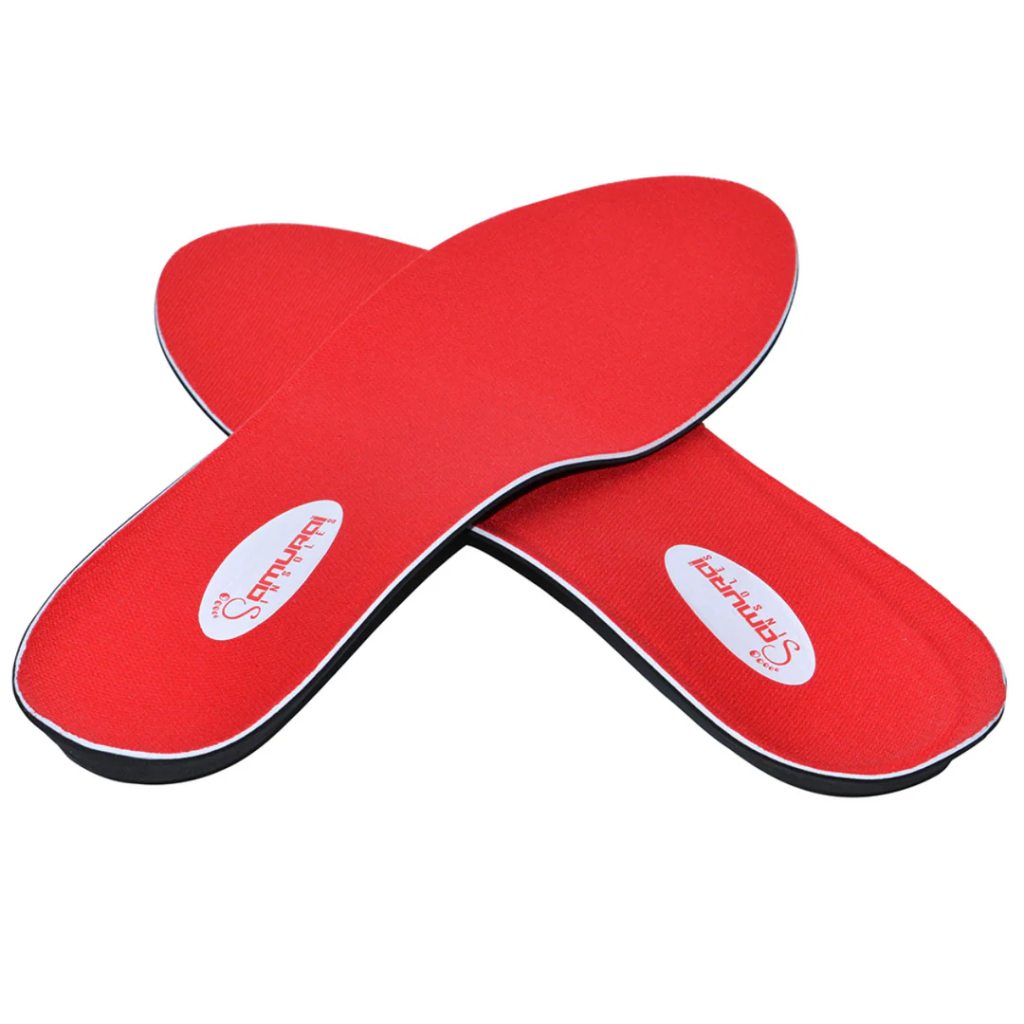
Best for: Flat feet with mild to moderate overpronation, budget-conscious buyers.
Samurai Insoles use a semi-rigid arch support design that provides more correction than soft foam insoles at a similar price point. The heel cup is reasonably deep for the price. A good option if you want more arch support than Dr. Scholl’s without spending $40 or more.
Pros: Semi-rigid arch support, good value (~$25), trimmable
Cons: Less durable than premium options; heel cup shallower than ComfortMax
Spenco Polysorb Cross Trainer: Best for Runners
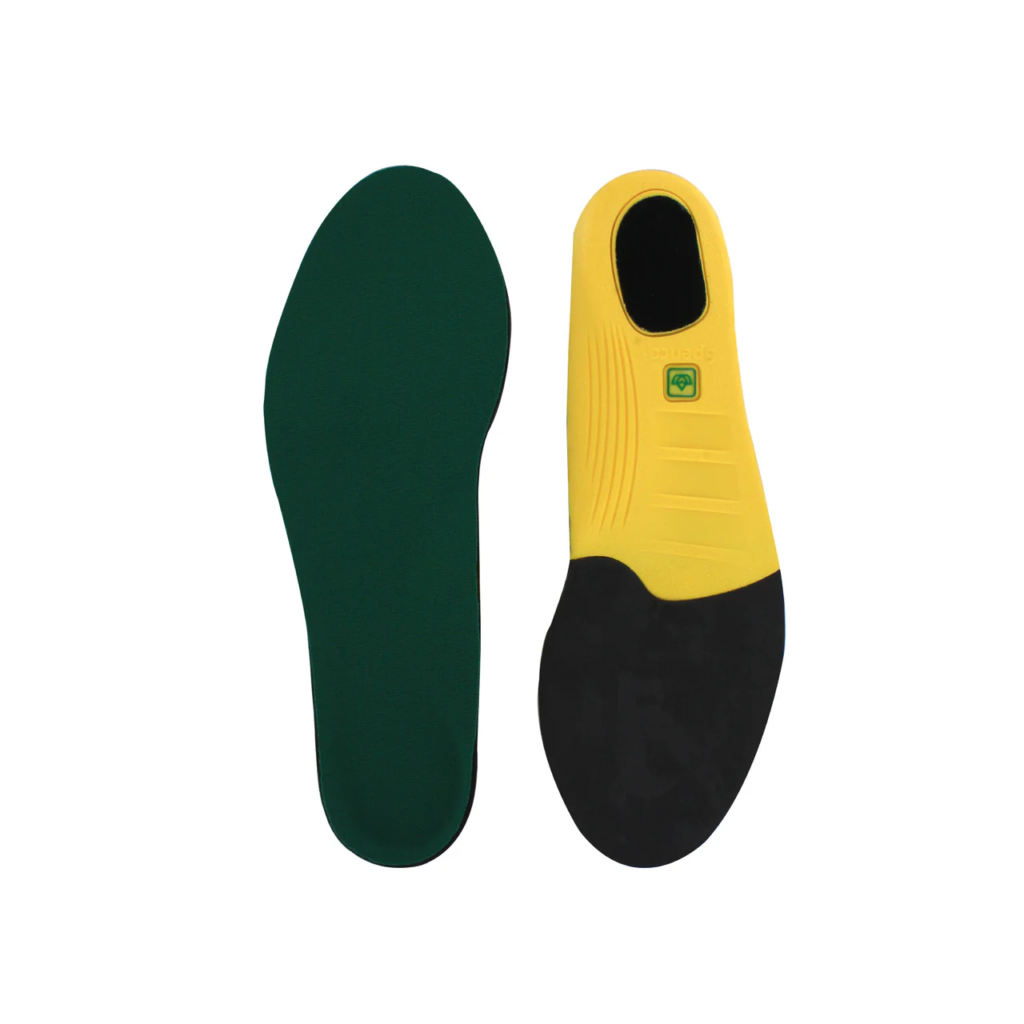
Best for: Runners with Achilles tendonitis who need high-impact cushioning alongside arch support.
Spenco Polysorb insoles are designed for high-impact activity. The Spenco 4-POD cushioning system absorbs shock effectively across the heel and forefoot, reducing the impact load on the Achilles tendon during running. The arch support is medium-firm, suitable for neutral to mild overpronation.
Pros: Excellent shock absorption, durable, designed for running
Cons: Medium arch support may not be sufficient for severe overpronation; higher price (~$30)
SOLE Active Medium: Best for Neutral Arches
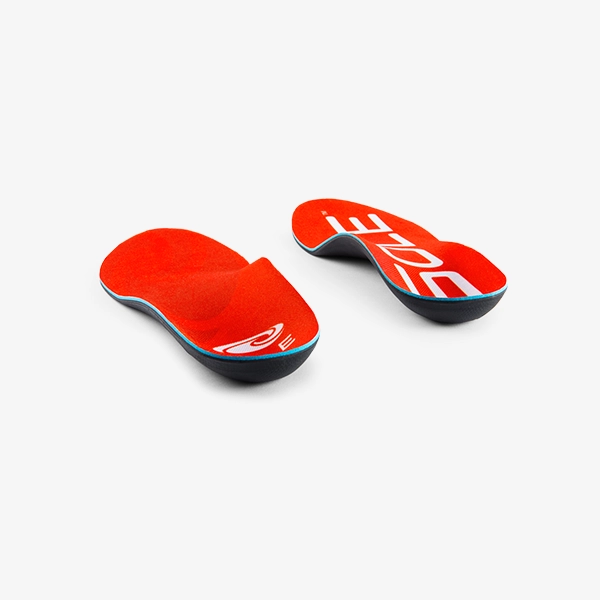
Best for: Runners and active people with neutral to low arches who want a heat-moldable fit.
SOLE Active insoles use a cork and EVA base that can be heat-molded to your foot shape in a standard oven. This gives a more customized fit than off-the-shelf insoles. The medium arch support suits neutral arches well. Not the best choice for severe flat feet, where a firmer, higher arch support is needed.
Pros: Heat-moldable for custom fit, durable cork base, good for neutral arches
Cons: Higher price (~$45); medium support insufficient for severe overpronation
Vionic Full-Length Active Orthotic: Best for Biomechanical Correction
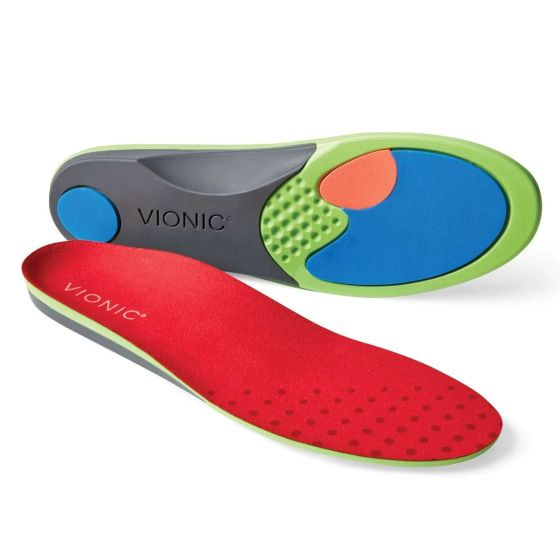
Best for: People who want podiatrist-designed arch support without the custom orthotic price tag.
Vionic insoles are designed with input from podiatrists and use a firm orthotic shell to correct foot alignment. The arch support is among the firmest available in an over-the-counter insole, making them effective for moderate to severe overpronation. The heel cup is deep and well-structured.
Pros: Podiatrist-designed, firm orthotic shell, deep heel cup, effective for moderate overpronation
Cons: Higher price (~$50); may feel too firm for people accustomed to soft insoles
Walk-Hero Comfort & Support: Best for Workers on Their Feet All Day
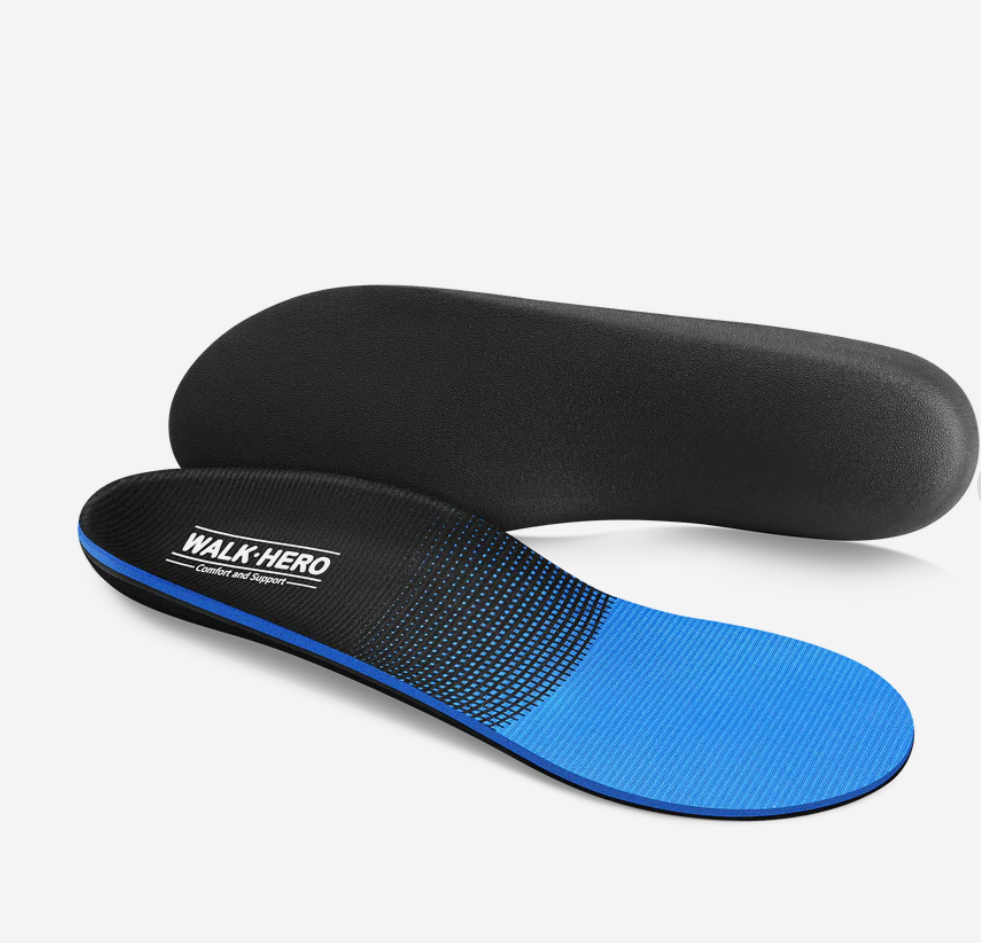
Best for: Retail workers, healthcare staff, and warehouse employees who stand on hard surfaces for long shifts.
Walk-Hero insoles combine medium arch support with generous heel and forefoot cushioning, making them well-suited for people who stand rather than run. The cushioning holds up well over long shifts. The arch support is not as firm as the ComfortMax or Vionic options, but it provides enough correction for mild to moderate overpronation.
Pros: Good cushioning for standing, affordable (~$20), comfortable for long shifts
Cons: Softer arch support limits effectiveness for severe overpronation
Tread Labs Stride: Best for High-Mileage Runners
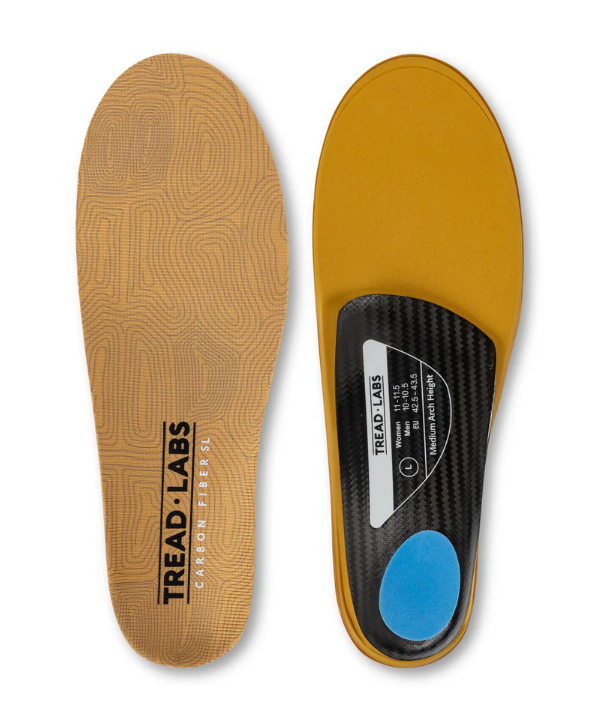
Best for: Serious runners who need durable, high-support insoles that last through heavy training.
Tread Labs Stride insoles use a polypropylene arch support shell that does not compress or lose its shape over time. They come in four arch heights, allowing you to match the support level to your foot type precisely. The top cover is replaceable, extending the life of the insole significantly. At ~$75, they are the most expensive option on this list, but the durability justifies the cost for high-mileage runners.
Pros: Four arch heights, replaceable top cover, extremely durable, firm polypropylene shell
Cons: Highest price on this list (~$75); requires knowing your arch height
Sof Sole Athlete: Best for Shock Absorption
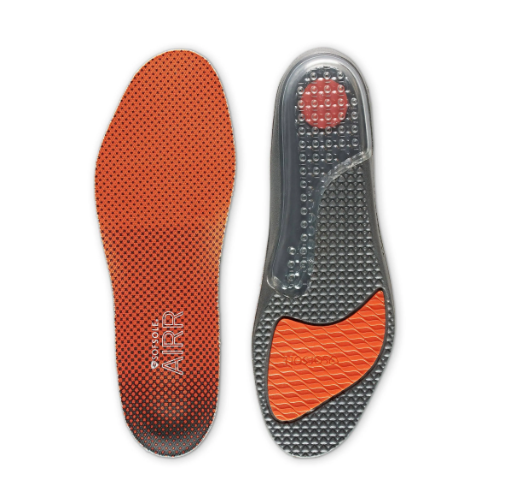
Best for: Runners and active people whose primary need is shock absorption rather than arch correction.
Sof Sole Athlete insoles use gel heel and forefoot pads to absorb impact effectively. They are better suited for insertional Achilles tendonitis, where reducing heel impact is the priority, than for mid-portion tendonitis driven by overpronation. The arch support is low to medium and will not correct significant overpronation.
Pros: Excellent shock absorption, affordable (~$20), comfortable for high-impact activity
Cons: Low arch support; not effective for overpronation-driven Achilles tendonitis
Nazaroo Shoe Insoles for Flat Feet: Best Ultra-Budget Option
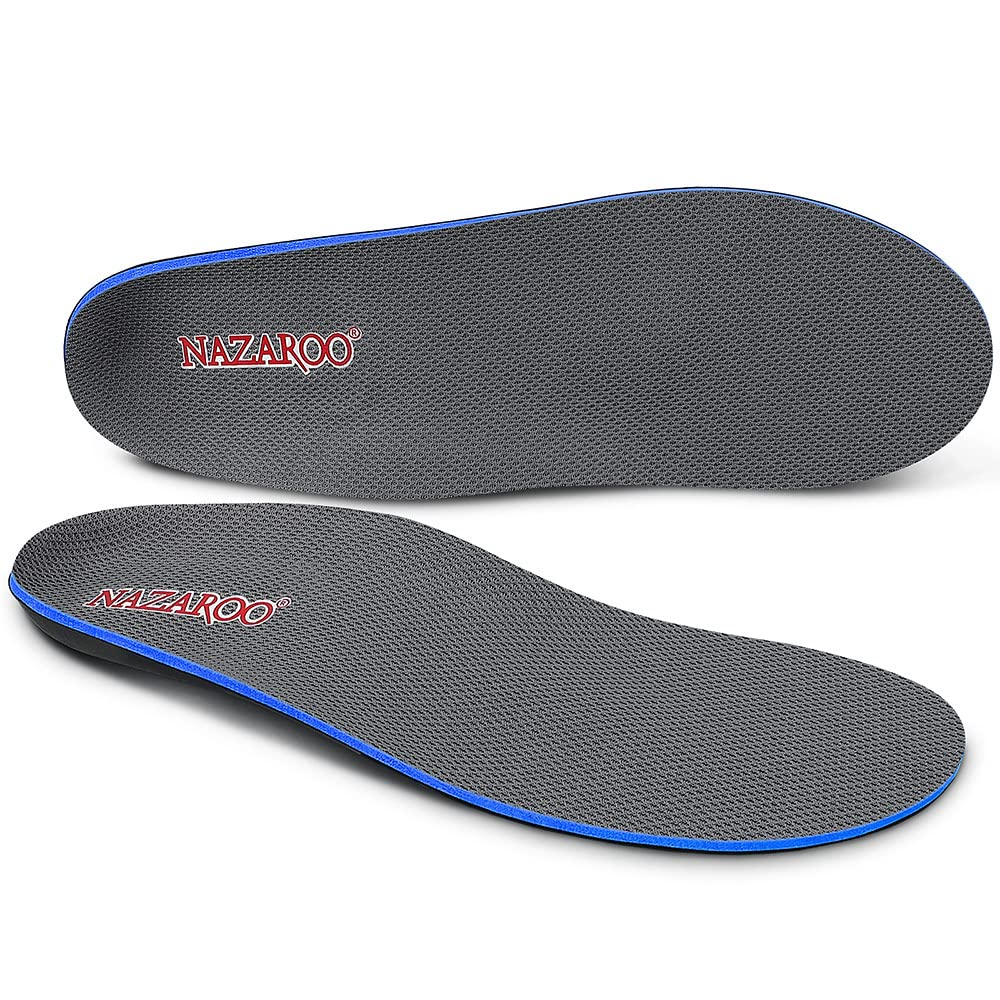
Best for: People who want to try arch support insoles before committing to a higher-priced option.
Nazaroo insoles provide basic arch support and heel cushioning at a very low price (~$15). The arch support is softer than the ComfortMax or Vionic options, which limits their effectiveness for moderate to severe overpronation. They are a reasonable starting point for people with mild flat feet and mild Achilles tendonitis.
Pros: Very affordable (~$15), basic arch support, available in multiple sizes
Cons: Soft arch support compresses quickly; not suitable for moderate to severe overpronation
A Buyer’s Guide: Matching the Right Insole to Your Situation
For Runners with Mid-Portion Tendonitis
Prioritize firm arch support and shock absorption. The Tread Labs Stride (high mileage) or Spenco Polysorb Cross Trainer (moderate mileage) are the best options. Pair with running shoes that have 8 to 12 millimeters of heel-to-toe drop. Avoid minimalist shoes during recovery.
For Workers on Their Feet All Day
Prioritize cushioning and medium arch support. The Walk-Hero Comfort & Support insoles are the best value option. The ComfortMax insoles are the better choice if you have flat feet or significant overpronation. Pair with work shoes that have a firm heel counter.
For Everyday Walking and Recovery
The ComfortMax flat feet insoles cover most presentations of Achilles tendonitis for everyday use. For insertional tendonitis with sensitive heels, the silicone gel insoles provide superior shock absorption and are particularly comfortable for people with heel sensitivity.
Insoles vs. Custom Orthotics
For most people with common presentations of Achilles tendonitis, quality over-the-counter insoles perform comparably to custom orthotics. Custom orthotics are worth considering for severe overpronation, structural foot abnormalities, or cases that do not respond to conservative treatment after 12 weeks. At $39.99 versus $300 to $600 for custom orthotics, starting with a quality OTC insole is the sensible first step.
For a broader comparison of insole options for tendon-related conditions, see the best insoles for tendonitis guide.
Other Treatments to Use Alongside Insoles
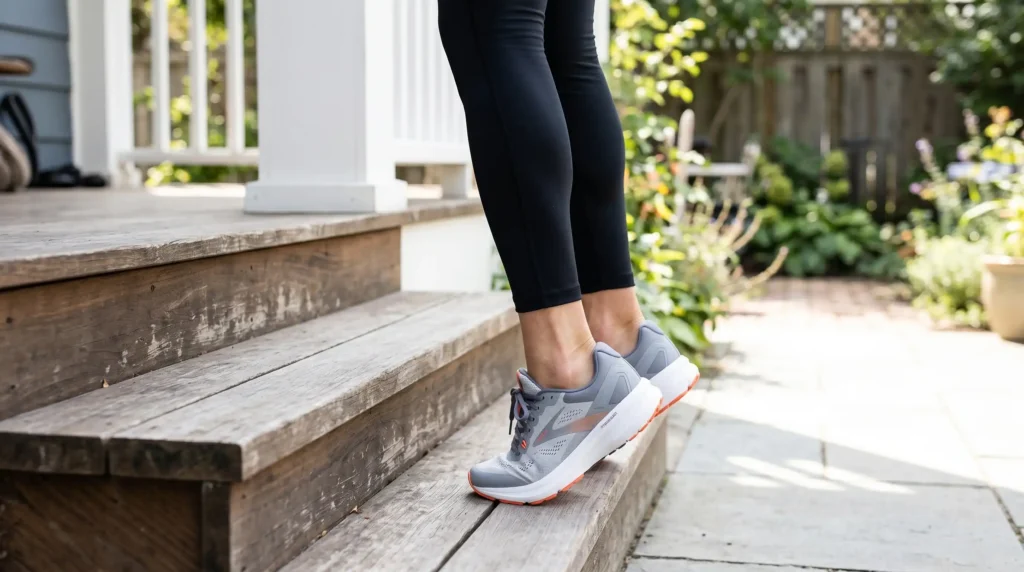
Insoles reduce the mechanical load on the Achilles tendon during daily activity. They work best as part of a broader recovery approach.
Eccentric calf exercises are the most evidence-backed treatment for mid-portion Achilles tendonitis. Stand on a step with your heels hanging off the edge. Rise onto both toes, then lower slowly on the affected foot only, taking 3 seconds to lower. Do 3 sets of 15 repetitions, twice daily. Expect some discomfort during the exercise. Sharp pain is not normal.
Load management matters more than complete rest. The tendon needs some load to heal. Reduce activities that aggravate it, but stay active at a level that does not worsen symptoms. Complete rest slows recovery.
Footwear changes support the insole’s work. Shoes with 8 to 12 millimeters of heel-to-toe drop and a firm heel counter reduce Achilles tendon load. Minimalist shoes and flat-soled footwear are counterproductive during recovery.
For people whose Achilles pain came on suddenly or was accompanied by a pop, the recovery approach may differ. That article covers what to do when Achilles tendon pain starts without warning.
Conclusion
The best insoles for Achilles tendonitis match the type of tendonitis you have. For mid-portion tendonitis driven by overpronation, firm arch support insoles are the right choice. For insertional tendonitis, heel cushioning and a moderate heel lift provide the most relief. Many people benefit from insoles that combine both.
The ComfortMax flat feet insoles are the top pick for overpronation-driven Achilles pain. The silicone gel insoles are the better choice for insertional tendonitis and sensitive heels. Both are available with a 30-day money-back guarantee.
Pair your insoles with eccentric calf exercises and sensible load management, and most cases of Achilles tendonitis resolve within 8 to 12 weeks.
For the full biomechanical explanation of why arch support works for Achilles tendonitis, see our guide to insoles for Achilles tendonitis.
Dealing with Achilles or heel pain?
Our orthotic insoles are designed to reduce tendon load and correct the foot mechanics that drive Achilles tendonitis, at a fraction of the cost of custom orthotics.
Find the Right Insole →Free returns on all orders · 30-day money-back guarantee
Frequently Asked Questions
Do insoles actually help Achilles tendonitis?
Yes, when chosen correctly. Insoles with firm arch support reduce overpronation, which is the primary mechanical driver of mid-portion Achilles tendonitis. Insoles with heel cushioning reduce impact load on the tendon. Most people notice a reduction in pain within 2 to 4 weeks of consistent use alongside eccentric calf exercises.
What type of insole is best for Achilles tendonitis?
It depends on your tendonitis type. Mid-portion tendonitis responds best to firm arch support insoles that correct overpronation. Insertional tendonitis responds better to cushioned insoles with a moderate heel lift. If you have flat feet, a firm arch support insole addresses both the mechanical cause and the cushioning need.
Should I use heel lifts or arch support insoles for Achilles tendonitis?
Heel lifts reduce the angle of pull on the tendon and help with insertional tendonitis. Arch support insoles correct overpronation and are more effective for mid-portion tendonitis. Many people benefit from insoles that combine both features. Heel lifts alone will not resolve tendonitis if overpronation is the underlying cause.
How long does Achilles tendonitis take to heal with insoles?
With consistent insole use combined with eccentric calf exercises and load management, most cases of mid-portion Achilles tendonitis improve significantly within 8 to 12 weeks. Insertional tendonitis can take longer, sometimes 3 to 6 months. Recovery is faster when you address the mechanical cause rather than just managing symptoms.
Can flat feet cause Achilles tendonitis?
Yes. Flat feet cause overpronation, the inward rolling of the foot that puts rotational stress on the Achilles tendon with every step. People with flat feet are at significantly higher risk of developing mid-portion Achilles tendonitis. Arch support insoles designed for flat feet address this directly.
Is it OK to walk with Achilles tendonitis if I wear insoles?
In most cases, yes. Complete rest is rarely necessary or helpful. The tendon needs some load to heal. Wearing supportive insoles in appropriate footwear allows you to stay active at a level that does not aggravate the tendon. Reduce high-impact activities like running and jumping until symptoms improve.
Frequently Asked Questions
Do insoles actually help Achilles tendonitis?
Yes, when chosen correctly. Insoles with firm arch support reduce overpronation, which is the primary mechanical driver of mid-portion Achilles tendonitis. Insoles with heel cushioning reduce impact load on the tendon. Most people notice a reduction in pain within 2 to 4 weeks of consistent use alongside eccentric calf exercises.
What type of insole is best for Achilles tendonitis?
It depends on your tendonitis type. Mid-portion tendonitis responds best to firm arch support insoles that correct overpronation. Insertional tendonitis responds better to cushioned insoles with a moderate heel lift. If you have flat feet, a firm arch support insole addresses both the mechanical cause and the cushioning need.
Should I use heel lifts or arch support insoles for Achilles tendonitis?
Heel lifts reduce the angle of pull on the tendon and help with insertional tendonitis. Arch support insoles correct overpronation and are more effective for mid-portion tendonitis. Many people benefit from insoles that combine both features. Heel lifts alone will not resolve tendonitis if overpronation is the underlying cause.
How long does Achilles tendonitis take to heal with insoles?
With consistent insole use combined with eccentric calf exercises and load management, most cases of mid-portion Achilles tendonitis improve significantly within 8 to 12 weeks. Insertional tendonitis can take longer, sometimes 3 to 6 months. Recovery is faster when you address the mechanical cause rather than just managing symptoms.
Can flat feet cause Achilles tendonitis?
Yes. Flat feet cause overpronation, the inward rolling of the foot that puts rotational stress on the Achilles tendon with every step. People with flat feet are at significantly higher risk of developing mid-portion Achilles tendonitis. Arch support insoles designed for flat feet address this directly.
Is it OK to walk with Achilles tendonitis if I wear insoles?
In most cases, yes. Complete rest is rarely necessary or helpful. The tendon needs some load to heal. Wearing supportive insoles in appropriate footwear allows you to stay active at a level that does not aggravate the tendon. Reduce high-impact activities like running and jumping until symptoms improve.