
Flat Feet Pain Relief Guide: Causes, Symptoms & Proven Treatments
Flat feet (medically known as pes planus) occur when the arches of your feet collapse, causing the entire sole to make contact with the ground. For millions of people, this isn’t just a structural quirk — it’s a source of persistent discomfort that can travel from the arches all the way up to the lower back. This guide maps out where flat feet pain strikes, why it happens, and what actually provides relief.
Key Takeaways
- Flat feet pain often radiates beyond the feet — into the ankles, knees, hips, and lower back — due to alignment changes caused by overpronation
- Different pain locations require slightly different approaches, but arch support is the common thread across all treatment plans
- Orthotic insoles address the root cause by restoring proper foot alignment and reducing strain on connected joints
- Most cases respond well to conservative treatments: insoles, supportive footwear, and targeted exercises
- Persistent or severe pain should always be evaluated by a podiatrist to rule out underlying conditions
What Is Flat Feet Pain?
Flat feet pain refers to the discomfort that results from collapsed or low arches. When the arch flattens, the foot’s natural shock-absorbing mechanism is compromised. Instead of distributing impact evenly across the foot, forces concentrate on specific areas — the heel, the ball of the foot, and the inner ankle.
This is not limited to the feet alone. Flat feet change your gait, which alters how forces travel through your legs and spine. That is why the condition can cause ankle pain, shin splints, knee discomfort, hip pain, and even lower back pain. An estimated 20–30% of the population has flat feet, though not everyone develops symptoms.
What Causes Flat Feet Pain?
Flat feet pain typically develops from one or more of these underlying factors.
Genetics. Some people are born with low arches or a structural predisposition to arch collapse. If one or both of your parents have flat feet, you are more likely to develop them as well.
Posterior Tibial Tendon Dysfunction (PTTD). This is the most common cause of acquired flat feet in adults. The posterior tibial tendon — the primary structural support of the arch — weakens or tears over time, leading to gradual arch collapse and pain along the inner ankle and foot.
Overpronation. When the arch collapses, the foot rolls inward excessively with each step. This overpronation strains the plantar fascia, Achilles tendon, and the muscles along the inner leg, creating pain that extends well beyond the foot itself.
Injury or Trauma. A broken bone, sprained ankle, or tendon injury can damage the structures that support the arch, leading to flat feet pain that persists long after the initial injury heals.
Age-Related Changes. Tendons naturally lose strength and flexibility with age. The posterior tibial tendon is particularly vulnerable, which is why flat feet often appear or worsen in adults over 40.
Obesity and Pregnancy. Excess body weight places additional stress on the arches, increasing the likelihood of collapse. Pregnancy hormones also relax ligaments throughout the body, which can temporarily flatten the arches.
Did You Know
Not all flat feet cause pain. Some people have naturally flat arches their entire lives without any discomfort. The key difference is usually flexibility — if your arch flattens only when standing but returns when you sit, you likely have flexible flat feet, which are less prone to pain than rigid flat feet.
Where Flat Feet Pain Strikes
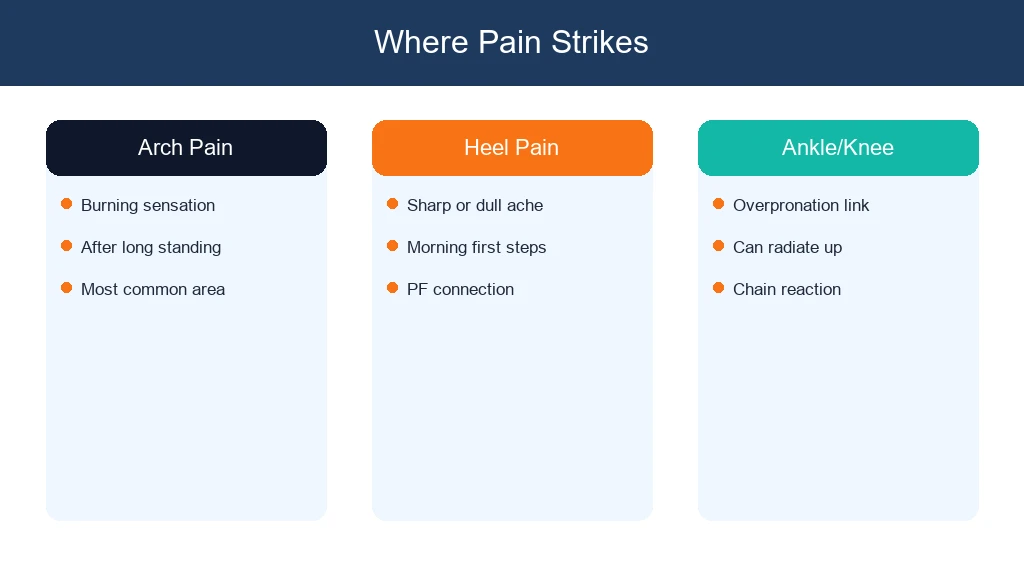
Flat feet pain rarely stays in one place. Because your feet are the foundation of your body, alignment issues at the bottom affect everything above. Here is where it typically shows up.
Foot and Arch Pain
The most direct symptom is pain in the feet themselves. The arch may ache after prolonged standing, walking, or running. Heel pain is also common, often overlapping with plantar fasciitis — inflammation of the tissue that connects your heel to your toes. Flat feet are one of the primary risk factors for plantar fasciitis because collapsed arches place constant tension on that connective tissue.
Ankle Pain
Flat feet alter the angle at which your ankle joint bears weight. Overpronation causes the talus bone to shift inward, compressing the inner ankle structures and stretching the outer ligaments. This can lead to chronic ankle pain, instability, and a higher risk of ankle sprains. Pain along the inner ankle — particularly over the posterior tibial tendon — is a hallmark sign of adult-acquired flat feet.
Knee Pain
Your knees absorb the rotational forces created by overpronation. When the foot rolls inward with each step, the tibia internally rotates, pulling the knee out of its natural alignment. This places abnormal stress on the kneecap and surrounding cartilage, leading to patellofemoral pain — a common form of knee discomfort in people with flat feet. You may notice the pain increases after walking or running longer distances.
Lower Back and Hip Pain
The effects travel all the way up. Overpronation creates a chain reaction: the inward rotation of the leg causes the pelvis to tilt forward, increasing the curve of the lower back (lumbar lordosis). This added stress on the lower back muscles and joints can result in chronic back pain. Research indicates that individuals with flat feet are significantly more likely to report lower back pain than those with normal arches.
How Flat Feet Cause Back Pain
The connection between flat feet and back pain is biomechanically straightforward. Each step sends impact forces from your feet up through your ankles, knees, hips, and spine. When your arches collapse, those forces travel unevenly.
With flat feet, the tibia internally rotates, which rotates the femur and tilts the pelvis forward. This anterior pelvic tilt increases lumbar lordosis — the inward curve of your lower back. The lower back muscles must work harder to maintain stability, leading to muscle fatigue, joint strain, and chronic lower back pain.
A 2019 study in the Journal of Physical Therapy Science found that individuals with flat feet reported significantly higher rates of lower back pain compared to those with normal arches. The researchers noted that arch support interventions could reduce back pain by restoring more natural gait mechanics. If you experience lower back pain alongside foot discomfort, flat feet may be the underlying cause.
How Flat Feet Cause Knee Pain
Knee pain related to flat feet typically presents as a dull ache around or behind the kneecap, especially after walking, running, or standing for extended periods. This type of pain — patellofemoral pain syndrome — is one of the most common overuse injuries in runners, and flat feet are a known contributing factor.
Here is the mechanism: with each step, overpronation causes the shin bone to rotate inward. Since the kneecap sits in a groove at the end of the thigh bone, this rotation pulls it out of its natural track. The result is increased pressure on the cartilage behind the kneecap, leading to pain and inflammation over time.
A study published in Clinical Biomechanics found that runners with flat feet experienced significantly greater knee joint loading compared to runners with neutral arches. Critically, correcting foot alignment with arch support insoles reduced that loading substantially. For many people, knee pain that has not responded to other treatments resolves once foot alignment is addressed.
Diagnosing Flat Feet Pain
If you are unsure whether your pain originates from flat feet, a podiatrist can provide a definitive diagnosis. They typically assess your foot structure through a visual examination — checking your arch while standing and seated — and observe your gait for signs of overpronation.
In some cases, imaging tests like X-rays or MRIs may be ordered to evaluate the extent of arch collapse, check for arthritis, or rule out stress fractures. The podiatrist may also assess your posterior tibial tendon to determine if tendon dysfunction is contributing to your pain.
One simple self-check: wet your foot and stand on a piece of paper. If the imprint shows nearly your entire foot with little to no curve along the inner side, you likely have flat feet. This is not a substitute for a professional diagnosis, but it can help you decide whether to seek one.
Medical Disclaimer
This guide is for informational purposes only and does not constitute medical advice. If you experience sharp or persistent pain, visible swelling, numbness, or difficulty walking, consult a podiatrist or healthcare professional before beginning any treatment regimen.
Effective Treatments for Flat Feet Pain
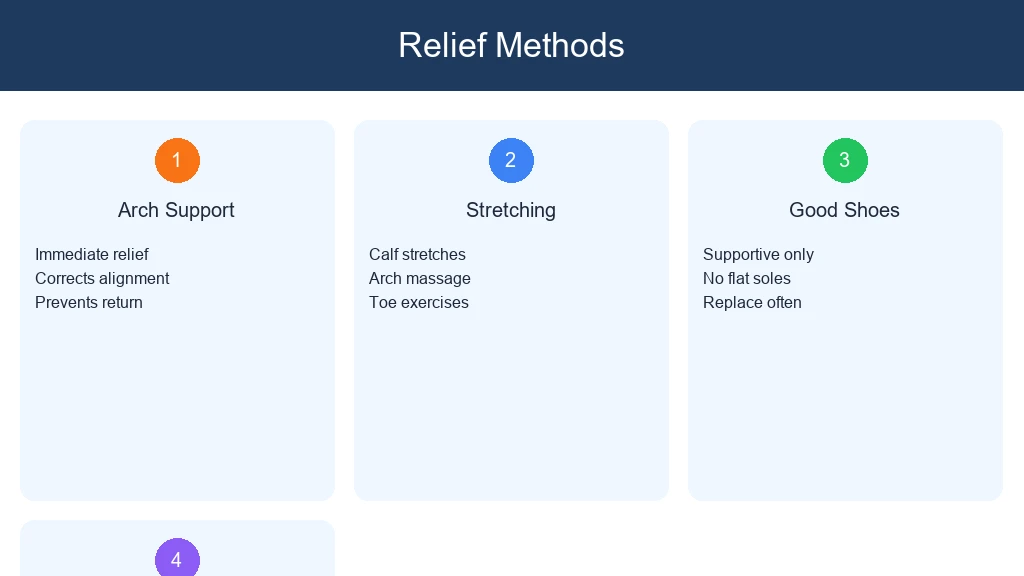
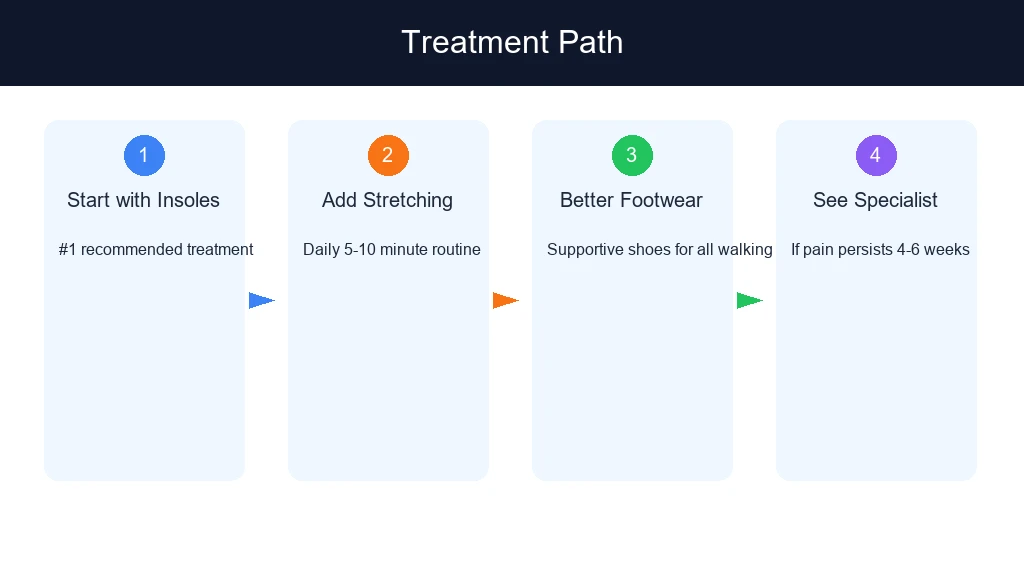
The majority of flat feet pain cases respond well to conservative, non-invasive treatments. Here are the most effective approaches, starting with the option that delivers the most immediate impact.
Arch Support Insoles
The single most effective treatment for flat feet pain is proper arch support. Orthotic insoles lift the arch and realign the foot into a neutral position, reducing overpronation and relieving strain on the plantar fascia, Achilles tendon, and knee joints.
Quality arch support insoles for flat feet are designed with rigid arch support that mirrors the structure of custom orthotics — at a fraction of the cost. Custom orthotics from a podiatrist typically run $300–$600, while over-the-counter orthotic insoles provide comparable support for under $50.
For flat feet pain, choose insoles with:
– Firm arch support that does not compress fully under body weight
– A deep heel cup to stabilize the foot and control pronation
– Medium to rigid flexibility — soft insoles cannot correct alignment
– A multi-layer design with a supportive base and comfortable top layer
If you are unsure where to start, our guide to the best flat feet and fallen arches insoles breaks down the top options for different pain profiles and budgets.
Supportive Footwear
Your shoes matter as much as your insoles. Worn-out or unsupportive shoes allow overpronation to continue even with quality insoles inside. Look for shoes with:
– A firm heel counter that does not collapse when squeezed
– Minimal torsional flexibility — the shoe should not twist easily
– A wide toe box that allows natural toe splay
– Motion control or stability features, particularly for running shoes
Avoid flat, unsupportive footwear like sandals, flip-flops, and worn-out sneakers. These offer no arch support and allow overpronation to worsen throughout the day.
Stretching and Strengthening Exercises
While insoles provide structural support, exercises address the underlying muscle weaknesses that contribute to flat feet pain.
Calf Stretches. Tight calves pull the heel upward and increase strain on the arch. Daily calf stretching — both straight-knee and bent-knee — relieves tension along the entire posterior chain.
Towel Curls. Place a towel on the floor and use your toes to scrunch it toward you. This strengthens the intrinsic foot muscles that support the arch.
Heel Raises. Stand on the edge of a step and slowly raise and lower your heels. This strengthens the calf muscles and posterior tibial tendon.
Arch Lifts. While standing, keep your toes flat on the ground and try to lift the arch of your foot without lifting your toes. This activates the small muscles that control arch height.
For more on how flat feet affect movement patterns, read our guide to supination flat feet and how different foot positions require different support strategies.
Lifestyle Modifications
Managing flat feet pain often requires adjustments to daily habits. If your job involves prolonged standing, invest in anti-fatigue mats and take regular sitting breaks. Maintaining a healthy weight reduces stress on your arches and tendons. And if you exercise, avoid sudden increases in mileage or intensity — give your feet time to adapt to new activities.
Preventing Flat Feet Pain
Prevention focuses on maintaining the health of your posterior tibial tendon and the muscles that support your arch. Wear supportive footwear even at home — avoid prolonged barefoot walking on hard surfaces. Replace athletic shoes every 300–500 miles, as worn-out midsoles lose the support your feet need.
If you are a runner, pay attention to your shoes’ wear patterns. Excessive wear on the inside edge of the sole indicates overpronation, which means you need more support. Early intervention — before pain develops — is far more effective than treating chronic discomfort.
For those already dealing with tendon-related discomfort, our insoles for tendonitis guide covers how targeted arch support can reduce strain on the posterior tibial tendon and Achilles.
Conclusion
Flat feet pain can disrupt more than just your feet — it can affect your knees, hips, and lower back. But relief is achievable without surgery or expensive custom orthotics. The most effective approach combines proper arch support, supportive footwear, targeted exercises, and smart daily habits.
For most people, the single biggest improvement comes from switching to orthotic insoles designed specifically for flat feet. These insoles address the root cause — arch collapse and overpronation — rather than just masking the symptoms. Take control of your flat feet pain today and get back to the activities you enjoy.
Struggling with flat feet pain?
Our ComfortMax insoles are designed specifically for flat feet — orthotic-level support at a fraction of the cost of custom orthotics.
Free returns on all orders · 30-day money-back guarantee
Frequently Asked Questions
Can flat feet cause back pain?
Yes. Flat feet alter your gait and pelvic alignment, which increases strain on the lower back muscles and joints. Studies show a significant correlation between flat feet and chronic lower back pain. Arch support insoles can reduce this strain by restoring more natural gait mechanics.
Can flat feet cause knee pain?
Yes. Overpronation from flat feet forces the kneecap out of its natural alignment, leading to patellofemoral pain. This is especially common in runners. Correcting foot alignment with arch support insoles has been shown to reduce knee joint loading significantly.
What does flat feet pain feel like?
Flat feet pain typically presents as a dull ache along the arch or inner ankle, though it can also appear as heel pain, knee pain, or lower back stiffness. The pain often worsens after prolonged standing, walking, or running and improves with rest.
Are flat feet pain and plantar fasciitis the same thing?
Not exactly, but they are closely related. Flat feet are a structural condition — collapsed arches — while plantar fasciitis is inflammation of the tissue connecting the heel to the toes. Flat feet significantly increase your risk of developing plantar fasciitis because collapsed arches place constant tension on that tissue.
When should I see a podiatrist for flat feet pain?
If your pain persists for more than two weeks despite rest and supportive measures, or if you experience sharp pain, visible swelling, or difficulty walking, consult a podiatrist for a professional evaluation.
Can exercise fix flat feet pain?
Exercise can strengthen the muscles supporting the arch, which helps reduce pain. However, for adults whose arch structure is already established, exercises alone cannot permanently restore the arch. They work best alongside arch support insoles for complete relief.