Flat Feet and Plantar Fasciitis: Why They’re Connected and How to Treat Both
Flat feet and plantar fasciitis are two of the most common foot conditions, and they frequently occur together. In fact, flat feet are the single greatest risk factor for developing plantar fasciitis. The reason is biomechanical: when your arch collapses, it places constant tension on the plantar fascia — the band of tissue running from your heel to your toes. Over time, that tension leads to micro-tears, inflammation, and the classic stabbing heel pain that defines plantar fasciitis. This guide explains the connection and shows you how to treat both conditions simultaneously.
Key Takeaways
- Flat feet cause the arch to collapse, which stretches and strains the plantar fascia with every step
- Over 70% of people with plantar fasciitis have flat feet or low arches — the conditions are biomechanically linked
- Treating one condition without the other often leads to incomplete recovery
- Arch support insoles are the most effective treatment because they address the root cause of both conditions at the same time
- Most cases resolve within 6–12 weeks with consistent use of insoles, stretching, and activity modification
Understanding Flat Feet
Flat feet (pes planus) occur when the medial longitudinal arch of the foot collapses, causing the sole to make full contact with the ground. This collapse is often caused by a weakened posterior tibial tendon — the structure that holds the arch up — combined with laxity in the foot’s supporting ligaments.
Flat feet can be flexible (the arch appears when sitting but flattens when standing) or rigid (the arch is flat regardless of position). In both cases, the mechanical consequence is the same: the foot loses its natural shock-absorbing curve, and structures downstream — including the plantar fascia — must absorb forces they were not designed to handle.
Approximately 20–30% of the population has flat feet, and the prevalence increases with age as tendons naturally weaken.
Understanding Plantar Fasciitis
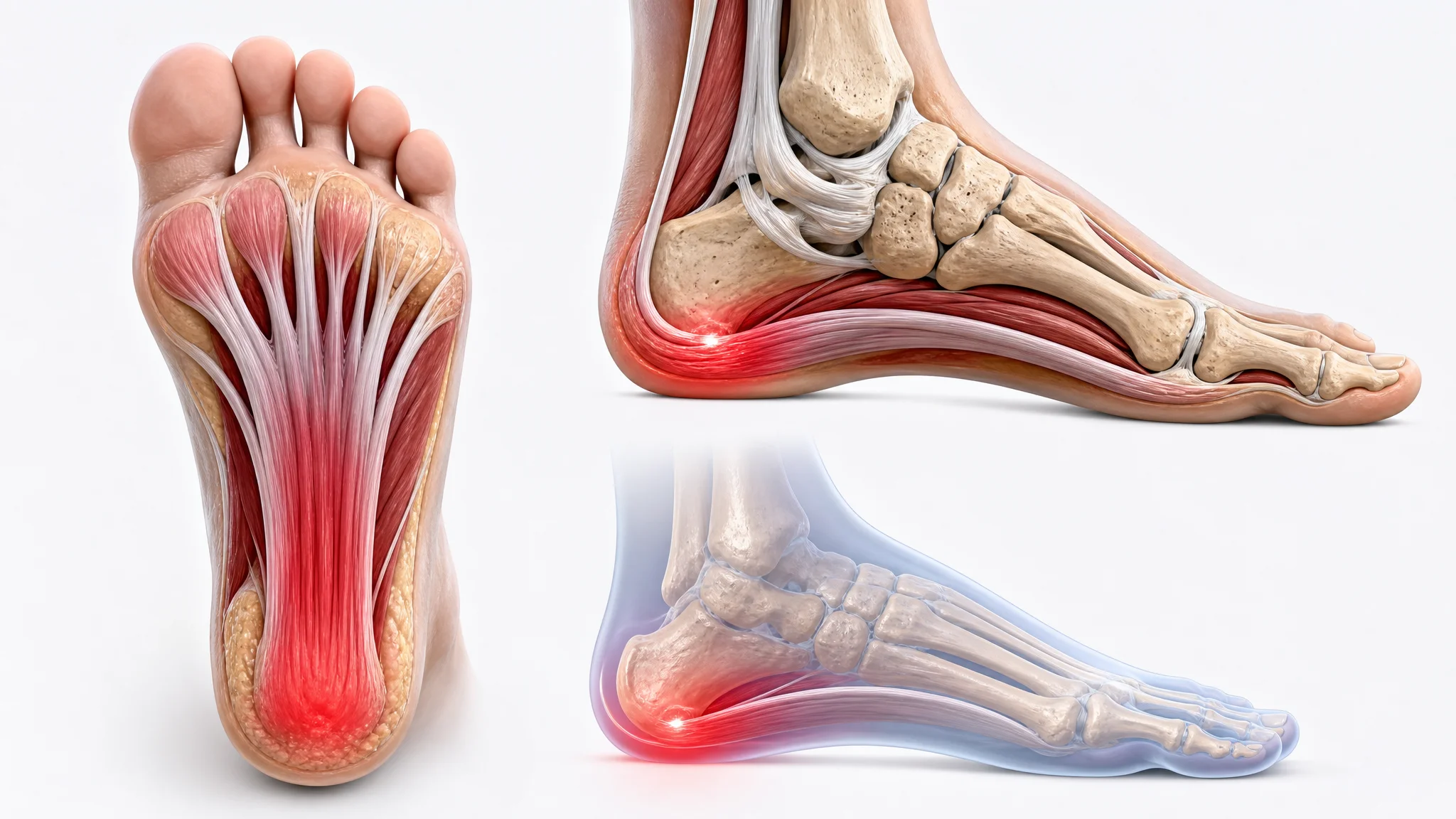
Plantar fasciitis is an overuse injury involving the plantar fascia — a thick band of connective tissue that runs from the heel bone to the base of the toes. This tissue acts like a bowstring, supporting the arch and absorbing shock during weight-bearing activities.
When the plantar fascia is subjected to repetitive strain beyond its capacity, micro-tears develop at the attachment point on the heel bone. The body’s inflammatory response causes pain, stiffness, and tenderness — most notably the sharp, stabbing sensation upon taking the first steps in the morning.
Plantar fasciitis is the most common cause of heel pain, affecting approximately 10% of the population at some point in their lives. Runners, people who stand for long hours, and individuals with flat feet are at the highest risk.
Why Flat Feet Cause Plantar Fasciitis
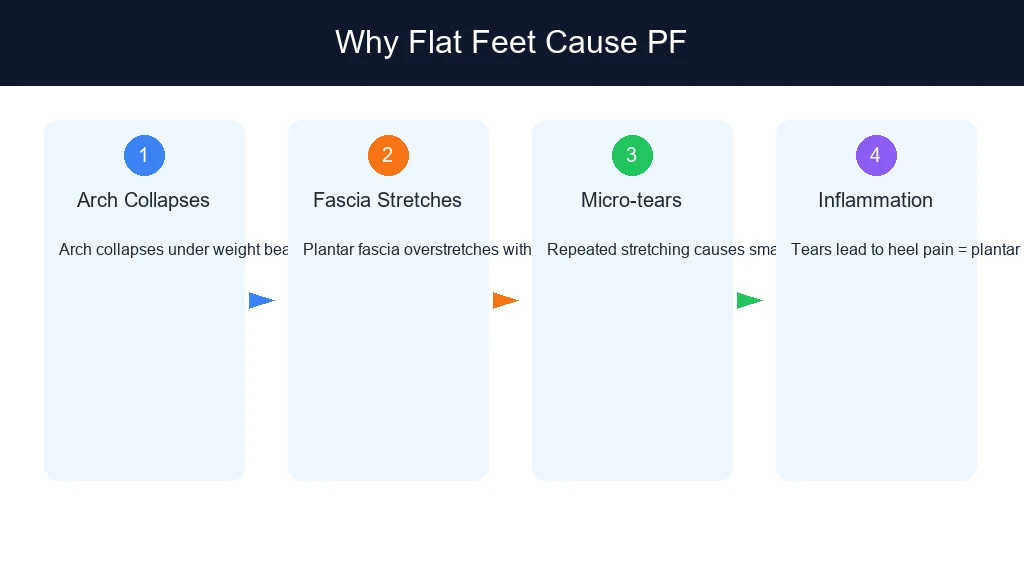
The connection between flat feet and plantar fasciitis is grounded in basic physics. The plantar fascia attaches to the heel bone and fans out toward the toes, forming the arch. When the arch is properly elevated, the plantar fascia is under moderate, healthy tension.
When the arch collapses, three things happen:
Increased Strain. The collapsed arch lengthens the distance between the heel and toes, placing the plantar fascia under constant, excessive tension. Each step stretches an already-stressed tissue, creating repetitive micro-trauma at the heel attachment.
Loss of Shock Absorption. The arch acts as a natural spring, absorbing impact during walking and running. Without it, the plantar fascia absorbs forces it was never designed to handle. A 2019 biomechanical study found that individuals with flat feet experienced 30–40% higher strain on the plantar fascia during walking compared to those with normal arches.
Prolonged Recovery. Because the underlying arch collapse never resolves on its own in adults, the plantar fascia remains under constant tension even during rest periods. This is why plantar fasciitis in people with flat feet tends to be more persistent and more prone to recurrence compared to plantar fasciitis in people with normal arches.
This connection explains why treating only the plantar fasciitis — with ice, rest, and anti-inflammatories — often provides only temporary relief. The underlying cause (the collapsed arch) continues to strain the tissue, and the pain returns as soon as the surface-level treatment stops.
Did You Know
The “first step in the morning” pain characteristic of plantar fasciitis happens because the plantar fascia tightens and shortens overnight as the foot rests in a relaxed, pointed position. When you stand, the sudden stretch on the already-strained tissue causes sharp pain. This is also why gentle calf stretching before getting out of bed can reduce morning pain significantly.
Flat Feet Plantar Fasciitis Treatment: Treat Both at Once
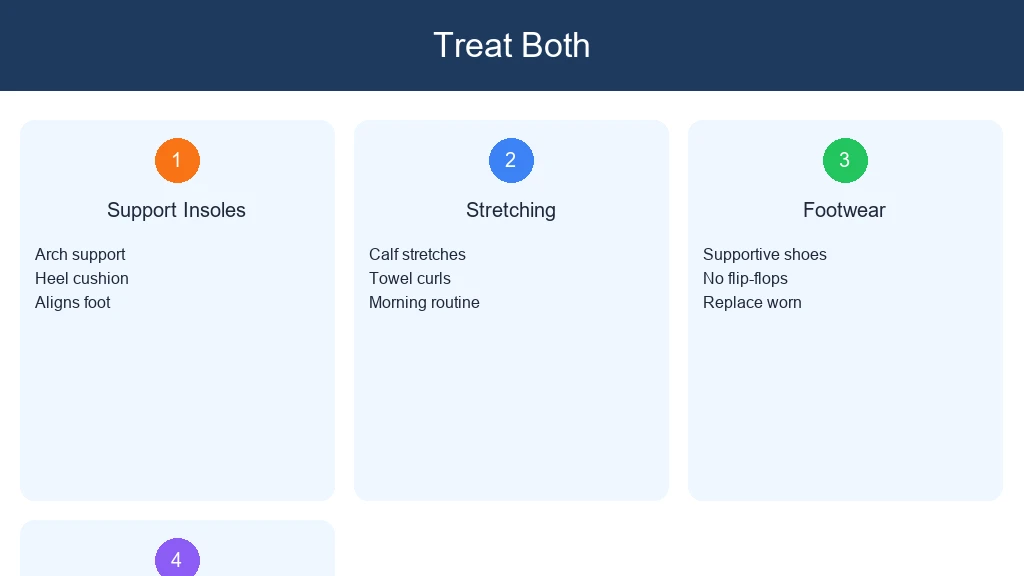
Because flat feet and plantar fasciitis are biomechanically linked, the most effective treatment strategy addresses both conditions simultaneously. Treating only the plantar fasciitis ignores the underlying cause, leading to a high recurrence rate.
Arch Support Insoles
The single most effective treatment for flat feet plantar fasciitis is proper arch support. Orthotic insoles lift the collapsed arch, reducing tension on the plantar fascia with every step. Unlike treatments that address only the inflammation (ice, anti-inflammatories), insoles address the root cause by restoring the foot’s natural alignment.
For flat feet and plantar fasciitis, look for insoles that offer:
Firm Arch Support. The insole must resist compression under body weight. If the arch collapses under pressure, it will not reduce plantar fascia strain. Semi-rigid orthotic insoles are the gold standard.
Deep Heel Cup. A 12–15 mm heel cup cradles the calcaneus, limiting excessive heel motion and reducing strain on the plantar fascia attachment point.
Heel Cushioning. While arch support addresses the cause of the pain, some additional heel cushioning helps manage the acute discomfort during the healing phase. Look for insoles with a gel or foam heel pad integrated into an otherwise supportive design.
Multi-Layer Construction. A rigid base layer provides structural support, while a comfortable top layer accommodates sensitive feet.
Studies consistently show that orthotic insoles reduce plantar fascia strain by 25–40% compared to walking without support. The best flat feet and fallen arches insoles are specifically designed to address both conditions simultaneously, making them the recommended first-line treatment.
Important
Transition to orthotic insoles gradually. Your feet and calves have adapted to walking without support, and introducing firm arch support can cause temporary muscle soreness. Start by wearing them for 2–3 hours on the first day, then increase by an hour each day. If you experience sharp pain rather than muscle fatigue, discontinue use and consult a podiatrist.
Stretching and Strengthening
While insoles provide mechanical support, stretching and strengthening exercises accelerate healing and reduce the risk of recurrence.
Plantar Fascia Stretch. While sitting, cross one leg over the other. Grasp your toes and gently pull them back toward your shin until you feel a stretch along the bottom of the foot. Hold for 30 seconds. Repeat three times per foot, ideally before standing in the morning.
Calf Stretch. Stand facing a wall with one leg back and the heel on the floor. Keep the back leg straight and lean forward until you feel a stretch in the calf. Hold for 30 seconds. Tight calves increase tension on the plantar fascia — releasing them provides immediate relief.
Towel Curls. Sit in a chair with a towel on the floor. Use your toes to scrunch the towel toward you. This strengthens the intrinsic foot muscles and improves arch control.
Marble Pickups. Place marbles on the floor and pick them up with your toes. This is a progression from towel curls and further strengthens the foot’s supporting muscles.
Other Therapies
Night Splints. These keep the foot in a dorsiflexed position overnight, preventing the plantar fascia from tightening. Combining night splints with daytime arch support insoles addresses both the morning pain and the daytime strain.
Spiky Ball Massage. Rolling a spiky ball under the foot after prolonged standing or exercise helps release tension in the plantar fascia and stimulates blood flow to the area. Our guide to treating plantar fasciitis with spiky balls covers technique and timing in detail.
Ice Therapy. Icing the heel for 15 minutes after activity reduces acute inflammation. Freeze a water bottle and roll it under your foot — this combines massage and cold therapy in one session.
Activity Modification. Reduce high-impact activities during the acute phase. Substitute running with cycling or swimming for 2–4 weeks while the plantar fascia heals.
Plantar Fasciitis Flat Feet Insoles: What the Science Says
If you have been diagnosed with both conditions, you might wonder whether specialized insoles are worth the investment. The research is clear.
A systematic review published in the Journal of Foot and Ankle Research analyzed 19 studies and found that orthotic insoles significantly reduced plantar fasciitis pain compared to no treatment, with the greatest effect seen in patients who also had flat feet. The review noted that insoles with firm arch support outperformed soft cushioned insoles for this specific combination of conditions.
Another study in the British Journal of Sports Medicine tracked patients with plantar fasciitis and flat feet over 12 weeks. Those using orthotic insoles with arch support reported a 78% reduction in pain scores, compared to 32% in the control group using only stretching.
The key takeaway: if you have flat feet and plantar fasciitis, you need insoles that address both problems. Arch support insoles designed for flat feet naturally reduce plantar fascia strain, while insoles designed only for heel cushioning miss the underlying arch collapse entirely.
For those whose condition involves tendonitis components, our insoles for tendonitis guide provides additional context on how arch support affects tendon health.
Preventing Recurrence
Flat feet are a permanent structural condition. Even after plantar fasciitis pain resolves, the underlying arch collapse remains. Without ongoing support, the plantar fascia will be re-strained and symptoms will return.
To prevent recurrence:
Wear Support Consistently. Continue using arch support insoles even after pain resolves. Many people make the mistake of stopping treatment once symptoms disappear, only to find the pain returns within weeks.
Replace Insoles Regularly. Orthotic insoles lose their structural integrity over time. Replace them every 6–12 months depending on usage. If you notice the arch support compressing more easily than when new, it is time to replace them.
Maintain Foot Strength. Continue performing foot-strengthening exercises 2–3 times per week even after recovery. Strong intrinsic foot muscles reduce the load on the plantar fascia.
Monitor Your Footwear. Worn-out shoes lose their supportive properties. Replace running shoes every 300–500 miles and everyday shoes when the heel counter becomes soft or the midsole shows visible compression.
Conclusion
Flat feet and plantar fasciitis are not separate problems — they are cause and effect. The collapsed arch of flat feet places the plantar fascia under constant, excessive strain, leading to inflammation and pain. Treating only the plantar fasciitis without addressing the underlying arch collapse is the primary reason this condition becomes chronic.
The most effective approach addresses both conditions simultaneously. Quality arch support insoles lift the collapsed arch, reduce plantar fascia strain, and allow the tissue to heal — all at the same time. Combined with targeted stretching, activity modification, and consistent footwear habits, this approach resolves the vast majority of cases within 6–12 weeks.
Find the right support for your feet in our guide to the best flat feet and fallen arches insoles, and take the first step toward lasting relief.
Stop treating heel pain — fix the cause.
Our ComfortMax flat feet insoles address both conditions at once — arch support that reduces strain on the plantar fascia with every step.
Free returns on all orders · 30-day money-back guarantee
Frequently Asked Questions
Are flat feet and plantar fasciitis the same thing?
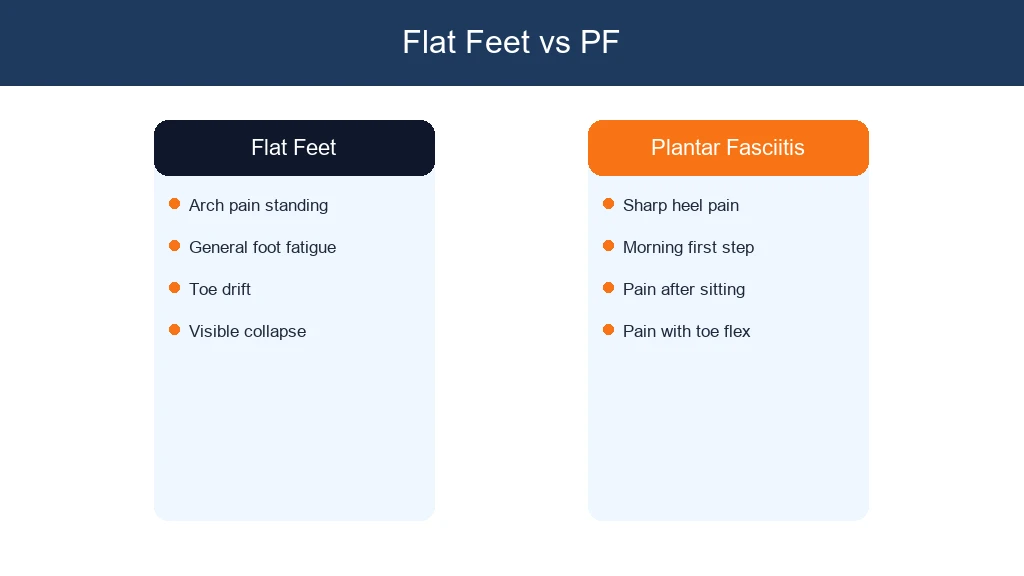
No. Flat feet are a structural condition where the arch has collapsed. Plantar fasciitis is an inflammatory condition of the connective tissue running along the bottom of the foot. However, flat feet are the primary risk factor for developing plantar fasciitis.
Can flat feet cause plantar fasciitis?
Yes, and this is the most common pathway. When the arch collapses, it places constant tension on the plantar fascia. Over time, this tension causes micro-tears and inflammation at the heel attachment point, resulting in plantar fasciitis.
What insoles are best for flat feet and plantar fasciitis?
Insoles with firm, uncompromising arch support that resist compression under body weight. Soft gel insoles will not help because they do not lift the collapsed arch. Look for deep heel cups, semi-rigid construction, and multi-layer support.
How long does it take for plantar fasciitis to heal with flat feet?
With consistent use of arch support insoles, stretching, and activity modification, most people see significant improvement within 6–12 weeks. Complete resolution may take 3–6 months. Without addressing the underlying flat feet, plantar fasciitis tends to become chronic.
Should I stretch or rest plantar fasciitis?
Both, in the right balance. Gentle stretching before standing (especially in the morning) prevents sharp pain and gradually lengthens the tissue. Rest from high-impact activities allows inflammation to subside. Avoid complete immobilization, as the plantar fascia needs controlled movement to heal properly.
Can flat feet plantar fasciitis be cured permanently?
The plantar fasciitis can resolve permanently with consistent management, but the underlying flat feet remain a structural condition. Continued use of arch support insoles and proper footwear prevents recurrence.