Best Carbon Fiber Insoles for Running (2026)
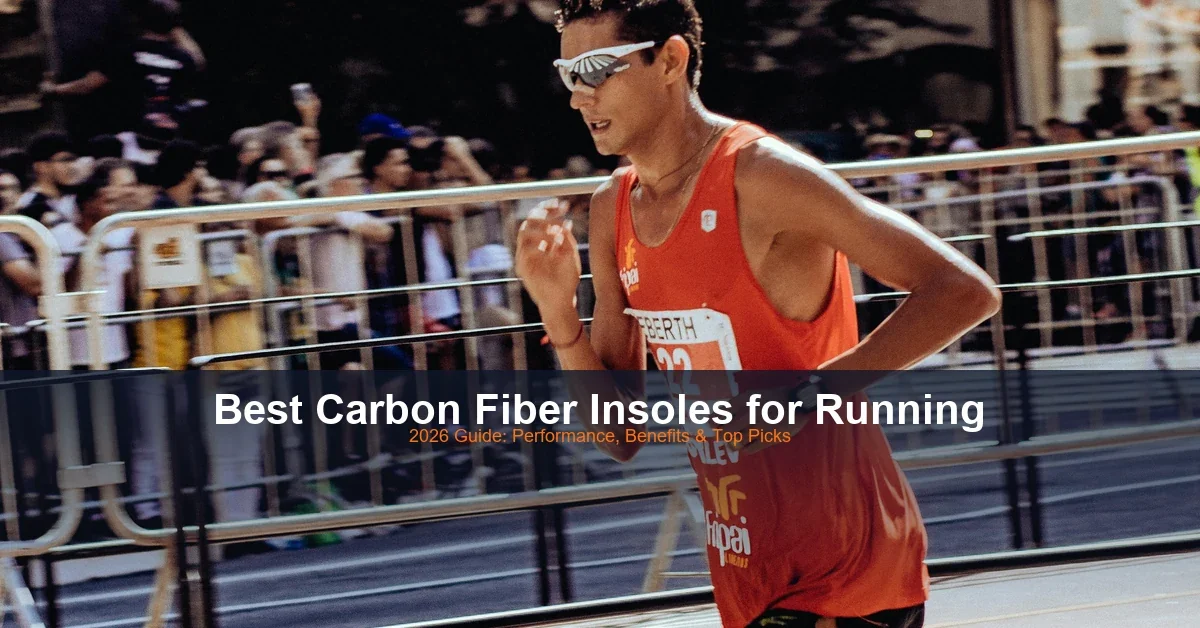
Carbon fiber insoles reduce foot fatigue and improve energy return during runs by combining a rigid carbon fiber plate with strategic cushioning. Whether you are training for a marathon or logging daily miles, the right carbon fiber insole can shave seconds off your split and keep your feet feeling fresher longer.
Key Takeaways
- Carbon fiber insoles use a spring-like plate to store and release energy with each stride, reducing muscle fatigue
- Runners with flat feet or overpronation benefit most from the added arch support and torsional stability
- The best models balance stiffness for performance with enough cushioning for road and trail comfort
- Look for moisture-wicking top layers and trimmable designs when choosing your pair
- Pairing carbon fiber insoles with the right running shoes maximizes both comfort and injury prevention
What Are Carbon Fiber Insoles and How Do They Work
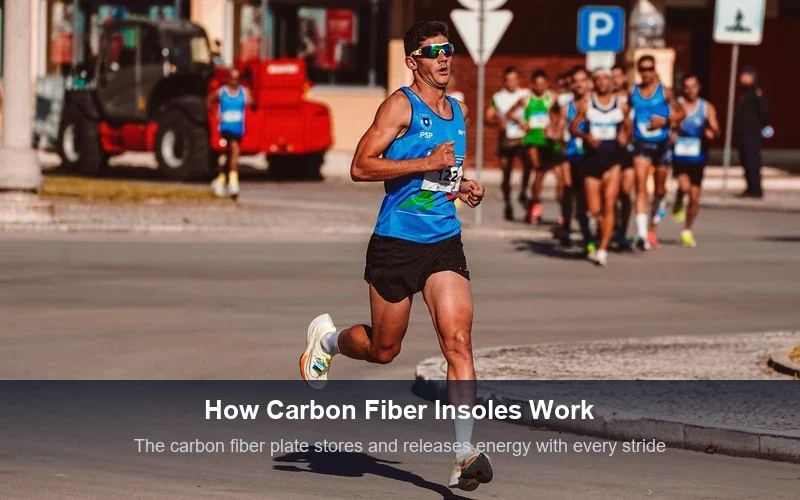
Carbon fiber insoles are a relatively new category in running gear that combines a lightweight carbon fiber plate with foam or gel cushioning. The carbon fiber element acts like a spring, it compresses under load as your foot strikes the ground and then releases that energy during toe-off, propelling you forward more efficiently.
The science behind this is straightforward. When you run, your foot absorbs two to three times your body weight with every stride. A carbon fiber plate helps distribute that force more evenly across the foot while reducing the energy lost to deformation of the midsole. Think of it as a stiff platform that keeps your foot stable and redirects energy into forward motion rather than wasteful compression.
Most carbon fiber running insoles sit directly under your foot inside the shoe, replacing the factory insole.
 They work alongside your shoe’s existing midsole rather than replacing it. This means you get the benefits of a carbon fiber plate without needing to buy a new pair of carbon-plated racing shoes.
Pro Tip
Most carbon fiber insoles are trimmable. Use your current insole as a cutting template and mark the toe area before trimming. A precise fit prevents slipping inside the shoe during runs.
Benefits of Carbon Fiber Insoles for Runners
Improved Energy Return
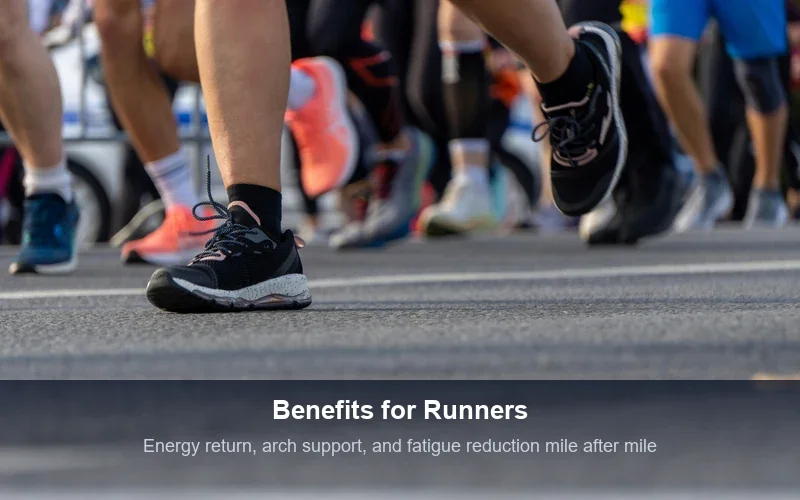
The primary advantage of carbon fiber is its ability to return energy. The American Council on Exercise notes that advanced footwear technologies, including carbon fiber plates, can improve running economy by 2–4 percent by reducing the energy cost of each stride. The plate acts like a loaded spring, storing energy during the stance phase and releasing it during push-off.
Reduced Fatigue in the Feet and Calves
Runners often report reduced calf and arch fatigue when using carbon fiber insoles. The stiff plate reduces the workload on the small muscles of the foot by providing a stable base, allowing the larger muscle groups in the legs to absorb more of the impact. This can be particularly helpful during long runs or marathon training cycles.
Enhanced Arch Support and Stability
Carbon fiber does not compress the way foam does. This means the arch support stays consistent mile after mile, you will not experience the gradual flattening that happens with standard foam insoles over the course of a long run. For runners with flat feet or fallen arches, this consistent support is a game-changer.
Shock Absorption Without Bulk
Carbon fiber insoles absorb impact through the flex of the plate rather than through thick layers of foam. This keeps the insole thin and lightweight while still providing meaningful shock attenuation. Many runners find they can maintain better ground feel with carbon fiber insoles compared to thick cushioned alternatives.
Who Should Use Carbon Fiber Insoles for Running
Distance Runners and Marathoners
If you are logging 20-plus miles per week, your feet take a beating. Carbon fiber insoles help maintain form late in runs when fatigue sets in. The energy return keeps your stride efficient when your legs are tired, which is exactly when most running form breakdowns occur.
Runners with Flat Feet or Overpronation
The rigid carbon fiber plate provides a level of arch support that foam insoles cannot match. If you have flat feet, the insole prevents excessive pronation by giving your arch a firm platform to push against. This reduces strain on the plantar fascia and helps keep your knees and hips aligned. Many elite athletes manage flat feet successfully, NBA players with flat feet have competed at the highest level using the same type of rigid support that carbon fiber insoles provide.
Speed-Focused Runners
If you are chasing personal records or racing regularly, carbon fiber insoles are worth serious consideration. The improvement in running economy, even at 2 percent, can be the difference between a PR and a plateau. Many competitive runners use carbon fiber insoles as a training tool to prepare their legs for the feel of carbon-plated racing shoes.
Runners Recovering from Injury
Runners returning from plantar fasciitis, shin splints, or stress fractures benefit from the stability and impact distribution of carbon fiber insoles. However, it is important to transition gradually, jumping straight into full training with carbon fiber insoles can overload different muscle groups that are not yet conditioned.
Before You Start
Carbon fiber insoles change your foot’s biomechanics. Start with short runs of 2–3 miles to let your feet and calves adapt. If you experience sharp pain, numbness, or discomfort that persists beyond the first week, consult a podiatrist before continuing use.
How to Choose the Best Carbon Fiber Insoles for Running
Stiffness Level
Carbon fiber insoles come in different stiffness grades. Softer plates are more forgiving for everyday training but offer less energy return. Stiffer plates provide maximum propulsion but require more adaptation time. Most runners should start with a medium-stiffness insole and progress to stiffer options as their feet adapt.
Cushioning Type
Some carbon fiber insoles pair the plate with EVA foam, others use polyurethane or gel. EVA is lighter and more responsive but compresses faster. Polyurethane lasts longer but adds weight. Gel inserts provide the best shock absorption but reduce the energy-return benefits of the carbon fiber plate. For runners who prioritize cushioning over stiffness, pairing carbon fiber insoles with silicone insoles in the heel area can offer balanced comfort and performance.
Fit and Trimmability
A proper fit is critical. The insole should sit flat in your shoe without curling up at the edges. Most quality carbon fiber insoles are trimmable, but check the manufacturer’s guidelines, some have specific trim lines that maintain the structural integrity of the plate.
Breathability and Moisture Management
Running generates heat and sweat. Look for insoles with a moisture-wicking top layer, materials like bamboo charcoal fabric or breathable mesh help keep your feet dry and reduce blister risk during long runs.
Top Carbon Fiber Insole Features to Look For
- Full-length carbon fiber plate, provides consistent stiffness from heel to toe rather than a partial plate that only benefits certain parts of your stride
- Deep heel cup, stabilizes the rearfoot and reduces heel slippage inside the shoe during fast runs
- Metatarsal pad, relieves forefoot pressure and helps with toe-off efficiency, especially useful for sprinters and midfoot strikers
- Anti-odor treatment, bamboo charcoal or silver-ion layers prevent bacterial buildup during sweaty training sessions
- Low stack height, keeps your foot closer to the ground for better stability and proprioception, reducing ankle roll risk on uneven terrain
Best Carbon Fiber Insoles for Different Running Styles
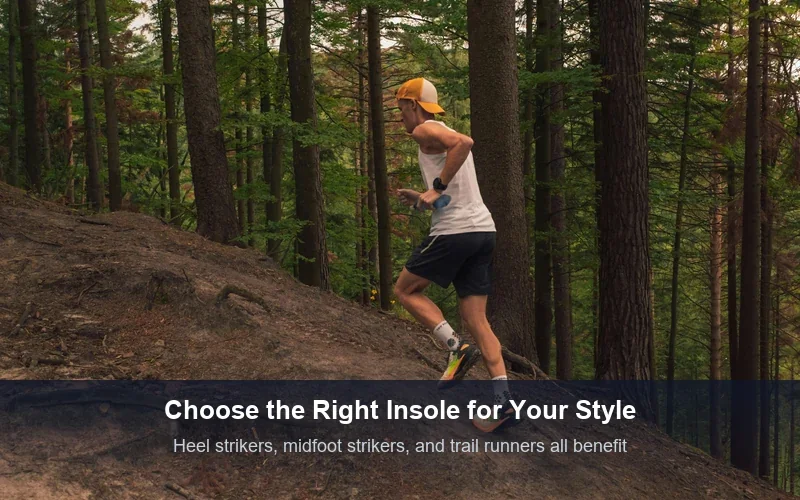
For Heel Strikers
Heel strikers need extra cushioning at the rear of the insole combined with the stiffness of the carbon fiber plate. Look for models with a thicker heel section and a gradual transition zone that guides your foot through the gait cycle without jarring your knees.
For Midfoot and Forefoot Strikers
If you land on your midfoot or forefoot, prioritize insoles with a responsive forefoot section. The carbon fiber plate should flex noticeably at the front to give you a springy toe-off. A metatarsal pad becomes even more important for these strike patterns.
For Trail Runners
Trail running demands more lateral stability than road running. Look for carbon fiber insoles with a wider platform and reinforced edges that prevent rolling on uneven ground. Trail-specific models often use a slightly softer carbon fiber blend to accommodate variable terrain. The same lateral stability principles that make insoles for volleyball effective for court sports also apply to technical trail running, your foot needs to stay planted during quick direction changes.
How to Transition to Carbon Fiber Insoles
Switching to carbon fiber insoles is not an overnight process. Your feet, calves, and achilles tendons need time to adjust to the increased stiffness and altered biomechanics. Follow a gradual transition plan over two to three weeks.
Start by wearing the insoles for short walks of 30 minutes during the first two days. Then progress to easy runs of 2–3 miles for the next three to four runs. Increase distance by no more than 10 percent per week after that. This gradual approach aligns with American College of Sports Medicine guidelines for safely introducing rigid support devices into a training routine. Pay attention to any new aches, tight calves are normal during adaptation, but sharp pain is not.
Most runners report full adaptation within two to three weeks. Once adapted, many find they cannot go back to standard insoles because the difference in energy return and comfort is that noticeable.
Carbon Fiber Insoles vs. Carbon-Plated Running Shoes
Many runners wonder whether carbon fiber insoles are redundant if they already own carbon-plated running shoes. Carbon-plated shoes embed the plate in the midsole for that specific shoe’s geometry, while carbon fiber insoles let you add a carbon plate to any shoe in your rotation, daily trainers, recovery shoes, and trail shoes alike.
The best approach for most runners is to use carbon fiber insoles in training shoes and save carbon-plated racing shoes for race day. This gives you the biomechanical benefits during training without wearing out your expensive race-day shoes. As Runner’s World has noted in their testing, the two technologies complement each other rather than overlap.
Common Mistakes When Using Carbon Fiber Insoles
Jumping into Full Training Too Quickly
The most common mistake is treating carbon fiber insoles like any other insole. They change how your foot functions, and ramping up mileage too fast is a recipe for achilles tendonitis or calf strains.
Ignoring Fit Issues
An insole that is too long will curl at the toe and create pressure points. One that is too narrow may cause your foot to slide off the edge during lateral movements. Always test the fit before committing to a full run.
Using Worn-Out Insoles
Carbon fiber plates are durable, but the cushioning layers wear out. Replace your insoles when the foam compresses noticeably or when the plate starts to delaminate, typically every 400 to 500 miles.
Conclusion
Carbon fiber insoles offer a genuine performance benefit for runners of all levels. The energy return, consistent arch support, and fatigue reduction make them a smart upgrade for anyone serious about their running. Whether you are training for your first 5K or aiming for a Boston Marathon qualifying time, the right pair of carbon fiber insoles can help you run stronger and recover faster.
For runners who also need targeted arch support or deal with flat feet, pairing carbon fiber insoles with dedicated arch support insoles can provide the best of both worlds, the energy return of carbon fiber with the structural support your feet need for healthy running mechanics.
Play harder, recover faster.
Whether you are hitting the pavement or the trail, the right insoles make every stride better. Explore our full collection of performance insoles designed for active feet.
Free returns on all orders · 30-day money-back guarantee
Frequently Asked Questions
Are carbon fiber insoles worth it for running?
Yes, for most runners. The energy return and fatigue reduction provide measurable benefits, especially for runners logging 15-plus miles per week. The key is choosing the right stiffness level and allowing your body time to adapt. At $30–$60 per pair, carbon fiber insoles cost far less than carbon-plated racing shoes while offering similar benefits across your entire shoe rotation.
Can I use carbon fiber insoles in any running shoe?
Most carbon fiber insoles are designed to fit standard running shoes and are trimmable for precise fit. They work best in shoes with removable insoles and a neutral to moderate drop. Shoes with very aggressive arch shapes or molded footbeds may not accommodate them well.
How long do carbon fiber insoles last?
The carbon fiber plate itself lasts for years, but the foam cushioning bonded to it typically compresses after 400–500 miles of running. Replace your insoles when you notice decreased cushioning, visible compression marks, or any delamination between the plate and foam layers.
Do carbon fiber insoles help with shin splints?
They can. Shin splints are often caused by excessive pronation and poor shock absorption. The stiff carbon fiber plate reduces the workload on the tibialis anterior muscle by providing a stable platform and distributing impact forces more evenly. Many runners find relief from shin splints after transitioning to carbon fiber insoles.
Do I need to break in carbon fiber insoles?
Yes. Expect a 1–2 week adaptation period where your calves and achilles tendons adjust to the increased stiffness. Start with short walks and easy runs, gradually increasing intensity. Tightness in the calves is normal during this period, but sharp pain is not, reduce usage if you feel joint or bone pain.
Can carbon fiber insoles replace custom orthotics?
No. Carbon fiber insoles provide excellent arch support and energy return, but they are not a substitute for custom orthotics prescribed by a podiatrist for specific medical conditions. If you have a diagnosed foot condition, consult your healthcare provider before switching to carbon fiber insoles.