Do Height Insoles Work? An Honest Look at Shoe Lifts for Height
The short answer: yes, height insoles work. They add 1–3 inches of visible height the moment you put them in your shoes. But there are limitations that honest reviews need to address. They require compatible shoes, your body needs time to adjust, and the maximum height depends on your footwear. This guide breaks down what height insoles can and cannot do, so you can decide if they are right for you.
Key Takeaways
- Height insoles add immediate, visible height — the effect is instant when you wear them and reversible when you remove them
- They work best in shoes with removable insoles and adequate depth: sneakers, boots, and lace-up dress shoes
- Comfort depends on lift height and insole quality — 1–2 inches is comfortable for all-day wear; 2–3 inches requires adjustment
- Height insoles do not permanently change your height, your posture, or your bone structure
- Over 75% of first-time users report satisfaction when they choose the right height and follow the adjustment period
Do Height Insoles Actually Add Height?
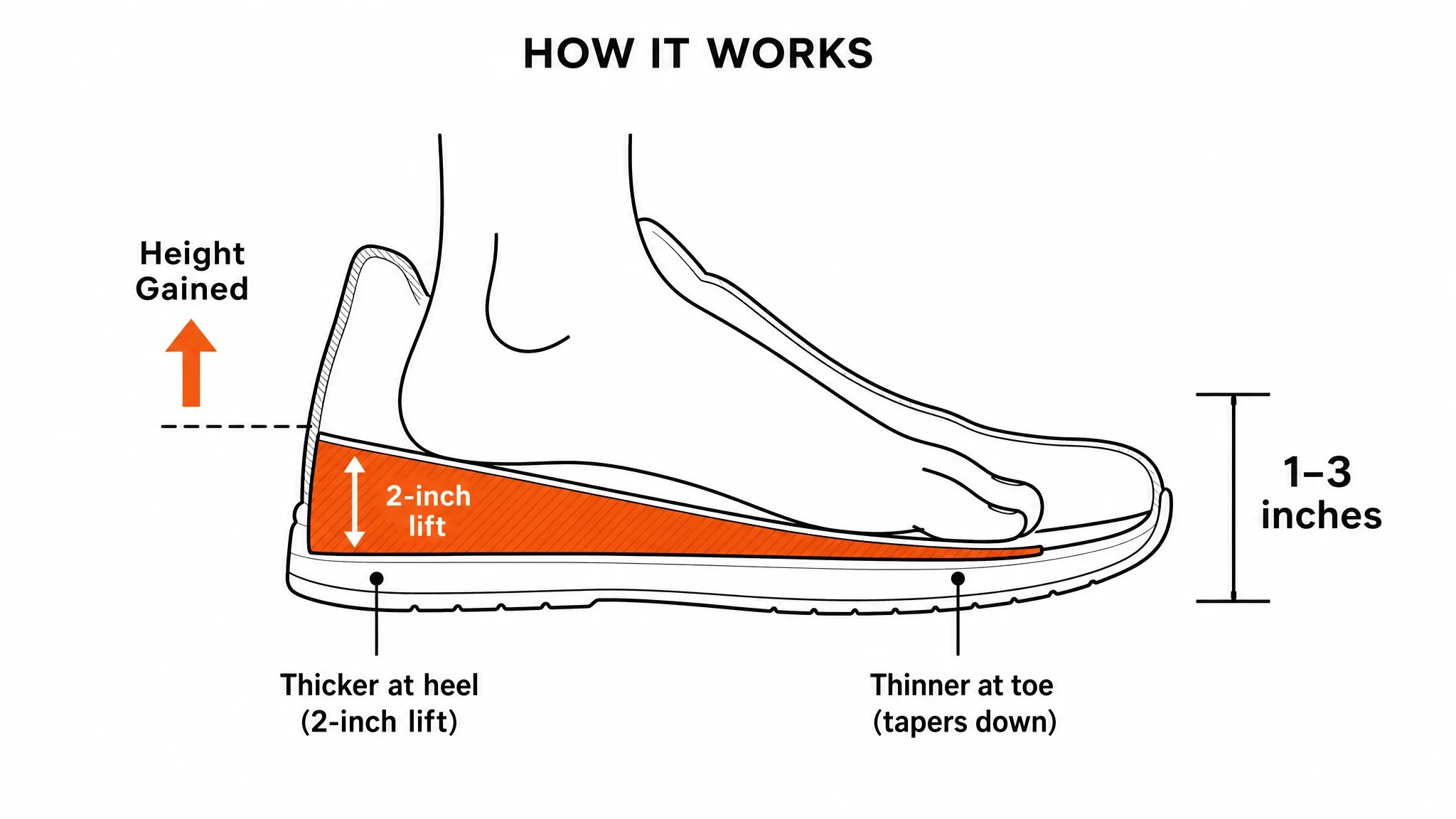
Yes. Height insoles add height by elevating your heel inside your shoe. The effect is immediate and measurable. If you measure your height without insoles and then put them in your shoes, you will be taller.
The mechanism is straightforward: your shoe’s original flat insole is removed and replaced with a wedge-shaped insole that is thicker at the heel. Your foot sits higher inside the shoe, and your heel position rises relative to the ground.
This is not an illusion or a trick — it is the same principle as wearing any shoe with a heel. Boots with a 1-inch heel make you 1 inch taller. Dress shoes with a heel do the same. Height insoles simply add additional heel height inside your existing shoes.
The amount of height you gain depends on the insole’s lift height, not on your body weight, arch type, or any other factor. A 2-inch insole adds 2 inches of height regardless of who wears it, provided the shoe has enough depth to accommodate it.
The Real Limitations of Height Insoles
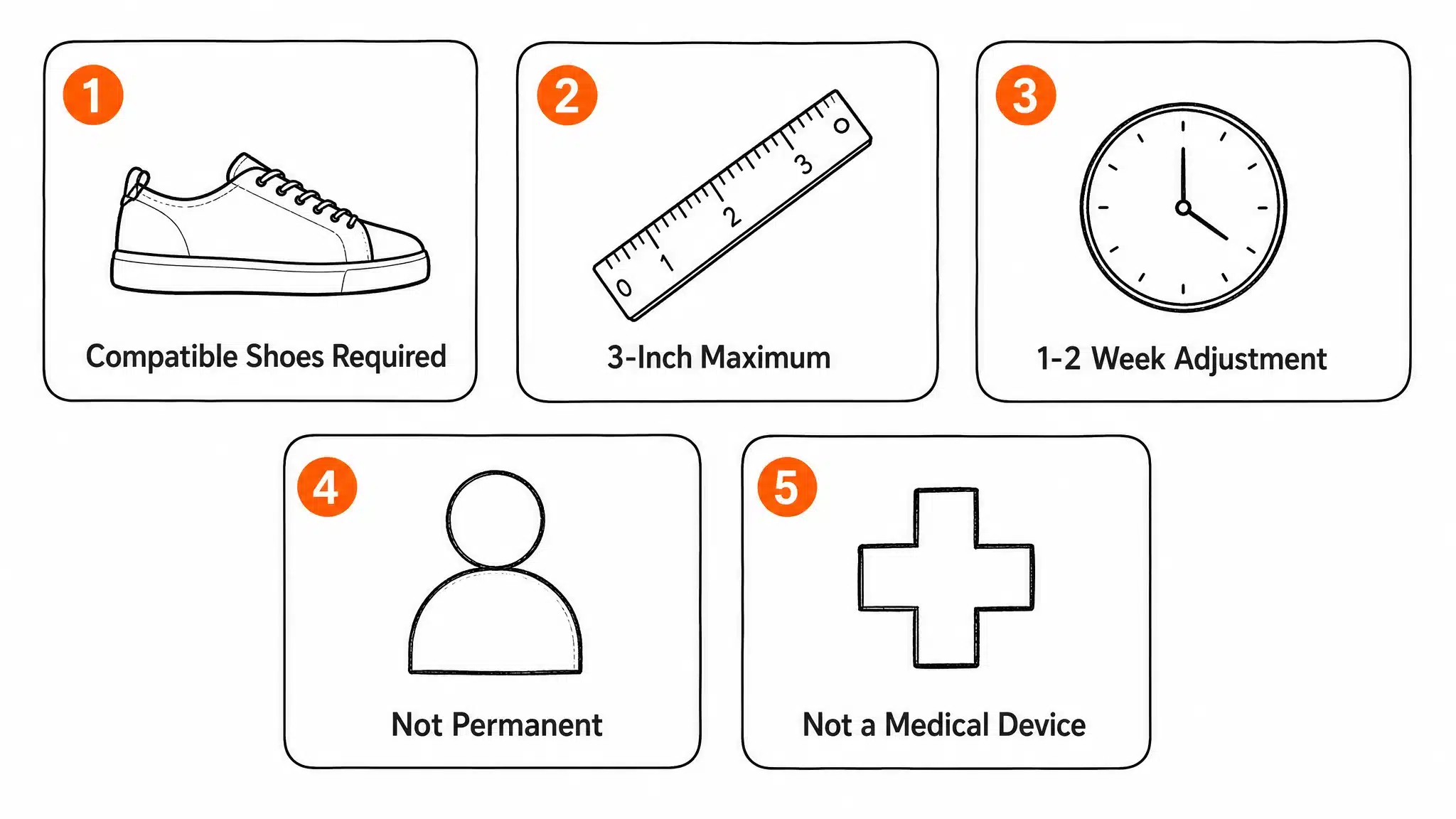
Honest reviews acknowledge what height insoles cannot do. Here are the real limitations:
They Require Compatible Shoes. This is the #1 limitation. Height insoles only work in shoes with removable original insoles and adequate internal depth. Sneakers and boots almost always work. Some dress shoes work. Loafers and slip-ons often do not. Always check your shoes before buying.
They Have a Maximum Height. Three inches is the practical maximum for most shoes. Some deep boots can handle slightly more, but 3 inches is the realistic ceiling. If you need more than 3 inches, you need elevator shoes or platform shoes.
They Require an Adjustment Period. Your calf muscles and balance have adapted to your natural heel position. Raising your heel by 1–3 inches changes this. Expect 1–2 weeks of adjustment, during which your calves may feel tight and your walking feel slightly different.
They Do Not Permanently Change Your Height. This should be obvious, but it is worth stating. Height insoles are a temporary wearable solution, like glasses for vision. They work while you wear them. Your height returns to normal when you take them out.
They Do Not Fix Posture or Health Issues. Height insoles are a cosmetic product, not a medical device. They will not correct your posture, relieve back pain, or treat any medical condition. If you have foot, knee, or back problems, consult a podiatrist.
Quick Note
The #1 reason people say height insoles “don’t work” is that they bought the wrong product. Cheap $10 foam insoles lack the structural support to maintain their shape. Insoles that are too thick for the shoe make walking uncomfortable. Insoles without adjustable layers lock you into one height. Quality adjustable insoles from a reputable brand eliminate most negative experiences.
Who Do Height Insoles Work Best For?
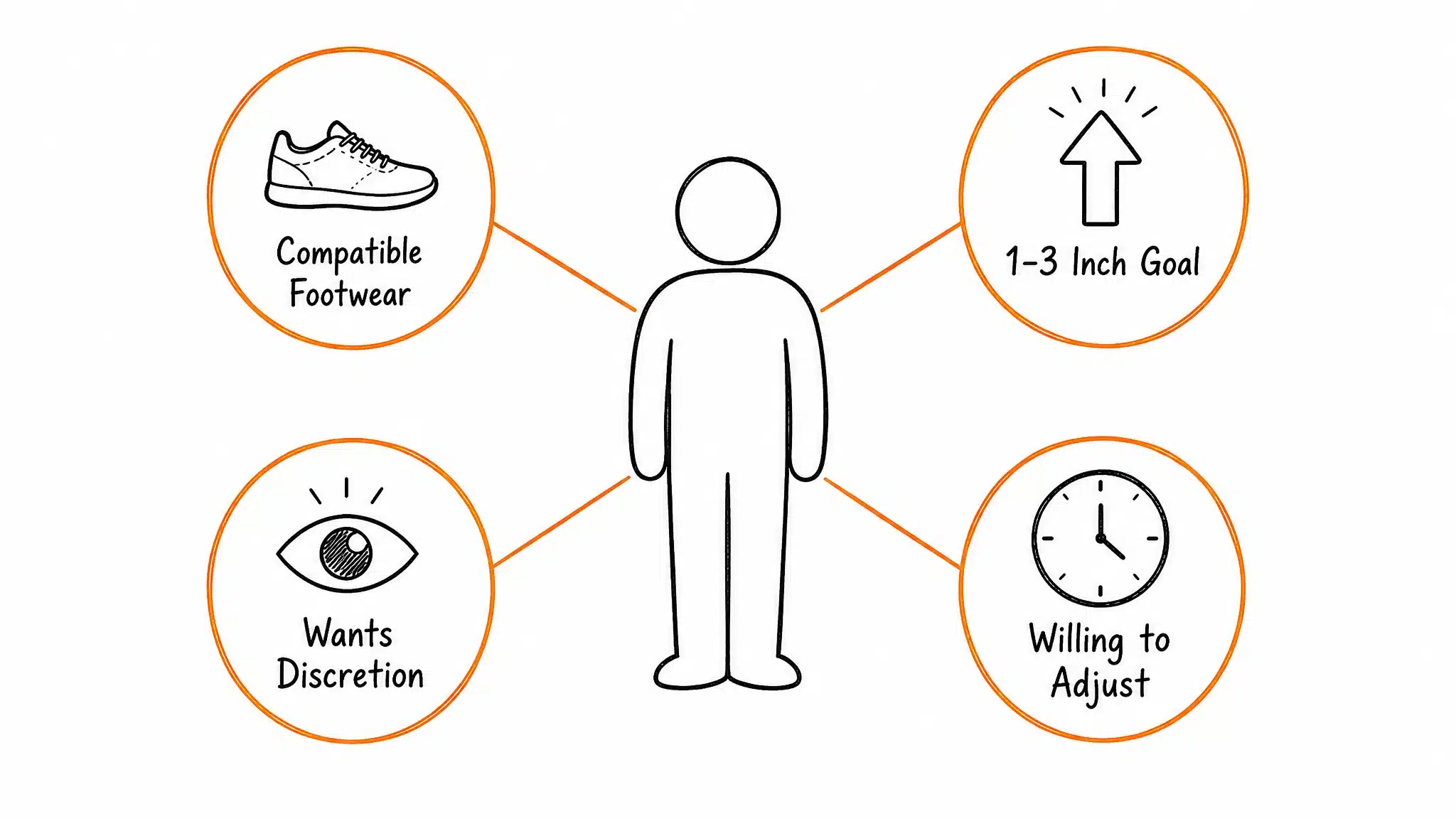
Height insoles are not for everyone. They work best for people who match this profile:
You have compatible shoes. If your daily footwear includes sneakers, boots, or lace-up dress shoes with removable insoles, height insoles will work well for you. If you primarily wear loafers, sandals, or slip-ons, they will not.
You want 1–3 inches of height. This covers most people. If you need 4+ inches, height insoles alone will not get you there.
You want discretion. Height insoles are invisible. If you want people to know you are wearing height boosters, platforms are a better choice.
You are willing to adjust. The 1–2 week adjustment period is real. People who rush into maximum height on day one often have a bad experience. People who start gradually are almost always satisfied.
You value versatility. If you want height across multiple pairs of shoes, insoles are the best option. If you want a single consistent pair for every outfit, elevator shoes may be simpler.
Do Height Insoles Work for Short People?
This is the most common use case, and the answer is yes — with realistic expectations.
Height insoles are most effective for people who are already of average or slightly below-average height and want a modest boost. A 5’7″ person who adds 2-inch insoles becomes 5’9″ — a noticeable difference that moves them closer to average male height.
For very short individuals (under 5’0″), 3 inches of lift may not feel like enough relative to their goals. In these cases, height insoles can still help, but combining them with other strategies (shoe choice, posture) maximizes the effect.
The most important factor is the ratio of height gain to your starting height. Two inches on a 5’7″ person is a 3% increase. Two inches on a 5’0″ person is a 3.3% increase — proportionally similar. The visual effect is comparable.
Are Height Insoles Comfortable?
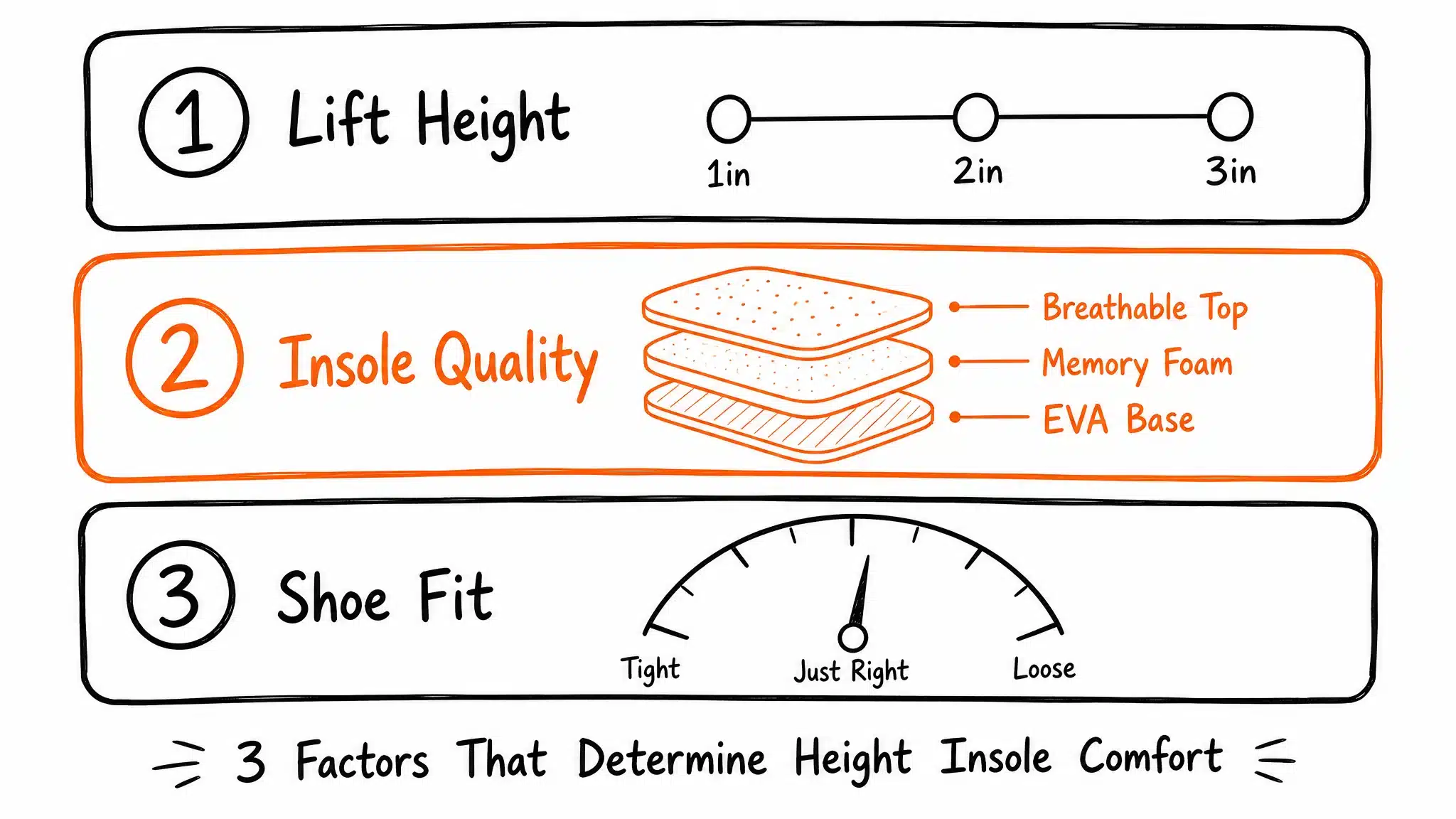
Comfort is the second most common concern after effectiveness. Here is what determines comfort.
Lift Height. At 1–1.5 inches, most people find height insoles indistinguishable from regular insoles after a short adjustment. At 2 inches, the difference is noticeable but comfortable in the right shoes. At 3 inches, your feet will feel the extended position, and you will need the full adjustment period.
Insole Quality. Cheap insoles use hard foam or plastic that causes foot fatigue. Quality insoles use layered construction: a firm EVA base for lift, a memory foam middle for comfort, and a breathable top layer. The difference between a $10 insole and a $34 insole is significant.
Shoe Fit. This may be the most important factor. If the shoe is too tight after inserting the insole, it will be uncomfortable regardless of the insole’s quality. Your shoe must have enough depth to accommodate the lift without compressing your foot.
Individual Factors. People with very high arches, flat feet, or pre-existing foot conditions may find height insoles less comfortable than people with neutral feet. If you have foot conditions, consult a podiatrist before using significant heel lift.
Read our detailed height increasing insoles guide for more on comfort expectations.
Important
If you feel sharp pain — not muscle tightness or mild discomfort — when wearing height insoles, stop using them. Sharp pain indicates that either the insole does not fit your shoe properly, the lift is too high for your current conditioning, or you have an underlying foot condition that needs professional evaluation. Discontinue use and consult a podiatrist.
What Real Users Say
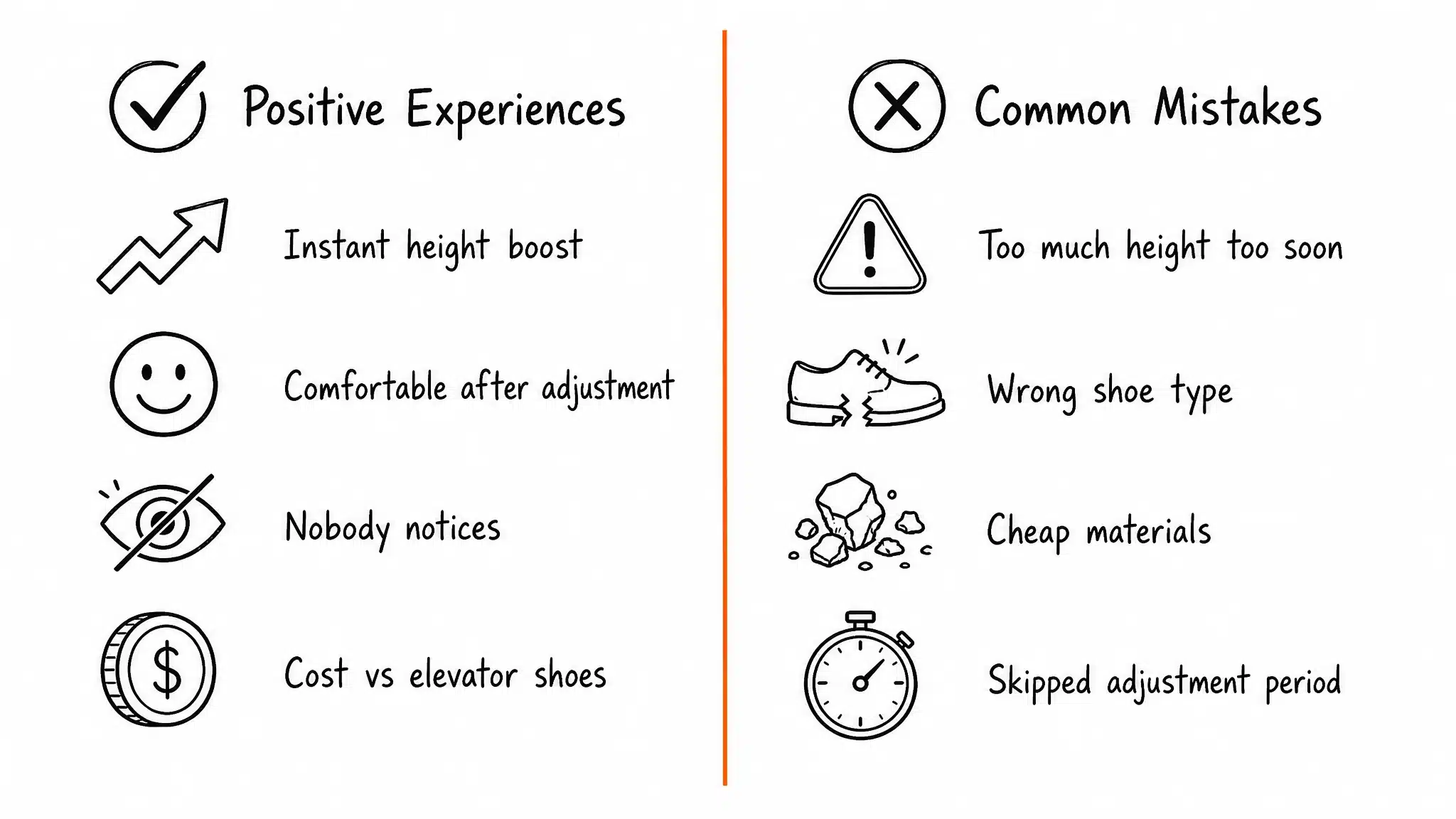
Reviews from actual height insole users reveal consistent patterns:
Positive experiences typically cite:
- Immediate height gain that boosts confidence
- Comfort once adjusted (usually 1–2 weeks)
- Nobody noticing the insoles (discretion works)
- Value vs. expensive elevator shoes
Negative experiences typically cite:
- Buying too much height too soon
- Incompatible shoes (non-removable insoles, shallow fit)
- Cheap materials (hard foam, no cushioning)
- Calf discomfort from skipping the adjustment period
The pattern is clear: height insoles work well when chosen correctly and used properly. Most negative experiences stem from buyer error, not product failure.
Do Height Insoles Work with Arch Support?
Standard height insoles focus on lift, not arch support. However, some height insoles include contoured arch support as part of their design. This is a legitimate differentiator — most budget insoles are flat wedges that provide no arch support.
Height insoles with built-in arch support offer two benefits:
- More comfort for extended wear
- Better foot alignment during walking
This is one reason why quality height insoles outperform budget options. The best height increasing insoles include contoured arches and deep heel cups alongside the lift layers.
Can You Exercise in Height Insoles?
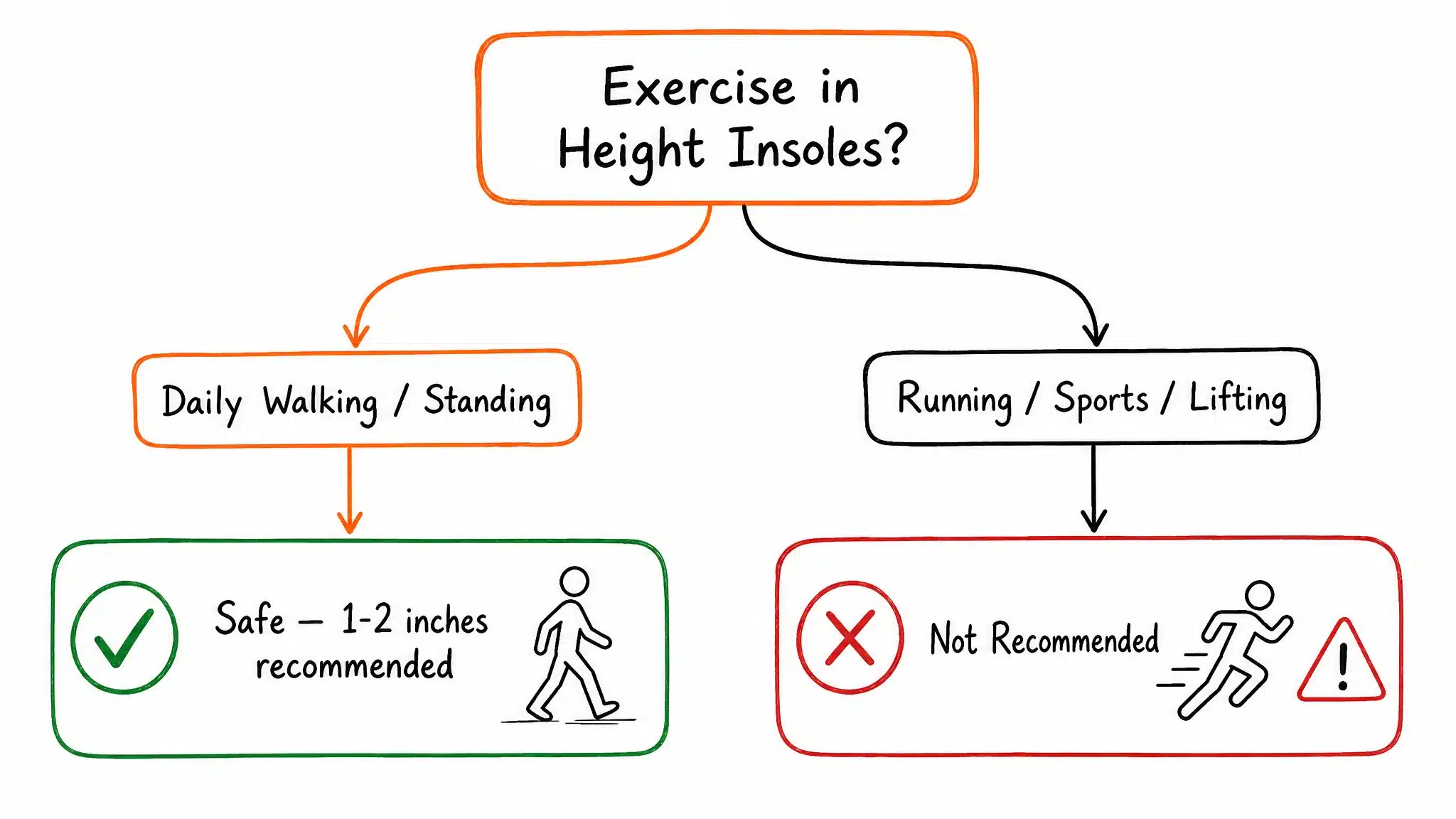
Light activity, walking, and daily movement — yes. Running, sports, and heavy lifting — not recommended.
For daily walking and standing, height insoles at moderate lift (1–2 inches) perform well once you are adapted. For exercise, the elevated heel position changes your biomechanics in ways that can increase injury risk during dynamic movement.
If you want height during workouts, use the lowest lift setting on adjustable insoles and limit activities to walking and light cardio. Remove them for running, sports, or any activity involving quick direction changes.
Conclusion
Do height insoles work? Yes — they add 1–3 inches of immediate, visible height. The effect is real, not an illusion. However, success depends on choosing quality insoles, wearing them in compatible shoes, and respecting the adjustment period.
Height insoles are not a magic solution — they have real limitations around shoe compatibility, maximum height, and adjustment time. But for most people who buy them with realistic expectations, they deliver exactly what they promise: invisible, comfortable height that nobody notices.
Browse the height increasing insoles collection to see the top-rated options with adjustable lift, memory foam comfort, and contoured arch support.
Height insoles that actually work.
Adjustable lift up to 3 inches, memory foam comfort, and invisible design — backed by a 30-day money-back guarantee.
Free returns on all orders · 30-day money-back guarantee
Frequently Asked Questions
Do height insoles actually add height?
Yes. They elevate your heel inside your shoe, adding 1–3 inches of height immediately. The effect is the same as wearing any shoe with a heel — instant and measurable.
Are height insoles comfortable?
Quality height insoles with memory foam top layers are comfortable for all-day wear at 1–2 inches. At 2–3 inches, there is an adjustment period of 1–2 weeks. Cheap foam insoles without cushioning are not comfortable for extended wear.
Do height insoles work in all shoes?
No. They require shoes with removable original insoles and adequate internal depth. Sneakers, boots, and lace-up dress shoes work best. Loafers, slip-ons, and sandals generally do not work.
Do height insoles cause back pain?
For most people, no. Height insoles at 1–2 inches have minimal effect on posture. At 2–3 inches, the heel elevation can affect your lower back if you have pre-existing back conditions. Proper adjustment and core strength minimize any issues.
How long do height insoles last?
Quality height insoles last 6–12 months with daily use. Replace them when the lift layers lose rigidity or the cushioning compresses. Adjustable insoles last longer because you can replace only the worn top layers.
Do height insoles work for flat feet?
Height insoles are designed for height, not arch support. However, some models include contoured arch support alongside the lift. If you have flat feet and want height, look for insoles with both lift and arch support features.