Can Flat Feet Be Corrected? Evidence-Based Answers for Adults and Children
The short answer: it depends on your age. In children, flat feet can often be corrected as the feet develop. In adults, the arch structure is fully formed and cannot be permanently changed — but the pain and symptoms can be managed effectively with the right treatment. This article breaks down what “correction” really means at each age and which treatments deliver results.
Key Takeaways
- Children with flat feet often outgrow the condition naturally, and early intervention with supportive measures can guide proper arch development
- Adults cannot permanently restore a collapsed arch, but orthotic insoles, exercises, and proper footwear effectively eliminate most symptoms
- “Correction” for adults means symptom relief and functional improvement, not structural change — and that is usually enough
- Surgery is rarely needed and is reserved for severe, treatment-resistant cases
- The most effective adult treatment combines arch support insoles with targeted strengthening exercises
What Does “Correcting” Flat Feet Actually Mean?
Before answering whether flat feet can be corrected, it helps to define what correction means. For many people searching this question, correction means eliminating pain and restoring normal function — not necessarily rebuilding the arch to textbook height.
Medically, flat feet (pes planus) involve a collapse of the medial longitudinal arch, causing the foot to roll inward during weight-bearing activities. The degree of collapse varies. Some people have flexible flat feet — the arch disappears only when standing and returns when sitting. Others have rigid flat feet, where the arch stays flat regardless of position.
For flexible flat feet, the prognosis is excellent. For rigid flat feet, the approach shifts toward managing underlying causes like tendon dysfunction or arthritis. The right treatment depends entirely on which type you have and how old you are.
Can Flat Feet Be Corrected in Children?
The answer here is most encouraging. Children’s feet are still developing, and their bones, tendons, and ligaments are more adaptable than adults’. Many children who present with flat feet will develop normal arches as they grow.
A study published in the Journal of Bone and Joint Surgery found that approximately 90% of children with flexible flat feet eventually develop normal arches without any intervention. The arch typically forms between ages 3 and 8 as the foot’s supporting structures strengthen.
For children who do need support, the options include:
Supportive Footwear. Children with flat feet benefit from shoes with firm heel counters and good arch support. Avoid soft, unsupportive shoes during early development.
Orthotic Insoles for Children. Pediatric arch support insoles can help guide proper foot alignment during growth. These are typically softer than adult orthotics and focus on positional support rather than correction.
Stretching and Strengthening. If tight calf muscles contribute to the flat foot position, daily stretching exercises can relieve tension and allow the foot to develop more naturally.
Most children outgrow flat feet with or without treatment. When intervention is needed, it is usually supportive rather than corrective — helping the foot develop properly rather than forcing it into a position.
Can Flat Feet Be Corrected in Adults?
For adults, the answer requires more nuance. Once your foot structure is fully developed — typically by the late teens — the bones and ligaments are set. You cannot permanently rebuild a collapsed arch in the same way a child can.
However, and this is the critical point, you do not need to permanently change your arch to eliminate flat feet pain. The goal of adult treatment shifts from structural correction to functional management. Adults can achieve full symptom relief through:
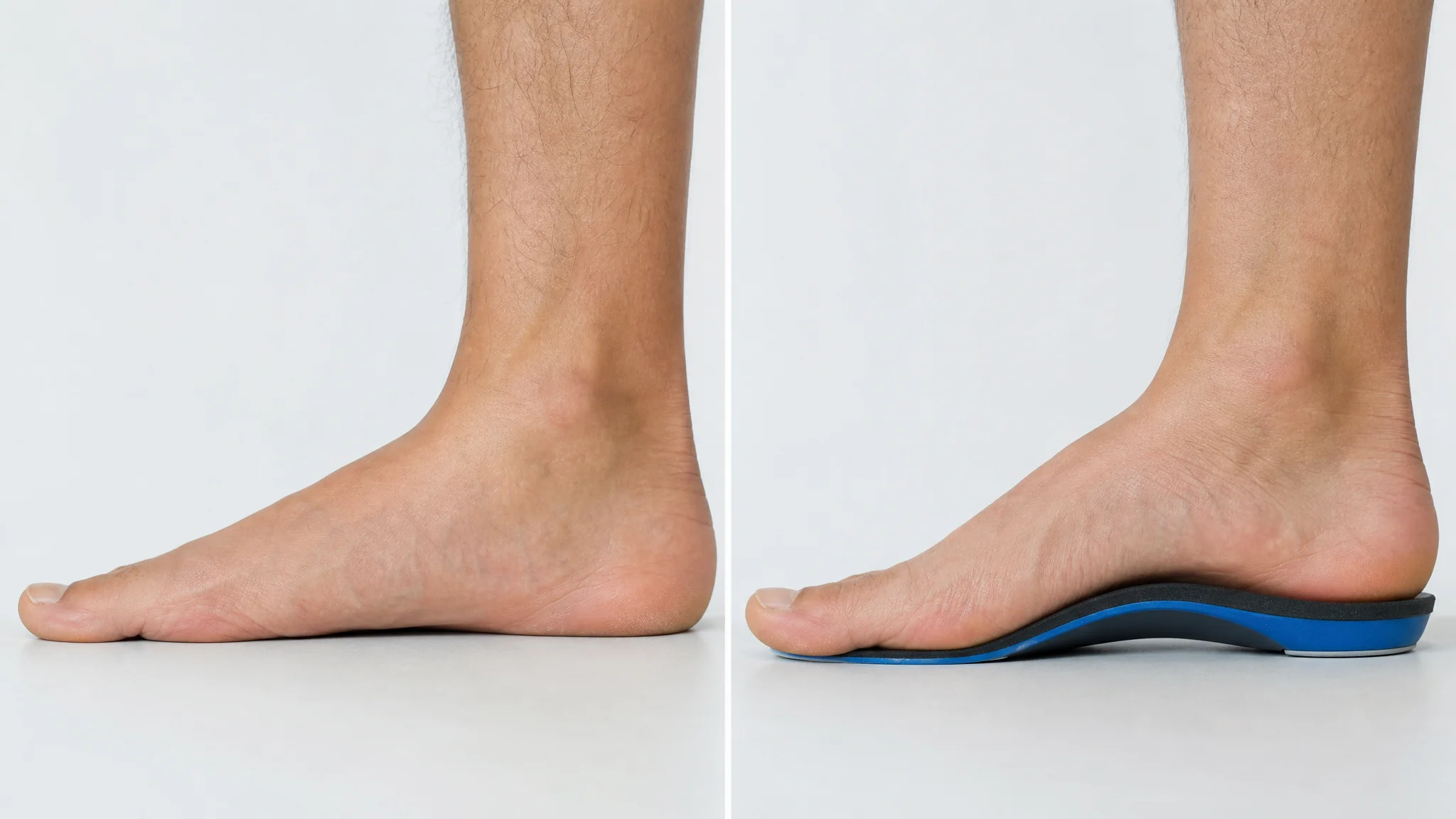
Arch Support Insoles. Orthotic insoles lift the arch into a more neutral position during weight-bearing activities. While the arch returns to its collapsed position when the insoles are removed, consistent use throughout the day prevents the pain and strain caused by overpronation.
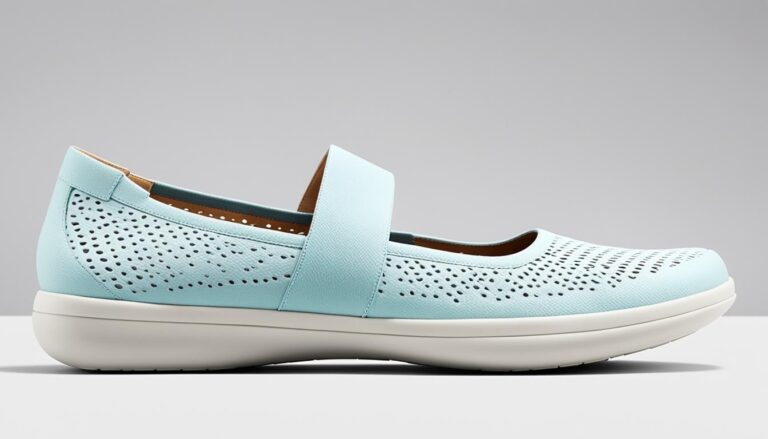
Supportive Footwear. Shoes with motion control features and firm arch support reduce the workload on the posterior tibial tendon and prevent overpronation.
Exercise Therapy. Strengthening the muscles around the foot and ankle improves stability and reduces strain on the arch. Stronger calves, tibials, and intrinsic foot muscles help the foot function more efficiently even with a collapsed arch.
A 2020 review in the Journal of Orthopaedic & Sports Physical Therapy concluded that conservative treatments — particularly orthotics combined with exercise — significantly reduced pain and improved function in adults with flat feet, even though the arch structure itself did not change.
Good to Know
The term “correction” in adult flat feet treatment is misleading. Think of it like wearing glasses — the lenses correct your vision while you wear them, but your eyes haven’t changed. Orthotic insoles work the same way. They correct your foot alignment while you wear them, and that consistent correction prevents the chain of pain that flat feet cause.
Flat Feet Treatment Options: What Actually Works
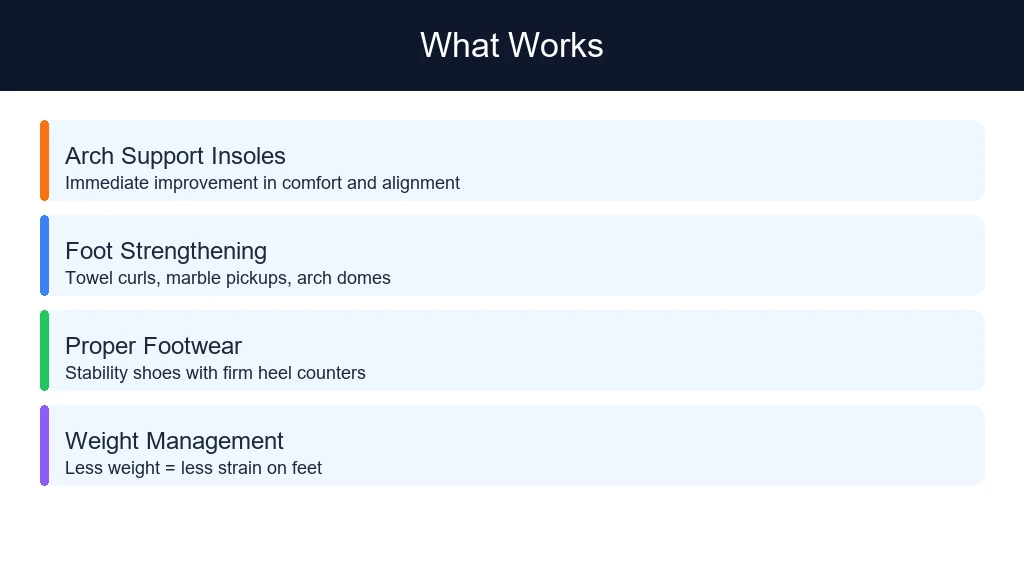
Whether you are managing flat feet for yourself or your child, treatment falls into a few proven categories.
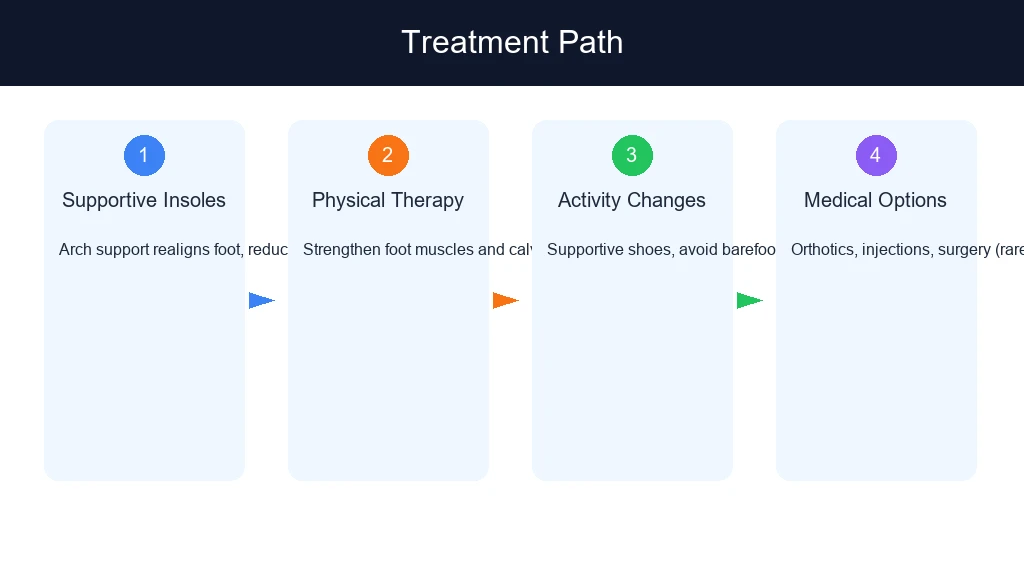
Orthotic Insoles. This is the most effective single treatment for adult flat feet. Quality orthotic insoles provide rigid arch support that prevents overpronation, reduces strain on the plantar fascia, and realigns the lower body. Look for insoles with firm arch support, a deep heel cup, and medium-to-rigid flexibility. The best flat feet and fallen arches insoles provide the same level of support as custom orthotics at a fraction of the cost.
Physical Therapy. A physical therapist can assess your gait, identify muscle weaknesses, and prescribe exercises specific to your condition. This is particularly valuable if you have posterior tibial tendon dysfunction.
Activity Modification. Reducing high-impact activities, avoiding prolonged standing on hard surfaces, and transitioning gradually to new exercise routines all help prevent flare-ups.
Weight Management. Excess body weight increases the load on your arches. Even modest weight loss can reduce flat feet pain significantly.
Do Orthotics Fix Flat Feet?
This is one of the most common questions about flat feet treatment, and the answer depends on how you define “fix.”
Orthotic insoles do not permanently change the structure of your foot. If you wear orthotics for a year and then stop, your arch will still be flat. But orthotics do fix the problem — the pain, the overpronation, the knee and back strain — by correcting alignment while you wear them.
Think of orthotics as a functional correction. They:
– Reduce overpronation immediately
– Relieve strain on the plantar fascia and Achilles tendon
– Align the knee and hip joints
– Prevent the chain reaction of pain that flat feet trigger
For most adults, this functional correction is all the “fix” they need. Custom orthotics from a podiatrist cost $300–$600 and are molded to your feet. Over-the-counter orthotic insoles, like those on the RoamingFeet range, cost significantly less and use engineering principles — firm arch support, deep heel cups, and semi-rigid construction — to achieve the same biomechanical effect.
Important
Not all “orthotic” insoles are created equal. Soft gel insoles and cushioned insoles marketed as orthotic but lacking rigid arch support will not correct overpronation. True orthotic insoles for flat feet must resist compression under body weight. If you can squeeze the arch flat with your fingers, it will not support you.
Flat Feet Exercises That Help
While exercise alone cannot permanently rebuild an adult arch, targeted strengthening and stretching significantly reduces pain and improves foot function. These exercises are designed to support the arch by strengthening the muscles and tendons that control foot position.
Calf Stretch (Gastrocnemius and Soleus). Stand facing a wall with one leg forward and one back. Keep the back leg straight and heel on the floor. Hold for 30 seconds. Repeat with the back knee slightly bent to target the deeper calf muscle. Tight calves pull the heel up, flattening the arch — releasing them reduces strain immediately.
Towel Curls. Place a towel on the floor. Sit in a chair and use your toes to scrunch the towel toward you. Repeat 10–15 times per foot. This strengthens the intrinsic foot muscles that support the arch from below.
Heel Raises. Stand on the edge of a step. Slowly raise onto your toes, then lower below the step level. This strengthens the calves and posterior tibial tendon — the main support structure of the arch.
Short Foot Exercise. While sitting or standing, keep your toes flat on the ground and contract the muscles to shorten the arch without curling your toes. Imagine pulling the ball of your foot toward your heel. Hold for 5 seconds, relax, and repeat.
Ankle Inversion with Resistance Band. Sit with your leg extended. Loop a resistance band around the inside of your foot and pull inward against the resistance. This targets the posterior tibial tendon directly.
For best results, perform these exercises daily and combine them with arch support insoles during daily activities. The exercises strengthen the supporting muscles; the insoles maintain proper alignment during the rest of the day.
For those who also squat or lift, our guide to squatting with flat feet covers form adjustments and support strategies for the gym.
When Surgery Is Considered
Surgery for flat feet is rare and reserved for severe cases that have not responded to months of conservative treatment. Candidates typically have rigid flat feet, significant posterior tibial tendon dysfunction, or arthritis-related deformities that cause constant pain.
Surgical options include tendon repair, osteotomy (cutting and realigning bone), or fusion of specific foot joints. Recovery is lengthy — often 6–12 months — and success rates vary.
The vast majority of flat feet cases never reach this point. With proper arch support, exercise, and activity management, most people achieve full symptom relief without ever considering surgery.
Conclusion
Can flat feet be corrected? For children, yes — the developing foot often responds well to supportive intervention. For adults, the arch itself will not change, but the pain and dysfunction absolutely can be corrected. Orthotic insoles, targeted exercises, and proper footwear work together to eliminate symptoms and restore normal function.
The most effective starting point for most adults is a quality pair of arch support insoles. They provide immediate relief, correct overpronation, and prevent the knee and back pain that flat feet cause downstream. Explore the best flat feet and fallen arches insoles to find the right support for your needs.
Ready to correct flat feet pain?
Our ComfortMax insoles provide orthotic-level arch support for flat feet — without the $300+ price tag of custom orthotics.
Free returns on all orders · 30-day money-back guarantee
Frequently Asked Questions
Can flat feet be corrected with exercise?
Exercise strengthens the muscles around the arch but cannot permanently change bone structure in adults. For children whose feet are still developing, exercise combined with supportive footwear may help guide proper arch formation.
At what age can flat feet be corrected?
Children typically develop natural arches between ages 3 and 8. If flat feet persist past age 10, the arch structure is largely set. Adult treatment focuses on managing symptoms rather than structural correction.
Do orthotic insoles permanently fix flat feet?
No. Orthotics correct alignment and eliminate pain while you wear them, but the arch returns to its collapsed position when they are removed. For most adults, this functional correction is sufficient for a pain-free life.
Can flat feet get worse with age?
Yes. The posterior tibial tendon weakens with age, which can cause previously mild flat feet to become more pronounced and painful. This is why adults over 40 often develop flat feet they never had before.
Is flat feet surgery worth it?
Surgery is a major decision with a long recovery period and variable outcomes. It is only recommended after months of conservative treatment has failed to provide relief. Most people with flat feet never need surgery.
How long does it take to correct flat feet in children?
Most children who outgrow flat feet do so naturally by age 8–10. For those who need intervention, consistent use of supportive insoles and proper footwear during childhood can guide arch development over several years.