Flat Feet and Running: Shoes & Insoles Guide for Pain-Free Miles
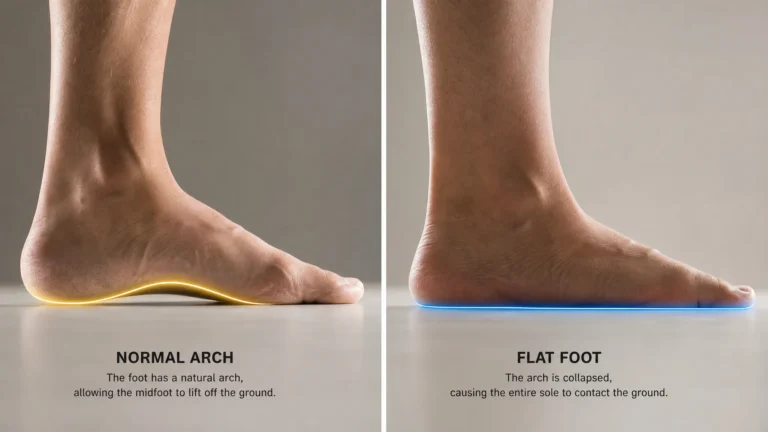
Running with flat feet presents a unique challenge. Each stride sends impact forces through feet that lack their natural shock-absorbing arch, increasing the risk of shin splints, plantar fasciitis, and knee pain. But flat feet do not prevent you from running pain-free — they simply require a smarter approach to footwear and support. This guide covers how flat feet affect your running form, what to look for in shoes and insoles, and how to build a support system that keeps you on the road.
Key Takeaways
- Flat feet reduce the foot’s natural shock absorption, transferring impact forces up the kinetic chain during running
- Standard neutral running shoes lack the arch support and motion control that flat-footed runners need
- The most effective setup combines motion control or stability shoes with orthotic insoles for targeted arch support
- Many elite distance runners have flat feet — the condition does not limit performance with the right support
- Gradual transition to supportive insoles and proper run form adjustments prevent the most common injuries
How Flat Feet Affect Running Form
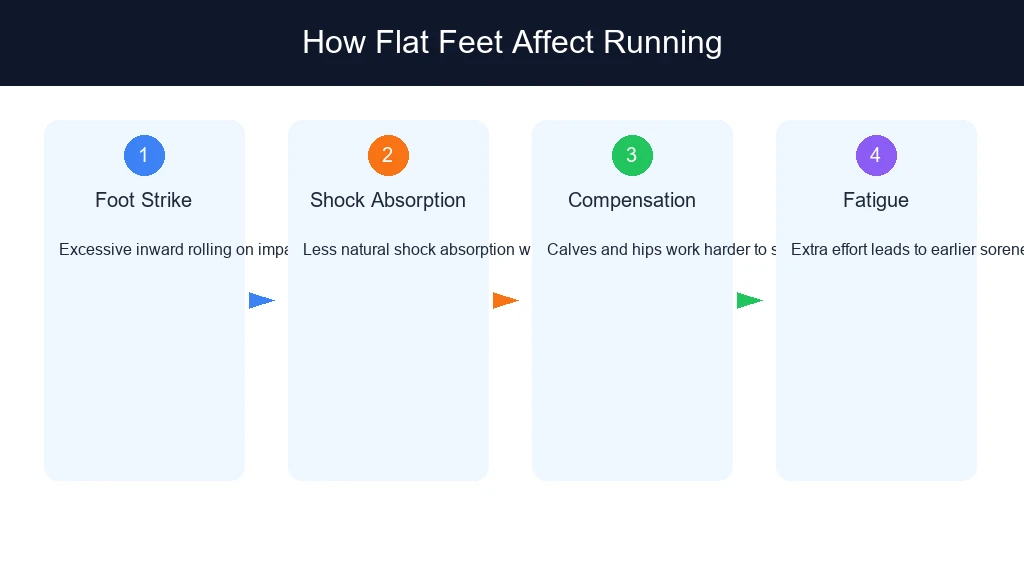
When you run, each footstrike generates forces of 2–3 times your body weight. A normal foot distributes these forces through a coordinated motion: slight pronation at heel strike to absorb shock, then supination at toe-off for a rigid push-off.
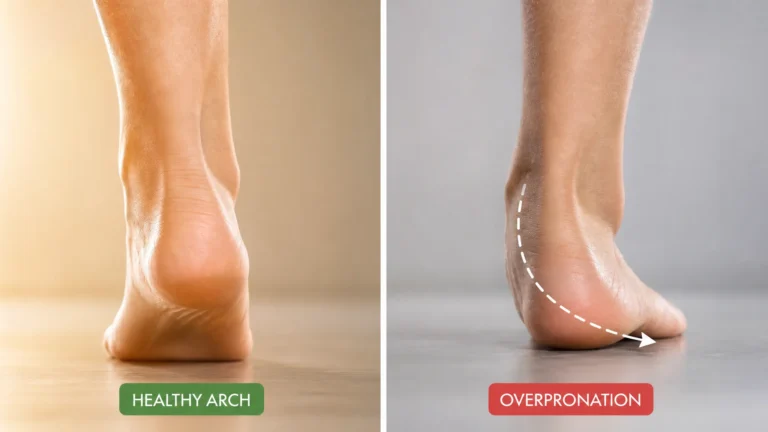
Flat feet disrupt this cycle. With the arch collapsed, the foot remains in a pronated position throughout the gait cycle. This means:
Reduced Shock Absorption. The arch acts as a natural spring, storing and releasing energy with each stride. Without it, the heel, ankle, and knee absorb forces that the arch should handle. A 2021 biomechanical study found that runners with flat feet experienced 25% higher impact loading at the knee compared to runners with neutral arches.
Delayed or Absent Toe-Off. The foot cannot effectively transition from a flexible shock absorber to a rigid lever for push-off. This makes each stride less efficient and places additional strain on the calf and Achilles tendon.
Increased Internal Rotation. Overpronation causes the tibia to rotate internally, which pulls the kneecap out of alignment and strains the IT band. This is why flat-footed runners frequently develop runner’s knee and IT band syndrome.
The good news is that correcting foot alignment with arch support resolves most of these issues. By restoring the foot to a more neutral position, you allow the natural gait cycle to function properly.
Do Flat Feet Make Running Harder?
Initially, yes. Runners with untreated flat feet often report:
– A feeling of running “flat” or “heavy” with less bounce
– Earlier fatigue in the calves and arches
– Recurrent shin splints or medial knee pain
– Difficulty finding comfortable running shoes
However, these challenges are almost entirely manageable with the right support. Many elite runners — including Olympic medalists and marathon record holders — have flat feet. The difference is not the shape of their feet but the support they use.
With proper arch support and appropriate footwear, running with flat feet becomes indistinguishable from running with normal arches. The key is not to accept discomfort as inevitable but to find the right combination of insoles, shoes, and running form adjustments.
Did You Know
Some of the world’s best runners have flat feet. Olympic gold medalist Galen Rupp, Boston Marathon winner Meb Keflezighi, and multiple world record holder Usain Bolt have all been noted to have flat arches. Their secret is not foot structure — it’s meticulous attention to footwear and support.
Best Running Shoes for Flat Feet
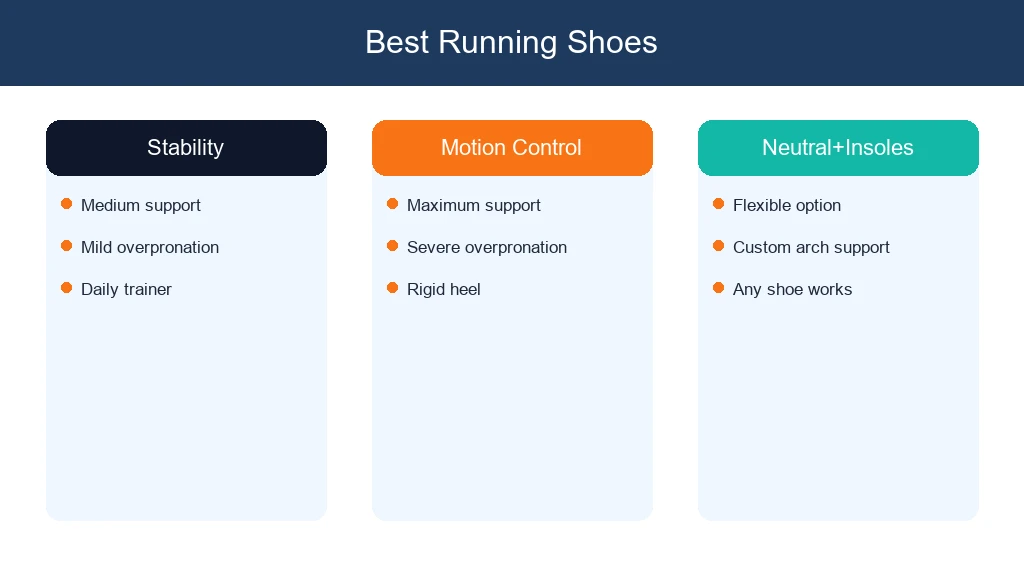
The running shoe market breaks down into three categories: neutral, stability, and motion control. For flat-footed runners, the choice comes down to the degree of overpronation you experience.
Neutral Shoes. These have minimal support features and are designed for runners with neutral gait. They are generally not suitable for flat-footed runners unless combined with orthotic insoles. The soft, cushioned midsoles common in neutral shoes allow overpronation to continue unchecked.
Stability Shoes. These use firmer foam or a medial post on the inner side of the midsole to resist pronation. They are the most common recommendation for runners with mild to moderate flat feet. Stability shoes provide enough pronation control for most runners while remaining flexible enough for daily training.
Motion Control Shoes. These are the most structured running shoes available, with rigid medial posts, firm heel counters, and minimal torsional flexibility. They are designed for severe overpronation and heavier runners. While effective, they can feel overly stiff for lighter runners or those with mild flat feet.
When selecting running shoes for flat feet, look for these features:
Firm Heel Counter. Squeeze the back of the shoe. If it collapses easily, it will not stabilize your heel. A firm heel counter controls calcaneal movement and reduces pronation forces.
Minimal Torsional Flexibility. Hold the shoe at both ends and twist. A shoe that twists easily offers little resistance to overpronation. Motion control and stability shoes should resist twisting.
Straight or Semi-Curved Last. Shoes built on a straight last (the shape of the shoe’s footprint) naturally resist pronation more than curved lasts, which encourage foot motion.
Wide Base. A wider platform at the midfoot and heel provides more stability for flat-footed runners who need a stable base.
Many flat-footed runners find that stability shoes alone are sufficient for easy runs, but adding orthotic insoles provides the targeted arch support needed for longer distances and speed work.
Running Insoles for Flat Feet: What to Look For
While stability shoes help, they work primarily through the midsole shape and foam density — not through direct arch support. Adding a quality insole addresses the arch directly.
For runners, running insoles for flat feet need to balance support with the demands of high-impact activity. Here is what to prioritize:
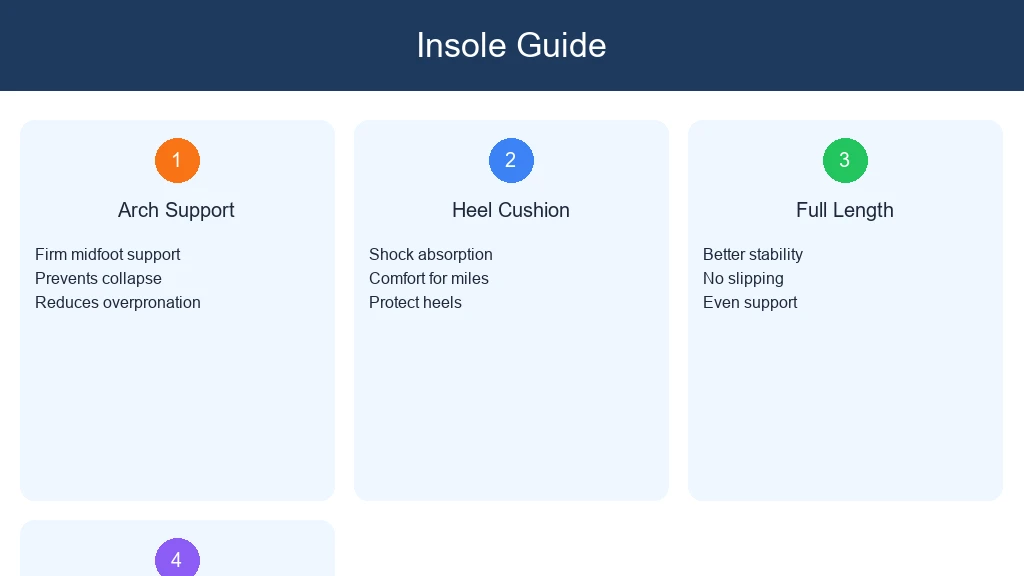
Rigid Arch Support. The arch must be firm and maintain its shape under impact. Running generates forces of 2–3 times body weight, and a soft arch support compresses to nothing under that load. Semi-rigid orthotic materials — polypropylene, carbon fiber, or reinforced nylon — provide the right balance of support and durability.
Heel Cup Depth. A 12–15 mm heel cup stabilizes the calcaneus during footstrike. Without it, the heel moves excessively, and pronation control is lost regardless of arch height.
Shock Absorption in the Right Places. The insole needs cushioning in the heel (for heel strikers) or forefoot (for midfoot strikers) without compromising the arch support. Look for a dual-layer design: a firm base layer for structure and a softer top layer for impact absorption.
Proper Fit in Performance Shoes. Running shoes fit more snugly than casual shoes. The insole should be thin enough at the toe box to avoid crowding while providing full arch coverage. Trimmable insoles are ideal for achieving a precise fit.
Moisture Management. Running generates significant foot sweat. Look for insoles with moisture-wicking top sheets or antimicrobial treatments to prevent odor and blistering.
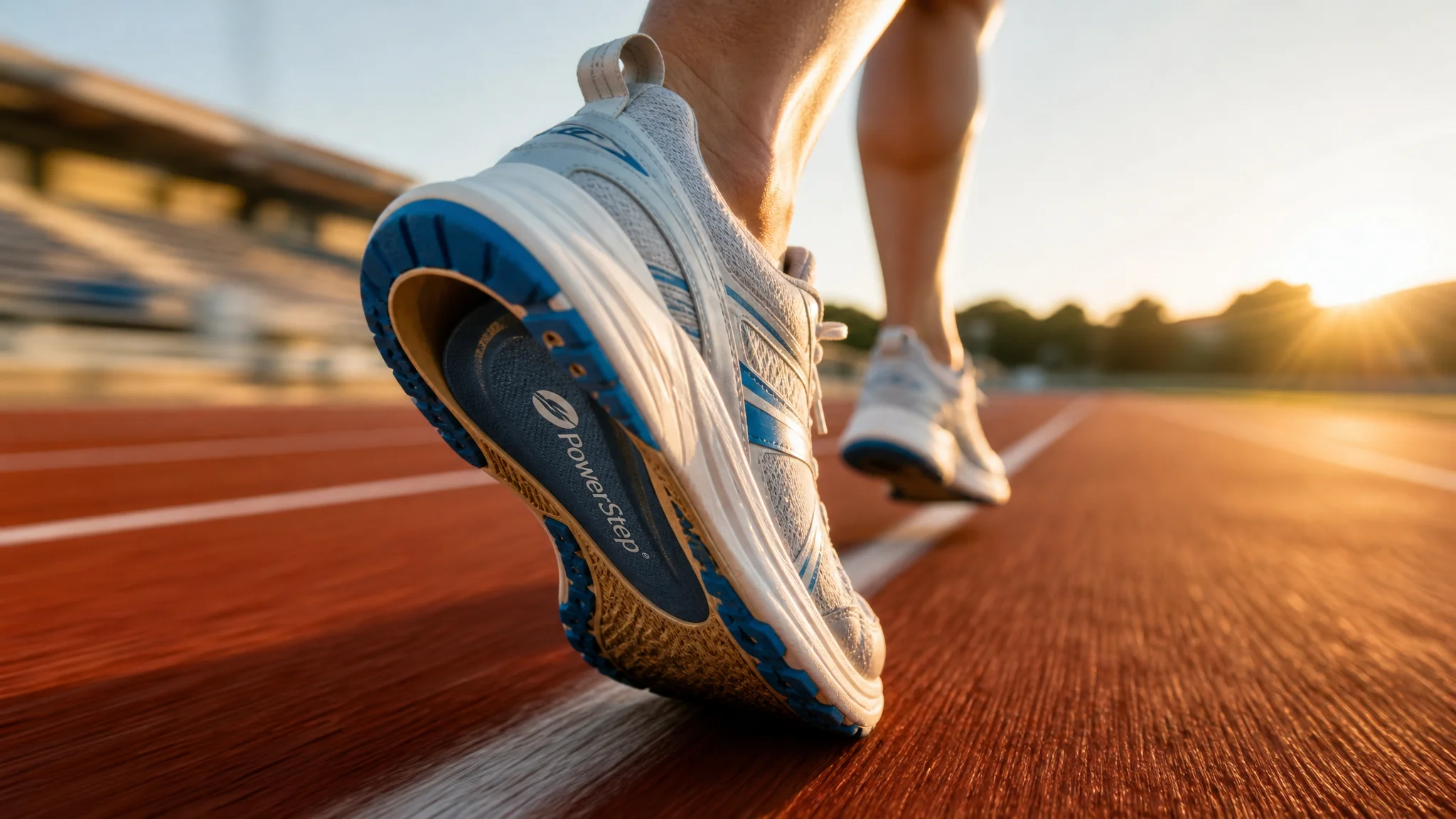
The best flat feet and fallen arches insoles include models specifically designed for athletic use, with the firm arch support and deep heel cups that runners need.
Important
Do not start running in new insoles on the same day you start a new training plan. Your feet, calves, and Achilles need time to adapt to the support. Wear your insoles for short walks (1–2 hours) for a week before running in them. Jumping directly into a 5K run with new orthotic insoles is the fastest route to calf strains and Achilles tendonitis.
Insoles vs Motion Control Shoes: Do You Need Both?
This is one of the most common questions among flat-footed runners. The answer depends on the severity of your flat feet and overpronation.
Mild Flat Feet, Minimal Overpronation. A stability shoe with moderate support features may be sufficient on its own. Adding insoles is optional but can provide additional comfort and arch support.
Moderate Flat Feet. A stability shoe combined with orthotic insoles is the most effective setup. The shoe provides a stable platform and some pronation resistance, while the insole provides direct arch support and heel control. This combination addresses both the structural and mechanical aspects of flat feet.
Severe Flat Feet or Heavy Overpronation. Motion control shoes plus orthotic insoles provide maximum support. The shoe’s rigid construction limits overall pronation, while the insole provides the arch lift and heel stability.
A good rule of thumb: if you wear through the inner edge of your running shoe soles within 200–300 miles, you likely need both a stability shoe and orthotic insoles. If your shoes wear evenly and you have only mild symptoms, a stability shoe alone may be adequate.
For athletes in other sports, our guide to insoles for volleyball covers the specific demands of jumping and lateral movement with flat feet.
Common Running Injuries from Flat Feet and How to Prevent Them
Flat-footed runners are more susceptible to specific overuse injuries. Understanding these risks helps you recognize early warning signs and adjust your training.
Medial Tibial Stress Syndrome (Shin Splints). This is the most common injury in flat-footed runners. The posterior tibial tendon — which supports the arch — attaches along the shin bone. Overpronation strains this attachment, causing pain along the inner shin. Prevention: arch support insoles to reduce tendon strain, combined with calf strengthening and gradual mileage increases.
Plantar Fasciitis. The constant tension of a collapsed arch on the plantar fascia leads to micro-tears at the heel attachment. Prevention: arch support insoles reduce fascia strain, and daily calf stretching prevents the Achilles tightness that exacerbates the condition.
Patellofemoral Pain Syndrome (Runner’s Knee). Overpronation rotates the tibia internally, pulling the kneecap out of alignment. Prevention: arch support to correct foot position, combined with glute and hip strengthening to stabilize the entire kinetic chain.
IT Band Syndrome. The rotation caused by overpronation places additional stress on the IT band, which runs from the hip to the outside of the knee. Prevention: arch support plus hip abductor strengthening and running form work.
Achilles Tendonitis. Flat feet place the Achilles tendon in a constantly stretched and rotated position. Prevention: heel lifts or insoles with moderate heel elevation, combined with eccentric calf exercises.
If you are experiencing any of these injuries, our insoles for tendonitis guide covers how targeted support aids recovery.
Running Form Adjustments for Flat Feet
Small adjustments to your running form reduce the demands on your feet and lower the risk of overuse injuries.
Increase Cadence. A cadence of 170–180 steps per minute reduces overstriding and lowers impact forces. Shorter, quicker steps mean less time in pronation per stride. Most runners can increase their cadence by 5–10% without changing their pace.
Land Softer. Aim for a midfoot strike rather than a heavy heel strike. Heel striking sends a shockwave through the foot and increases pronation demands. Midfoot striking distributes impact across the foot more evenly.
Shorten Your Stride. Overstriding — landing with your foot well ahead of your center of mass — increases braking forces and pronation. Aim to land with your foot directly under your hip.
Maintain Upright Posture. Leaning forward at the waist shifts your center of gravity forward, increasing pronation. Run tall with a slight forward lean from the ankles, not the waist.
For more on how foot position affects the rest of your body, our comparison guide on flat feet vs overpronation explains the relationship between arch structure and running mechanics.
Conclusion
Running with flat feet requires more attention to footwear and support than running with neutral arches, but it does not limit your potential. The combination of stability or motion control running shoes with quality orthotic insoles addresses the structural and mechanical demands that flat feet place on your body during running.
The key is finding the right level of support for your specific feet and giving yourself time to adapt. Start with a good stability shoe, add orthotic insoles with firm arch support, and gradually build your mileage. Your feet will adapt, and the pain that may have held you back will resolve.
Find the right running insoles in our guide to the best flat feet and fallen arches insoles and get back to enjoying your runs.
Hit the road pain-free.
Our ComfortMax running insoles provide firm arch support with impact-absorbing heel cushioning — designed for runners with flat feet.
Shop Flat Feet Insoles →Free returns on all orders · 30-day money-back guarantee
Frequently Asked Questions
Can I run with flat feet?
Yes. Flat feet do not prevent running at any level. With proper arch support insoles and appropriate running shoes, flat-footed runners perform equally to those with neutral arches.
What running shoes are best for flat feet?
Stability shoes with medial posts or motion control shoes for more severe overpronation. Look for a firm heel counter, minimal torsional flexibility, and a straight or semi-curved last.
Should I get insoles for running with flat feet?
Yes, in most cases. While stability shoes provide some pronation control, orthotic insoles add direct arch support that shoes alone cannot provide. The combination of stability shoes and orthotic insoles is the gold standard for flat-footed runners.
Do I need motion control shoes for flat feet?
Only if you have severe overpronation. Most flat-footed runners do well with stability shoes, which are less rigid than motion control shoes but provide adequate pronation resistance. Motion control shoes are typically recommended for heavier runners or those with extreme overpronation.
How do I know if my running shoes are supportive enough?
Check the wear pattern on the soles. If the inner edge wears down significantly faster than the outer edge, you need more support. Also, if you develop shin splints, knee pain, or arch pain after increasing mileage, your current setup is insufficient.
Can flat feet cause shin splints when running?
Yes. Overpronation from flat feet strains the posterior tibial tendon, which attaches along the shin bone. This is the primary cause of medial shin splints in runners. Arch support insoles are the most effective preventive measure.