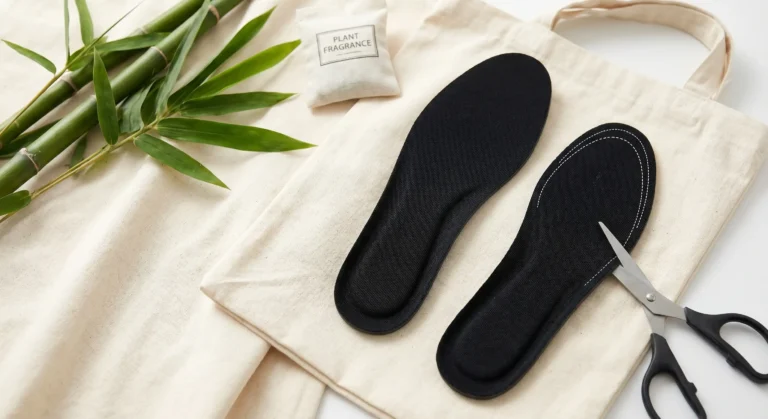
Best Antibacterial Insoles in 2026: Reviewed and Ranked
The best antibacterial insoles stop foot odor before it starts by targeting the bacteria responsible for it, not masking the smell with fragrance. Bamboo charcoal, silver ions, and antimicrobial coatings each work differently, but all of them disrupt the bacterial growth that standard insoles do nothing about.
If your shoes smell regardless of how often you wash your feet, the problem is not your hygiene. Most people searching for insoles for foot odor discover the real culprit is the insole itself, holding moisture and letting bacteria thrive. This guide explains how antibacterial insoles work, reviews the three best options across different needs and price points, and tells you exactly what to look for before you buy.
Key Takeaways:
– The best antibacterial insoles target odor-causing bacteria directly, not just the smell
– Bamboo charcoal is the natural, eco-friendly mechanism; silver ions offer broader-spectrum antibacterial coverage
– RoamingFeet’s Bamboo Charcoal Antibacterial Insoles ($26.05) are the best natural option for everyday and athletic wear
– Antibacterial insoles last 6–12 months before the active material saturates and needs replacing
– They work best as part of a foot hygiene routine, not as a standalone solution
Why Your Shoes Smell Even When Your Feet Don’t
The average human foot has approximately 250,000 sweat glands and produces roughly half a pint of sweat each day. Inside a closed shoe, that moisture has nowhere to go. The warm, dark, damp environment creates ideal conditions for odor-causing bacteria, particularly Bacillus and Micrococcus species, which break down sweat compounds and produce the byproducts responsible for foot odor.
Standard insoles cushion your foot and absorb impact. They do not address the bacteria. Even expensive foam or gel insoles will eventually smell because the material holds moisture rather than preventing the bacterial growth feeding on it.
That is the gap antibacterial insoles fill. Instead of absorbing sweat and leaving it for bacteria to break down, they create conditions that prevent bacterial growth from taking hold in the first place.
How Antibacterial Insoles Work: The Main Mechanisms
Not all antibacterial insoles use the same approach. The material determines how effective the insole is, how long it lasts, and whether it suits your preference for natural vs. synthetic options.
Bamboo Charcoal (Natural Absorption)
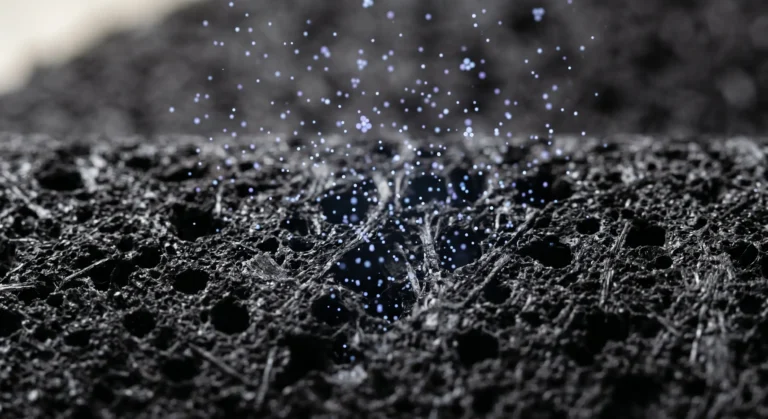
Bamboo charcoal works through absorption. Its highly porous surface structure draws moisture, sweat, and odor compounds directly into the material. The charcoal’s natural properties inhibit bacterial and fungal growth without releasing any chemical agent into your shoe.
This passive, continuous process makes bamboo charcoal insoles particularly well-suited for sensitive skin and all-day wear. There are no synthetic ions being released, no coatings to wear off, and no chemicals interacting with the skin. The mechanism is entirely natural, and the material is biodegradable, making it the most eco-friendly antibacterial option currently available.
Good to Know
Bamboo charcoal insoles are completely odorless themselves, they absorb odor compounds rather than masking them with fragrance. If your insoles carry a strong artificial scent, they are covering the problem, not solving it. Fresh insoles should smell like nothing at all.
Silver Ions and Nanoparticles
Silver nanoparticles and silver ions are the most widely studied antibacterial materials in insole manufacturing. Silver ions (Ag+) work by attacking bacterial cell walls directly, disrupting the enzyme activity bacteria need to produce energy, and preventing cellular replication. This broad-spectrum effect is active against more than 650 bacterial species.
The most recognized branded version is Polygiene StayFresh technology, a silver-chloride salt formulation applied as a fabric treatment and used by Dr. Scholl’s and other major brands. It is durable, wash-resistant, and effective across extended use periods.
The tradeoff: silver processing is synthetic, and some bacterial strains have begun developing limited resistance to silver exposure over time. For buyers who prefer natural materials, or who have concerns about nanoparticle contact with skin, bamboo charcoal is the cleaner alternative.
Other Approaches
Activated carbon with zinc pyrithione: Used in products like Kaps Fresh Carbonex, this dual-action approach pairs carbon absorption with a synthetic antibacterial agent that directly kills odor-causing bacteria. Strongest option for severe foot odor, but involves a chemical active ingredient.
Cedar wood: Zederna cedar insoles are ultra-thin and naturally antibacterial, using essential oils to deter bacterial growth. Suited for dress shoes with minimal depth. No cushioning.
Branded antimicrobial coatings: Applied to the top surface of the insole fabric. Effective but surface-level, the coating can wear off faster than material embedded with antibacterial properties.
Best Antibacterial Insoles in 2026
The best antibacterial insoles available fall into three categories: natural bamboo charcoal options, structured support insoles with antimicrobial coatings, and dual-action chemical formulas for severe odor. Here is how they compare.
Best Natural Option, RoamingFeet Bamboo Charcoal Antibacterial Insoles
Mechanism: Bamboo charcoal natural absorption
Material: Cloth + cotton + plant fragrance
Price: $26.05 per pair ($49.05 for four pairs)
Sizes: EU 40–45, trimmable
Best for: Everyday wear, eco-conscious buyers, athletic and daily use, sensitive skin
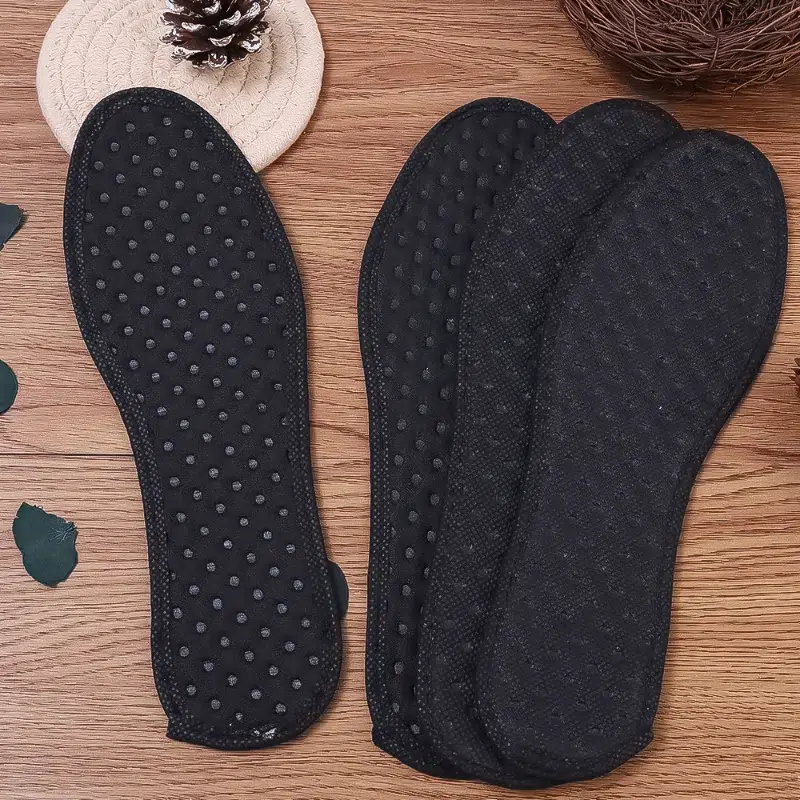
The RoamingFeet Bamboo Charcoal Antibacterial Insoles are the best antibacterial insoles for anyone who wants a natural approach to foot odor without synthetic chemicals. The bamboo charcoal core absorbs moisture and odor compounds passively, all day, without releasing agents into the shoe. The material is biodegradable and the construction, cloth, cotton, and plant fragrance, keeps the insole odorless and breathable across long wear periods.
The insoles are trimmable to fit multiple shoe sizes from a single pair, compatible with athletic shoes, work shoes, and casual footwear. At $26.05 per pair, they are priced competitively against drugstore options that offer none of the antibacterial function. The four-pair bundle brings the per-pair cost to $12.25, practical for rotating pairs across multiple shoes.
Consider what happens for workers in closed footwear across long shifts. A nurse spending 12 hours in work shoes without ventilation accumulates significant bacterial load inside the shoe. Standard insoles hold that moisture against the foot. Bamboo charcoal draws it in before bacteria have the chance to feed on it. That is the difference between shoes that smell by noon and shoes that stay fresh through the end of a shift.
Best for Medical-Grade Support, Powerstep Original
Mechanism: Anti-microbial top coat over dual-layer EVA
Price: ~$40–$50
Best for: Buyers who need structured arch support alongside antibacterial protection
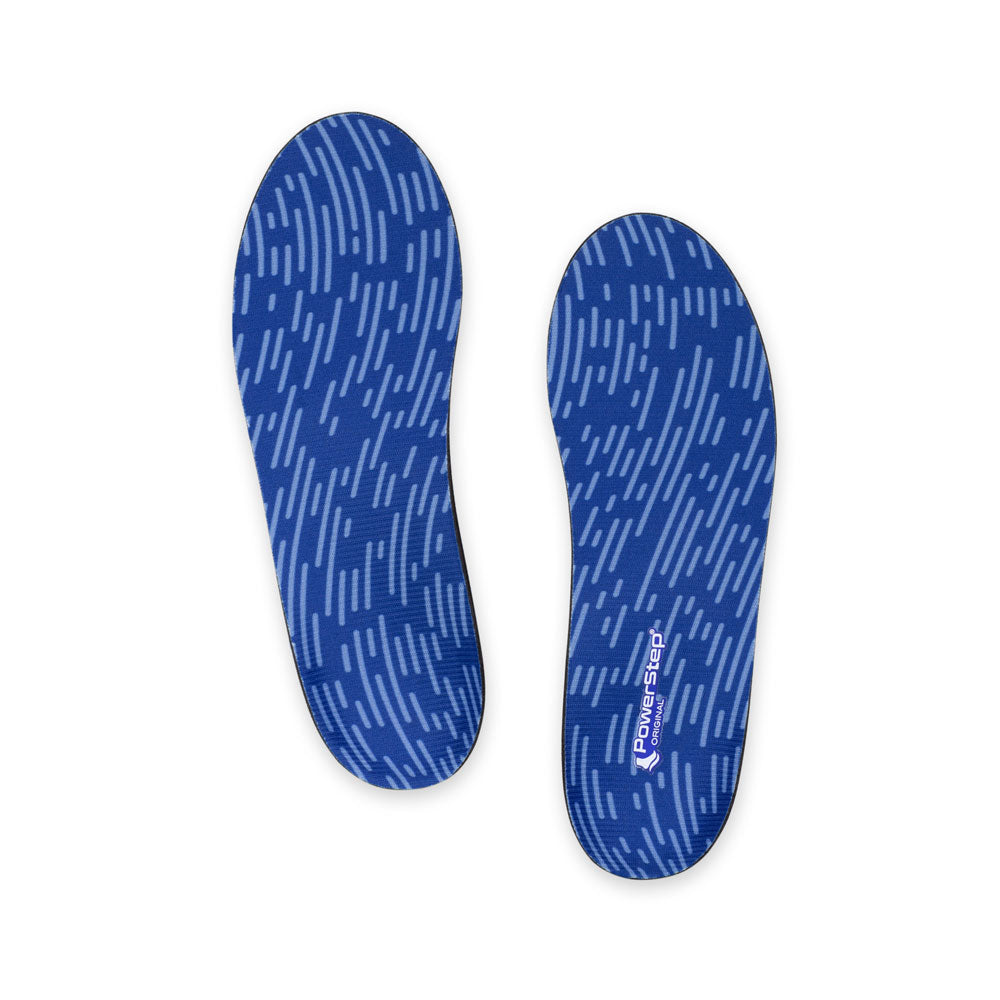
The Powerstep Original combines an anti-microbial surface treatment with a dual-layer EVA foam base and built-in arch support. For buyers who are managing flat feet or plantar fasciitis and also need odor control, this is the closest available overlap between structural support and antibacterial treatment. It fits most shoes without trimming and transfers easily between footwear.
For severe cases where a dedicated structural solution is needed alongside odor control, pairing a full-support arch support insoles with a thinner antibacterial option is worth considering over a single-product approach.
Best for Maximum Odor Control, Kaps Fresh Carbonex
Mechanism: Activated carbon + zinc pyrithione (dual-action)
Price: ~$15–$20
Best for: Severe foot odor, gym shoes, high-sweat activity

The Kaps Fresh Carbonex targets severe foot odor with a two-mechanism approach: activated carbon for odor absorption and zinc pyrithione, a synthetic antibacterial compound, to kill odor-causing bacteria directly. For gym shoes used daily, running shoes that rarely fully dry between sessions, or combat and work boots with minimal ventilation, this dual approach outperforms single-mechanism options on raw odor control.
Zinc pyrithione is a synthetic chemical, so this is not the right choice for buyers who prefer natural materials. For those spending full days in insoles for military boots or heavy work footwear where sweat accumulation is high, the Kaps Fresh Carbonex delivers the strongest antibacterial performance at this price point.
How to Choose the Best Antibacterial Insoles
1. Natural vs. Synthetic Mechanism
If avoiding synthetic chemicals or nanoparticles is a priority, bamboo charcoal and cedar wood are the only fully natural options. Silver ion and zinc pyrithione products perform more aggressively across a broader spectrum of bacteria but involve synthetic processing. Decide on this first, it narrows the field immediately.
2. Cushioning and Arch Support Level
Antibacterial protection and cushioning are independent features. Thin antibacterial options (cedar, charcoal-only designs) prioritize hygiene over structure. Combination products like Powerstep add arch support. For everyday comfort in athletic or casual shoes, silicone gel insoles provide excellent cushioning and shock absorption that can complement a thinner antibacterial option if both goals matter to you.
3. Shoe Compatibility and Trimming
Thin options (cedar, slim charcoal) fit dress shoes and loafers with limited depth. Full-length antibacterial insoles with structure require more volume and suit sneakers, boots, and work shoes. Always remove the factory insole before inserting a full-length replacement. Most antibacterial insoles are trimmable, size up and cut to match your shoe’s original insole as a template.
4. When to Replace
Antibacterial insoles degrade over time as the active material saturates. Bamboo charcoal fills its pores with absorbed compounds after 6–12 months of daily wear. Silver-treated fabrics may show physical wear on the top layer before antibacterial efficacy fades. The practical signal to replace is simple: if odor returns despite regular shoe ventilation, the insole has reached the end of its useful life. Continuing to use it provides no antibacterial benefit.
Who Benefits Most from Antibacterial Insoles
Workers in closed footwear all day. Healthcare workers, retail staff, warehouse employees, and anyone in a 10-to-12-hour shift in closed shoes accumulates the most bacterial load. Antibacterial insoles reduce the growth that happens across those hours and can be the difference between footwear that refreshes overnight and footwear that never fully recovers.
Athletes and regular gym-goers. Sports shoes trap sweat during activity and rarely fully dry between sessions. Bacterial growth accelerates in that damp, post-workout window. An antibacterial insole slows that growth between uses.
Anyone prone to athlete’s foot. The fungal infections that cause athlete’s foot (tinea pedis) thrive in the same warm, moist environment that produces foot odor. Antibacterial and antifungal insoles reduce the conditions that support both.
People managing diabetic foot health. For those with diabetes, bacterial infections in the feet carry significantly elevated risk. Antibacterial insoles reduce bacterial load inside footwear as one element of a complete foot hygiene approach. For anyone with active diabetic foot complications, a podiatrist should be involved in the full management plan.
Do Antibacterial Insoles Actually Work?
Yes, with honest expectations. The best antibacterial insoles significantly reduce the bacteria responsible for foot odor and slow the microbial growth that standard insoles do nothing about. Research on the use of antimicrobial insole materials as a preventive measure against foot mycoses has demonstrated that antibacterial insole materials provide meaningful protection when used consistently.
What they will not do: replace regular foot washing, solve odor originating in the shoe material itself after years of saturation, or maintain effectiveness without eventual replacement. Think of them as extending the time your shoes stay fresh between cleanings rather than eliminating the need for hygiene entirely.
Tom works construction and spends eight hours in steel-toed boots that see minimal airflow. He had tried three pairs of standard foam insoles and accepted that his boots would smell. After switching to bamboo charcoal insoles, his boots stopped developing a persistent odor between weekly cleanings. The charcoal was absorbing moisture before bacteria had the chance to accumulate across a full workday. That is what a correctly matched antibacterial insole accomplishes.
Medical Note
Antibacterial insoles reduce bacterial load but are not a treatment for active fungal infections. If you have athlete’s foot symptoms, itching, burning, scaling skin, or skin breakdown between the toes, consult a podiatrist before relying on insoles alone. Antibacterial insoles work best as prevention, not as treatment for an existing infection.
Conclusion
The best antibacterial insoles work by targeting the bacteria responsible for foot odor, not by covering it with fragrance. For most buyers who want a natural, chemical-free approach, the RoamingFeet Bamboo Charcoal Antibacterial Insoles deliver consistent odor control through passive absorption at $26.05 per pair, with the option to buy up to four pairs at a reduced per-pair cost. They are trimmable, breathable, and biodegradable, the most sustainable option in this category.
For severe foot odor in high-sweat conditions, the Kaps Fresh Carbonex dual-action formula provides the strongest antibacterial performance available. For buyers who need structural arch support alongside odor control, Powerstep Original covers both.
Replace whichever option you choose after 6–12 months. When odor returns despite normal shoe ventilation, the active material has saturated and the insole needs replacing, regardless of how well it performed when new.
Fresh feet without synthetic chemicals.
Our Bamboo Charcoal Antibacterial Insoles use natural absorption to stop foot odor at the source, eco-friendly, trimmable, and built for all-day wear in any shoe.
Free shipping on $50+ · Free returns on all orders
Frequently Asked Questions
How do antibacterial insoles work?
The best antibacterial insoles contain active materials, bamboo charcoal, silver ions, or antimicrobial coatings, that inhibit the growth of odor-causing bacteria inside your shoe. Bamboo charcoal works by absorbing moisture and the compounds bacteria feed on. Silver ions attack bacterial cell walls directly. Both approaches reduce the bacterial population responsible for foot odor.
How long do antibacterial insoles last?
Most antibacterial insoles maintain their effectiveness for 6–12 months of regular daily wear. Bamboo charcoal gradually saturates as its pores fill with absorbed compounds. Silver-treated coatings may show physical wear before antibacterial properties degrade. Replace them when odor returns despite normal ventilation.
What is the difference between antibacterial and antimicrobial insoles?
Antibacterial refers specifically to bacteria, while antimicrobial covers bacteria, fungi, and other microorganisms. In practice, most antibacterial insoles also provide antifungal protection because they address the same moisture conditions that support both types of growth.
Can antibacterial insoles prevent athlete’s foot?
They reduce the risk. Athlete’s foot thrives in warm, moist environments, which antibacterial insoles help control by reducing moisture and microbial growth. However, they are not a treatment for existing infections, which require antifungal medication.
Are bamboo charcoal insoles better than silver insoles?
It depends on your priorities. Bamboo charcoal is natural, biodegradable, and suitable for sensitive skin. Silver ions provide stronger antibacterial action across a wider range of bacteria. Choose based on whether you prefer natural materials or maximum antibacterial performance.
Do antibacterial insoles work for sweaty feet?
Yes. Sweaty feet create ideal conditions for bacterial growth. Antibacterial insoles, especially moisture-absorbing designs like bamboo charcoal, reduce both moisture and bacteria. For best results, combine them with breathable socks and shoes that allow airflow.