Best Insoles for Military Boots: 2026 Guide for Flat Feet and Arch Support
Best Insoles for Military Boots: 2026 Guide
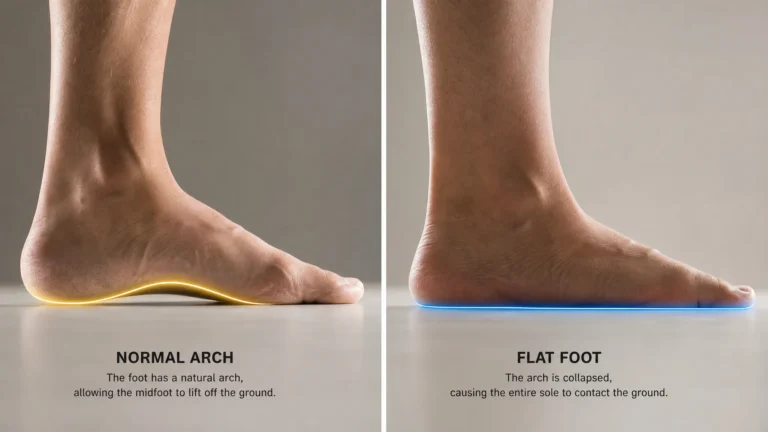
Standard-issue military boot insoles are designed for durability and cost-effectiveness — not arch support. For service members with flat feet, this lack of support leads directly to shin splints, plantar fasciitis, and stress fractures. The right insoles for military boots can prevent these injuries and improve comfort during long marches, runs, and standing duty. This guide covers what to look for and which insoles perform best under military demands.
Key Takeaways
- Military boots need insoles with firm arch support that resists compression under heavy loads
- Moisture-wicking material is essential for all-day wear in field conditions
- A deep heel cup stabilizes the foot on uneven terrain
- The best military boot insoles balance support with durability for rucking and running
- Break in new insoles gradually before field use to avoid blisters and calf cramps
What to Look for in Military Boot Insoles
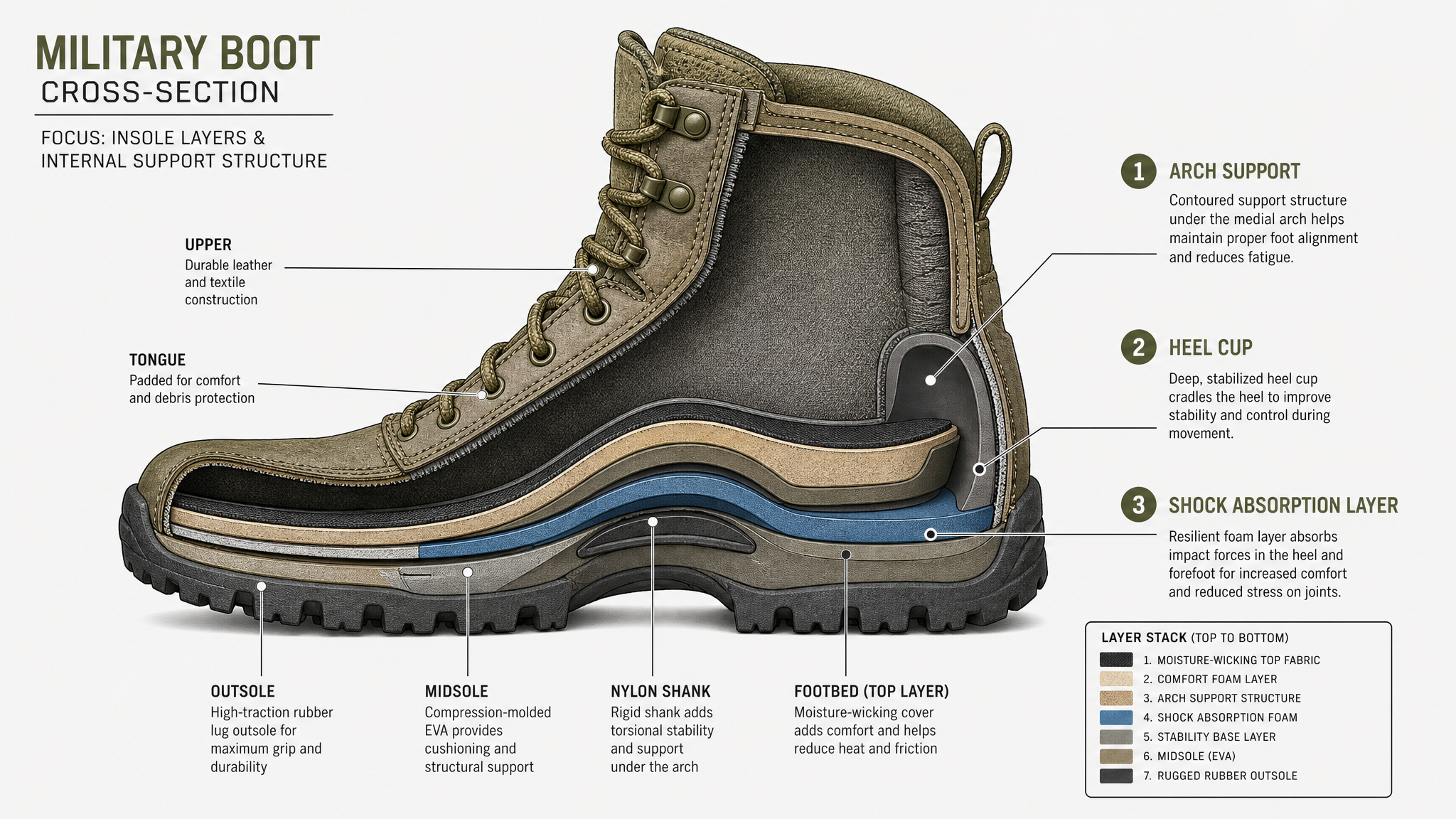
Military boots have different requirements than running shoes or casual footwear. The insoles you choose must withstand heavier loads, longer wear periods, and more demanding terrain. Here are the critical features:
Firm Arch Support
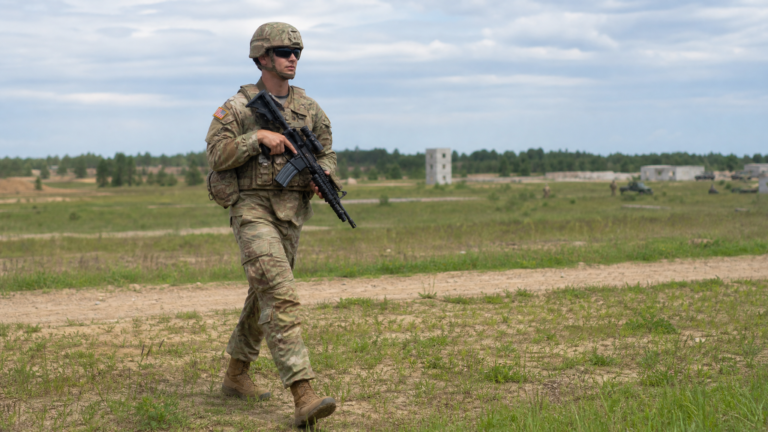
This is the most important feature. Military boot insoles need arch support that does not compress under the additional weight of body armor, ruck sacks, and equipment. A loaded infantryman can carry 60–100 pounds of gear — insoles that feel supportive in casual shoes will flatten under this load.
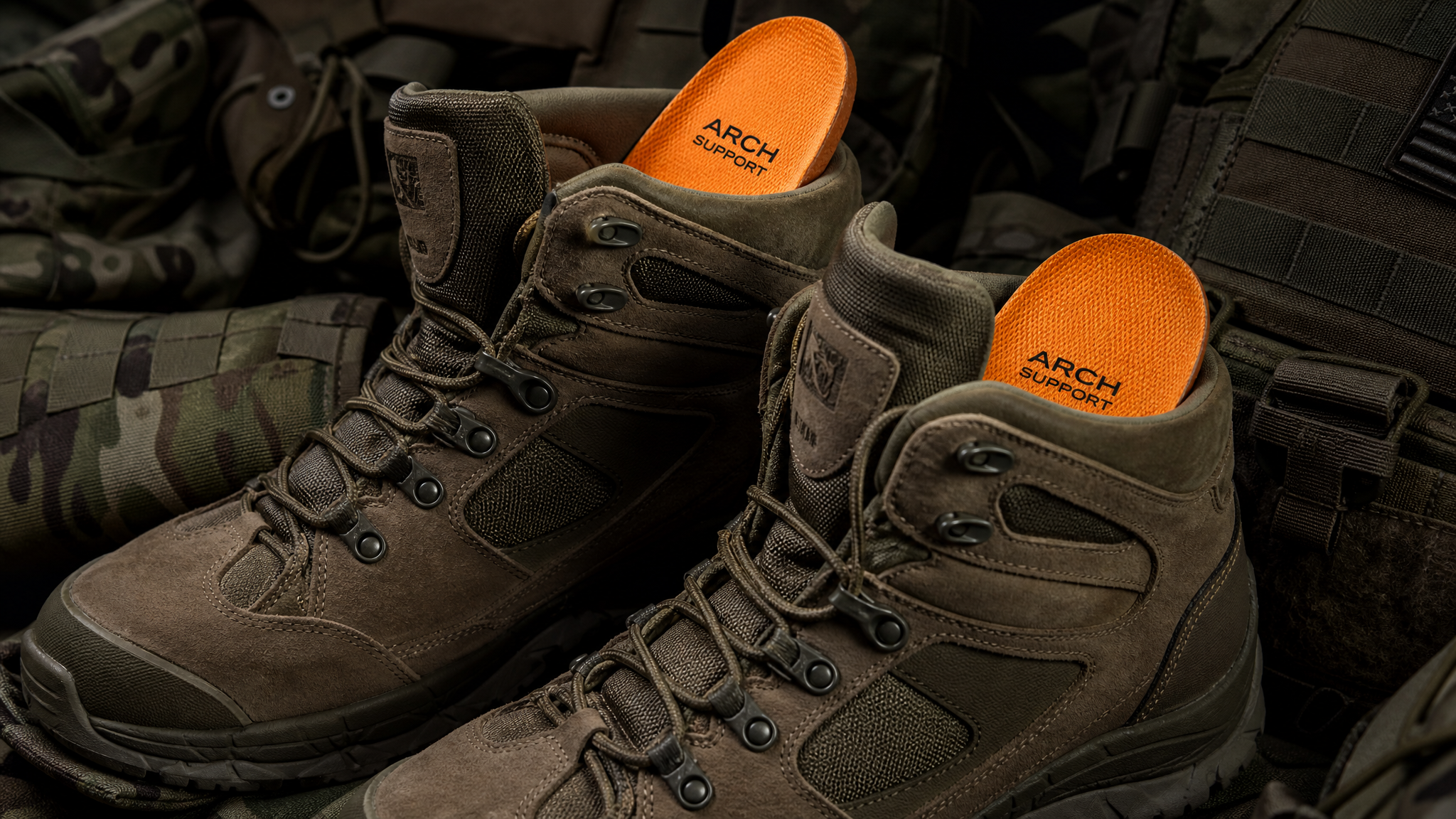
Look for insoles with a rigid or semi-rigid arch cradle rather than soft foam. The arch support should hold its shape when you press into it firmly. Materials like polypropylene or carbon fiber provide the durability needed for military use.
Deep Heel Cup
A deep heel cup stabilizes the heel and controls overpronation — the inward rolling of the foot that is common with flat feet. On uneven terrain, a secure heel cup prevents your foot from shifting inside the boot, which reduces friction and blister risk.
The heel cup should cradle your heel comfortably without digging in. Check that the depth matches your heel shape. Too shallow and you lose stability; too deep and you risk heel irritation.
Shock Absorption
Military boots have minimal cushioning compared to running shoes. When you are marching on asphalt or running on hard-packed dirt, each step sends shock through your feet, knees, and hips. Insoles with good shock absorption in the heel and forefoot reduce this impact.
Look for materials like PU foam, gel inserts, or multilayer construction. The shock absorption layer should be thick enough to matter but not so thick that it raises your foot too high in the boot.
Moisture-Wicking Properties
Military boots trap moisture. In field conditions, your feet may be in boots for 12–18 hours at a time. Moisture-wicking insoles pull sweat away from your feet, reducing blister risk and preventing fungal infections.
Avoid insoles with thick fabric or felt tops that absorb and retain moisture. Look for mesh or anti-microbial top cloths that dry quickly.
Durability
Combat boot insoles take more abuse than everyday insoles. They need to hold up to heat, moisture, pressure, and friction without breaking down. The best military boot insoles last 6–12 months of regular use before needing replacement.
Top Features Comparison
| Feature | Why It Matters | What to Look For |
|---|---|---|
| Arch support | Prevents overpronation and shin splints | Semi-rigid cradle, polypropylene or carbon fiber |
| Heel cup | Stabilizes foot on uneven terrain | Deep enough to cradle heel without irritation |
| Shock absorption | Reduces impact during running and marching | PU foam, gel, or multilayer construction |
| Moisture wicking | Prevents blisters and fungal infections | Mesh top cloth, antimicrobial treatment |
| Durability | Withstands heavy loads and extended wear | Replace every 6–12 months |
Best Insoles for Different Military Roles
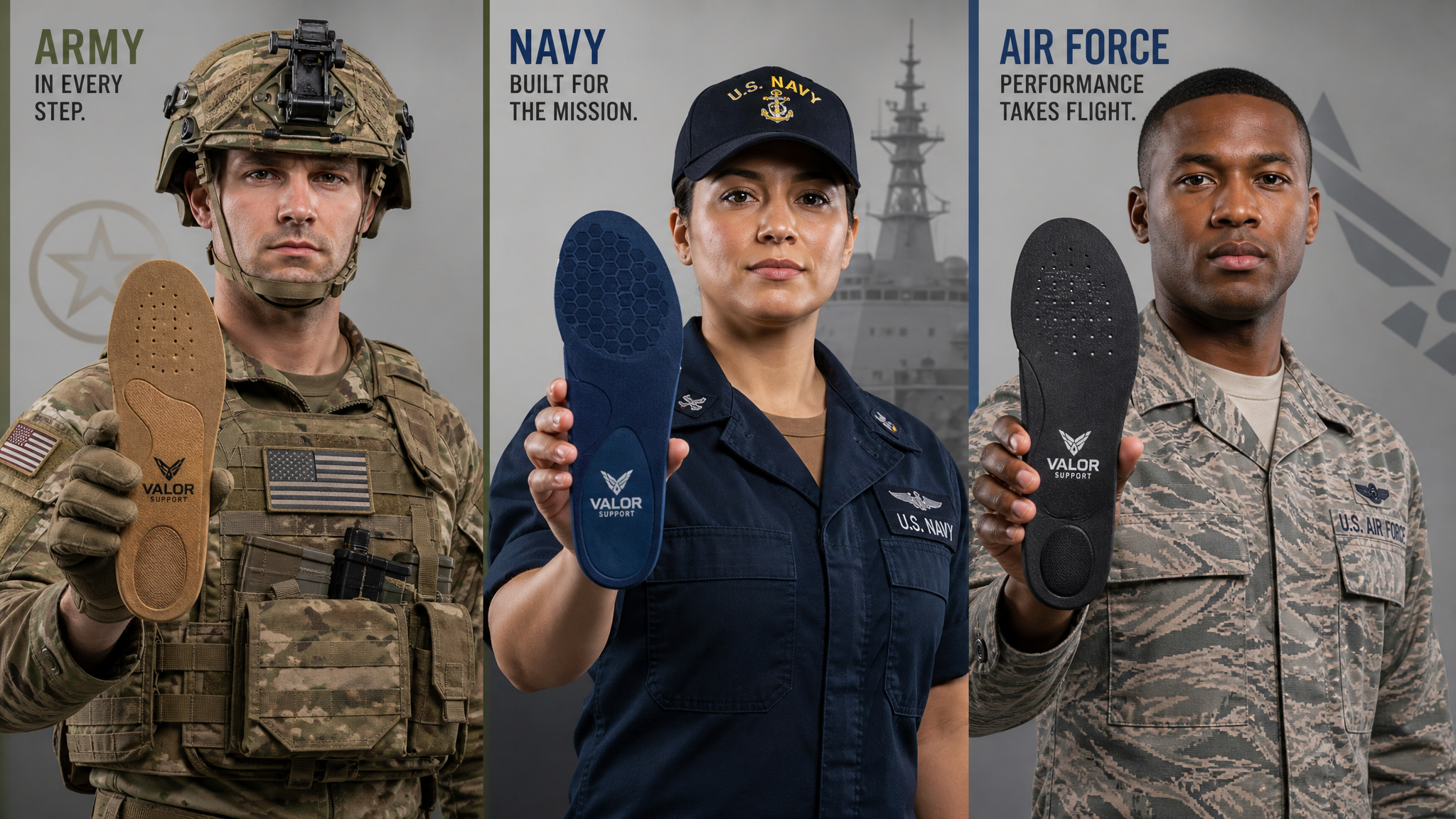
The best insole for you depends on your specific role and the demands of your service:
For Basic Training Recruits
Basic training involves the highest volume of running and marching. Recruits need insoles that provide immediate support and injury prevention.
What to prioritize: Maximum arch support and shock absorption. Recruits are at highest risk for shin splints and stress fractures. A supportive insole reduces both.
Fit consideration: Basic training boots are typically new and unbroken. Choose insoles that are slightly thinner than maximum to allow for boot break-in without pressure points.
For Infantry and Field Units
Personnel in field units carry the heaviest loads over the most demanding terrain. Durability and arch support under load are critical.
What to prioritize: Firm arch support that resists compression, deep heel cup for terrain stability, and moisture management for multi-day field exercises.
Fit consideration: Field boots often have more volume than dress boots. You may need thicker insoles or a combination of insole plus boot add-ons for optimal fit.
For Daily Garrison and Standing Duty
Service members in garrison roles spend significant time standing on hard surfaces — concrete, asphalt, and steel decks. Comfort and moderate support are the priorities.
What to prioritize: Cushioning for standing comfort, moderate arch support, and moisture-wicking for all-day wear.
Fit consideration: Garrison boots are worn for longer hours but with less intense activity. Choose insoles that prioritize all-day comfort over heavy-duty performance.
Do Military Boot Insoles Need to Be Tactical-Specific?
Some brands market “tactical” insoles specifically for military and law enforcement use. These differ from general-purpose insoles in several ways:
- Higher density materials that resist compression under heavy loads
- More aggressive antimicrobial treatment for extended wear in field conditions
- Trim-to-fit sizing that accommodates different boot brands (Nike, Belleville, Rocky, Garmont, etc.)
However, many high-quality general-purpose insoles with firm arch support work equally well in military boots. The key is matching the insole’s support level to the demands of your role — not whether the package says “tactical.”
How to Fit Insoles in Military Boots
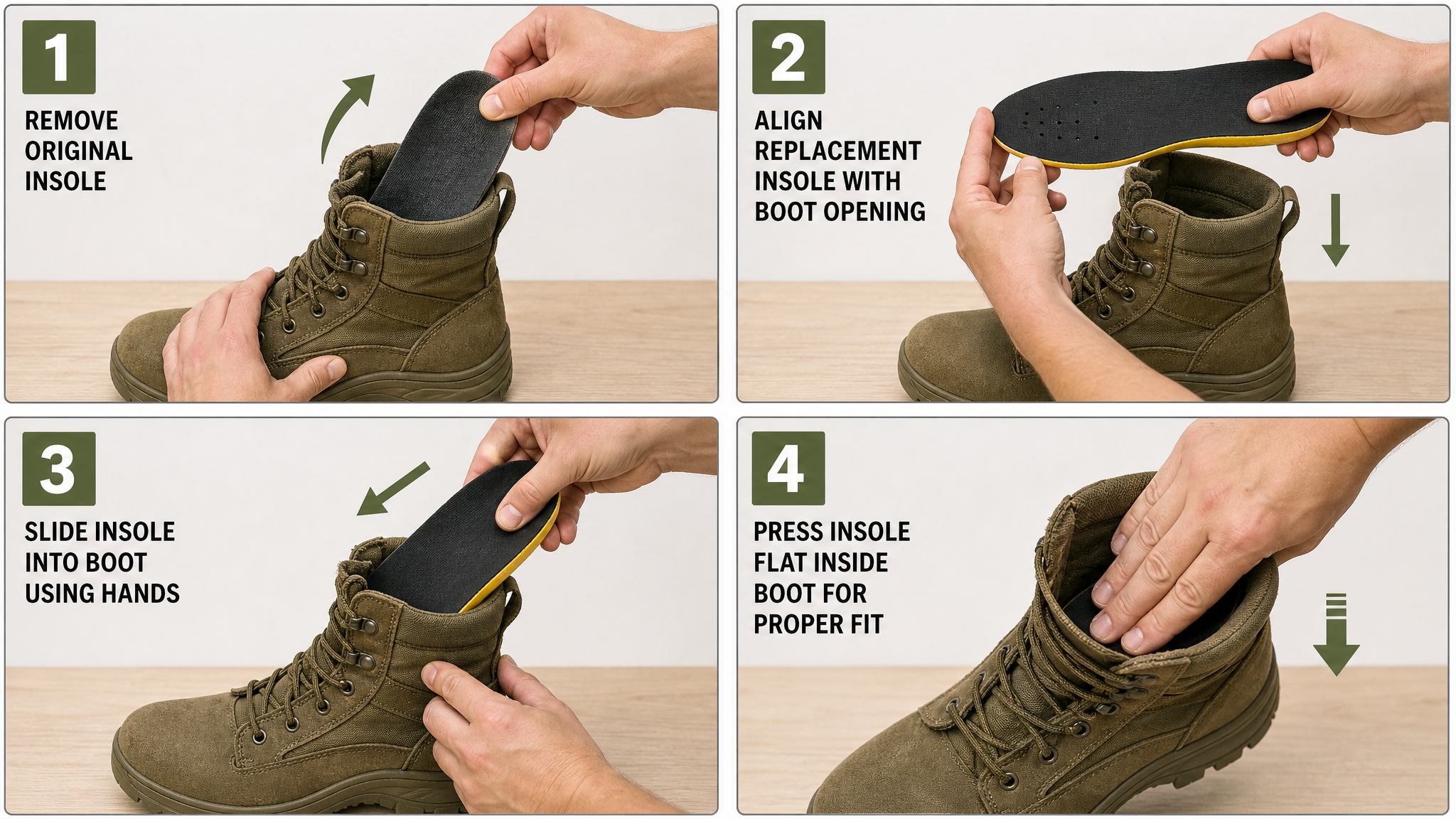
Proper fitting prevents the two most common problems: blisters from ill-fitting insoles and reduced toe room from overly thick inserts.
Step 1: Remove the stock insole. Most military boots have a thin, removable insole. Take it out before inserting your aftermarket insole. Stacking insoles reduces toe room and can cause foot pain.
Step 2: Check the length. Your new insole should sit flat in the boot without curling at the toe or heel. Trim if needed. Most quality insoles have trim lines marked for sizing.
Step 3: Check the volume. With the insole in place, put on the boot and lace it normally. Your toes should have thumb-width room at the end. If your foot feels compressed vertically, the insole is too thick for that boot.
Step 4: Test with a short walk. Walk for 5–10 minutes in the boots with new insoles. Your heel should feel secure without slipping. No pressure points or hot spots should develop.
Break-In Period for Military Boot Insoles
New insoles require a break-in period, especially if you are switching from flat stock insoles to firm arch support. Jumping into full-day wear with new insoles guarantees calf cramps and sore arches.
Days 1–3: Wear the insoles for 2–3 hours during light activity Days 4–7: Increase to 4–6 hours during moderate activity Days 8–14: Full-day wear; your feet and calves should be adapted
Do not start the break-in process during the first week of basic training. Begin 4–6 weeks before shipping out so your feet are ready.
Best Insoles for Military Boots: Reviews
1. Superfeet Green (Heavy-Duty Support)
Superfeet Green is the most popular insole for military boots. It features a high-density foam base, a deep heel cup, and a semi-rigid polypropylene arch support. The firm arch is ideal for flat feet under heavy loads. The carbon fiber cap adds durability for field use.
Best for: Infantry, field units, and anyone carrying heavy loads. The firm support prevents overpronation during ruck marching. The deep heel cup maintains stability on uneven terrain.
Considerations: The high arch profile may not suit very low-volume boots. Break in gradually — the firm support requires adaptation.
2. Superfeet Blue (Moderate Support)
Superfeet Blue offers similar construction to the Green model with a slightly lower arch profile. This makes it more versatile across different boot types while still providing meaningful arch support.
Best for: Basic training recruits and garrison personnel who need support without the maximum profile of the Green model. The moderate arch accommodates a wider range of foot shapes.
3. Powerstep Pinnacle Plus
Powerstep Pinnacle Plus uses a dual-layer design with a firm plastic arch support and a cushioned EVA base. The antimicrobial top cloth controls odor during extended wear.
Best for: Daily garrison wear and standing duty. The cushioning layer provides comfort on hard surfaces while the arch support controls overpronation. The full-length design fits most combat boots without trimming.
4. SOLE Signature (Moldable)
SOLE Signature insoles use heat-moldable foam that adapts to your foot shape. The medium arch support and deep heel cup provide a custom fit without the cost of prescription orthotics.
Best for: Service members with hard-to-fit feet or combined foot issues (flat feet plus heel pain). The moldable fit reduces the adjustment period common with firm arch support insoles.
5. Currex RunPro (High-Activity)
While designed for running, the Currex RunPro works well in military boots for personnel who prioritize running performance. The dynamic arch support adjusts to high-impact movement.
Best for: PT-intensive roles and running events. Not ideal for heavy rucking due to the softer arch support. Good as a secondary insole for PT shoes.
When to Replace Military Boot Insoles
Military boot insoles wear out faster than everyday insoles due to the higher loads and harsher conditions. Replace them when:
- The arch support feels flat or compressed — press into the arch; if it collapses easily, replace
- Visible wear on the top cloth — tears or smooth spots indicate breakdown
- Persistent foot pain returns — this is the clearest sign the insoles no longer provide adequate support
- After 6 months of regular use — even if not visibly worn, the support materials degrade over time
Pro Tip
Bring two pairs of insoles to basic training. One pair will inevitably get wet, muddy, or damaged during field exercises. Having a dry backup pair prevents training days lost to foot problems.
Conclusion
The right insoles make the difference between feet that hurt and feet that perform. For military boots, prioritize firm arch support, a deep heel cup, shock absorption, and moisture management. The best military boot insoles resist compression under heavy loads and hold up to the demands of field use. Break them in gradually before basic training or field exercises, and replace them when the support breaks down.
Get the insoles your boots deserve.
Our orthotic insoles with firm arch support are tested for durability under heavy loads — ideal for military boots.
Shop Orthotic Insoles →Free returns on all orders · 30-day money-back guarantee
Frequently Asked Questions
Are insoles allowed in military boots?
Yes. Arch support insoles are permitted in all branches of the US military. They are considered personal medical devices rather than modifications to uniform items.
What insoles do special forces use?
Special operations personnel often use Superfeet (Green or Berber model), SOLE moldable insoles, or custom orthotics. The choice depends on individual foot type and mission requirements.
How often should I replace insoles in military boots?
Every 6–12 months, depending on use intensity. Heavy field use compresses the support materials faster. Replace when the arch support feels flattened or foot pain returns.
Can I use running shoe insoles in combat boots?
Standard running insoles are usually too soft for combat boots. The arch support compresses under the additional weight of gear and equipment. Choose insoles designed for high-impact, high-load use.
Do thick insoles make boots too tight?
Quality military boot insoles are designed to be thin enough for boot compatibility while providing adequate support. If your boots are properly sized, a quality insole should fit without pressure issues.