Carbon Fiber Insoles for Flat Feet: Complete 2026 Guide
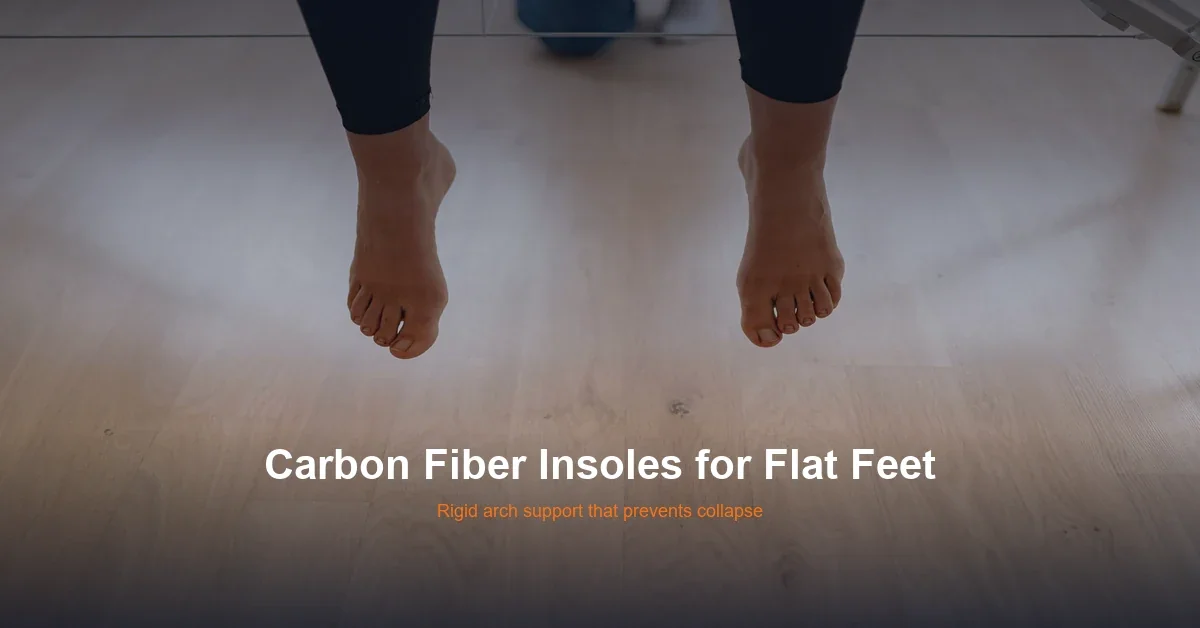
Flat feet cause your arch to collapse with every step, leading to pain that can travel up through your knees and lower back. Carbon fiber insoles for flat feet provide rigid arch support that prevents this collapse, keeping your foot in a more neutral position throughout the day.
Key Takeaways
- Carbon fiber insoles provide rigid, non-compressible arch support that foam insoles cannot match
- They help control overpronation by stiffening the midfoot and limiting arch collapse
- Most effective for people with flexible flat feet who need motion control during activity
- Can last 3–5 years with daily use, making them cost-effective over time
- Best used as part of a comprehensive approach including supportive footwear and strengthening exercises
What Are Flat Feet?
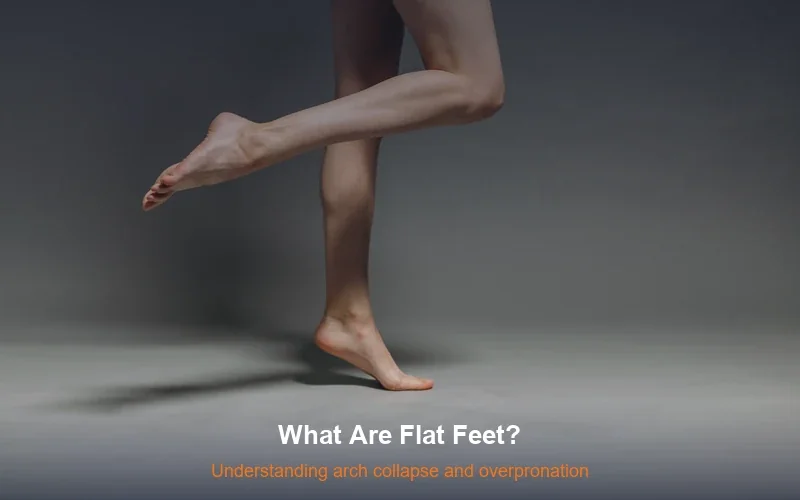
Flat feet, medically known as pes planus, is a condition where the arch of the foot is partially or completely collapsed. When standing, the entire sole of the foot makes contact with the ground. The Mayo Clinic notes this affects roughly 20 to 30 percent of the population to some degree.
Flat feet can be flexible (the arch reappears when you lift your foot) or rigid (the arch stays flat regardless of position). Flexible flat feet are more common and more responsive to insole treatment. Rigid flat feet often have an underlying bone or joint issue that requires medical evaluation.
The primary problem with flat feet is overpronation, the foot rolls inward excessively during walking or running. This alters the alignment of the entire leg, placing abnormal stress on the knees, hips, and lower back.
How Carbon Fiber Insoles Support Flat Feet
Carbon fiber insoles support flat feet by doing something that soft foam insoles cannot: they provide rigid, non-compressible arch support that physically prevents the arch from collapsing under body weight.
When you walk with flat feet, your arch flattens and your foot rolls inward. This overpronation stretches the plantar fascia and alters the alignment of your ankle, knee, and hip joints. A carbon fiber insole acts as a structural beam under the foot, it does not give way under pressure the way foam or gel does.
The stiffness of carbon fiber is what makes it effective for flat feet. While a foam insole might feel comfortable at first, it compresses under body weight and eventually allows the arch to collapse. Carbon fiber maintains its shape and support throughout the day, regardless of how many steps you take.
Benefits of Carbon Fiber Insoles for Flat Feet

Consistent Arch Support
The primary benefit is support that does not degrade over time. From your first step in the morning to your last step at night, a carbon fiber insole provides the same level of arch support. This consistency is critical for people whose flat feet cause pain during long days on their feet.
Motion Control
Carbon fiber insoles reduce overpronation by limiting how much the midfoot can roll inward. This controlled motion reduces strain on the plantar fascia, Achilles tendon, and knee joints, all common secondary pain sites for people with flat feet.
Lightweight and Thin
Despite its strength, carbon fiber is lightweight and thin. A full-length carbon fiber insole adds minimal bulk to your shoe, which means it works in more types of footwear than bulky foam orthotics.
Long Lifespan
Carbon fiber does not compress, break down, or lose its shape over time. A quality carbon fiber insole can last three to five years with daily use. At a typical price of $40–$80, the cost per day is negligible compared to replacing foam insoles every few months.
Good to Know
Many athletes with flat feet use carbon fiber insoles during training and competition. Some well-known NBA players who manage flat feet use custom carbon fiber orthotics in their game shoes to maintain performance and prevent injury.
Carbon Fiber vs. Traditional Flat Feet Insoles
Foam and Gel Insoles
Standard drugstore insoles are made from foam, gel, or memory foam. They excel at cushioning and shock absorption but provide minimal structural arch support. Within weeks of daily use, most foam insoles compress and lose whatever arch shape they had, which means your foot returns to its unsupported, overpronated position.
Semi-Rigid Plastic Orthotics
Plastic shell orthotics offer a step up in support. They hold their shape better than foam and provide moderate motion control. However, plastic can fatigue and crack over time, and many users find them bulky inside their shoes.
Carbon Fiber Insoles
Carbon fiber sits at the top of the support spectrum. It is lighter than plastic, stronger than foam, and provides the highest level of motion control available in an over-the-counter insole. For people with moderate to severe flat feet, carbon fiber offers the closest thing to a custom orthotic without the $300–$600 price tag.
| Insole Type | Arch Support | Motion Control | Durability | Typical Cost |
|---|---|---|---|---|
| Foam or Gel | Low | None | 3–6 months | $10–$30 |
| Plastic Orthotic | Medium | Moderate | 1–2 years | $30–$60 |
| Carbon Fiber | High | Strong | 3–5 years | $40–$80 |
| Custom Orthotic | Very High | Custom | 3–5 years | $300–$600 |
Who Should Consider Carbon Fiber Insoles for Flat Feet?
Carbon fiber insoles are best suited for people with flexible flat feet who experience pain or fatigue during daily activities. They are particularly helpful for those who stand or walk for long hours, participate in sports that involve running or jumping, or have not found relief with softer insoles.
You may be a good candidate if you have tried foam arch supports that felt comfortable initially but stopped working after a few weeks. If your flat feet cause secondary pain in your knees, hips, or lower back, the motion control from carbon fiber may provide relief that softer materials cannot.
People with rigid flat feet should consult a podiatrist before trying carbon fiber insoles. Rigid flat feet often have a different underlying cause and may respond better to custom orthotics or other interventions.
Medical Disclaimer
Not all flat feet require treatment. Many people with flat feet never experience pain, and insoles are not needed in those cases. If you do have pain, consult a podiatrist for an accurate diagnosis before purchasing insoles. Flat feet can sometimes indicate an underlying neurological or structural condition that requires medical attention.
What the Research Says About Carbon Fiber and Flat Feet
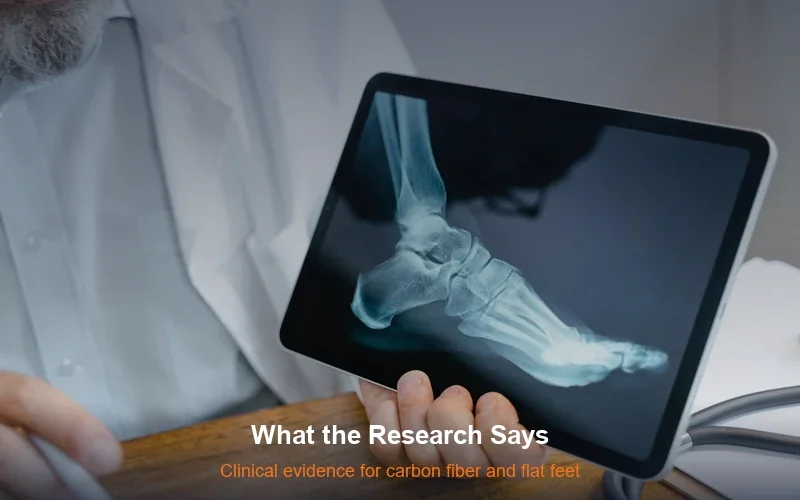
Research on carbon fiber orthotics for flat feet focuses primarily on their ability to reduce overpronation and control foot motion during gait. A study in the Journal of Foot and Ankle Research found that carbon fiber orthotic plates significantly reduced rearfoot eversion, the rolling-in motion that characterizes overpronation in flat feet.
Another study examined the energy cost of walking with carbon fiber orthotics in people with flat feet. Researchers found that the rigid support improved walking efficiency by reducing the muscle activation needed to stabilize the arch during stance phase. This means less fatigue during long periods of standing or walking.
While more research is needed specifically comparing over-the-counter carbon fiber insoles to custom-molded versions, the biomechanical principles are well-established. A stiffer insole provides more arch support and motion control, which directly benefits people with flexible flat feet.
How to Choose Carbon Fiber Insoles for Flat Feet
Arch Height and Profile
Flat feet vary in severity. Some carbon fiber insoles have a pronounced arch profile designed for significant collapse, while others offer a lower, more subtle arch. Choose based on the severity of your flat feet and consult sizing guides carefully.
Forefoot Flexibility
Some carbon fiber insoles are stiff from heel to toe, while others allow some forefoot flexibility. For flat feet, a full-length stiff design provides the most motion control. If you find a fully rigid insole uncomfortable, look for one with a carbon fiber arch and a more flexible forefoot section.
Shoe Compatibility
Carbon fiber insoles require shoes with a removable sock liner and adequate depth. They work well in athletic shoes, work boots, and hiking boots. Check whether your daily shoes can accommodate the insole before purchasing.
Sizing Considerations
Unlike foam insoles that can be trimmed with scissors, carbon fiber insoles come in fixed sizes. Measure your foot length and arch length against the manufacturer’s sizing chart carefully. If you are between sizes, choose the larger size and use a thin layer of felt or foam to fill any gap.
Footwear Considerations for Flat Feet
The shoes you wear with carbon fiber insoles matter as much as the insoles themselves. A supportive shoe with a firm heel counter, a stable midsole, and minimal torsional flexibility provides the foundation that carbon fiber needs to work effectively.
Shoes marketed as stability or motion-control models are ideal for flat feet. They are designed with a wider base and stiffer construction that complements the action of carbon fiber insoles. Avoid shoes that are extremely flexible or minimalist, as they allow the foot to overpronate despite the insole.
For everyday wear, consider our flat feet insoles designed to work with a wide range of footwear. They provide the arch support and stability that flat feet need in a package that fits sneakers, boots, and casual shoes alike.
Complementary Treatments for Flat Feet
Strengthening Exercises
The muscles of the foot and arch can be strengthened to provide better natural support. Towel curls, short foot exercises, and heel raises target the intrinsic foot muscles that help maintain the arch.
Calf and Achilles Stretching
Tight calves pull the heel upward and increase stress on the arch. Regular calf stretching reduces this tension and can improve foot mechanics during walking. This is especially important for people with flat feet who develop secondary Achilles tightness.
Proper Warm-Up and Recovery
If you are active with flat feet, warming up before exercise and cooling down afterward helps manage the additional stress on your feet. Dynamic stretches before activity and self-massage afterward can reduce post-exercise discomfort.
Many people with flat feet also develop related conditions like tendonitis or supination issues. If you experience pain on the outer edge of your foot, you may be dealing with supination flat feet, which requires a slightly different approach to support and alignment.
Tips for Transitioning to Carbon Fiber Insoles
Carbon fiber insoles feel different from any other insole you have used. The rigidity takes getting used to, and rushing the transition is the most common reason people give up on them.
Start by wearing the insoles for one to two hours at a time, doing only light walking. Increase by an hour each day. Your feet, calves, and legs need time to adapt to the new support. Mild soreness during the first week is normal, but sharp pain is not, stop and reconsider if you feel sharp pain.
Wear the insoles in your most supportive shoes during the break-in period. A stable shoe helps the insole stay in position and provides a better introduction to the rigid support. Once you are comfortable, you can experiment with wearing them in other footwear.
Conclusion
Flat feet do not have to limit your activity or cause daily pain. Carbon fiber insoles offer a durable, effective solution for managing arch collapse and overpronation that softer insoles cannot provide.
For people with flexible flat feet who spend long hours on their feet or stay active, the rigid support of carbon fiber can make a meaningful difference in comfort and pain levels. Combined with supportive footwear and targeted exercises, they offer a non-invasive path to better foot health.
For a versatile and affordable option, RoamingFeet ComfortMax insoles provide the arch support and motion control that flat feet need. At $39.99 with free returns and a 30-day money-back guarantee, they are an accessible entry point into orthotic-level support for flat feet.
Struggling with flat feet pain?
Our ComfortMax insoles are designed specifically for flat feet, orthotic-level support at a fraction of the cost of custom orthotics.
Free returns on all orders · 30-day money-back guarantee
Frequently Asked Questions
Can carbon fiber insoles correct flat feet?
No, carbon fiber insoles cannot permanently change the structure of your foot. Flat feet are a structural characteristic, not a postural habit. What these insoles can do is support the arch during activity, reducing pain and preventing secondary issues like overpronation and joint strain.
Are carbon fiber insoles better than custom orthotics for flat feet?
For many people with mild to moderate flexible flat feet, over-the-counter carbon fiber insoles provide comparable support to basic custom orthotics at a fraction of the cost. For severe flat feet or rigid flat feet, custom orthotics molded to your foot may still be the better option.
How long will carbon fiber insoles last for flat feet?
With daily use, a quality carbon fiber insole typically lasts three to five years. Unlike foam insoles that compress and lose support, carbon fiber does not break down under body weight. The main reason to replace them is wear on the top cover material rather than loss of support.
Can I use carbon fiber insoles if I have flat feet but no pain?
There is no medical need to treat painless flat feet. If your flat feet do not cause discomfort or affect your activity, insoles are not necessary. Some people choose to use them proactively during high-impact sports, but this is optional.
Will carbon fiber insoles fit in my work boots?
Yes, most carbon fiber insoles are designed to fit work boots, combat boots, and other lace-up footwear with removable insoles. They are thin enough to fit without crowding the toe box. Insoles for military boots are a common category, and carbon fiber is well-suited for the long hours and hard surfaces that come with boot wear.