Do Carbon Fiber Insoles Help with Hiking?
Yes, carbon fiber insoles help with hiking by reducing foot fatigue on long trails, improving stability on uneven terrain, and providing consistent arch support that does not break down over distance. Whether you are tackling a day hike or a multi-day backpacking trip, the right insole can make the difference between finishing strong and limping to the trailhead.
Key Takeaways
- Carbon fiber insoles reduce the energy your feet expend stabilizing on uneven ground, leaving you fresher
- The rigid plate provides consistent arch support that does not compress or flatten over miles of hiking
- Hikers with flat feet, overpronation, or a history of plantar fasciitis benefit most from carbon fiber insoles
- Pair carbon fiber insoles with supportive hiking boots and moisture-wicking socks for best results
- Allow a break-in period of 1–2 weeks on shorter hikes before attempting full-day or multi-day trips
How Carbon Fiber Insoles Work on the Trail
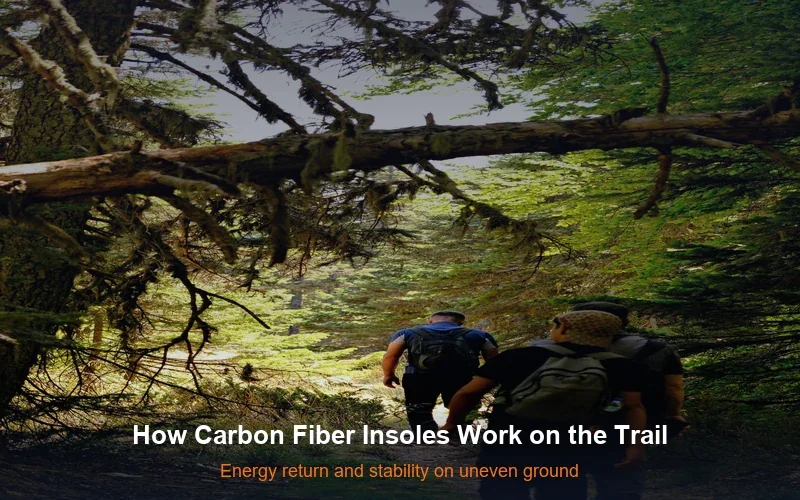
Carbon fiber insoles combine a lightweight spring-loaded plate with cushioning layers to create a platform that stores and returns energy with each step. On the trail, this translates to less fatigue in your feet and calves because the insole is doing some of the work your muscles would otherwise handle.
The key difference on hiking terrain is stability. When you walk on uneven ground, your foot’s small intrinsic muscles constantly fire to maintain balance. A carbon fiber insole provides a stiff, stable platform that reduces this muscular effort. Think of it as giving your feet a solid foundation so they do not have to work as hard to keep you upright on rocky descents or slippery ascents.
Unlike foam insoles that gradually compress throughout a long hike, carbon fiber maintains its structural integrity all day. The arch support you feel at mile one is the same arch support you get at mile ten. This consistency is one of the most underrated benefits for hikers who cover serious distance.
Main Benefits of Carbon Fiber Insoles for Hiking
Reduced Fatigue on Long Days
Hiking involves repetitive low-impact motion that accumulates over hours. Carbon fiber insoles reduce the cumulative fatigue by improving your gait efficiency. According to the American Hiking Society, proper foot support is one of the most overlooked factors in hiking endurance, your feet absorb thousands of pounds of cumulative force on even a moderate day hike.
Consistent Arch Support That Lasts
Standard insoles use foam for arch support, and foam compresses over time. After four or five hours on the trail, many hikers feel their arches start to ache as the support flattens out. Carbon fiber does not compress. The arch support stays exactly where it started for the entire hike, regardless of distance or load.
Improved Stability on Uneven Terrain
The rigidity of a carbon fiber plate gives your foot a stable base to push off from when navigating rocks, roots, and steep sections. This stability translates to better balance and reduced ankle fatigue, especially on technical trails where every step requires careful foot placement.
Better Shock Distribution on Descents
Downhill hiking is hard on your feet. The impact forces are higher, and your toes get jammed into the front of your boots. Carbon fiber insoles distribute these forces more evenly across your foot, reducing pressure points and the jarring sensation that makes descents so punishing.
Good to Know
Carbon fiber insoles work best in boots with removable insoles and a stiff shank. If your boots already have significant built-in arch support, the combination may feel too aggressive at first. Start with shorter hikes to gauge comfort before committing to a full-day outing.
Who Benefits Most from Carbon Fiber Insoles for Hiking
Hikers with Flat Feet
If you have flat feet or fallen arches, hiking can be particularly punishing. The constant pronation forces your arches to work overtime, often leading to pain in the arch, heel, or knee by the end of the day. Carbon fiber insoles provide a rigid arch support that prevents excessive pronation and keeps your foot in a neutral position throughout your stride. The same stability benefits that help athletes with flat feet perform at their best on the court translate directly to the trail.
Backpackers Carrying Heavy Loads
When you add a 30- to 50-pound pack to the equation, every step transmits more force through your feet. Carbon fiber insoles excel in this scenario because the stiff plate distributes the increased load more evenly. Many backpackers report significantly less foot pain on multi-day trips after switching to carbon fiber insoles.
Hikers Prone to Plantar Fasciitis
The consistent arch support of carbon fiber insoles helps prevent the plantar fascia from overstretching during long hikes. For hikers who have dealt with plantar fasciitis in the past, this preventative benefit alone justifies the upgrade. The insole keeps your arch supported through every step, reducing the strain that triggers flare-ups.
Older Hikers and Those with Degenerative Conditions
As we age, the natural padding on the bottom of our feet thins and our arches may weaken. Carbon fiber insoles compensate for both of these changes by providing external support and impact distribution. Hikers over 50 often find carbon fiber insoles restore comfort they thought they had lost permanently.
Medical Disclaimer
Carbon fiber insoles are training tools, not medical devices. If you have a diagnosed foot condition, diabetic neuropathy, or chronic pain that affects your gait, consult a podiatrist before switching insoles. Insoles designed for arch support are not a replacement for professional medical care.
How to Choose Carbon Fiber Insoles for Hiking
Stiffness for Load-Bearing
Hiking insoles need to be stiffer than running insoles because the forces involved are different. When you carry a pack, you need more support, not more flexibility. Look for insoles described as “stiff” or “high-support” rather than “flexible” or “responsive.” The REI Expert Advice series on hiking footwear recommends prioritizing stability and arch support for anyone carrying a pack over 20 pounds on uneven terrain.
Boot Compatibility
Not all hiking boots accommodate carbon fiber insoles equally. The insole needs to sit flat inside the boot without curling at the edges. Boots with a removable factory insole and a roomy toe box work best. Try the insole in your boot at home before committing to a purchase, some boots with aggressive arch shapes may not mate well with a carbon fiber plate. For those using heavy-duty or tactical boots, the same fit considerations apply as with insoles for combat boots, where a proper insole-to-boot match is critical for comfort.
Traction and Grip Considerations
Carbon fiber itself is smooth. Some carbon fiber insoles have a textured top layer that helps prevent your sock from sliding inside the boot on steep ascents. This is a small detail that matters significantly when you are climbing a 30-degree grade with a full pack.
Cushioning for Impact
While the carbon fiber plate provides stiffness and support, the cushioning layer determines how comfortable the insole feels on hard-packed trails and rocky descents. Look for a balance: too much cushioning reduces ground feel and stability, too little makes every rock feel like a spike.
Carbon Fiber Insoles vs. Standard Hiking Insoles
Standard hiking insoles typically use EVA foam or polyurethane for cushioning and arch support. They are comfortable out of the box and require no break-in period. However, they compress over time and lose their support after 200–300 miles of hiking.
Carbon fiber insoles require a longer break-in period but last significantly longer, often 500–800 miles before the cushioning layer needs replacement. The carbon fiber plate itself can outlast multiple pairs of boots. The trade-off is initial cost ($40–$70 for carbon fiber vs. $15–$30 for standard insoles) and the adaptation period.
For hikers who cover 100-plus miles per year, carbon fiber insoles deliver better value over time despite the higher upfront price. For casual day hikers who go out a handful of times per year, standard insoles may be sufficient.
How to Transition to Carbon Fiber Insoles for Hiking
Transitioning to hiking with carbon fiber insoles requires patience. The increased stiffness changes how your feet interact with the trail, and your calves and achilles tendons need time to adapt.
Start with flat, easy walks of 1–2 miles on paved surfaces for the first three to four days. Then progress to easy hiking trails with minimal elevation gain for your first few hikes. Keep these initial hikes under 3 miles. After 1–2 weeks of gradual exposure, most hikers are ready for full-day hikes with their carbon fiber insoles.
Watch for warning signs during the transition. Tight calves are normal, but sharp heel pain, arch pain that persists after hiking, or numbness in your toes indicate the insoles may be too stiff or improperly fitted. Scale back usage if you experience any of these symptoms.
Maintenance and Care for Hiking Insoles
Hiking insoles take more abuse than running insoles. Mud, water, and sweat all degrade the materials over time. Remove your insoles after every hike and let them air dry completely before your next outing.
Do not machine wash carbon fiber insoles. The agitation can delaminate the carbon fiber plate from the cushioning layer. Instead, hand wash with mild soap and cool water, then pat dry with a towel. Store them flat at room temperature, do not bend or roll them, as this can stress the carbon fiber.
Replace your insoles when the cushioning layer shows visible compression marks or when you notice decreased arch support during hikes. Most carbon fiber hiking insoles need replacement every 500–800 miles, though high-quality pairs can last longer.
Common Mistakes Hikers Make with Carbon Fiber Insoles
Using Them Straight Out of the Box on a Big Hike
The number one mistake is taking carbon fiber insoles on a 10-mile hike the first time out. Your feet need gradual exposure to the new biomechanics. Even if the insoles feel comfortable standing still, a full day of hiking will reveal adaptation challenges.
Choosing the Wrong Stiffness Level
Running-oriented carbon fiber insoles are too flexible for hiking. They do not provide enough support for load-bearing activity. Conversely, the stiffest hiking insoles may feel uncomfortable for hikers who prefer flexible, minimalist footwear. Match the stiffness to your boot type and hiking style.
Ignoring Boot Fit Changes
Adding a carbon fiber insole changes how your foot sits inside your boot. If your boots were already snug, the additional thickness of the insole may cause pressure points or toe jamming on descents. Always test the fit before heading to the trail.
Conclusion
Carbon fiber insoles are a worthwhile investment for hikers who want better stability, reduced fatigue, and consistent arch support on the trail. The rigid carbon fiber plate provides a level of support that standard foam insoles cannot match, especially on long days or when carrying a heavy pack. The adaptation period requires patience, but most hikers who make the switch report noticeably fresher feet. For hikers who need additional arch support or deal with flat feet, combining carbon fiber insoles with dedicated flat feet insoles designed for high-impact activity provides comprehensive foot support for any trail condition. And when the terrain gets technical, the right silicone insoles can add targeted cushioning to the heel and forefoot areas that take the most abuse on rocky descents.
Play harder, recover faster.
Whether you are hitting the pavement or the trail, the right insoles make every stride better. Explore our full collection of performance insoles designed for active feet.
Free returns on all orders · 30-day money-back guarantee
Frequently Asked Questions
Do carbon fiber insoles help with hiking?
Yes. Carbon fiber insoles reduce foot fatigue, provide consistent arch support that does not break down over long distances, and improve stability on uneven terrain. They are particularly beneficial for hikers carrying heavy packs or those with flat feet, overpronation, or a history of plantar fasciitis.
Are carbon fiber insoles good for hiking boots?
Carbon fiber insoles work well in hiking boots with removable factory insoles, a stiff shank, and a roomy toe box. They provide the same stability benefits that make carbon fiber effective in running shoes but are better suited to the lower-cadence, higher-impact nature of hiking. Boots with aggressive arch shapes may not accommodate them well.
Can I use running carbon fiber insoles for hiking?
It depends on your load and terrain. Running-oriented carbon fiber insoles are designed for forward motion on smooth surfaces and may lack the stiffness needed for hiking with a pack. If you do light day hikes with minimal gear, running insoles may suffice. For backpacking or technical terrain, choose insoles specifically built for hiking.
How long do carbon fiber insoles last for hiking?
The carbon fiber plate itself is extremely durable and can last through multiple pairs of boots. The cushioning layer typically needs replacement every 500–800 miles of hiking. Signs of wear include visible compression marks, reduced arch support, and any delamination between the plate and foam.
Will carbon fiber insoles make my boots too tight?
Possibly. Carbon fiber insoles add thickness compared to standard insoles. If your boots were already snug, the additional height may cause pressure on the top of your foot or jam your toes into the toe box on descents. Try the insoles in your boots at home before committing to a long hike.