Invisible Height Insoles: Discreet Lift That No One Notices
The number one concern for anyone considering height insoles is being found out. Will people notice? Will the insole be visible around my ankle? Will my walk look different?
These are fair questions. An invisible height boost is only valuable if it actually stays invisible.
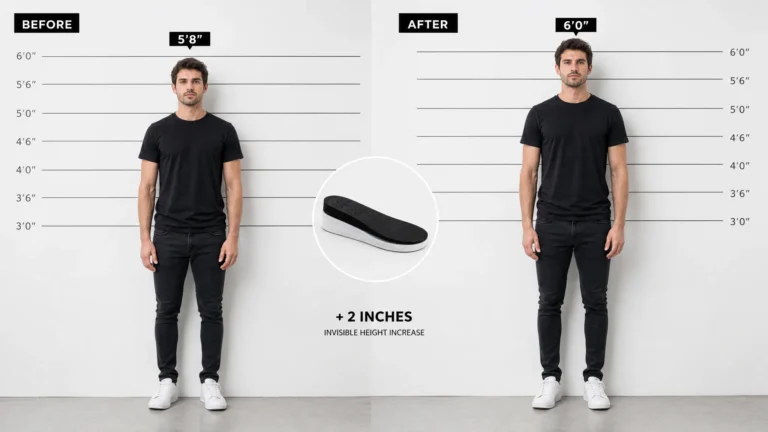
The good news is that modern height insoles are designed specifically for discretion. With the right product and the right shoe choice, you can add 1 to 3 inches of height without anyone knowing. This guide covers exactly how invisible height insoles work, which shoes conceal them best, and what to look for when choosing a discreet pair.
Good to Know
The most discreet height insoles use a full-length tapered design that follows the natural shape of your shoe. Unlike cheap heel-only inserts, full-length insoles distribute the lift evenly and stay hidden inside the shoe.
What Makes Height Insoles Invisible?
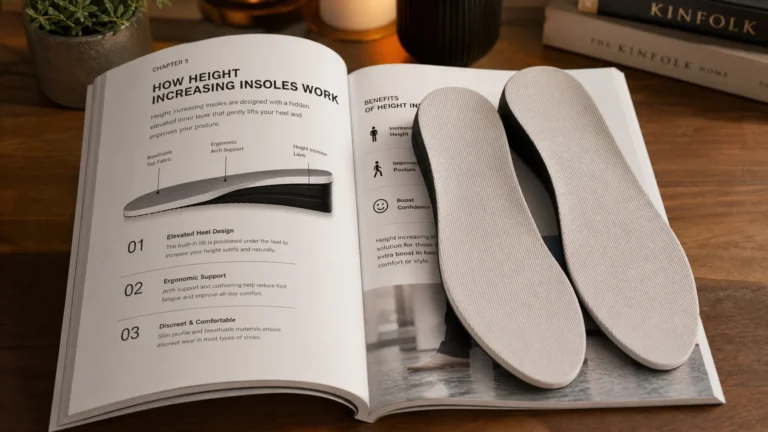
Invisible height insoles achieve discretion through three key design features:
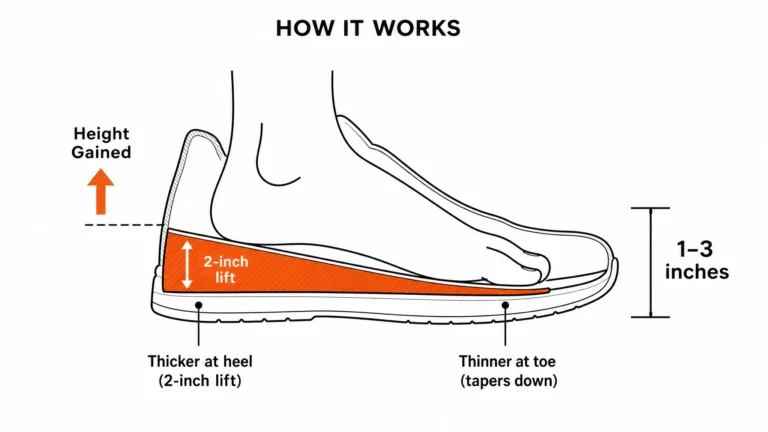
Full-length construction. A full-length insole distributes the lift across the entire foot, which means there is no abrupt wedge visible at the heel. The insole follows the internal shape of the shoe. From the outside, the shoe looks completely normal.
Tapered heel cup. The heel section of a quality invisible insole is contoured to match the shoe’s heel cup. There is no extra bulk at the back of the ankle. This is the most common giveaway with cheap insoles — visible padding around the heel — and quality designs eliminate it.
Graduated lift profile. Instead of a sharp drop from heel to toe, graduated insoles create a smooth slope. This not only feels more natural when walking but also prevents the shoe from visibly distorting at the heel.
The RMF-030 Invisible Height Increase Insole uses all three features. Its adjustable layered system lets you find the right lift height while maintaining a completely invisible profile inside the shoe.
Which Shoes Conceal Height Insoles Best?
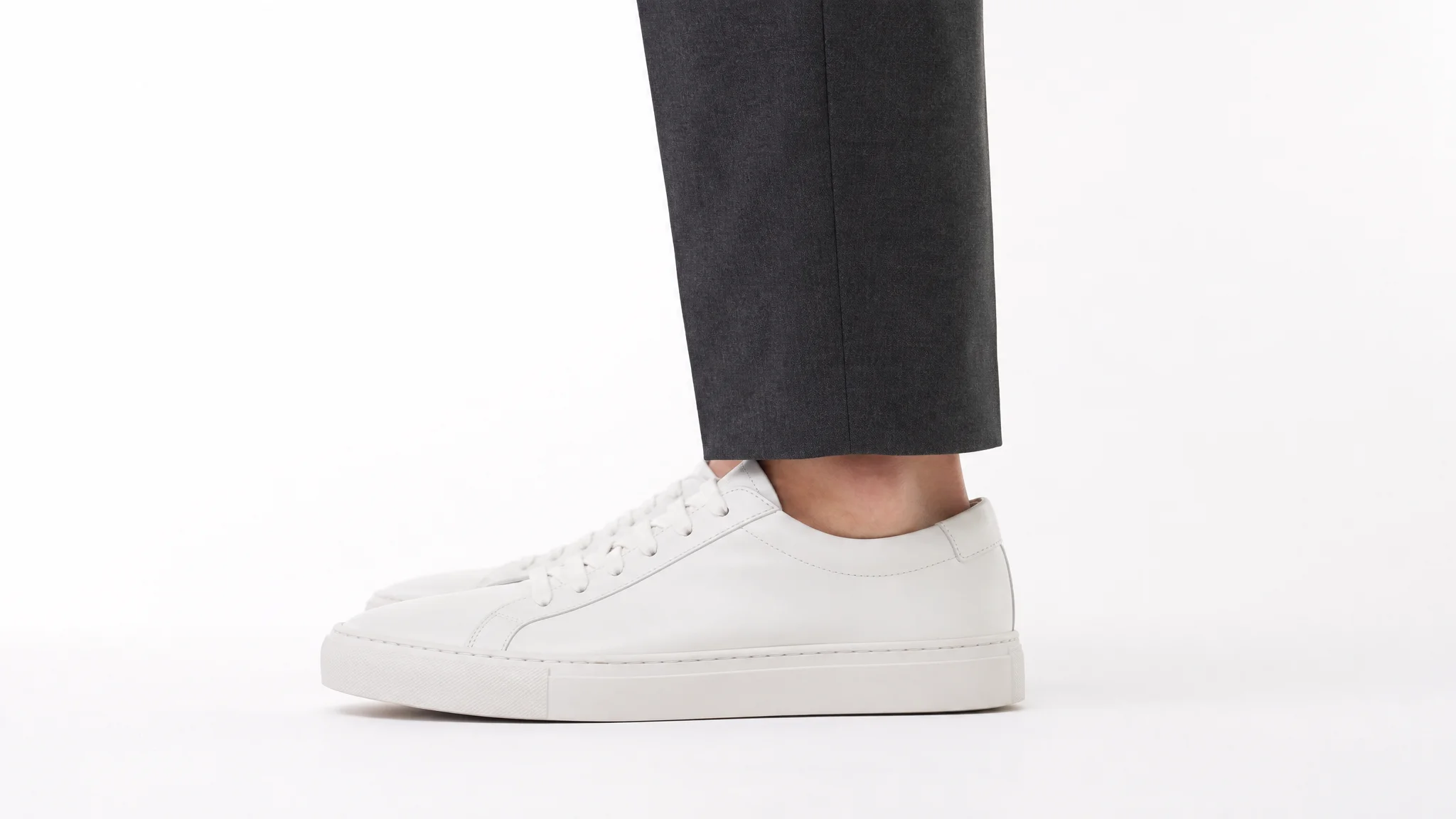
Shoe choice is the most important factor for discretion. Even the best invisible insole will be noticeable in the wrong shoe.
Best for concealment:
| Shoe Type | Why It Works | Maximum Discreet Lift |
|---|---|---|
| Lace-up boots | Deep internal space, high ankle covers the heel | 3 inches |
| High-top sneakers | Similar to boots, good depth | 2.5–3 inches |
| Standard sneakers | Removable insoles, moderate depth | 2 inches |
| Loafers (with lining) | Depends on the shoe construction | 1–1.5 inches |
| Casual lace-up shoes | Good middle-ground option | 1.5–2 inches |
Shoes to avoid:
- Thin flats and ballet-style shoes — no depth for any lift
- Most slip-on dress shoes — too shallow for more than 1 inch
- Sandals and open-toe shoes — the insole would be visible
- Very tight or narrow shoes — the extra material causes visible bulging
Invisible Height Insoles vs Cheap Alternatives
There is a significant difference between quality invisible height insoles and budget alternatives from Amazon or drugstores:
| Factor | Quality Invisible Insole | Cheap Alternative |
|---|---|---|
| Material | Multi-layer EVA + memory foam | Single-density foam or gel |
| Heel design | Tapered, contoured heel cup | Flat or blocky heel wedge |
| Lift distribution | Full-length graduated slope | Heel-only or abrupt drop |
| Breathability | Moisture-wicking fabric cover | Plastic or basic foam cover |
| Durability | 6–12 months | 1–3 months before compression |
| Discretion | Invisible in appropriate shoes | Visible heel bulk, shoe distortion |
Quality height insoles like the RMF-011 are designed for everyday wear. The difference in both comfort and discretion is measurable — the better materials and construction mean the insole stays hidden even through a full day of walking.
How to Make Height Insoles Completely Invisible
Follow these steps to ensure your height insoles stay discreet:
Choose the right shoe. Select shoes with good internal depth and a heel counter that sits at or above your ankle bone. Boots are the gold standard for discretion.
Remove the original insole. Wearing both the original insole and a height insole compresses your foot and creates visible bulging. Always remove the factory insole first.
Check the fit from the outside. After inserting the insoles, look at your shoes from every angle — front, side, back. If you see any bulging, the insole is too thick for that shoe. Try a lower lift or a different shoe.
Test in natural lighting. Checking in a mirror at home under bright lights is different from being seen in normal conditions. Have someone watch you walk in natural light to confirm the insoles are invisible.
Walk naturally. The most common giveaway is not visual — it is an unnatural gait caused by wearing too much lift too soon. Start with a height that does not change your walking pattern.
Important
Do not wear height insoles in shoes that are visibly too tight. Straining the shoe material not only reduces discretion but can also damage the shoe and cause foot pain.
Who Benefits Most from Invisible Height Insoles?
Invisible height insoles are most valuable for people in situations where appearance matters:
- Professional settings where confidence and presence affect outcomes
- Social events and dates where first impressions count
- Photography and video where every inch shows on camera
- Daily wear for anyone who wants a consistent, low-effort height boost
For men, the men’s height insoles range offers up to 3 inches in discreet designs. For women, the women’s height insoles line uses EVA memory foam construction sized for women’s footwear.
Common Myths About Invisible Height Insoles
Myth: People will notice the difference. In reality, most people will not notice a difference of 1–3 inches in someone they see regularly. Height perception is not that precise. New acquaintances will simply see you at your (slightly taller) height.
Myth: The insoles make a sound when walking. Quality insoles use foam materials that are completely silent. No clicking, no squeaking, no noise.
Myth: You cannot run or move naturally. At moderate lift heights (1–2 inches), most people can walk, climb stairs, and move normally. Running and sports are not recommended at any height, but everyday movement is unaffected.
Myth: The insoles will wear out and become visible over time. Quality insoles maintain their shape for 6–12 months. They compress gradually with use, but they do not suddenly fail or become visible. Replace them when you notice reduced lift.
Invisible lift. Total confidence.
Our height insoles are designed to be completely invisible inside your shoes. Up to 3 inches of lift, zero visibility. See for yourself.
Discreet Height Insoles →Free returns on all orders · 30-day money-back guarantee
Frequently Asked Questions
Can people tell when you wear height insoles?
With quality insoles and the right shoes, no. The insole is hidden inside the shoe, and the lift is distributed naturally. People will see a slightly taller version of you — they will not see the insole.
What height insoles are the most invisible?
Full-length insoles with tapered heel cups are the most invisible. The RMF-030 Invisible Height Increase Insole is designed specifically for discretion, with an adjustable layered system and contoured heel.
Do invisible height insoles work in dress shoes?
It depends on the shoe. Dress shoes with removable insoles and moderate depth can accommodate 1–1.5 inches of lift. Very shallow dress shoes will not conceal the insole well.
How can I tell if my height insoles are visible?
Stand in front of a full-length mirror and look at your shoes from behind and from each side. If you see any bulging at the heel or ankle, try a lower lift or different shoes. Have someone watch you walk in natural light for the most accurate check.
Are height insoles that look natural expensive?
No. Quality invisible height insoles range from $22 to $39. This is far less than elevator shoes ($100–$300+) and a fraction of the cost of custom footwear.
Can I wear invisible height insoles with boots?
Yes. Boots are actually the best choice for invisible height insoles. The deep internal space and high ankle construction provide maximum concealment, even at 3 inches of lift.