Flat Feet Military Eligibility Guide: Can You Join with Flat Feet?
The short answer: yes, in most cases. The US military has significantly relaxed its flat feet restrictions over the past two decades. Asymptomatic flat feet — flat arches that do not cause pain — are generally not disqualifying for any branch. However, flat feet that cause chronic pain, limit physical activity, or require ongoing treatment may require a medical waiver. This guide covers the current standards by branch, what triggers disqualification, and how the right support can help recruits succeed through basic training.
Key Takeaways
- Asymptomatic flat feet are generally not disqualifying for any US military branch as of 2026
- Symptomatic flat feet that cause chronic pain or limit physical function may require a medical waiver
- Each branch sets its own standards — the Marines and Navy are generally stricter than the Army and Air Force
- Arch support insoles are permitted in basic training and can significantly improve comfort and performance
- Many service members with flat feet serve without issues by using supportive insoles and proper footwear
Military Physical Standards for Flat Feet: An Overview
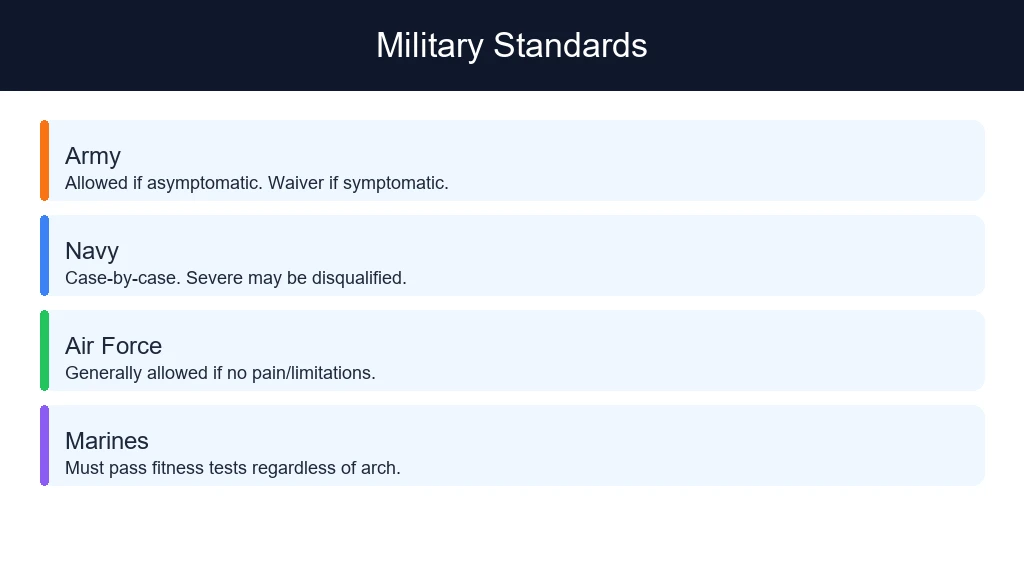
The Department of Defense (DoD) instruction governing medical standards for military service (DoDI 6130.03) addresses flat feet under musculoskeletal conditions. The relevant standard disqualifies individuals with “pes planus (flat feet) that is symptomatic or interferes with the proper fitting of military footwear.”
The key word is “symptomatic.” If your flat feet cause pain, swelling, or functional limitations, you may need a waiver. If your arches are flat but you have no symptoms, you meet the standard.
This represents a major shift from earlier eras. During the Vietnam War era, flat feet were an automatic disqualification regardless of symptoms. The change reflects both a better understanding of the condition — flat feet alone do not predict physical performance — and the military’s need to cast a wider recruitment net.
It is essential to note that a medical examination at a Military Entrance Processing Station (MEPS) will evaluate your feet regardless of your medical history. If you have never experienced symptoms, the examination will confirm that and you will likely proceed without issue.
Can You Join the Military with Flat Feet?
Yes, provided your flat feet do not cause symptoms that interfere with training or duty. Here is how it breaks down by scenario:
No Symptoms, Low Arches. You will almost certainly pass the medical examination. Many recruits have flat feet and serve without any restrictions. The key is having no history of pain, treatment, or activity limitations related to your arches.
Mild or Occasional Symptoms. If you have occasional arch pain after long runs or standing for extended periods, you may need a waiver. A podiatrist’s note confirming the condition is manageable with supportive insoles strengthens your case.
Chronic Pain or Prior Treatment. If you have a documented history of flat feet-related pain, physical therapy, orthotic prescriptions, or activity restrictions, you face a higher bar. The military will want to confirm that the condition will not interfere with training or deployability.
Prior Surgery. Flat feet corrective surgery is rare but disqualifying in most cases. A waiver may be possible after a full recovery and functional assessment, but this is an uphill path.
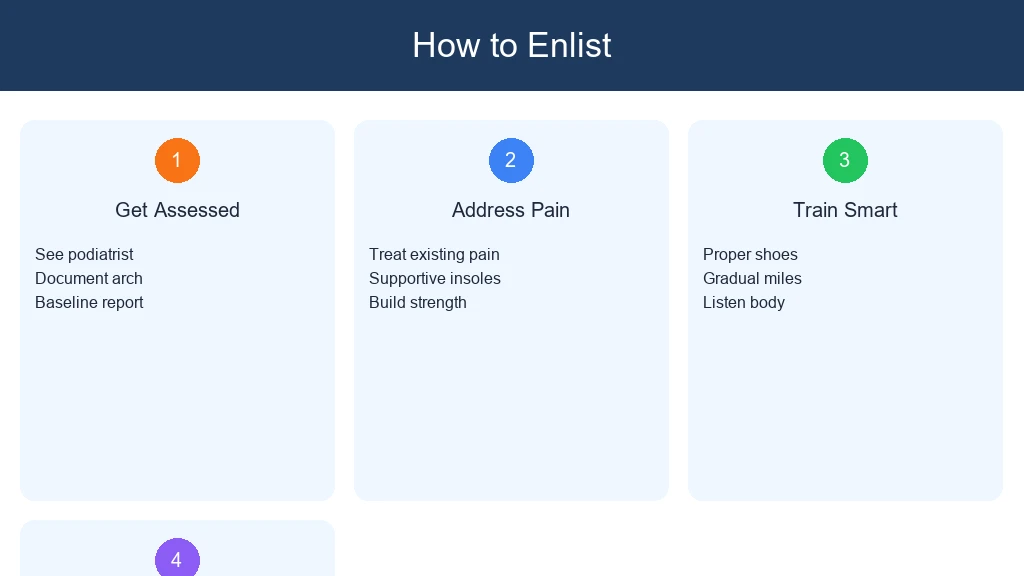
If you are unsure where you stand, visit a podiatrist for a pre-enlistment evaluation. They can assess whether your flat feet are symptomatic and provide documentation if needed.
Good to Know
The military medical standard focuses on *current* symptoms and function, not your arch shape. Two recruits with identical arch collapse can have different outcomes — one with no pain passes, one with chronic pain needs a waiver. The determination is based on how your feet perform, not how they look.
Flat Feet Army Disqualification Rules
The Army follows DoD guidelines but adds its own specific enlistment standards through AR 40-501. For flat feet, the Army’s position is straightforward:
Disqualifying conditions:
– Symptomatic pes planus that causes pain, swelling, or tenderness
– Flat feet that interfere with the proper fit of military boots
– Flat feet accompanied by other foot conditions like plantar fasciitis or tendonitis
– A history of surgical correction for flat feet
Not disqualifying:
– Asymptomatic flat feet regardless of arch height
– Flat feet discovered during the MEPS exam with no symptom history
– Flat feet that are well-managed with over-the-counter insoles (with medical documentation)
The Army processes the most recruits of any branch and handles flat feet waivers regularly. If you are otherwise qualified and your flat feet do not cause significant functional limitation, a waiver is reasonably attainable.
The Army’s physical demands — particularly the ruck marching and running requirements — mean that even with a waiver, you should enter basic training with your support strategy in place. Recruits with flat feet who prepare with proper arch support insoles and pre-training conditioning tend to have fewer issues than those who discover the need during basic.
The Navy’s medical standards for flat feet are outlined in the Manual of the Medical Department (MANMED). The Navy takes a slightly stricter approach than the Army because of the unique demands of shipboard service — prolonged standing on steel decks, ladder climbing, and the physical requirements of damage control.
Navy-specific considerations:
– Flat feet that cause pain during prolonged standing may be disqualifying, as shipboard life involves hours of standing watch
– Flat feet that limit the ability to wear standard-issue safety footwear or combat boots are scrutinized more closely
– The Navy places additional emphasis on lower extremity alignment due to the confined, uneven surfaces aboard ships
However, asymptomatic flat feet are still not disqualifying. Many sailors serve with flat feet without restrictions. The key for Navy applicants is demonstrating that your flat feet do not cause pain during standing or walking — the primary activities of shipboard life.
The Navy also considers whether flat feet would interfere with the ability to pass the Physical Readiness Test (PRT), which includes running and push-ups. If your flat feet limit your run time or cause pain during conditioning, a waiver may still be possible with supporting documentation from a podiatrist.
Other Branch Standards
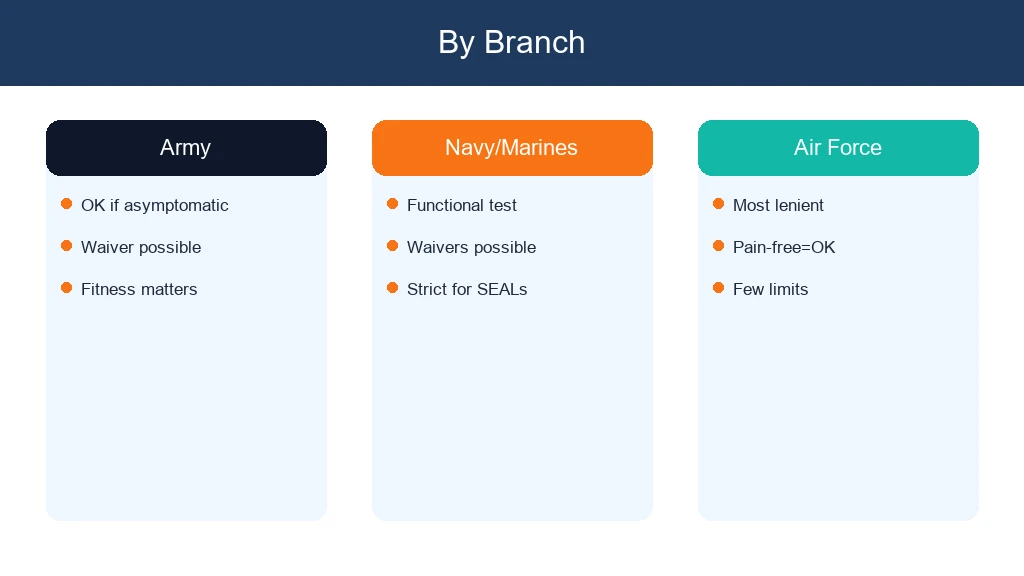
Air Force. The Air Force has the most relaxed flat feet standards among the branches. As long as your flat feet are asymptomatic and do not interfere with running or wearing military boots, you will likely pass the medical exam without issue. The Air Force processes waivers regularly for mild cases.
Marine Corps. The Marines have the strictest physical standards overall, and flat feet are evaluated within that context. Asymptomatic flat feet are not disqualifying, but the Marines place a premium on running performance and ruck marching. If your flat feet affect your initial strength test or run time, the Marines may require a waiver. The USMC is also less likely to grant waivers for conditions that require ongoing supportive devices.
Coast Guard. The Coast Guard follows similar guidelines to the Navy. Flat feet that cause no symptoms are acceptable. Waivers are available for mild symptomatic cases but are evaluated on a case-by-case basis with an emphasis on operational deployability.
Important
Medical standards change. The information in this guide reflects current DoD and branch policies as of 2026, but enlistment standards are updated regularly. Always verify current requirements with a military recruiter and consult a podiatrist for a personal assessment before making enlistment decisions based on a medical condition.
How Insoles Help Recruits with Flat Feet Pass Basic Training
Even with a successful enlistment, basic training places extraordinary demands on your feet. Recruits typically march 5–10 miles per day in boots, stand for hours during drill and ceremony, and run regularly. For flat-footed recruits, this can quickly lead to arch pain, shin splints, and stress reactions if the feet are not properly supported.
Arch support insoles are the single most effective tool for managing flat feet through basic training. Here is why they matter and how to use them.
Why Boots Alone Are Not Enough. Standard-issue military boots are designed for durability and protection, not arch support. Most boots have minimal arch support and a flat insole. For recruits with flat feet, this combination accelerates overpronation and strain on the plantar fascia and posterior tibial tendon.
What to Look for in Military Boot Insoles. Quality insoles for military use need to meet specific requirements:
– Firm arch support that does not compress under heavy loads (ruck sacks add 50–100 pounds)
– A deep heel cup to stabilize the foot on uneven terrain
– Shock absorption in the heel and forefoot for running and marching on hard surfaces
– Moisture-wicking material for all-day wear in hot conditions
When to Start. Do not wait until basic training begins. Start wearing your insoles 4–6 weeks before shipping out. This allows your feet and calves to adapt gradually. Jumping into full-day wear with firm arch support during the first week of basic training guarantees painful shin splints and calf cramps.
Are Insoles Allowed in Basic Training? Yes. Arch support insoles are generally permitted in all branches of basic training. They are considered medical devices rather than modifications to uniform items. However, check with your specific training command, as some may require a medical note.
For specific recommendations, our guide to best military boots insoles covers insoles designed for the unique demands of military footwear and training.
Flat Feet in Active Duty Service Members
Flat feet do not end a military career. Many service members manage flat feet throughout their careers with consistent support strategies.
The most common issues active-duty members with flat feet face include:
Shin Splints. Overpronation from flat feet is a primary cause of medial tibial stress syndrome (shin splints). This is the most common overuse injury in basic training and among new runners. Proper arch support significantly reduces incidence.
Stress Fractures. The altered force distribution from flat feet increases stress on the metatarsals and heel. Recruits with flat feet are at higher risk for stress fractures during the rapid mileage increase of basic training.
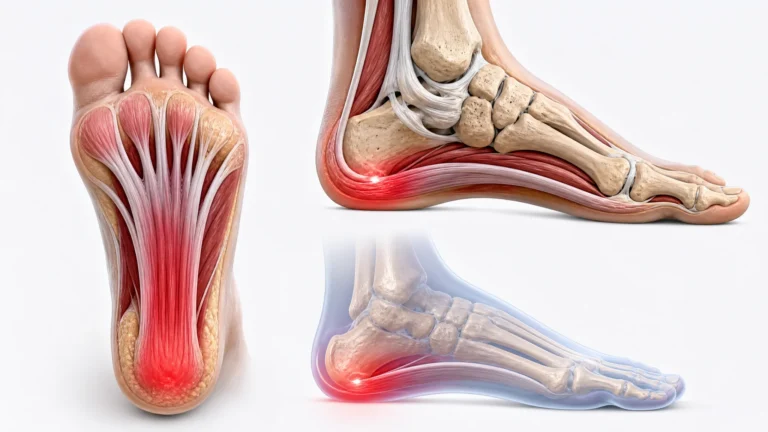
Plantar Fasciitis. The constant tension on the plantar fascia from collapsed arches is aggravated by marching and running in boots. Preventive arch support is far more effective than treating plantar fasciitis after it develops.
Patellofemoral Pain. Knee pain is common among flat-footed service members due to the rotational forces of overpronation traveling up the kinetic chain.
For those looking for combat-specific solutions, our guide to the 10 best insoles for combat boots covers options tested for durability and performance under field conditions.
Tips for Preparing for Basic Training with Flat Feet
If you have flat feet and are preparing for military service, here is a preparation plan to minimize issues:
Start Conditioning Early. Begin a progressive walking and running program 8–12 weeks before basic training. Gradually increase distance and time on your feet. This allows your posterior tibial tendon to adapt to the load.
Acclimate to Boots. Purchase your boots early if possible and wear them during training walks. Breaking in boots with your insoles inside ensures both the footwear and your feet are ready.
Strengthen Your Feet. Add foot-specific exercises to your pre-training routine: calf raises, towel curls, and arch lifts. Stronger feet handle the demands of basic training better.
Build Core and Glute Strength. Flat feet cause compensation patterns up the chain. Weak glutes and core increase the load on your feet. Include hip thrusts, planks, and lunges in your preparation.
Plan Your Insole Strategy. Have your insoles ready before you ship out. Bring a spare pair. Know that you may need a brief adjustment period — start with 2–3 hours per day during your pre-training phase.
Conclusion
Flat feet alone will not stop you from serving in the US military. Asymptomatic flat feet are not disqualifying for any branch, and even symptomatic cases can often receive waivers with proper documentation. The key factors are whether your flat feet cause pain, limit physical function, or interfere with military footwear.
If you are preparing for enlistment, the smartest step you can take is addressing your foot support before basic training begins. Quality arch support insoles designed for military boots prevent the most common overuse injuries that flat-footed recruits face — shin splints, stress fractures, and plantar fasciitis. Find the right support in our guide to the best flat feet and fallen arches insoles, and enter basic training with the foundation you need to succeed.
Preparing for basic training with flat feet?
Our ComfortMax insoles provide the firm arch support you need for long marches and hard runs — tested for durability under heavy loads.
Free returns on all orders · 30-day money-back guarantee
Frequently Asked Questions
Can you join the military with flat feet in 2026?
Yes. Asymptomatic flat feet are not disqualifying for any US military branch. Symptomatic flat feet may require a medical waiver, which is attainable in most cases with proper documentation from a podiatrist.
Are flat feet disqualifying for the Army?
Only if they are symptomatic — causing pain, swelling, or interfering with boot fit. Asymptomatic flat feet are not disqualifying for Army service.
Do flat feet affect military performance?
Flat feet can increase the risk of shin splints, stress fractures, and plantar fasciitis during basic training if not properly supported. However, with arch support insoles and proper conditioning, most recruits with flat feet perform without issues.
Can I wear insoles in basic training?
Yes. Arch support insoles are generally permitted in all branches of basic training. They are considered medical devices. It is advisable to have a medical note or documentation, though this is rarely required.
Asymptomatic flat feet are not disqualifying for the Navy. The Navy evaluates flat feet in the context of shipboard requirements, particularly prolonged standing. Symptomatic cases are evaluated on a case-by-case basis.
What insoles are best for military boots?
Look for insoles with firm arch support that resists compression under heavy loads, a deep heel cup for stability on uneven terrain, and moisture-wicking material for all-day wear. Our military boots insoles guide has specific recommendations.