Ball of Foot Pain (Metatarsalgia): Causes, Relief & Best Insoles
Ball of Foot Pain (Metatarsalgia): Causes, Symptoms & the Best Insoles for Relief
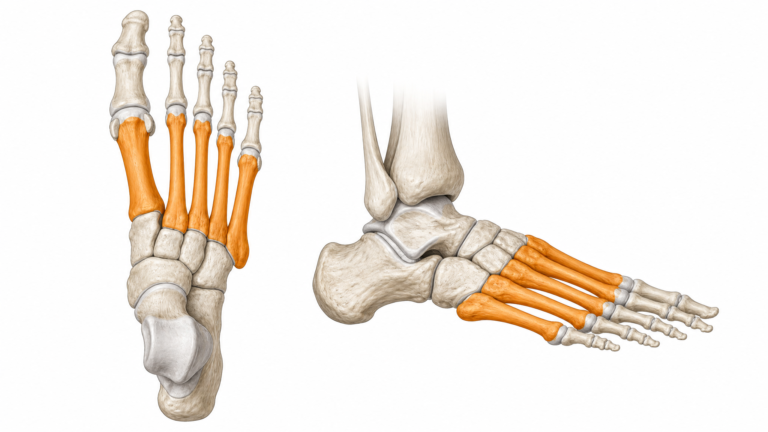
That sharp, burning sensation in the ball of your foot has a medical name — metatarsalgia. It is a common condition that affects the forefoot, where the five metatarsal bones connect to your toes. The pain can range from a dull ache to a sharp, burning sensation that makes every step uncomfortable. The good news: metatarsalgia is highly treatable, usually without surgery. This guide covers what causes it, how to recognize it, and which insoles provide the fastest relief.
Key Takeaways
- Ball of foot pain (metatarsalgia) affects the metatarsal heads — the bones just behind your toes
- Common causes include overuse, poor footwear, high arches, flat feet, aging, and tight calf muscles
- First-line treatment is a combination of metatarsal pads, arch support insoles, and proper footwear
- Most cases improve significantly within 4–6 weeks of consistent conservative treatment
- Choosing insoles with a built-in metatarsal dome is the most effective product solution
What Is Ball of Foot Pain (Metatarsalgia)?
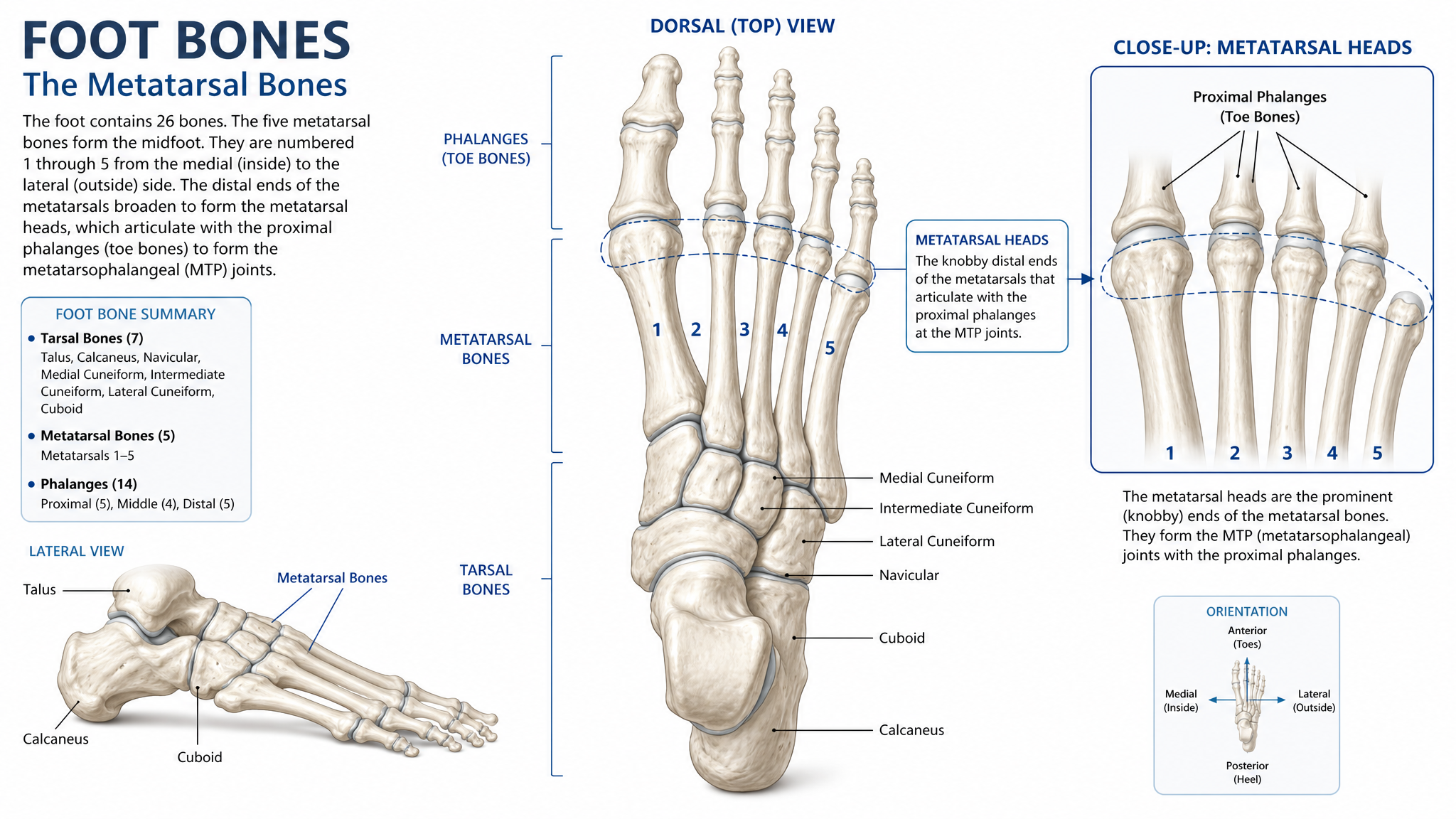
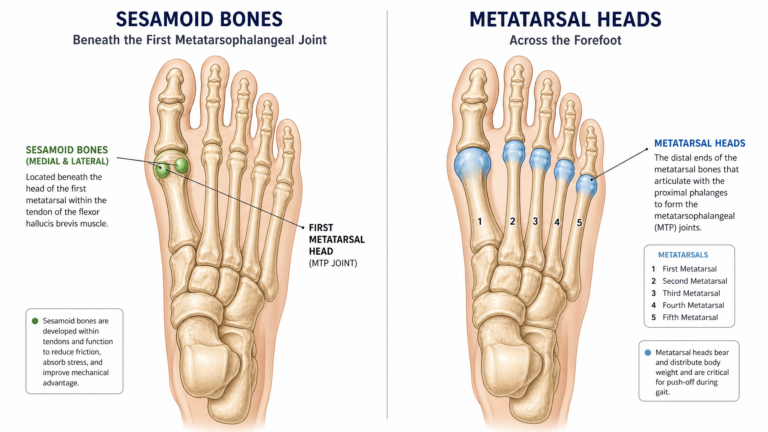
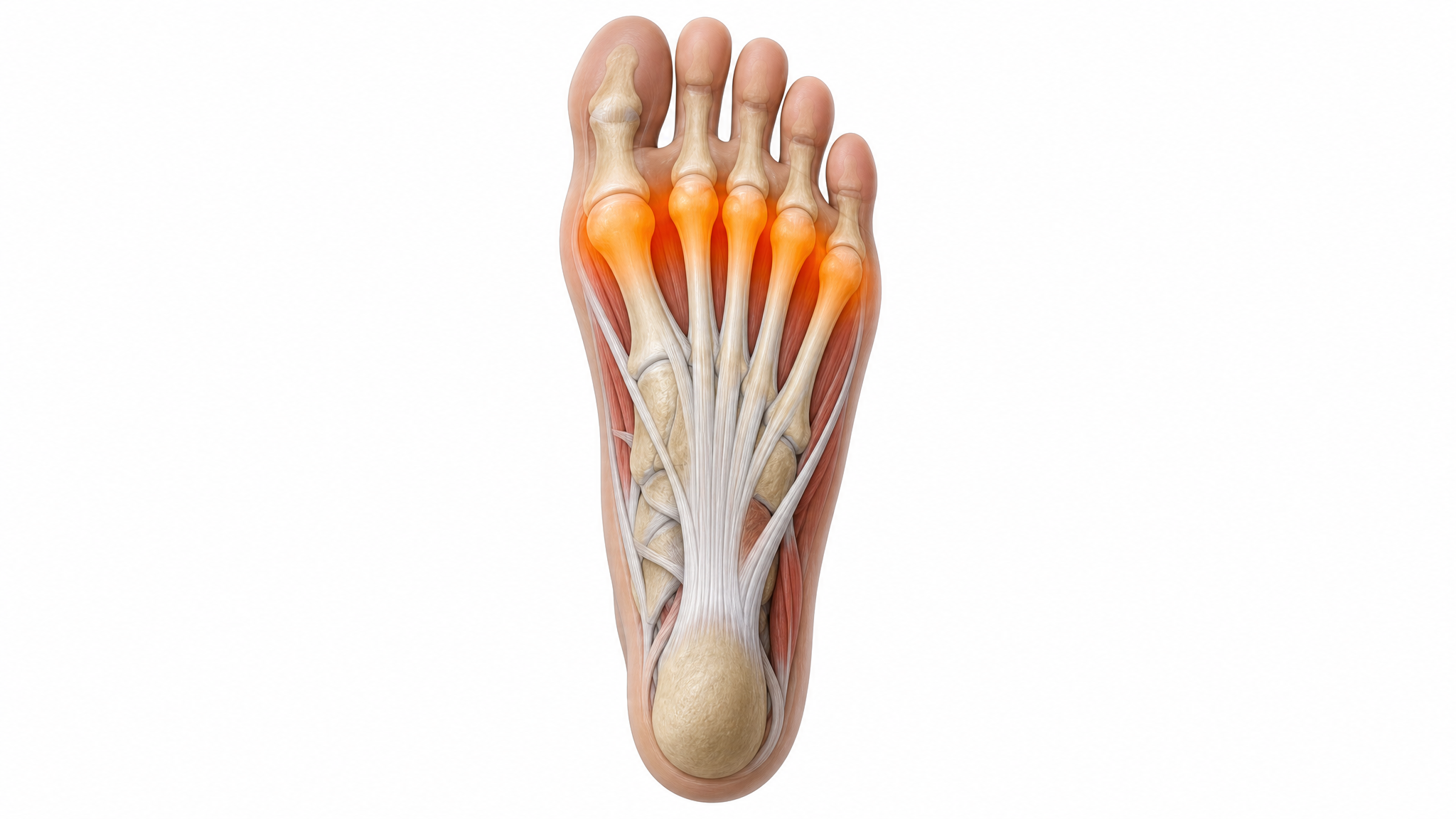
Metatarsalgia is a general term for pain and inflammation in the ball of the foot — the padded area between your arch and your toes. The pain involves one or more of the five metatarsal bones, the long bones that run from the middle of your foot to your toes.
The condition is not a single diagnosis but a symptom complex with multiple possible causes. The common thread is increased pressure on the metatarsal heads — the knuckle-like ends of these bones at the base of your toes. When something causes excessive pressure or inadequate cushioning in this area, the result is pain.
Quick Note
Metatarsalgia affects an estimated 15–30% of adults at some point in their lives. It is most common in runners, people over 40, and those who wear high heels or narrow shoes regularly. The condition is significantly more common in women than men, largely due to footwear choices.
Common Causes of Metatarsalgia
Understanding what caused your ball of foot pain is the first step to treating it. Here are the most common causes:
Overuse from High-Impact Activities. Running, jumping, basketball, tennis, and other high-impact sports repeatedly load the forefoot. Without adequate cushioning or recovery time, the metatarsal heads become inflamed. This is the most common cause in athletes and active individuals.
Poor Footwear Choices. Shoes with narrow toe boxes crowd the metatarsal heads together, increasing pressure. High heels shift body weight forward onto the forefoot, multiplying the force on the metatarsal heads by two to three times compared to flat shoes. Thin-soled shoes provide inadequate shock absorption.
Foot Structure Abnormalities. High arches (cavus foot) place more weight on the metatarsal heads because the arch does not absorb and distribute force effectively. Flat feet can also contribute by altering the way weight transfers through the forefoot. Hammertoes and claw toes shift the foot’s padding forward, exposing the metatarsal heads.
Fat Pad Atrophy. The natural fatty pad under the metatarsal heads thins with age, typically starting around age 40. This leaves the bones with less natural cushioning, making even normal walking painful. This is often described as feeling like “walking on marbles.”
Tight Calf Muscles. Restricted ankle dorsiflexion from tight calves and Achilles tendons forces the foot to compensate by rotating early onto the forefoot. This increases the duration and intensity of forefoot loading with every step.
Excess Body Weight. Every pound of body weight multiplies the force on the forefoot during walking by roughly three to five times. Higher body weight increases the baseline pressure on the metatarsal heads.
Ball of Foot Pain Symptoms — What It Feels Like
Metatarsalgia produces a distinct set of sensations that differentiate it from other foot conditions:
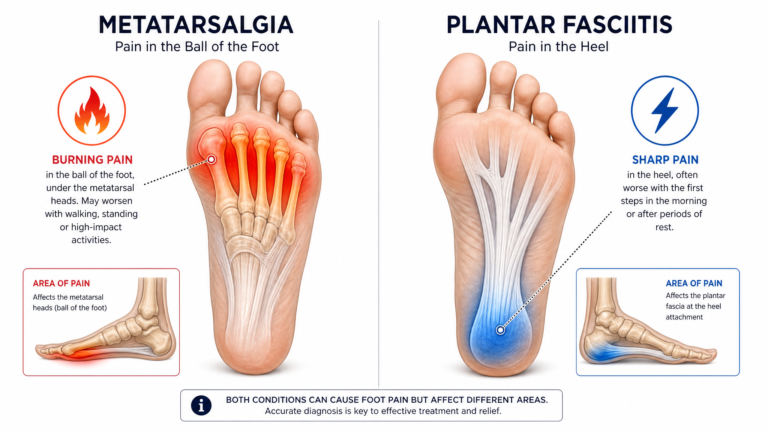
- A burning or aching pain in the ball of the foot that worsens with standing, walking, or running
- A sensation of “walking on pebbles” or having a stone in your shoe
- Sharp, shooting pain that may radiate toward the toes
- Numbness or tingling in the toes when nerve involvement is present (often confused with Morton’s neuroma)
- Pain that eases with rest and worsens with activity
- Tenderness when pressing on the metatarsal heads
The pain typically develops gradually over weeks or months rather than appearing suddenly. A sudden onset of sharp forefoot pain may indicate a stress fracture and requires different treatment.
Important
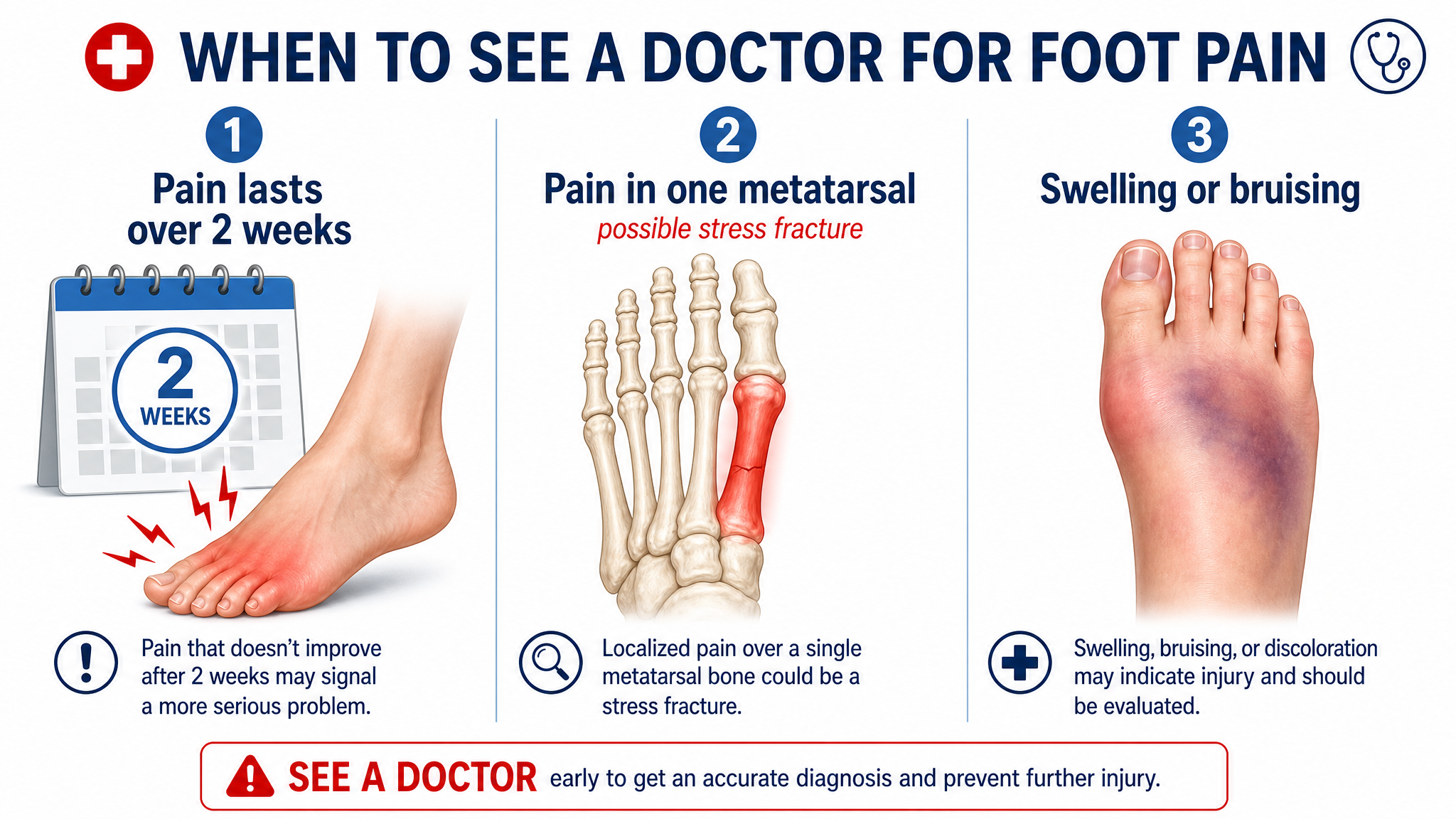
If your ball of foot pain came on suddenly after an injury, is accompanied by significant swelling or bruising, or makes it impossible to bear weight, you may have a stress fracture or acute injury. See a podiatrist for imaging rather than attempting home treatment.
Metatarsalgia vs Related Conditions
Ball of foot pain can be caused by several different conditions. Here is how to tell them apart:
| Condition | Pain Location | Sensation | Key Differentiator |
|---|---|---|---|
| Metatarsalgia | Across the ball of foot | Burning, aching | Worsens with activity, eases with rest |
| Morton’s Neuroma | Between 3rd and 4th toes | Sharp, electric, tingling | Feel a “click” when squeezing the foot |
| Sesamoiditis | Under the big toe joint | Dull ache | Pain with toe-off while walking |
| Plantar Fasciitis | Heel and arch | Sharp, stabbing | Worst with first steps in the morning |
| Stress Fracture | One specific metatarsal | Localized sharp pain | Sudden onset, tender to touch at one spot |
| Predislocation Syndrome | Ball of foot near toes | Bruise-like ache | Toe may start to cross over |
| Capsulitis | Base of toes | Swollen, tender | Toes feel “loose” or unstable |
Morton’s Neuroma vs Metatarsalgia
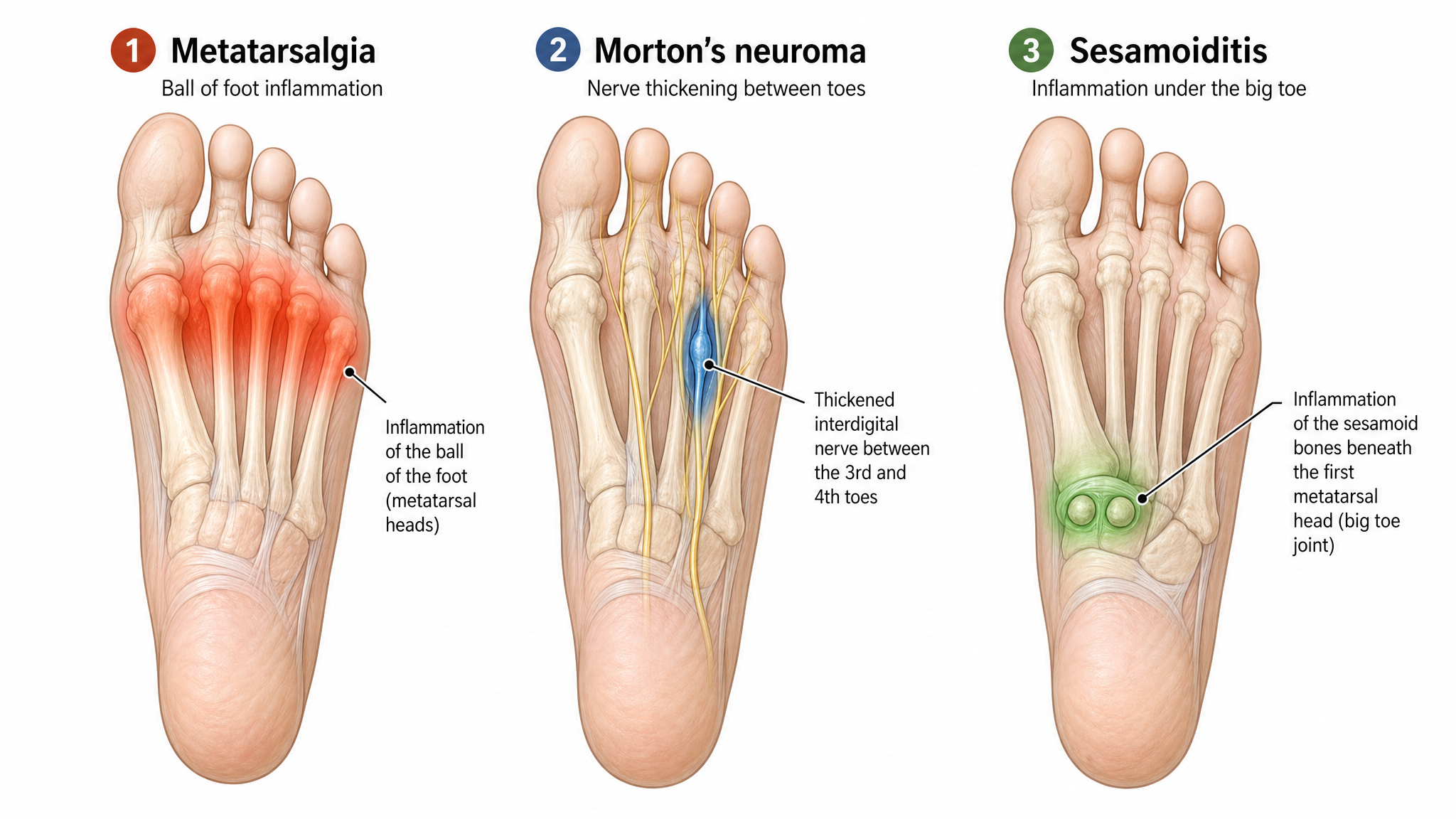
Morton’s neuroma is often confused with metatarsalgia because both cause forefoot pain, but they are distinct conditions. Morton’s neuroma involves a benign thickening of the nerve tissue between the third and fourth toes, producing sharp, electric-shock pain and numbness. Metatarsalgia is broader — it involves inflammation of the metatarsal heads themselves.
A simple home test: squeeze your forefoot gently. If you feel a “click” or “pop” sensation under the ball of your foot, that is Mulder’s sign — a classic indicator of Morton’s neuroma. If squeezing simply hurts across the entire forefoot, metatarsalgia is more likely.
Sesamoiditis vs Metatarsalgia
Sesamoiditis involves inflammation of the two tiny sesamoid bones embedded in the tendon under the big toe joint. The key difference: sesamoiditis pain is specifically under the big toe joint and worsens during push-off when walking. Metatarsalgia pain is broader across the forefoot.
Best Insoles for Ball of Foot Pain — What to Look For
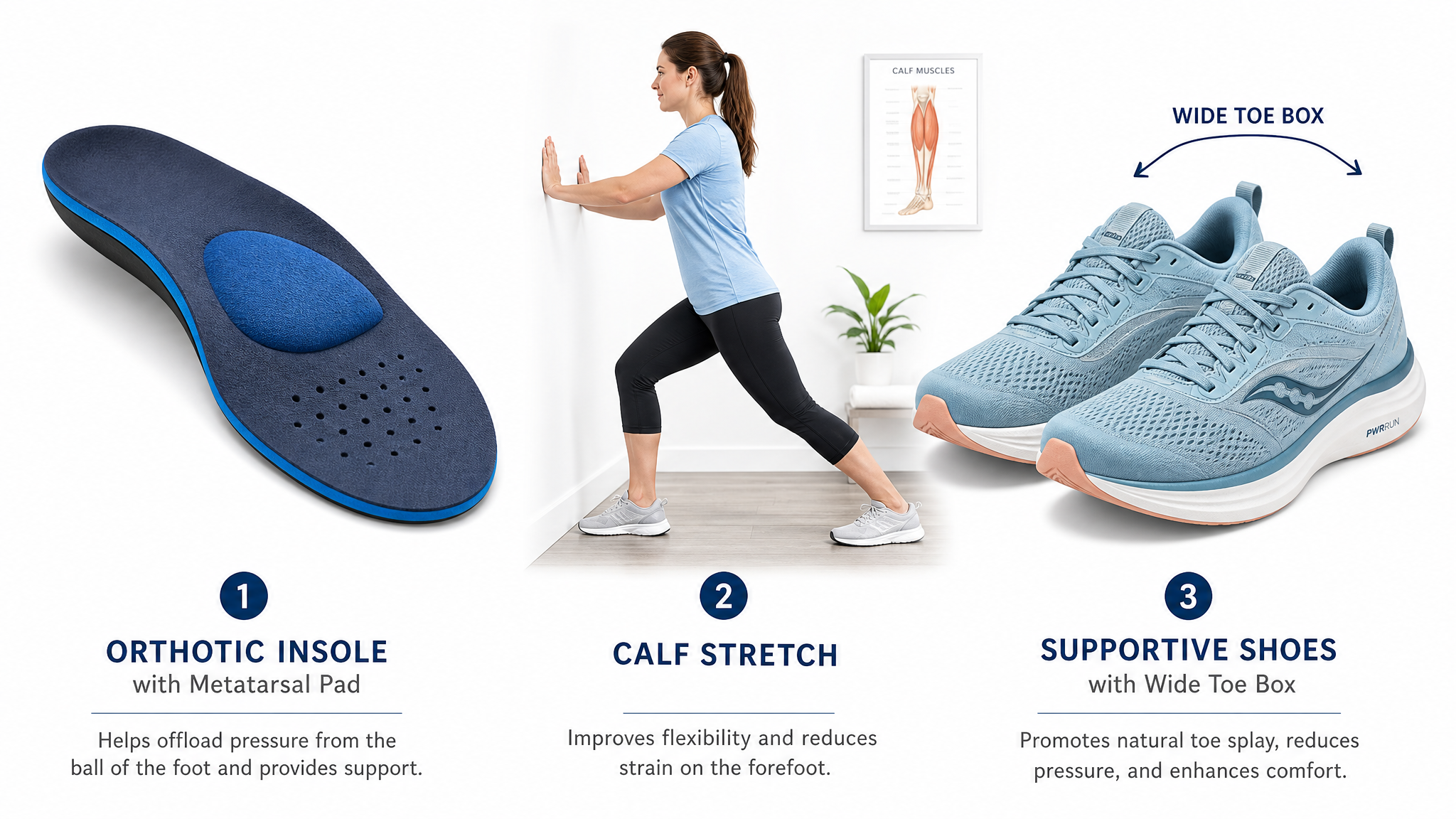
Insoles are the most effective first-line treatment for metatarsalgia when chosen correctly. Here is what matters:
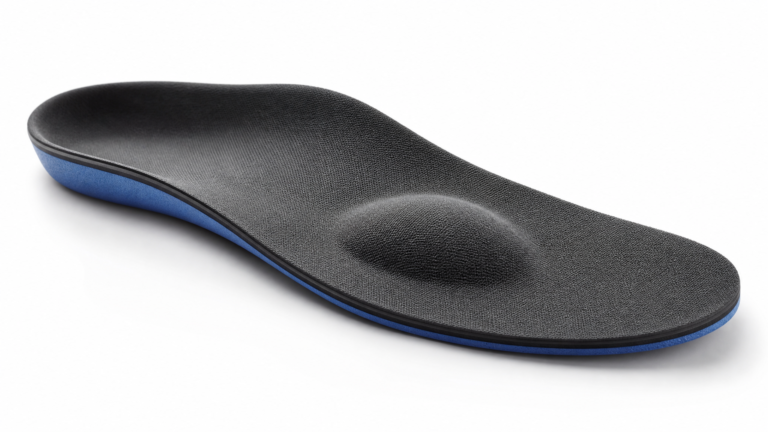
Metatarsal Pad (Dome). This is the single most important feature. A metatarsal pad is a raised cushion placed just behind the metatarsal heads. It lifts and spreads the metatarsal bones, redistributing pressure away from the painful area. Look for insoles with a built-in, correctly positioned metatarsal dome.
Arch Support. High arches and flat feet both contribute to metatarsalgia through different mechanisms. Firm arch support distributes weight evenly across the foot, reducing concentrated pressure on the forefoot. For metatarsalgia related to overpronation, arch support addresses the root cause.
Heel Cushioning. Adequate shock absorption in the heel reduces the impact that travels through the foot to the forefoot. Look for insoles with a cushioned heel pad or gel insert.
Full-Length Design. Full-length insoles stay in place better than 3/4-length inserts and provide more consistent support through the gait cycle. They also prevent the insole from shifting forward and bunching under the toes.
The best flat feet and fallen arches insoles include models with built-in metatarsal support that address both the arch and forefoot simultaneously. For metatarsalgia specifically, prioritize insoles with a pronounced metatarsal dome.
Additional Treatment Options
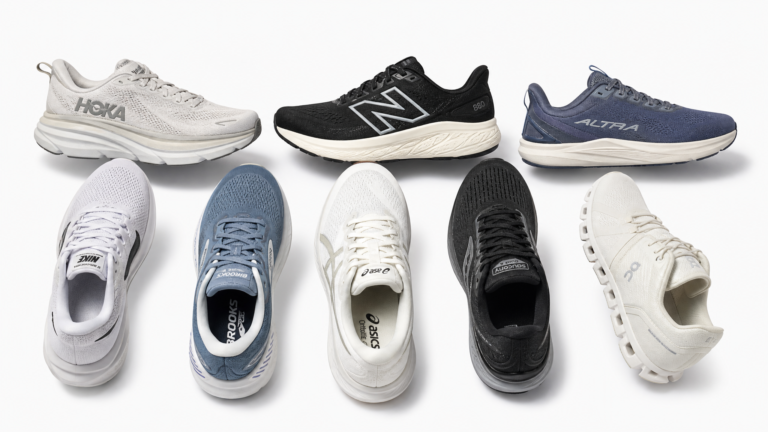
Footwear Modifications. Switch to shoes with a wide toe box that allows your toes to spread naturally. Look for a rocker sole design (curved from heel to toe) that reduces metatarsal flexion during walking. Avoid shoes with a heel higher than 1.5 inches. Good options include Hoka, Altra, Brooks, and New Balance in wide widths.
Stretching and Exercises. Tight calf muscles are a significant contributor to forefoot pressure. The single most effective stretch for metatarsalgia is the calf stretch — both straight-leg and bent-knee versions, held for 30 seconds, repeated three times, done at least twice daily.
Ice Therapy. Icing the ball of the foot for 15 minutes after activity reduces acute inflammation. Roll a frozen water bottle under your foot — this combines ice therapy with gentle massage.
Activity Modification. Reduce high-impact activities during the acute phase. Switch to swimming, cycling, or elliptical training until the pain subsides. When returning to running, increase mileage by no more than 10% per week.
When to See a Podiatrist. If conservative treatment has not improved your pain after 4–6 weeks, or if the pain is severe enough to alter your walking pattern, see a podiatrist. Professional treatment options include custom orthotics, corticosteroid injections, physical therapy, and — in rare cases — surgery.
Metatarsalgia Exercises for Daily Relief
These four exercises have the strongest evidence for reducing metatarsalgia pain when done consistently:
Calf Stretch (Two Versions). Stand facing a wall with one foot forward and one back. Keep the back leg straight and heel on the floor. Hold 30 seconds. Repeat with the back knee slightly bent to target the deeper soleus muscle. Do three reps on each side.
Towel Curls. Place a towel on the floor and use your toes to scrunch it toward you. This strengthens the intrinsic foot muscles that support the arch and reduce forefoot pressure. Do 20 curls per foot.
Marble Pickup. Place 10–15 marbles on the floor and pick them up one at a time with your toes, placing them in a cup. This strengthens the same intrinsic muscles as towel curls with a higher challenge level.
Foot Rolling. Sit in a chair and roll a tennis ball, lacrosse ball, or frozen water bottle under the ball of your foot for 2–3 minutes per foot. This releases the plantar fascia and intrinsic muscles.
How Long Does Metatarsalgia Take to Heal?
Recovery time depends on the underlying cause, how long you have had symptoms, and how consistently you apply treatment:
- Acute cases (symptoms for less than 4 weeks): 2–4 weeks with consistent insole use, activity modification, and stretching
- Subacute cases (symptoms for 4–12 weeks): 4–8 weeks, may require a combination of insoles and physical therapy
- Chronic cases (symptoms for more than 3 months): 8–16 weeks, often needs custom orthotics or professional treatment
Factors that slow recovery: continuing high-impact activity without modification, wearing unsupportive shoes during the healing period, and underlying foot structure issues that are not addressed with proper support.
Conclusion
Ball of foot pain (metatarsalgia) is a common and treatable condition. The majority of cases resolve with conservative treatment — specifically, the right combination of metatarsal support insoles, proper footwear, and targeted stretching. The key is choosing insoles with a correctly positioned metatarsal dome and firm arch support, then giving your body time to adapt and heal.
If your pain persists beyond 6 weeks with consistent treatment, see a podiatrist. But for most people, the path to relief starts with better support inside your shoes.
Stop letting ball of foot pain slow you down.
Our orthotic insoles feature built-in metatarsal support to relieve forefoot pressure and keep you moving comfortably.
Free returns on all orders · 30-day money-back guarantee
Frequently Asked Questions
Can metatarsalgia go away on its own?
Mild cases may resolve with rest and better footwear, but most cases require active treatment. Without addressing the underlying cause — whether that is poor footwear, foot structure, or activity level — the pain typically returns when you resume normal activity.
Are metatarsal pads effective?
Yes. Metatarsal pads are the most effective insole feature for ball of foot pain. They work by lifting and separating the metatarsal heads, redistributing pressure away from the painful area. Studies show they reduce forefoot pressure by 20–40% when correctly positioned.
Can I run with metatarsalgia?
You can, but you should reduce intensity and duration during the acute phase. Switch to low-impact cross-training for 2–4 weeks. When returning to running, increase mileage gradually and ensure you are using insoles with metatarsal support.
What is the difference between metatarsalgia and Morton’s neuroma?
Metatarsalgia is inflammation of the metatarsal heads — the bones at the ball of the foot. Morton’s neuroma is a thickening of the nerve tissue between the third and fourth toes. Metatarsalgia produces a broad aching pain; Morton’s neuroma produces sharp, electric, or tingling pain that may radiate into the toes.
Do custom orthotics help metatarsalgia?
Yes, custom orthotics are effective for cases that do not respond to over-the-counter insoles. A podiatrist can prescribe orthotics with specific metatarsal accommodations based on your foot structure and gait analysis. However, most mild to moderate cases respond well to quality OTC insoles with built-in metatarsal pads.
Is walking good for metatarsalgia?
Walking in supportive shoes with metatarsal insoles is generally fine and may help maintain mobility. Walking in unsupportive footwear — thin soles, narrow toe boxes, or high heels — will aggravate the condition.
What shoes are best for metatarsalgia?
Look for shoes with a wide toe box, rocker sole design, thick cushioned midsoles, and low heels (under 1.5 inches). Brands like Hoka, Altra, Brooks, and New Balance offer models that meet these criteria. Combine them with supportive insoles for maximum relief.