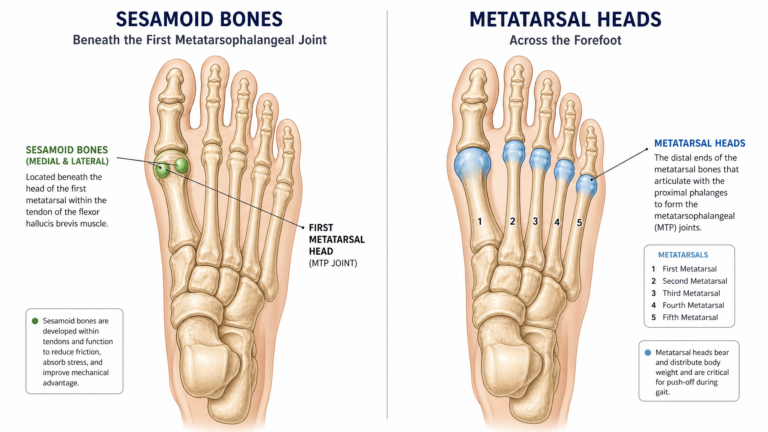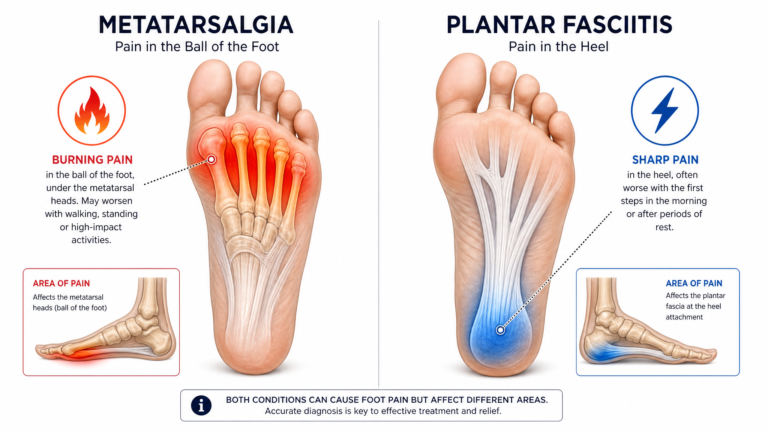
High Heels and Metatarsalgia: Why Heels Cause Forefoot Pain
High Heels and Metatarsalgia: Why Heels Cause Ball of Foot Pain
There is a direct relationship between high heels and metatarsalgia: the higher the heel, the greater the pressure on the forefoot. A 2-inch heel increases forefoot load by approximately 50%. A 3-inch heel more than doubles it. This makes high heels one of the most common preventable causes of ball of foot pain — particularly in women, who develop metatarsalgia at significantly higher rates than men.
Key Takeaways
- Wearing high heels shifts 50–80% of body weight onto the forefoot, compared to 40% in flat shoes
- Even occasional heel wear (a few hours per week) can contribute to metatarsalgia
- The forefoot pain from heels is caused by a combination of increased pressure, forefoot compression, and altered gait mechanics
- You can reduce the damage: limit heel height, choose wider toe boxes, use metatarsal pads, and stretch after wearing heels
- The damage is cumulative — years of heel wear can cause lasting changes to foot structure
Why High Heels Cause Forefoot Pain
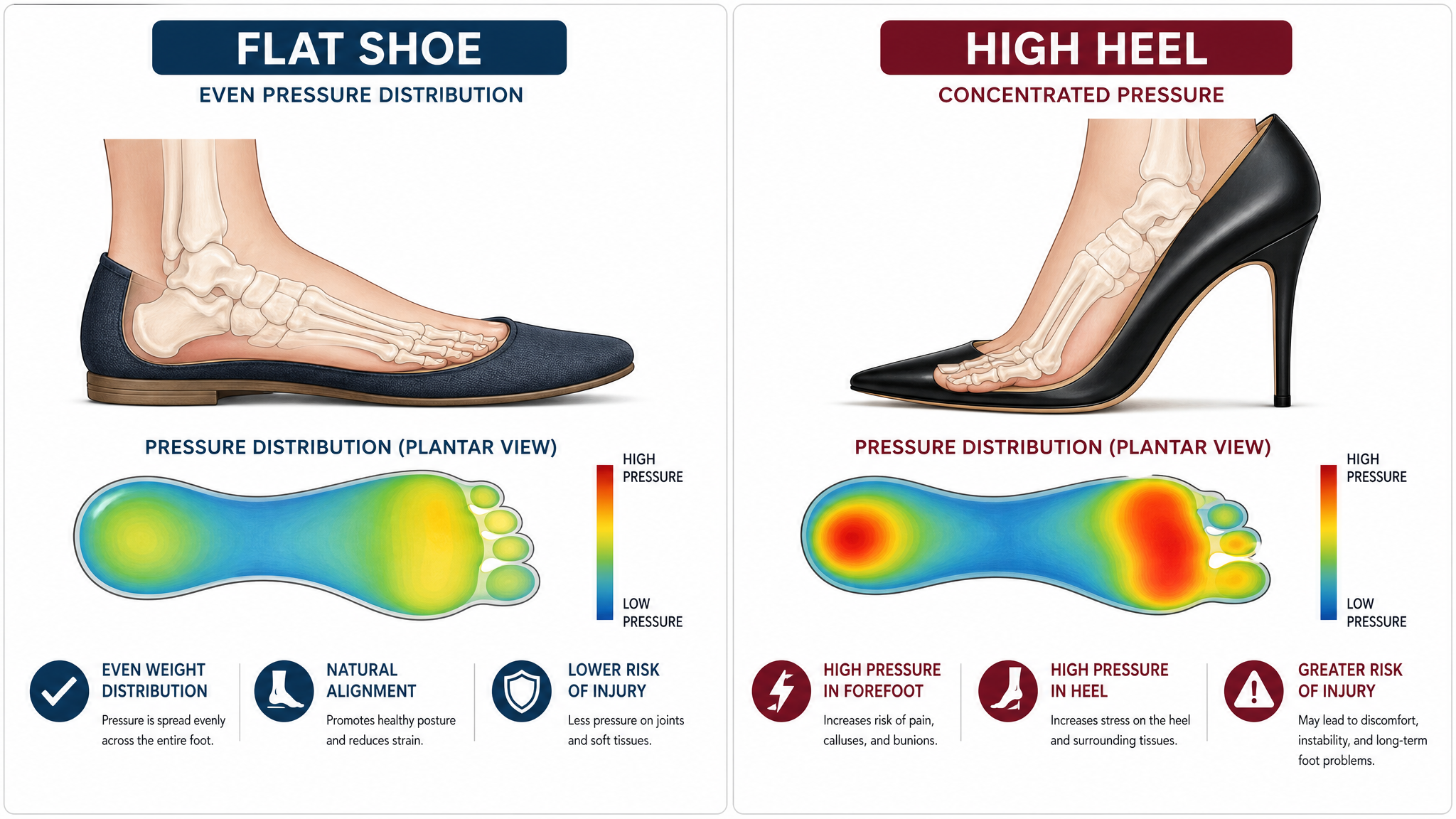
High heels affect the forefoot through three distinct mechanisms:
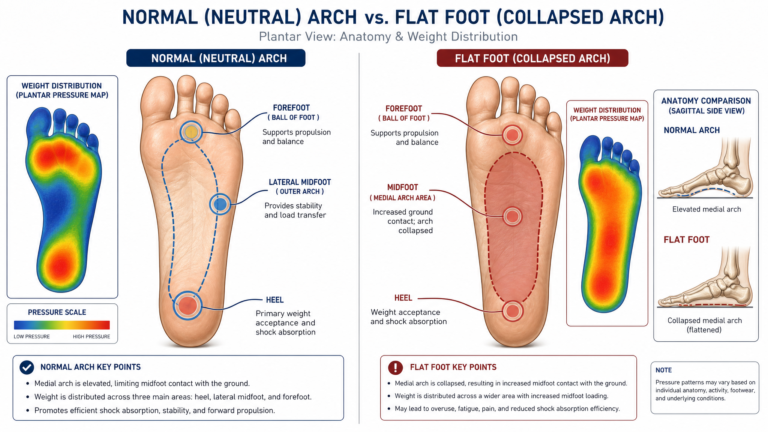
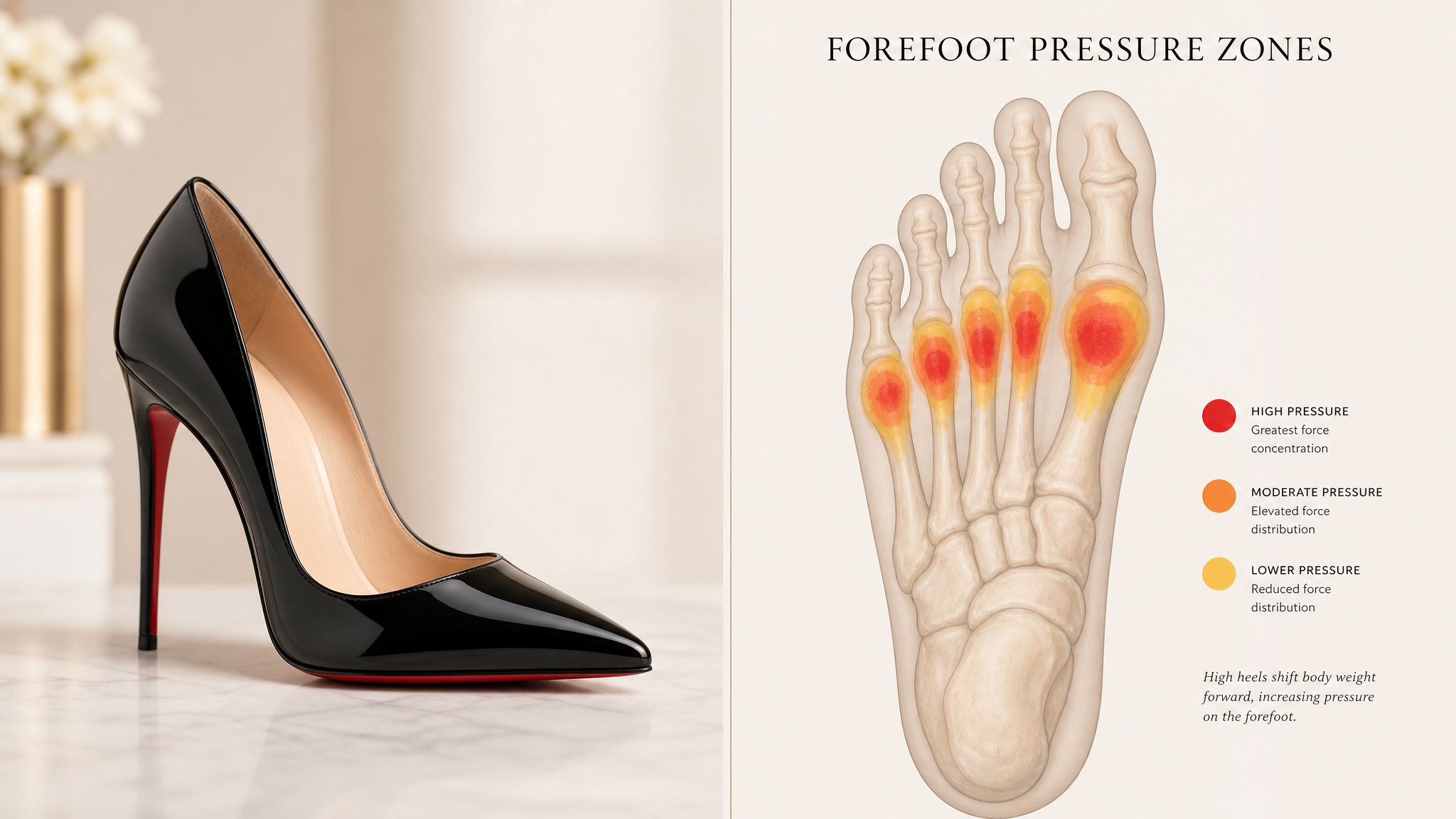
Increased direct pressure. When you wear a flat shoe, approximately 40% of your body weight rests on the forefoot. A 2-inch heel increases this to 50–60%. A 3-inch heel pushes it to 70–80%. This means the metatarsal heads are bearing significantly more load with every step.
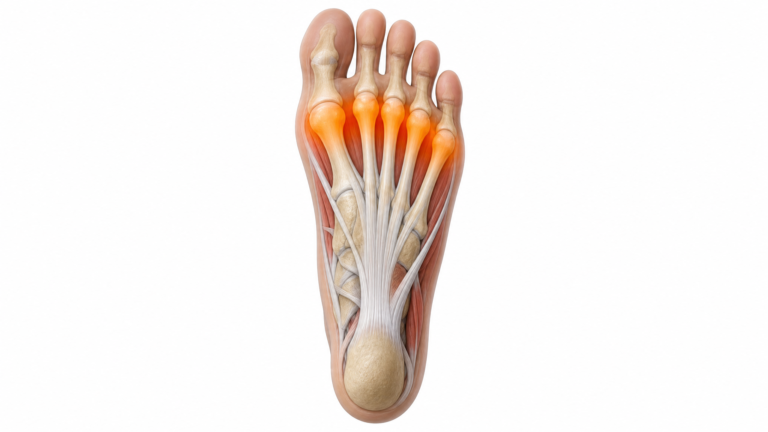
Forefoot compression. Most high heels have narrow, tapered toe boxes that squeeze the metatarsal heads together. This compression increases pressure between the bones and can also irritate the interdigital nerves, contributing to Morton’s neuroma — a condition that frequently coexists with metatarsalgia.
Altered gait mechanics. High heels keep the ankle in a plantarflexed (pointed) position, which shortens the calf muscles and Achilles tendon over time. This is the same mechanical problem that tight calves cause: reduced ankle range of motion forces the forefoot to bear more load during walking, even when you are not wearing heels.
The combination of these three factors makes high heels arguably the most preventable cause of metatarsalgia.
The Cumulative Effect of Heel Wear
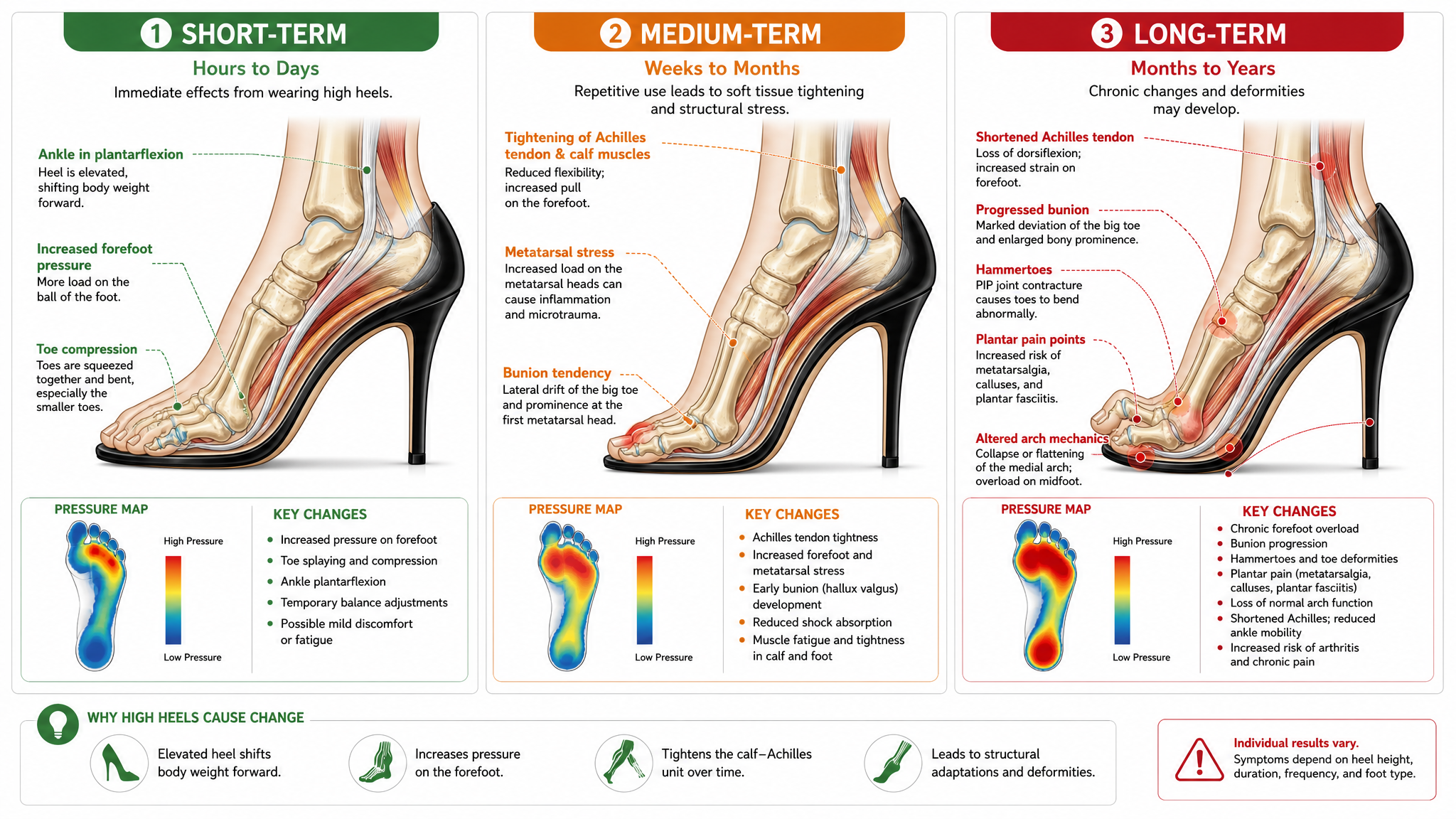
One of the most concerning aspects of heel-related metatarsalgia is its cumulative nature. The changes that occur with regular heel wear do not reverse fully when you take the heels off:
Short-term effects (single wear): Forefoot pain, burning sensation, and temporary gait changes. These resolve within hours of removing the heels.
Medium-term effects (regular wear over months): The calf muscles and Achilles tendon begin to adapt to the shortened position, becoming less flexible even when not wearing heels. The forefoot fat pad may begin to thin or shift.
Long-term effects (years of regular wear): The calf muscles become chronically tight, the forefoot fat pad may permanently thin or migrate forward, and the metatarsal heads can develop chronic inflammation. At this stage, metatarsalgia can persist even when you stop wearing heels.
This cumulative effect explains why some women develop metatarsalgia in their 40s and 50s even though they stopped wearing high heels years earlier. The structural changes from years of heel wear persist.
How to Wear Heels with Less Forefoot Pain
If you are not ready to give up heels entirely, these strategies can reduce their impact:
Limit Heel Height
The lower the heel, the less forefoot pressure. A 1-inch heel increases forefoot pressure by approximately 20% — noticeable but manageable for most people. A 2-inch heel increases it by 50%. A 3-inch heel increases it by 100% or more.
Practical guideline: use 1-inch heels for daily wear, 2-inch heels for occasional wear, and avoid 3-inch-plus heels entirely if you have or are prone to metatarsalgia.
Choose a Wider Toe Box
Not all high heels are created equal. Look for heels with a wider, more rounded toe box rather than sharply pointed toes. A pointed toe box compresses the metatarsal heads together, compounding the pressure from the heel height. Even a slightly wider toe box makes a meaningful difference.
Use Metatarsal Pads
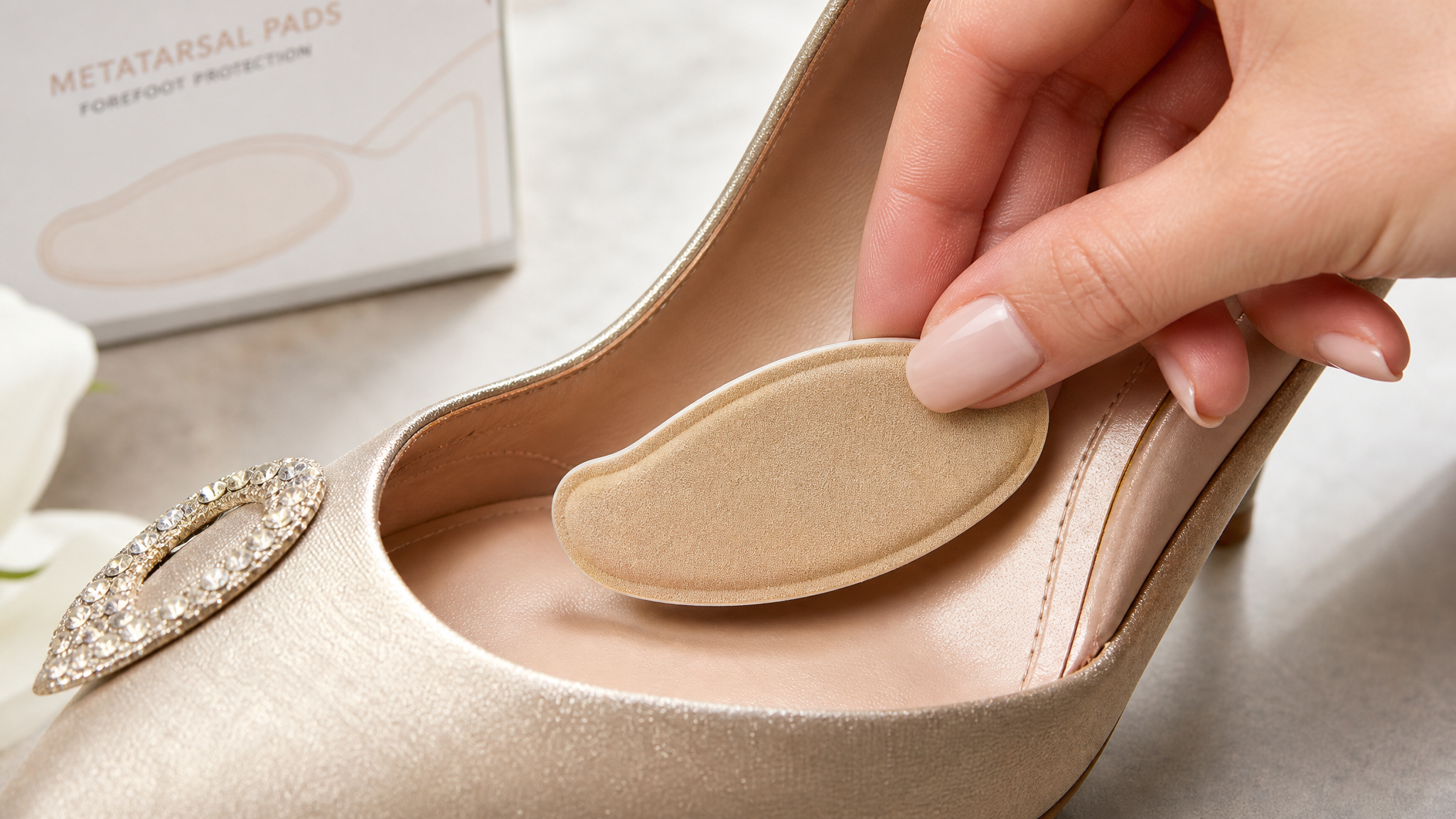
Metatarsal pads (also called “ball of foot cushions”) are small adhesive pads that stick inside your shoes just behind the metatarsal heads. They lift and separate the metatarsal bones, redistributing pressure away from the painful area.
These are available as over-the-counter adhesive pads or as built-in features in some comfort-focused shoe brands. They are not as effective as full orthotic insoles, but they provide meaningful relief in shoes that cannot accommodate full-length insoles.
Rotate with Supportive Shoes
Do not wear heels every day. Rotate with supportive flat shoes that have wide toe boxes, rocker soles, and cushioned midsoles. This gives your forefoot time to recover between heel wear.
Stretch After Wearing Heels
After wearing heels, do calf stretches to counteract the shortened position your feet were in:
- Straight-leg calf stretch — targets the gastrocnemius muscle
- Bent-knee calf stretch — targets the soleus muscle
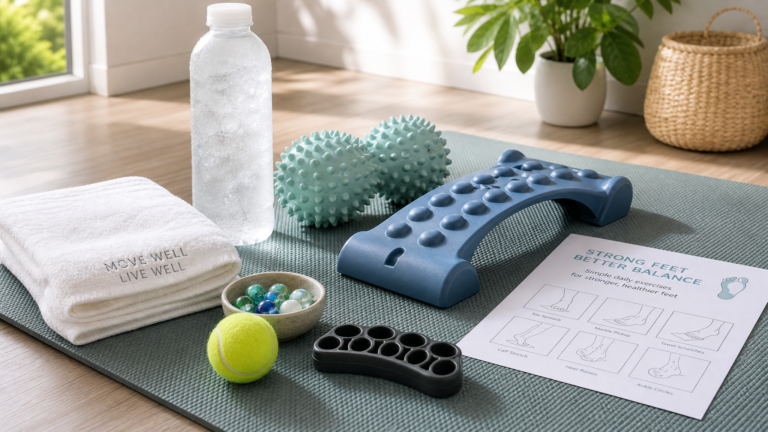
Hold each for 30 seconds, repeat 3 times per side. Doing this immediately after removing heels helps reset the calf muscles and reduces next-day forefoot pain.
Quick Note
Heel height is measured from the heel to the ball of the foot (the platform height at the forefoot), not the visible height of the heel. A 4-inch heel with a 1-inch platform is effectively a 3-inch heel in terms of forefoot pressure. Platform heels reduce the effective angle.
Best Alternatives to High Heels
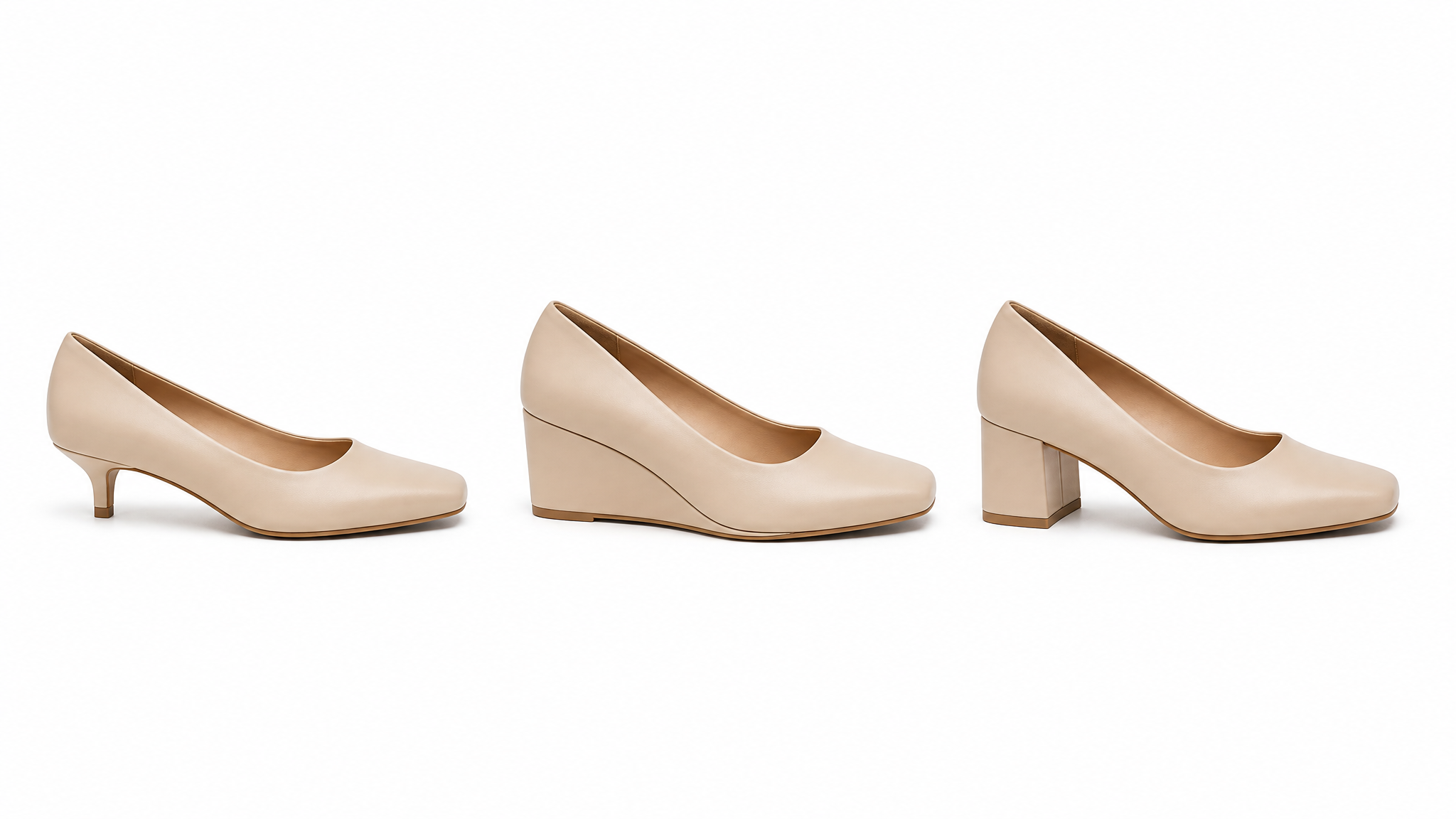
Several shoe styles provide the elegance of heels without the forefoot damage:
Kitten heels (1–1.5 inches). Minimal forefoot pressure increase. Wide availability. Suitable for most formal occasions.
Wedge heels. Distribute pressure more evenly across the foot than stilettos. The wider sole provides better stability. Choose wedges with a gradual slope rather than a steep angle.
Block heels. Provide better stability than stilettos, which means less micro-adjustment of the foot muscles during walking. Look for block heels under 2 inches.
Comfort dress shoes. Brands like Vionic, Naturalizer, and Clarks now make dress shoes with hidden arch support, cushioned footbeds, and moderate heel heights that look professional but function like supportive shoes.
Treating Heel-Related Metatarsalgia
If high heels have already caused metatarsalgia, the treatment approach is similar to metatarsalgia from other causes, with a few additional considerations:
Stop wearing heels during the acute phase. You need to give the inflammation time to resolve. Two to four weeks of heel-free wear, combined with supportive insoles, is usually enough for acute cases.
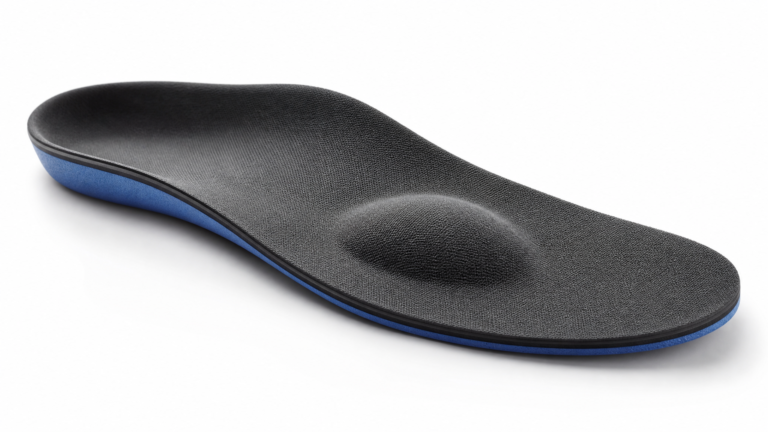
Use full-length supportive insoles. The best insoles for ball of foot pain provide a metatarsal dome that lifts and separates the metatarsal heads, combined with firm arch support. Wear these in your flat shoes during recovery.
Address calf tightness. If you have worn heels regularly, your calves are likely tight. Daily calf stretching is essential for recovery. Without addressing calf tightness, the metatarsalgia will return when you resume normal activity.
Consider physical therapy. For chronic heel-related metatarsalgia, a physical therapist can provide gait retraining, manual therapy for tight calves, and a structured strengthening program.
Important
If you have worn high heels for many years and are now experiencing forefoot pain even in flat shoes, the damage may be structural. See a podiatrist for evaluation. You may have fat pad atrophy, chronic calf tightness, or toe deformities that require specific treatment beyond standard metatarsalgia care.
Conclusion
High heels are a direct cause of metatarsalgia through increased forefoot pressure, toe compression, and chronic calf shortening. The higher the heel and the more frequently you wear them, the greater the risk. To protect your feet, limit heel height to 1–2 inches, choose wider toe boxes, use metatarsal pads, and stretch your calves after wearing heels. If you already have metatarsalgia from heel wear, switch to supportive flat shoes with metatarsal insoles and address calf tightness for the best recovery.
Protect your feet from the damage of high heels.
Our orthotic insoles with metatarsal support provide relief when you need it — and prevention for the future.
Free returns on all orders · 30-day money-back guarantee
Frequently Asked Questions
Can wearing high heels once cause metatarsalgia?
A single instance of wearing high heels is unlikely to cause chronic metatarsalgia, but it can cause acute forefoot pain that resolves within hours or days. Chronic metatarsalgia from heels develops over months to years of regular wear.
Do platform heels protect against metatarsalgia?
Partially. Platform heels reduce the effective angle of the foot, which reduces forefoot pressure compared to a stiletto of the same total height. However, most platform heels still have elevated heels and narrow toe boxes, so they still contribute to forefoot pressure.
Can metatarsalgia from high heels be reversed?
In most cases, yes. Early-stage metatarsalgia from heel wear resolves well with conservative treatment: stop wearing heels, use supportive insoles with metatarsal pads, stretch daily, and wear supportive flat shoes. Chronic cases with structural changes may require longer treatment but still improve significantly.
How long does it take for forefoot pain from heels to go away?
Acute pain after a single heel-wearing event typically resolves within 24–48 hours. Chronic metatarsalgia from regular heel wear takes 4–8 weeks of consistent treatment. If you have worn heels for many years and developed structural changes, recovery may take longer.
Are there any high heels that are safe for metatarsalgia?
No high heel is completely “safe” for metatarsalgia, but some are less harmful than others: heels under 1.5 inches, with wide rounded toe boxes, and with cushioned footbeds. Look for comfort-focused brands that design heels with foot health in mind.