Military Foot Injuries: Prevention, Treatment and the Best Insoles
Military Foot Injuries: Prevention, Treatment and the Best Insoles
Foot injuries are the most common medical issue in military training and service. The combination of high-impact activity, heavy loads, and inadequate footwear support creates ideal conditions for overuse injuries — particularly in recruits with flat feet. This guide covers the most common military foot injuries, how to prevent them, and which insoles help each condition.
Key Takeaways
- Overuse foot injuries affect 20–30% of recruits during basic training
- Flat feet significantly increase the risk of shin splints, stress fractures, and plantar fasciitis
- Proper arch support insoles reduce injury risk by improving foot mechanics
- Early recognition and treatment prevent minor issues from becoming career-ending injuries
- Most military foot injuries are preventable with the right preparation and equipment
Why Military Service Is Hard on Feet
Military service places unique demands on the feet that go beyond what most civilian activities require:
High impact volume. Basic training involves running 10–20 miles per week, marching 5–10 miles per day with gear, and standing for extended periods. This is a dramatic increase in volume for most recruits.
Heavy loads. Service members carry 40–100 pounds of gear — body armor, ruck sack, weapon, and equipment. This multiplies the force transmitted through the feet with every step.
Hard surfaces. Training occurs on asphalt, concrete, hard-packed dirt, and other unforgiving surfaces. These surfaces provide no shock absorption.
Inadequate footwear support. Standard-issue military boots prioritize durability and cost-effectiveness over foot support. The stock insoles offer minimal arch support.
Rapid intensity increase. The sudden jump in physical activity during basic training does not allow the feet to adapt gradually. This rapid overload is the primary cause of overuse injuries.
Common Military Foot Injuries
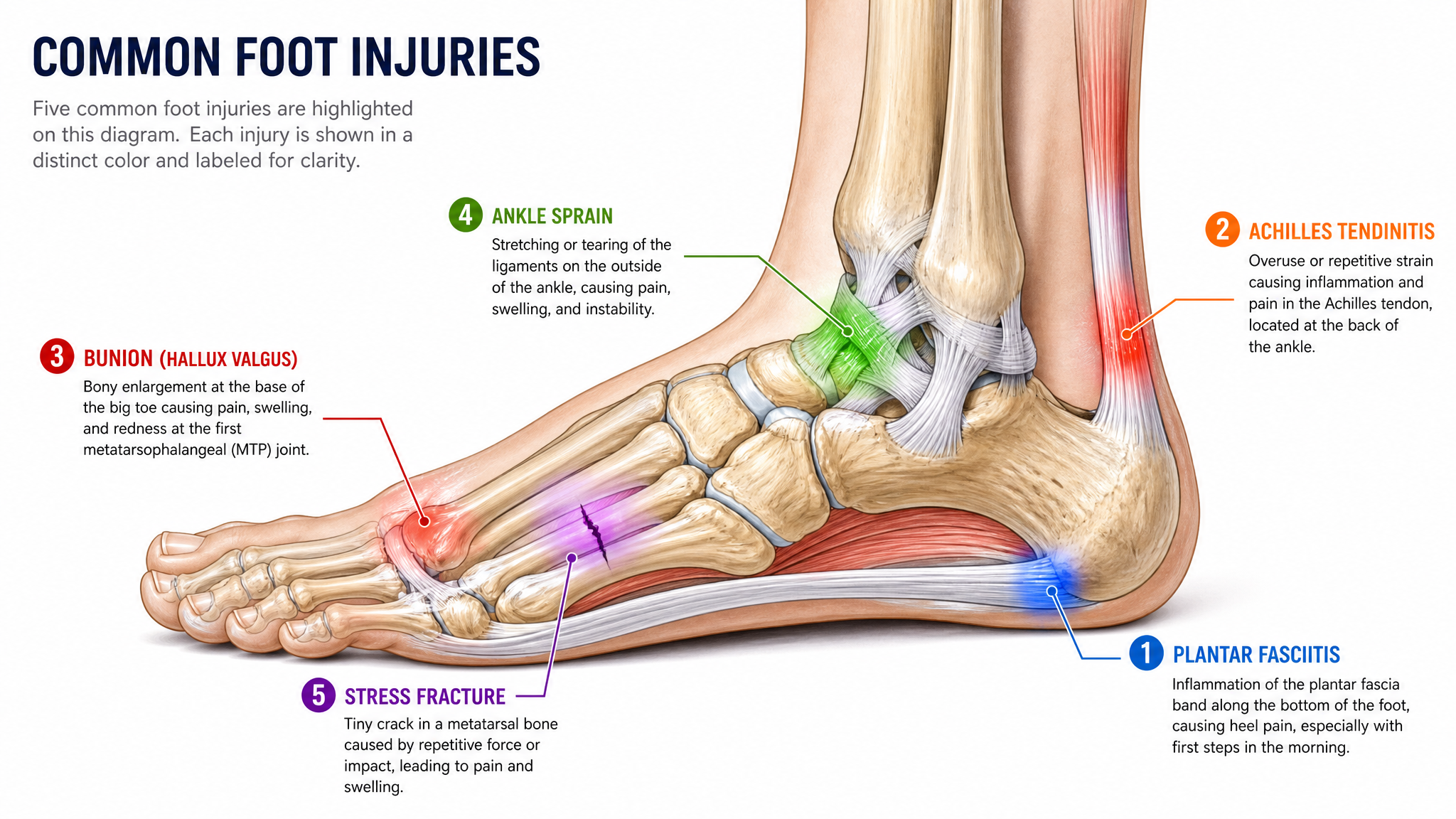
1. Shin Splints (Medial Tibial Stress Syndrome)
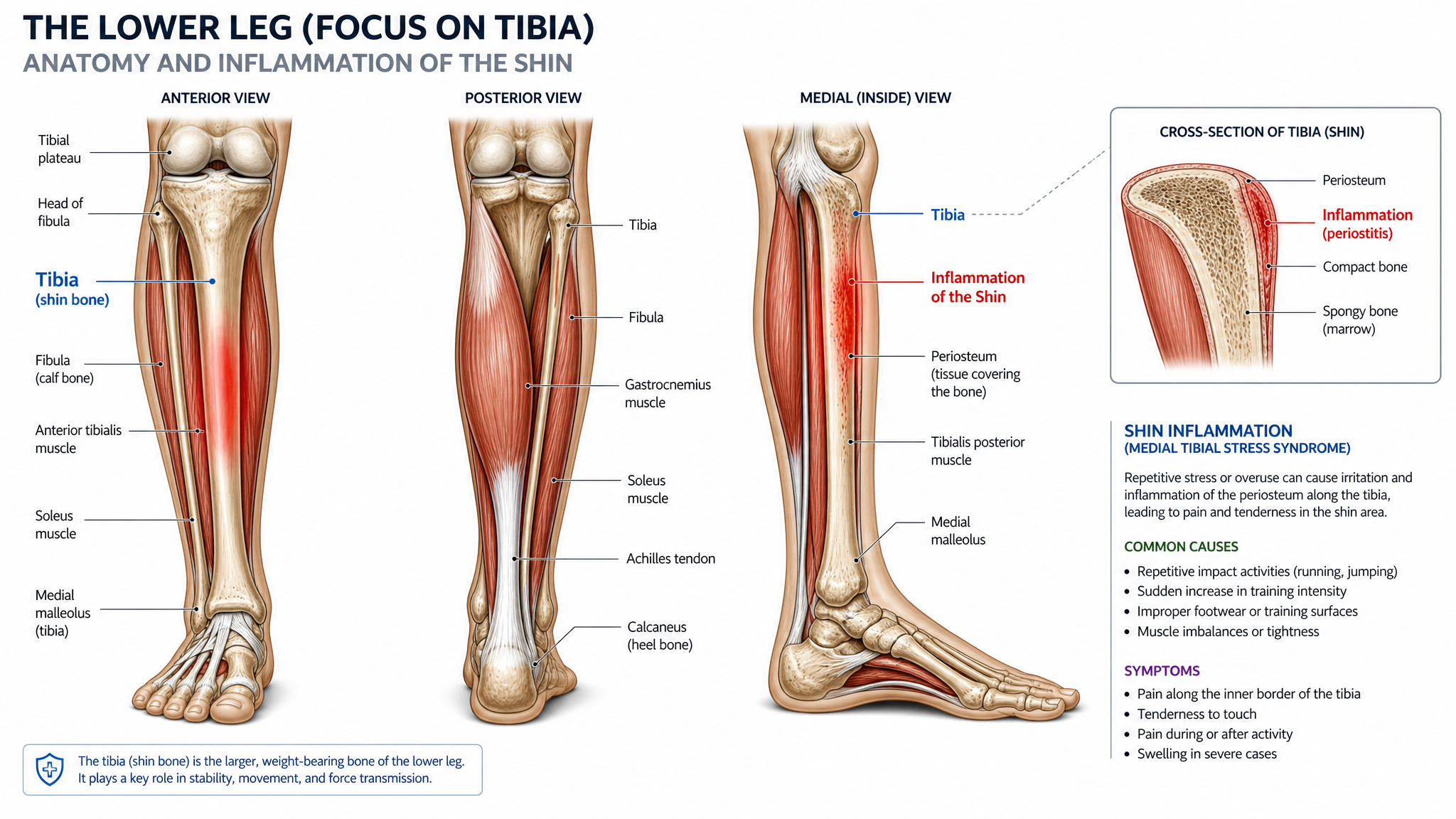
What it is: Inflammation of the muscles, tendons, and bone tissue around the shin bone (tibia). Shin splints are the most common overuse injury in military training.
Prevalence: Affects up to 20% of recruits in basic training. Rates are significantly higher in flat-footed individuals.
Cause: The posterior tibial muscle — which supports the arch — attaches along the inside of the shin. When flat feet cause overpronation, this muscle is overworked, pulling on its attachment and causing inflammation along the shin bone.
Symptoms: – Dull ache along the inside of the shin bone – Pain that worsens during running and improves with rest – Tenderness when pressing on the lower third of the shin – Possible mild swelling
Prevention: – Arch support insoles to control overpronation — this is the single most effective prevention – Daily calf stretching to reduce tension on the posterior tibial muscle – Gradual running progression (no more than 10% mileage increase per week) – Proper running shoes with adequate support
Treatment: – Relative rest — reduce running volume but continue low-impact activity – Ice therapy — 15 minutes on the shin after activity – Calf stretching — twice daily, straight-leg and bent-knee versions – Arch support insoles — continue wearing during all weight-bearing activity – If pain persists beyond 2 weeks, see a medical provider
2. Stress Fractures
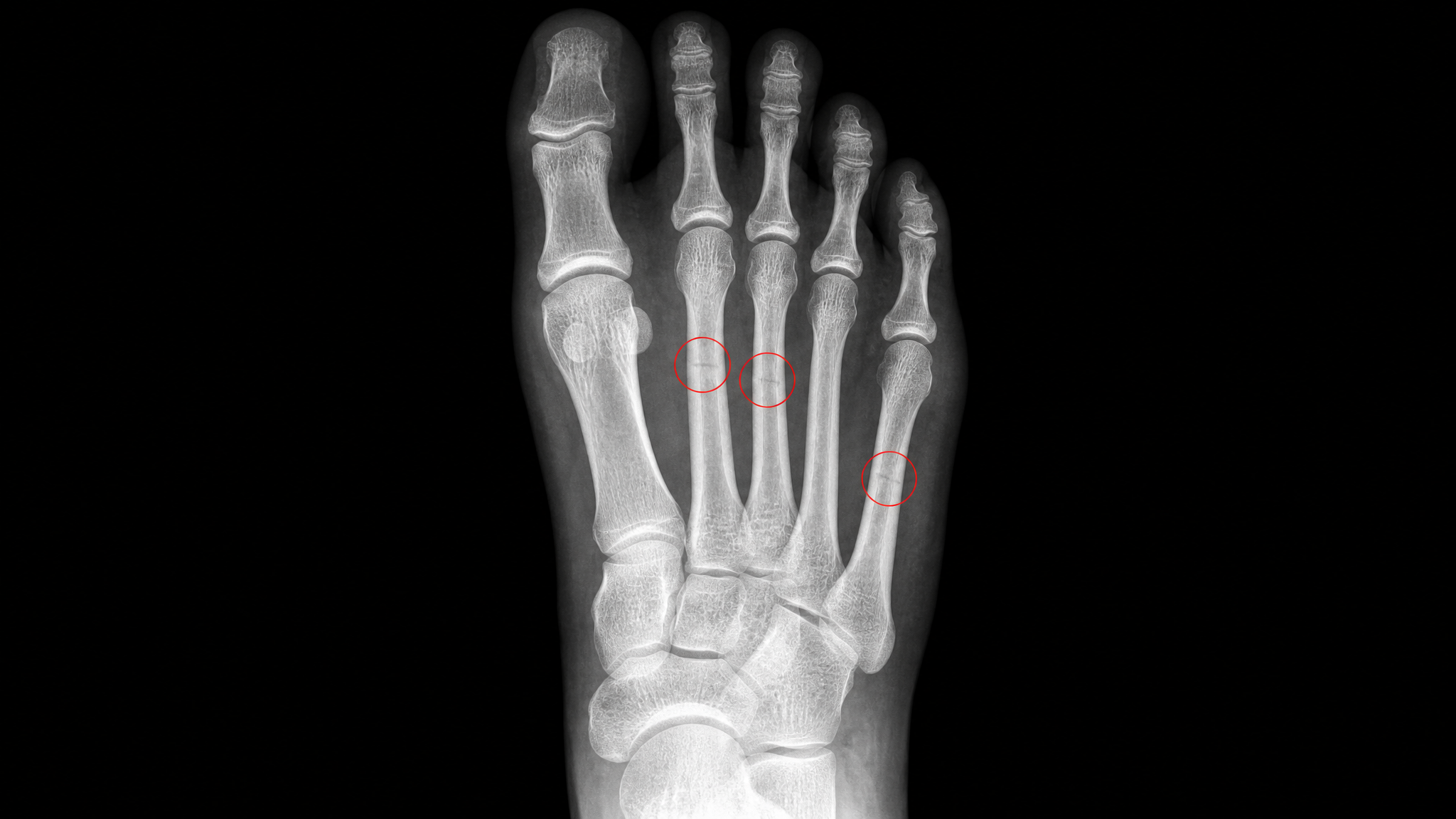
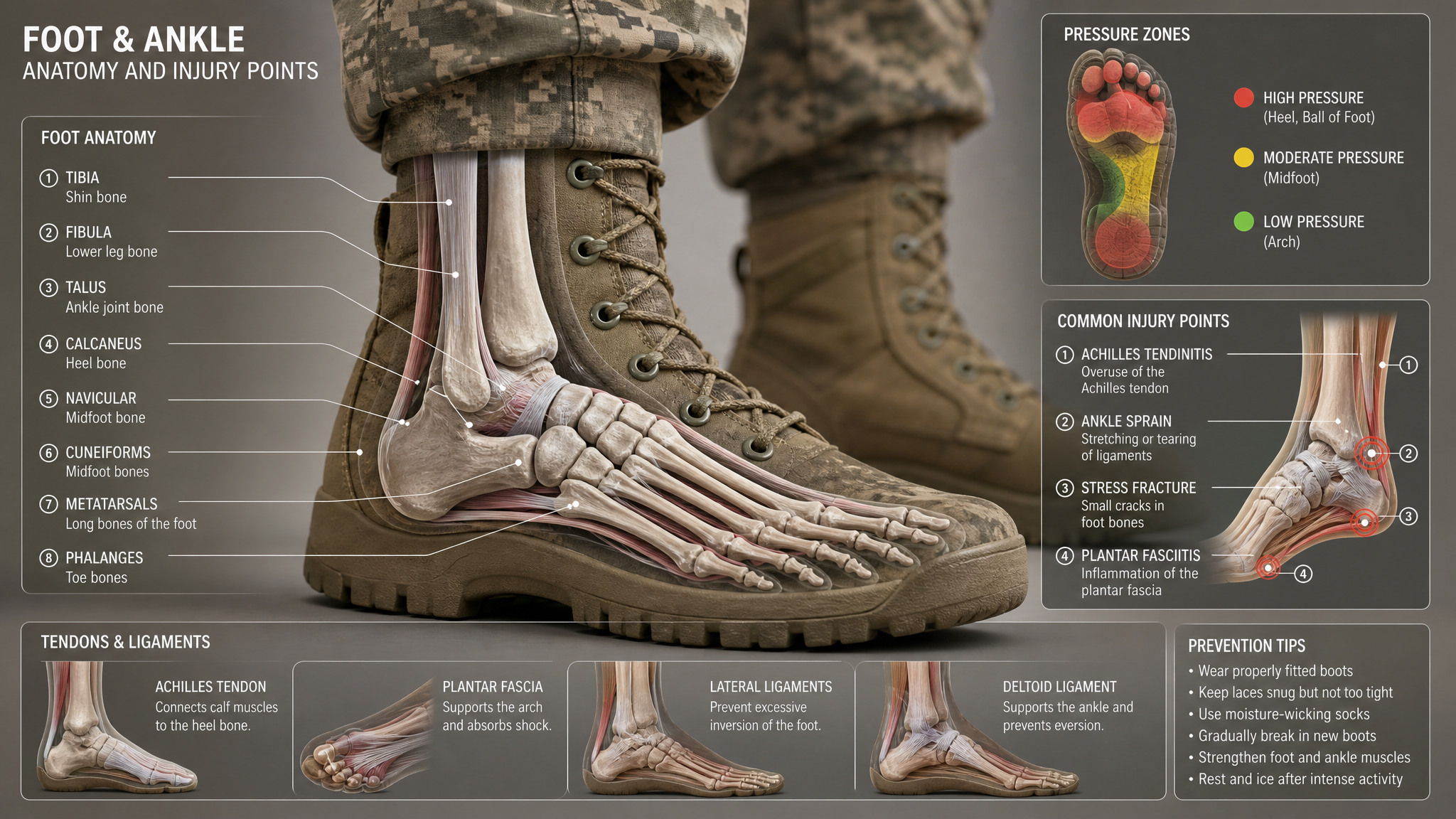
What they are: Small cracks in bone caused by repetitive impact. In military training, stress fractures most commonly occur in the metatarsals (forefoot) and calcaneus (heel).
Prevalence: Affects 2–5% of recruits. Flat-footed individuals are at higher risk due to altered force distribution through the foot.
Cause: When the foot’s shock-absorbing mechanisms are overwhelmed by repetitive impact, the bone cannot repair itself fast enough. Microscopic cracks develop and worsen with continued activity. Flat feet concentrate force on specific metatarsal heads, increasing local stress.
Symptoms: – Localized, sharp pain at a specific point on the foot – Pain that worsens with weight-bearing activity – Pain that persists even at rest in advanced cases – Swelling over the affected bone – Tenderness when pressing directly on the bone
Prevention: – Proper arch support to distribute force evenly across the foot – Gradual training progression — stress fractures are almost always from doing too much too fast – Adequate calcium and vitamin D intake – Proper footwear with sufficient shock absorption – Cross-training to reduce cumulative impact
Treatment: – Immediate cessation of high-impact activity – Medical evaluation with imaging (X-ray or MRI) – Protective weight-bearing (boot or crutches) for 4–8 weeks – Gradual return to activity after healing confirmed – Arch support insoles during recovery and after return to activity
3. Plantar Fasciitis
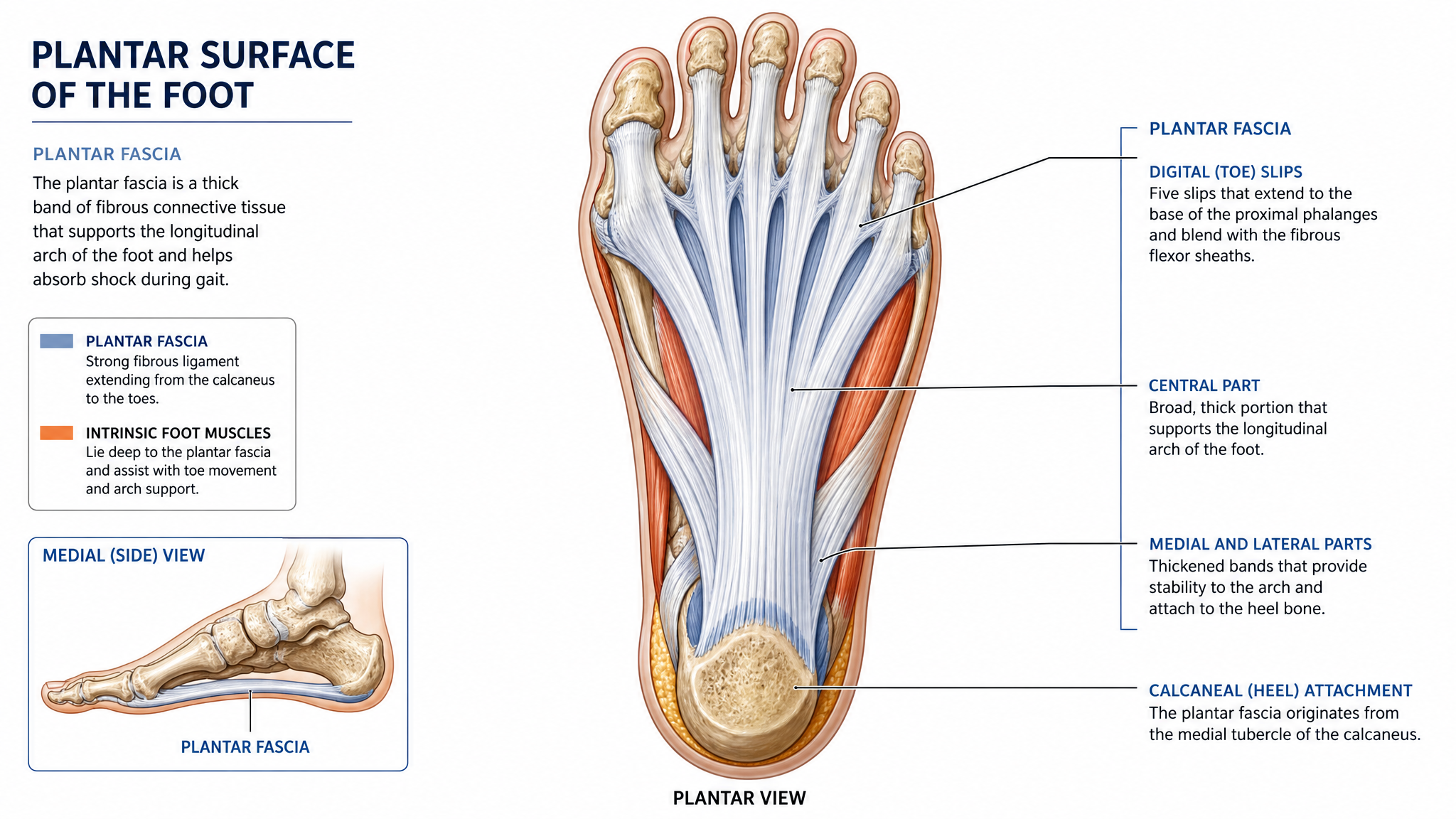
What it is: Inflammation of the plantar fascia — a thick band of connective tissue running from the heel to the toes.
Prevalence: Affects 5–10% of military personnel at some point during their career. More common in flat-footed individuals and runners.
Cause: Flat feet cause the arch to collapse, placing constant tension on the plantar fascia. During running and marching, this tension is amplified. The fascia becomes inflamed at its attachment to the heel bone.
Symptoms: – Sharp pain in the heel with the first steps in the morning – Pain that eases after a few minutes of walking – Pain that returns after prolonged standing or activity – Tenderness when pressing on the bottom of the heel – Tightness in the calf muscles
Prevention: – Arch support insoles to reduce tension on the plantar fascia – Daily calf stretching — tight calves are a primary contributor – Avoid walking barefoot on hard surfaces – Gradual training progression
Treatment: – Arch support insoles with firm arch support and a deep heel cup – Calf stretching — twice daily, straight-leg and bent-knee versions – Night splints to keep the plantar fascia stretched during sleep – Frozen water bottle rolling under the arch for 10 minutes after activity – Activity modification — reduce high-impact volume during acute phase
4. Posterior Tibial Tendonitis
What it is: Inflammation of the posterior tibial tendon — the primary dynamic support of the arch.
Prevalence: Common in flat-footed service members, particularly those who increase running or marching volume rapidly.
Cause: The posterior tibial tendon works overtime in flat feet, trying to support an arch that has collapsed. During high-impact activity, the tendon becomes overloaded and inflamed.
Symptoms: – Pain along the inside of the ankle and lower shin – Pain that worsens with activity and improves with rest – Difficulty standing on tiptoes on the affected side – Possible swelling along the tendon
Prevention: – Arch support insoles to reduce the load on the posterior tibial tendon – Eccentric calf strengthening – Gradual training progression
Treatment: – Arch support insoles with firm medial support – Activity modification — reduce high-impact volume – Eccentric heel drops (slowly lowering the heel off a step) – Physical therapy for advanced cases
5. Metatarsalgia (Forefoot Pain)
What it is: Pain and inflammation in the ball of the foot, affecting the metatarsal heads.
Prevalence: Common in service members who ruck march or run frequently. Flat feet increase risk by altering forefoot loading.
Cause: High-impact activity compresses the metatarsal heads against the ground. In flat feet, the forefoot bears additional load due to altered gait mechanics.
Symptoms: – Burning or aching pain in the ball of the foot – Sensation of “walking on pebbles” – Pain that worsens with standing and walking – Tenderness when pressing on the metatarsal heads
Prevention: – Metatarsal pad insoles that lift and separate the metatarsal heads – Wide toe box boots that allow natural forefoot splay – Proper running form
Treatment: – Metatarsal pad insoles – Activity modification during acute phase – Ice therapy — roll a frozen water bottle under the forefoot
Injury Prevention Strategies
The Role of Insoles
Insoles are the single most effective preventive measure for military foot injuries. They address the root cause of most overuse injuries — poor foot mechanics.
For flat feet: Firm arch support insoles control overpronation, reducing stress on the posterior tibial tendon, plantar fascia, and metatarsal heads. They also improve shock absorption, reducing stress fracture risk.
For high arches: Cushioned insoles with shock absorption reduce impact on the heel and forefoot. High-arched feet are less efficient at absorbing shock naturally.
For general injury prevention: Insoles with moderate arch support, a deep heel cup, and shock absorption provide a baseline level of protection for all foot types.
Our guide to the best insoles for military boots covers options specifically selected for the demands of military service.
Training Principles for Foot Injury Prevention
Gradual progression. Increase running mileage by no more than 10% per week. Increase ruck weight gradually — add 5–10 pounds per week rather than loading up fully.
Cross-training. Mix low-impact activities (swimming, cycling, elliptical) with running and marching. This maintains cardiovascular fitness while reducing cumulative impact on the feet.
Proper footwear rotation. Rotate between at least two pairs of running shoes and have appropriate insoles in each pair. Shoes need 24–48 hours to recover between uses.
Surface variation. Vary training surfaces when possible. Running on grass, tracks, and trails reduces impact compared to asphalt or concrete.
When to Seek Medical Care
Some foot injuries require professional medical evaluation. Seek care if:
- Pain persists despite 2 weeks of conservative treatment
- Pain is severe enough to alter your gait
- You have swelling, bruising, or tenderness at a specific point
- You cannot bear weight on the affected foot
- Symptoms include numbness, tingling, or burning
Military treatment facilities (MTFs) have podiatry and physical therapy services available to active-duty service members. Early intervention prevents minor injuries from becoming chronic problems.
Foot Injury First Aid for the Field
When you are in the field and develop foot pain, immediate action prevents the injury from worsening:
RICE protocol: – Rest — Stop the aggravating activity. If you must continue, reduce intensity. – Ice — Apply ice or cold water to the painful area for 15 minutes. In field conditions, cold water from a stream or canteen works. – Compression — Wrap the foot with an ACE bandage to reduce swelling. – Elevation — Elevate the foot above heart level when resting.
Insole check: If foot pain develops during field training, check your insoles. Compressed or worn-out insoles lose their support and can cause pain. Replace them if needed.
Conclusion
Military foot injuries are common but largely preventable. The key prevention strategies are proper arch support insoles, gradual training progression, daily calf stretching, and appropriate footwear. Shin splints, stress fractures, and plantar fasciitis — the three most common military foot injuries — are all directly linked to flat feet and overpronation, which is why arch support is so critical. If you are preparing for military service or already serving, investing in quality insoles is the single most effective step you can take for foot health.
Prevent foot injuries with the right support.
Our orthotic insoles provide the arch support, shock absorption, and stability your feet need for military service.
Shop Orthotic Insoles →Free returns on all orders · 30-day money-back guarantee
Frequently Asked Questions
What is the most common foot injury in the military?
Shin splints (medial tibial stress syndrome) are the most common overuse injury in military training, affecting up to 20% of recruits. Flat feet significantly increase the risk.
Can flat feet cause stress fractures in basic training?
Yes. Flat feet alter force distribution through the foot, concentrating stress on specific metatarsal heads. This increases the risk of stress fractures, particularly during the rapid mileage increase of basic training.
Are military boots bad for flat feet?
Standard-issue military boots offer minimal arch support, which can be problematic for flat feet. However, the boots themselves are not bad — the lack of arch support in the stock insoles is the issue. Replacing stock insoles with arch support insoles solves this problem.
How do I prevent shin splints in the military?
The three most effective prevention measures are: arch support insoles to control overpronation, daily calf stretching to reduce tension on the posterior tibial muscle, and gradual training progression.
Can I get disability for flat feet caused by the military?
If you develop symptomatic flat feet during military service, you may be eligible for VA disability compensation. The VA rates flat feet (pes planus) under Diagnostic Code 7800, with ratings from 0% to 50% depending on severity.
Should I run through foot pain in basic training?
No. Running through pain can turn a minor overuse injury into a stress fracture or chronic condition. Report foot pain to your training instructors and seek medical evaluation at the training clinic.