
How to Prepare for Basic Training with Flat Feet: 8-Week Plan
How to Prepare for Basic Training with Flat Feet: 8-Week Plan
Basic training is physically demanding for every recruit, but flat feet add specific challenges. The good news is that proper preparation dramatically reduces your risk of injury. This 8-week plan is designed specifically for recruits with flat feet — covering conditioning, insole adaptation, and foot strengthening to help you graduate healthy.
Key Takeaways
- Start preparation 8–12 weeks before your ship date for best results
- Gradual insole break-in prevents calf cramps and shin splints during basic
- Foot-specific strengthening exercises reduce injury risk by up to 40%
- Calf flexibility is critical — tight calves compound flat feet problems
- The right preparation strategy differs by branch and training location
Why Preparation Matters for Flat Feet
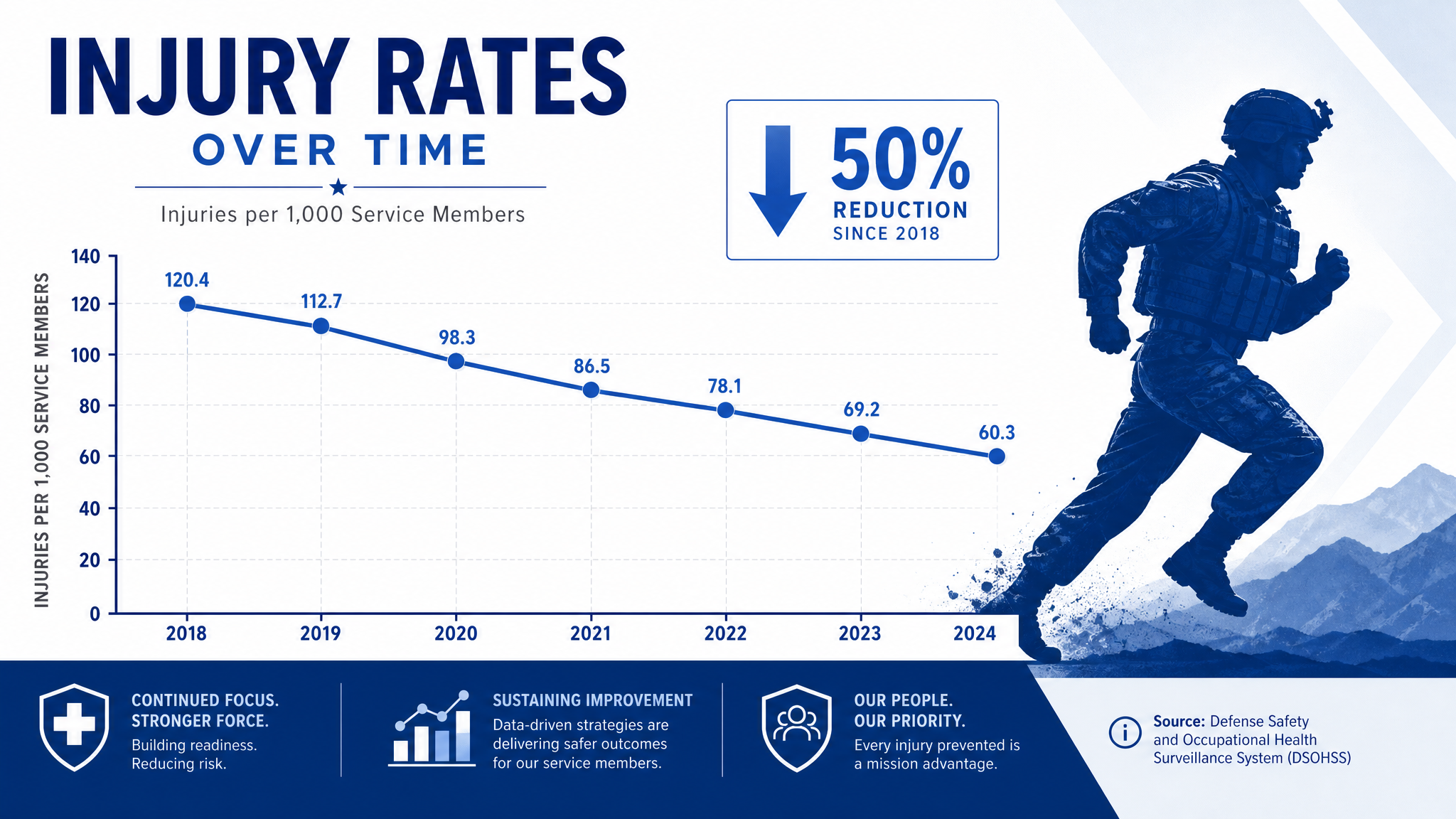
Basic training involves a sudden and dramatic increase in physical activity. Recruits who have been sedentary or lightly active go directly into 5–10 mile marches, daily runs, and hours of standing. For flat-footed recruits, this rapid increase in load on unsupported arches is a recipe for overuse injuries.
The most common injuries among flat-footed recruits: – Shin splints — affects up to 20% of recruits in basic training – Stress fractures — flat feet increase risk by altering force distribution – Plantar fasciitis — develops from constant tension on the plantar fascia – Posterior tibial tendonitis — the arch-supporting tendon is overloaded
These injuries are largely preventable with the right preparation. The 8-week plan below addresses each risk factor systematically.
The 8-Week Preparation Plan
Week 8: Baseline and Insole Selection
Goal: Establish your starting point and acquire the right equipment.
Actions: – Walk 1 mile at a comfortable pace. Note any foot, arch, or ankle pain. – Purchase arch support insoles with firm support designed for high-impact activity. Our insoles for military boots guide covers the best options. – Measure your feet at the end of the day (when feet are largest) for boot fitting. – Start wearing your insoles for 1 hour per day during casual walking.
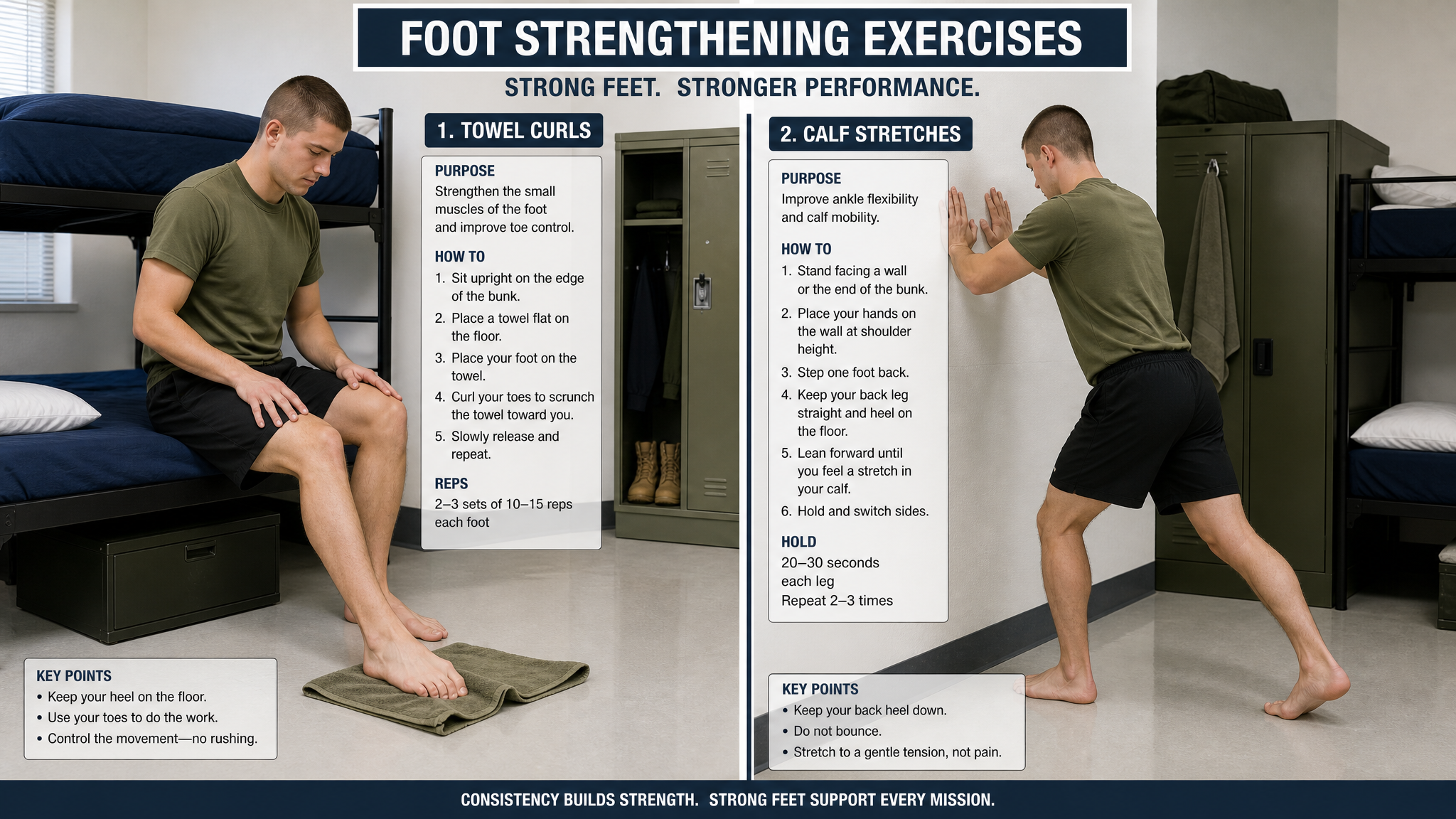
Foot exercises to add: – Towel curls: 2 sets of 15 per foot (daily) – Ankle alphabet: trace the alphabet with your big toe (daily)
Warning sign: If 1 hour of insole wear causes arch cramping, reduce to 30 minutes. Cramping is normal during adaptation; sharp pain is not.
Week 7: Walking Volume Increase
Goal: Increase weight-bearing tolerance and continue insole adaptation.
Actions: – Walk 1.5 miles daily in supportive shoes with your insoles – Increase insole wear to 2–3 hours per day – Begin morning calf stretches: straight-leg and bent-knee versions, 30 seconds each, 3 repetitions per side
Foot exercises to add: – Short foot exercise: 2 sets of 10 per foot (daily) — shorten the foot by drawing the ball toward the heel without curling toes – Calf raises: 3 sets of 15 (every other day)
Monitor: Any foot pain during or after walking should be noted. Mild arch fatigue is normal; sharp or persistent pain is not.
Week 6: Begin Rucking Preparation
Goal: Introduce loaded walking to simulate basic training conditions.
Actions: – Walk 2 miles, 5 days per week – One of these walks should be with a loaded backpack (15–20 pounds) – Increase insole wear to 4–6 hours daily – Continue daily calf stretching
Foot exercises to add: – Single-leg balance: 30 seconds per leg, 3 repetitions (every other day) – Resistance band ankle inversion: 3 sets of 12 per side (every other day)
Important: The loaded walk should be on flat, even terrain. Do not attempt rucking on trails or hills yet.
Week 5: Running Introduction
Goal: Begin running with proper form and flat feet considerations.
Actions: – Walk 2 miles, 4 days per week – Add 1 day of run/walk intervals: run 1 minute, walk 2 minutes, repeat 6 times – Continue one loaded walk per week (backpack now 20–25 pounds) – Full-day insole wear should be comfortable by now
Foot exercises to add: – Single-leg calf raises: 3 sets of 10 per leg (every other day) – Foot rolling with a frozen water bottle or tennis ball: 5 minutes per foot (daily after activity)
Form cue: Run with a midfoot strike — avoid heavy heel striking, which increases shock transmission through the arch.
Week 4: Volume Increase
Goal: Build toward basic training volume levels.
Actions: – Walk 2.5 miles, 3 days per week – Run intervals: run 2 minutes, walk 1 minute, repeat 6 times (2 days per week) – Loaded walk: 2 miles with 25–30 pounds, 1 day per week – Continue all foot exercises and stretching
Monitor: Pay attention to shin pain. If you develop shin splint symptoms, reduce running volume and focus on calf stretching and ice therapy.
Week 3: Peak Conditioning
Goal: Reach the highest training volume before a taper week.
Actions: – Walk 3 miles, 2 days per week – Run intervals: run 3 minutes, walk 1 minute, repeat 4 times (2 days per week) – Loaded walk: 2.5 miles with 30–35 pounds, 1 day per week – Add heel walks and toe walks to strengthen foot and ankle stabilizers
Strength work to add: – Glute bridges: 3 sets of 15 (targets glute weakness that contributes to overpronation) – Side-lying leg raises: 3 sets of 12 per side
Week 2: Recovery Taper
Goal: Reduce volume while maintaining intensity to allow your body to adapt.
Actions: – Walk 2 miles, 2 days per week – One run interval session (moderate intensity) – One loaded walk: 2 miles with 25 pounds – Continue all stretching and foot exercises – Increase sleep and hydration — this is when adaptation happens
Week 1: Final Preparation
Goal: Light activity to stay loose without creating fatigue before shipping out.
Actions: – Light walking only — 1–2 miles per day – Daily stretching and foot exercises – No loaded walks – Confirm your insole and boot strategy – Pack a spare pair of insoles in your shipping bag
Preparing for Branch-Specific Basic Training
Each branch’s basic training has different physical demands. Tailor your preparation accordingly:
Army Basic Training (BCT)
Location: Fort Jackson, Fort Moore, Fort Sill, or Fort Leonard Wood Duration: 10 weeks Key demands: Ruck marching (up to 10 miles), obstacle course, daily runs (1–2 miles progressing to 4+ miles)
Preparation focus: Prioritize rucking and running volume. Army BCT has the most running of any basic training program. Your 8-week plan should emphasize run conditioning.
Marine Corps Boot Camp
Location: Parris Island or San Diego Duration: 13 weeks Key demands: High run volume, obstacle course, combat fitness test, ruck marching
Preparation focus: Maximum running volume and bodyweight exercises. Marine Corps boot camp is the most physically demanding. Extend your preparation to 12 weeks if possible.
Location: Great Lakes, Illinois Duration: 8 weeks Key demands: Standing, swimming, obstacle course, running (moderate)
Preparation focus: Emphasize standing tolerance. Practice standing for extended periods. The running volume is lower than Army or Marine Corps basic training.
Air Force BMT
Location: Lackland AFB, Texas Duration: 8 weeks Key demands: Running (moderate), obstacle course, standing
Preparation focus: Moderate running preparation with emphasis on standing comfort. Air Force BMT is the least demanding on feet.
Insole Strategy for Basic Training
Your insole strategy can make or break your basic training experience. Here is a proven approach:
Before basic training: – Select insoles with firm arch support (see our best insoles for military boots guide) – Break them in over 4–6 weeks using the schedule above – Bring two pairs — one for training, one as backup
During basic training: – Wear insoles in boots for all marching and field training – Switch to running shoes with insoles for PT and runs – Remove insoles at night to allow them to dry and decompress – Replace if they get waterlogged or compressed
After basic training: – Continue using insoles in your duty boots – Replace every 6 months or when support feels flattened
Calf Stretching Protocol for Flat Feet
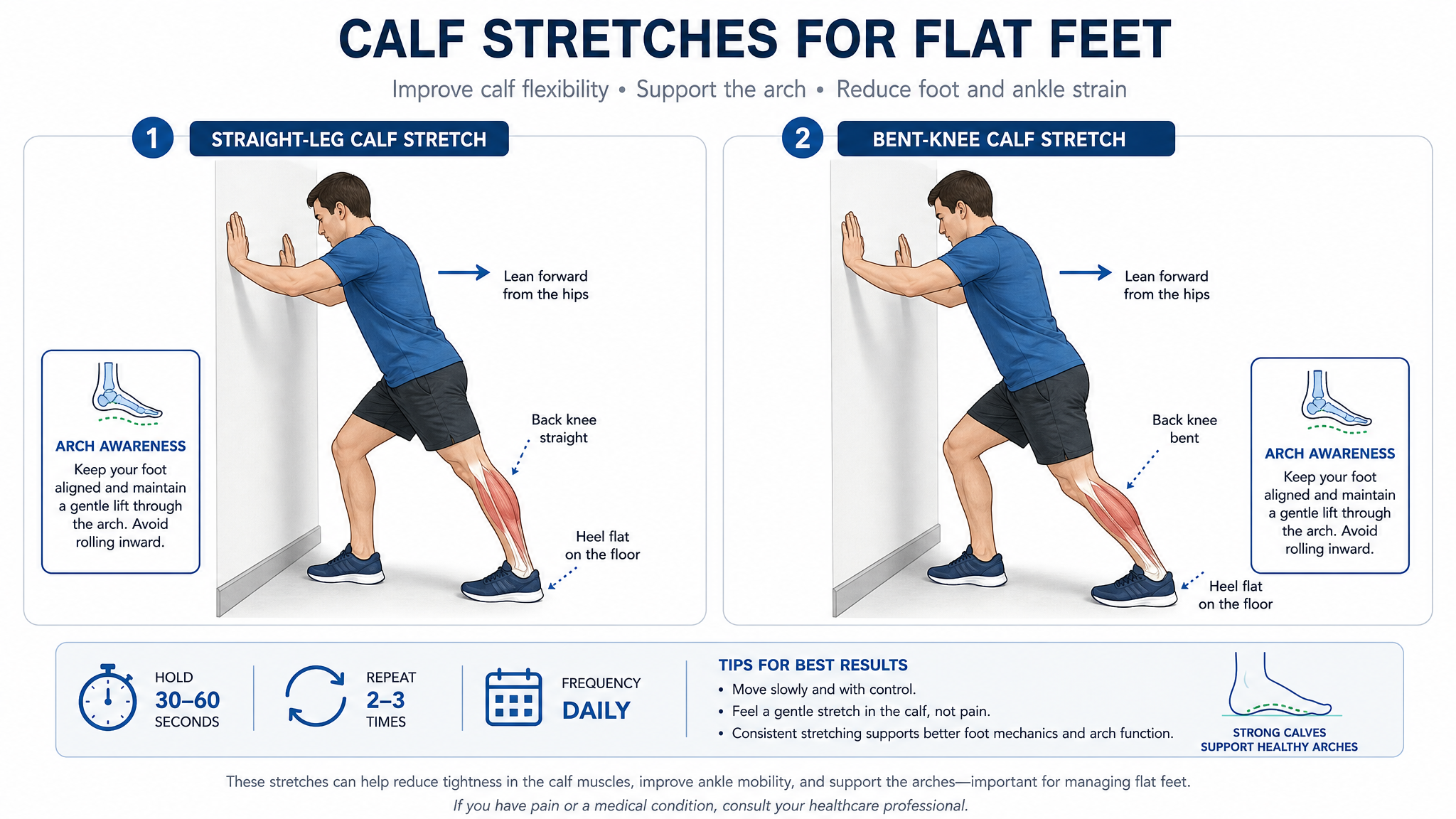
Tight calves are one of the most overlooked contributors to flat feet problems. When the calf muscles are tight, they limit ankle range of motion, forcing the foot to compensate by overpronating. This protocol should be done twice daily:
Straight-leg calf stretch (gastrocnemius): Stand facing a wall, hands on the wall at shoulder height. Step one foot back, keeping the leg straight and heel on the ground. Lean forward until you feel a stretch in the upper calf. Hold 30 seconds. Repeat 3 times per side.
Bent-knee calf stretch (soleus): Same position but with the back knee bent. This targets the deeper soleus muscle. Hold 30 seconds. Repeat 3 times per side.
Daily minimum: 6 minutes of calf stretching (30 seconds × 3 reps × 2 legs × 2 versions). Do this every day during your preparation phase and throughout basic training.
Conclusion
Proper preparation transforms basic training from a painful ordeal into a manageable challenge for recruits with flat feet. The 8-week plan above covers insole adaptation, progressive conditioning, foot strengthening, and calf flexibility — the four pillars of flat feet preparation. Start early, be consistent, and your feet will carry you through basic training successfully.
Start your preparation with the right support.
Our orthotic insoles provide the firm arch support you need for basic training success.
Shop Orthotic Insoles →Free returns on all orders · 30-day money-back guarantee
Frequently Asked Questions
Is basic training harder with flat feet?
Basic training is demanding for everyone, but flat feet increase the risk of specific overuse injuries — shin splints, stress fractures, and plantar fasciitis. Proper preparation with arch support insoles and conditioning significantly reduces this risk.
Can I wear insoles in basic training?
Yes. Arch support insoles are permitted in all branches of US military basic training. They are considered personal medical devices. Bring two pairs and break them in before shipping out.
What happens if my feet hurt during basic training?
Report foot pain to your drill instructor and seek evaluation at the training medical clinic. Minor issues can be managed with supportive insoles and stretching. Serious injuries require medical attention.
Should I tell my drill instructor I have flat feet?
Yes. Your drill instructors need to know about any medical conditions that could affect your training. However, do not use flat feet as an excuse to avoid activities — use your preparation and insoles to perform.
How do I prevent shin splints in basic training with flat feet?
Prevention requires three things: firm arch support insoles, daily calf stretching, and gradual conditioning before basic training. Do not skip any of these components.
Can flat feet get you discharged from basic training?
Flat feet alone rarely result in discharge from basic training. However, if flat feet cause significant overuse injuries that prevent you from training, you could be medically separated. This is why preparation and proper support are essential.