Best Shoe Lifts for Height: Insoles vs Elevator Shoes vs Platforms
If you want to be taller, you have more options than ever. Height increasing insoles, elevator shoes, platform shoes, and even custom footwear all promise extra inches. But each option comes with different trade-offs in cost, comfort, discretion, and everyday practicality.
This guide compares the three most popular shoe lift methods head-to-head. We have scored each option across five categories so you can decide which approach fits your needs.
Good to Know
The average person cannot tell the difference between 1–3 inches of height gain from quality insoles versus natural height. Elevator shoes and platforms, however, are often identifiable by their thicker soles.
Comparison Overview
| Factor | Height Insoles | Elevator Shoes | Platform Shoes |
|---|---|---|---|
| Cost | $22–$39 | $100–$300+ | $50–$200 |
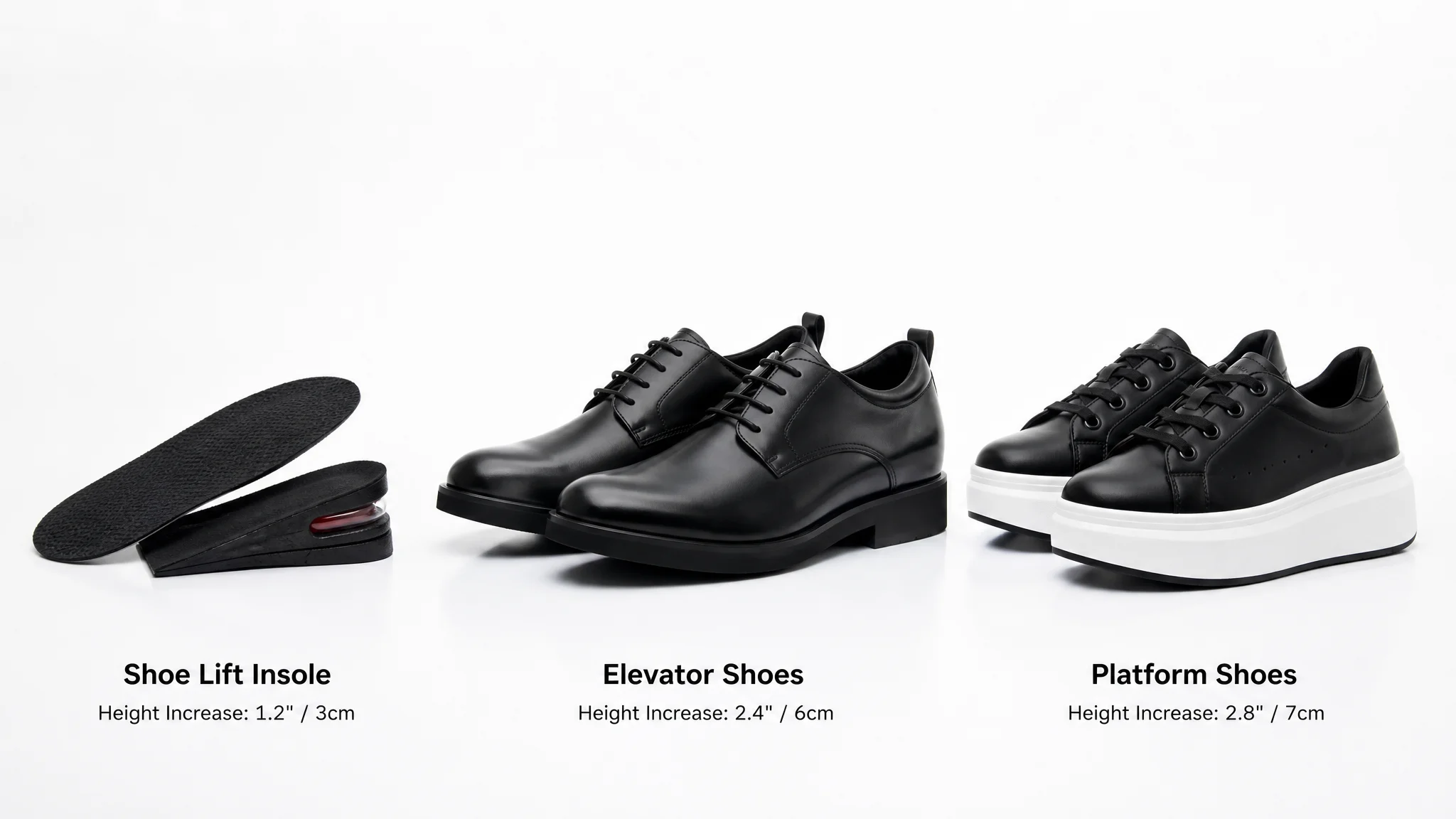
| Height gain | 1–3 inches | 2–4 inches | 1–6 inches |
| Discretion | Excellent — invisible inside shoe | Moderate — visible thicker sole | Low — obvious platform sole |
| Comfort | High — cushioned with arch support | Moderate — varies by brand | Low — rigid sole, no support |
| Works with your shoes | Yes — fits existing footwear | No — dedicated shoes only | No — dedicated shoes only |
| Versatility | One pair works with multiple shoes | Each pair only works on its own | Each pair only works on its own |
| Best for | Daily wear, all situations | Specific events, formal wear | Fashion, costumes, events |
Height Increasing Insoles — Best Overall Value
Height insoles are the most practical option for most people. They work inside your existing shoes, cost a fraction of the alternatives, and deliver up to 3 inches of invisible lift.
Pros: – Completely invisible inside lace-up shoes and boots – Works with shoes you already own — no new wardrobe needed – Comfortable for all-day wear with quality materials – One pair works across multiple pairs of shoes – Adjustable lift options available
Cons: – Maximum 3 inches of lift (vs 4–6 inches for other options) – Requires shoes with enough depth – Not suitable for all shoe types (flats, sandals)
Best for: Daily wear, work, social situations. The most versatile option that balances cost, comfort, and effectiveness.
RoamingFeet offers a range of height increasing insoles for both men and women, starting at $22.05 with up to 3 inches of adjustable lift.
Elevator Shoes — Dedicated Height Footwear
Elevator shoes have the lift built directly into the sole and heel of the shoe. They look like normal dress shoes or casual footwear from most angles, but the sole is visibly thicker than standard shoes.
Pros: – Built-in lift up to 4 inches – No insert needed — put them on and go – Can look like normal dress shoes from above – Suitable for formal wear where inserts might not fit
Cons: – Expensive ($100–$300+ per pair) – Only works with that specific pair of shoes – The thicker sole is noticeable from the side – Less comfortable than cushioned insoles – Cannot transfer the lift to other shoes
Best for: Special occasions, formal events, or situations where you want height without any insert setup. Not ideal for daily wear given the cost and limited versatility.
Platform Shoes — Maximum Height
Platform shoes build height into the entire sole of the shoe. They offer the most height gain — up to 6 inches — but are the least discreet option.
Pros: – Highest maximum height (up to 6 inches) – Consistent sole thickness feels stable – Wide variety of styles available
Cons: – Clearly visible as platform footwear – Heavy and less flexible – Limited arch support and cushioning – Very noticeable — no discretion – Limited to casual or fashion contexts
Best for: Fashion-forward looks, costume wear, and situations where the platform style is intentional. Not a practical daily solution for most people.
Head-to-Head Scoring
| Category | Height Insoles | Elevator Shoes | Platform Shoes |
|---|---|---|---|
| Cost | ★★★★★ | ★★☆☆☆ | ★★★☆☆ |
| Comfort | ★★★★★ | ★★★☆☆ | ★★☆☆☆ |
| Discretion | ★★★★★ | ★★★☆☆ | ★☆☆☆☆ |
| Height Range | ★★★☆☆ | ★★★★☆ | ★★★★★ |
| Versatility | ★★★★★ | ★★☆☆☆ | ★★☆☆☆ |
| Overall | ★★★★★ | ★★★☆☆ | ★★☆☆☆ |
When to Choose Each Option
Choose height insoles if: You want a practical, everyday solution that works with your existing shoes. You need 1–3 inches of invisible lift. You value comfort and discretion. This is the right choice for most people.
Choose elevator shoes if: You need more than 3 inches of lift and cannot use inserts. You want a dedicated pair of shoes for specific occasions. You are willing to pay more for the built-in convenience.
Choose platform shoes if: The look is the point — platform boots, sneakers, or fashion footwear. You want maximum height (4–6 inches) and are not concerned about discretion.
Important
Custom elevator shoes can cost $300 or more. Before investing in dedicated lift footwear, consider whether height insoles at $22–$39 could achieve a similar result in shoes you already own.
Cost Comparison Over 12 Months
| Option | Initial Cost | Replacement | Total First Year |
|---|---|---|---|
| Height insoles (1 pair) | $22–$39 | 1 replacement ($22–$39) | $44–$78 |
| Elevator shoes (1 pair) | $100–$300+ | None (last longer) | $100–$300+ |
| Platform shoes (1 pair) | $50–$200 | None (last longer) | $50–$200 |
Height insoles not only cost less upfront but also work across multiple pairs of shoes. One $34 pair of insoles can add height to every pair of compatible shoes you own. Elevator shoes and platforms only work as a single pair of footwear.
Which Option Is Right for You?
For the vast majority of people, height insoles are the best choice. They offer: – The lowest cost by a significant margin – The highest level of discretion – The best comfort for all-day wear – The most versatility (works with any compatible shoe)
Elevator shoes and platforms have their place, but they solve a different problem. If your goal is to look naturally taller in everyday life — without people noticing how — height insoles are the answer.
Find the right pair for your needs at our height increasing insoles shop, where options for both men and women start at $22.05.
Why pay $300 for elevator shoes?
Our height insoles deliver up to 3 inches of invisible lift at a fraction of the cost. Comfortable, discreet, and works with your existing shoes.
Compare Height Insoles →Free returns on all orders · 30-day money-back guarantee
Frequently Asked Questions
What is the best shoe lift for height?
For most people, height increasing insoles are the best option. They are the most affordable, most discreet, and most comfortable for daily wear. They work with your existing shoes and provide up to 3 inches of invisible lift.
Do elevator shoes look obvious?
Elevator shoes have a visibly thicker sole than standard footwear. While the design is subtle compared to platforms, people familiar with footwear may notice the difference. Height insoles offer better discretion.
Can you get 4 inches of height from insoles?
Most height insoles max out at 3 inches. For 4 inches or more, elevator shoes or platform shoes are typically required. The internal depth of most shoes simply cannot accommodate a 4-inch lift.
Are platform shoes bad for your feet?
Platform shoes offer minimal arch support and can contribute to foot fatigue, especially during extended wear. Height insoles with cushioned foam provide much better support for all-day comfort.
What is the most discreet way to add height?
Height insoles worn in lace-up boots or sneakers are the most discreet option. The insole is completely hidden inside the shoe, and the lift is distributed naturally across the foot.
Do height insoles work in boots?
Yes. Boots are actually the best footwear for height insoles. The deep internal space accommodates up to 3 inches of lift, and the high ankle construction keeps everything invisible.