
Best Heel Lifts for Achilles Tendonitis: What Actually Works
The best heel lift inserts for Achilles tendonitis raise the heel 6–12mm, which shortens the distance between the calf muscle and the heel bone and reduces the load on the tendon with every step. They are one of the most widely recommended first-line interventions for Achilles tendonitis, and one of the most misunderstood.
Most people searching for heel lifts end up buying heel cups instead. The two products look similar on the shelf, but they do completely different things. A heel cup cushions the heel. A heel lift raises it. For Achilles tendonitis, the raise is what matters.
Key Takeaways:
- Heel lifts reduce Achilles tendon tension by shortening the distance the tendon must stretch with each step
- A heel lift raises the heel; a heel cup cushions it, only the lift reduces tendon load
- 6–12mm of lift is the clinically recommended range; more than 12mm can cause problems
- Wear heel lifts in both shoes, not just the painful side, to prevent a leg-length imbalance
- Heel lifts are a short-term management tool, not a long-term fix, most people use them for 6–12 weeks alongside rehabilitation exercises
Why Heel Lifts Help Achilles Tendonitis
The Achilles tendon connects the calf muscles (gastrocnemius and soleus) to the heel bone (calcaneus). When you stand flat on the ground, the tendon is under constant low-level tension. When you walk or run, that tension spikes with each heel strike and push-off.
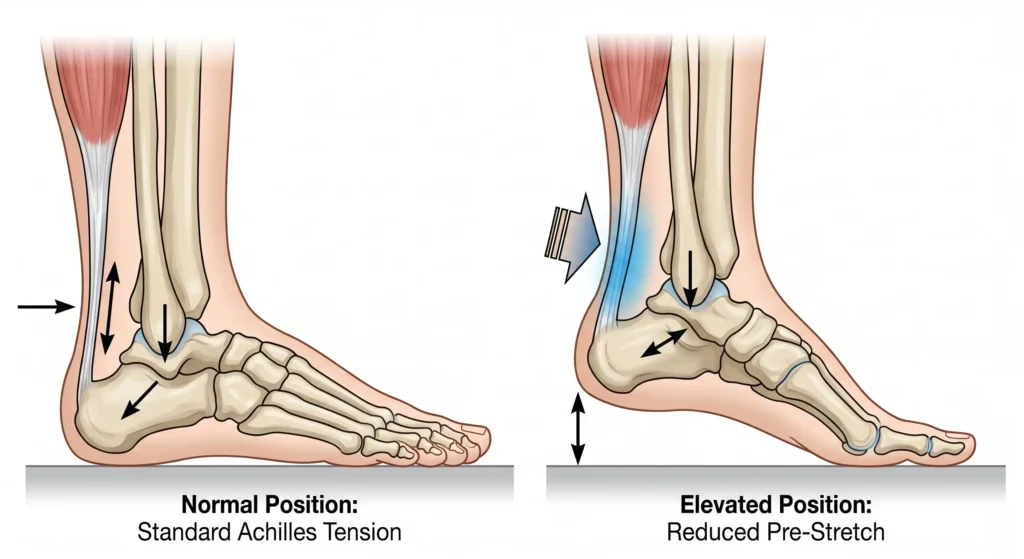
Raising the heel reduces the angle at the ankle joint. A smaller angle means the calf muscle does not need to stretch as far, which means the tendon is under less tension throughout the gait cycle. The effect is immediate and measurable. Research published in the Journal of Orthopaedic & Sports Physical Therapy found that a 12mm heel lift reduced Achilles tendon force during walking by approximately 11%.
This is why podiatrists recommend heel lifts as a first-line intervention. They do not treat the underlying tendon pathology, but they reduce the load on the tendon while it heals. That load reduction is what allows rehabilitation exercises to work without constantly re-aggravating the injury.
Marcus had been dealing with mid-portion Achilles tendonitis for four months. He had tried rest, ice, and stretching, but the pain returned every time he went back to running. His sports physiotherapist added 9mm heel lifts to both his running shoes and his everyday shoes. Within three weeks, his morning stiffness had dropped significantly. The lifts were not healing the tendon, the eccentric calf exercises were doing that, but they were reducing the daily load enough for the exercises to take effect.
Heel Lift vs. Heel Cup: The Difference That Matters
This is the most common source of confusion when buying for Achilles tendonitis.
A heel lift is a wedge-shaped insert that sits under the heel and raises it relative to the forefoot. The back of the insert is thicker than the front. The entire purpose is elevation. Most heel lifts are 6–12mm thick at the back and taper to nothing at the midfoot.
A heel cup is a cup-shaped insert that cradles the heel pad. It is the same thickness all the way around. The purpose is cushioning and heel stabilisation. Heel cups are excellent for plantar fasciitis and heel pad syndrome. They do not raise the heel and do not reduce Achilles tendon tension.
Many products are sold as “heel cups for Achilles tendonitis” and they are not wrong, cushioning helps with the impact pain that often accompanies the condition. But if your goal is to reduce tendon load, you need a lift, not a cup.
Some products combine both: a raised heel cup that provides both elevation and cushioning. These are a reasonable choice for Achilles tendonitis because they address both the mechanical load and the impact pain. Look for products that specify the lift height in millimetres, if the product description does not mention a height measurement, it is almost certainly a cup, not a lift.
Good to Know
Heel lifts work differently for insertional vs. mid-portion Achilles tendonitis. For mid-portion tendonitis (pain 2–6cm above the heel), heel lifts are consistently effective. For insertional tendonitis (pain right at the heel bone), heel lifts help but you must avoid heel cups that press directly on the insertion point, this can aggravate the condition. A thin silicone lift that raises without compressing the back of the heel is the better choice for insertional cases.
How Much Lift Do You Actually Need
The clinically recommended range for Achilles tendonitis is 6–12mm. This range is not arbitrary.
Below 6mm provides minimal mechanical benefit. The reduction in tendon tension is too small to make a meaningful difference during activity.
6–9mm is the standard starting point for most people. It provides meaningful load reduction without significantly altering gait mechanics or causing discomfort in the opposite leg.
9–12mm is appropriate for more severe cases or for people with tight calf muscles (gastrocnemius tightness is a major risk factor for Achilles tendonitis). A higher lift compensates for the reduced ankle dorsiflexion range that tight calves create.
Above 12mm starts to cause problems. The heel sits so high that the foot slides forward in the shoe, the toes bear more load than normal, and the altered gait can create new problems in the knee and hip. If you feel you need more than 12mm of lift to get relief, that is a signal to see a podiatrist rather than stack more inserts.
The practical test: if a 9mm lift provides significant relief within the first week of use, you have found the right height. If it provides no relief, the problem may not be primarily mechanical, consult a podiatrist before increasing the lift height further.
Best Heel Lift Options for Achilles Tendonitis
Silicone Heel Lifts (Best for Most People)
Silicone heel lifts are the most widely recommended option for Achilles tendonitis. They combine a measured lift height with shock absorption, they fit into almost any shoe without taking up significant space, and they are durable enough for daily use over several months.
The key features to look for in a silicone heel lift:
- Specified lift height: 6mm, 9mm, or 12mm, not “medium” or “high”
- Full heel coverage: The lift should cover the entire heel pad, not just the centre
- Non-slip base: Silicone grips the shoe interior; fabric-backed lifts slide
- Bevelled front edge: A tapered front edge prevents a pressure ridge under the midfoot
Silicone gel insoles with a built-in heel raise provide both the lift and the cushioning in a single insert. For people whose Achilles tendonitis is accompanied by heel impact pain, this combination is more practical than a separate lift and cushioning layer. The silicone gel insoles guide covers the full range of silicone options with specific recommendations for heel pain and tendon conditions.
EVA Foam Heel Lifts (Best for Athletic Shoes)
EVA foam heel lifts are lighter and thinner than silicone, which makes them a better fit for running shoes and athletic footwear where space is limited. They provide less cushioning than silicone but more precise lift height control.
For runners managing Achilles tendonitis, EVA foam lifts are the practical choice. They do not add significant weight, they do not compress as much as silicone under running loads, and they fit within the heel counter of most running shoes without causing heel slip.
The tradeoff is durability. EVA foam compresses over time and loses its lift height. A foam lift that starts at 9mm may be providing only 6mm of lift after three months of daily running. Replace foam lifts every 8–12 weeks if you are using them for running.
Adjustable Heel Lifts (Best for Finding the Right Height)
Adjustable heel lifts use stacked layers that can be added or removed to change the lift height. They are useful when you are not sure which height will provide the most relief, or when you want to gradually reduce the lift height as the tendon heals.
The limitation is that stacked layers can shift during activity, and the total thickness of an adjustable lift is often greater than a single-piece lift at the same height. They work well for everyday shoes and work boots but are less suitable for athletic footwear.
How to Use Heel Lifts Correctly
Getting the mechanics right matters as much as choosing the right product.
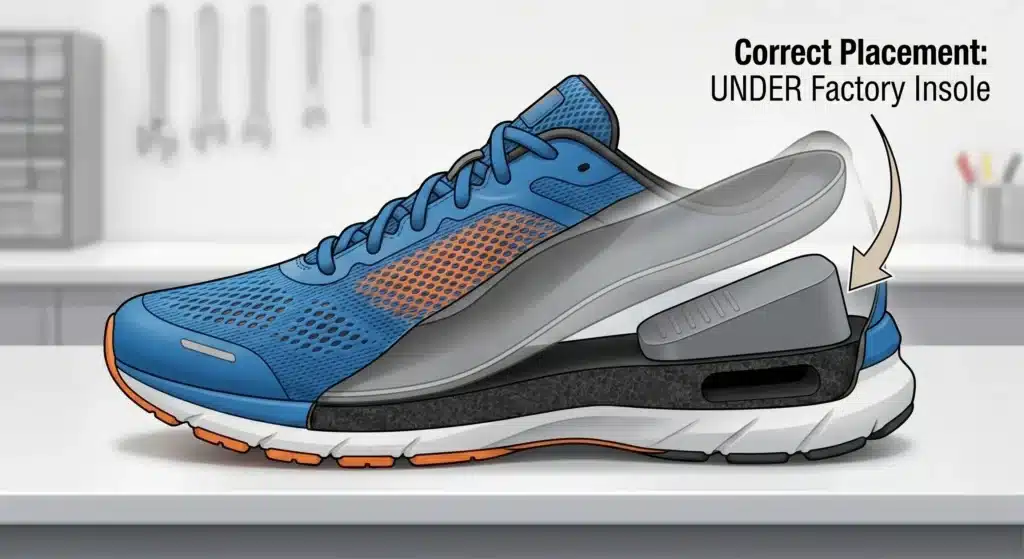
Use Both Shoes, Not Just the Painful Side
This is the most common mistake. Wearing a heel lift in only the painful shoe creates a leg-length discrepancy. The lifted side is effectively longer, which tilts the pelvis and can cause hip and lower back pain within days. Always use matched lifts in both shoes, even if only one Achilles is symptomatic.
Start with the Lowest Effective Height
Begin with 6mm and assess after one week. If pain during activity has reduced noticeably, stay at 6mm. If there is minimal improvement, move to 9mm. Starting too high and then reducing is harder than building up gradually.
Wear Them Consistently, Not Just During Activity
The Achilles tendon is under load whenever you are on your feet, not just during exercise. Wearing heel lifts only in your running shoes while walking around barefoot or in flat shoes at home undermines the benefit. Use them in every shoe you wear regularly during the treatment period.
Important
Heel lifts manage Achilles tendonitis symptoms but do not treat the underlying tendon pathology. If you have been using heel lifts for more than 12 weeks without significant improvement, or if you experience sudden sharp pain, significant swelling, or a popping sensation in the tendon, stop activity and consult a podiatrist or sports medicine physician. A sudden pop with immediate weakness may indicate a tendon rupture, which requires urgent medical attention.
How Long to Wear Heel Lifts for Achilles Tendonitis
Most clinical guidelines recommend using heel lifts for 6–12 weeks as part of a structured rehabilitation programme. The exact duration depends on the severity of the tendonitis and how quickly the tendon responds to treatment.
The goal is not to wear heel lifts indefinitely. Long-term use shortens the calf muscles and reduces ankle dorsiflexion range, which can make the Achilles tendon more vulnerable to re-injury once the lifts are removed. The lifts are a bridge, they reduce load while the tendon heals and while rehabilitation exercises rebuild tendon strength.
The weaning process matters. Do not remove heel lifts abruptly after 12 weeks. Reduce the height gradually over two to four weeks: from 9mm to 6mm for two weeks, then from 6mm to no lift over the following two weeks. This gives the calf muscles time to adapt to the increased stretch.
Priya had been using 9mm heel lifts for eight weeks after a diagnosis of mid-portion Achilles tendonitis. Her pain had reduced from a 7/10 to a 2/10 during her daily walks. Her physiotherapist advised her to drop to 6mm lifts for two weeks, then remove them entirely while continuing her eccentric calf raises. She had no recurrence at the three-month follow-up. The gradual reduction was what prevented the pain from returning when she stopped using the lifts.
Heel Lifts vs. Full-Length Insoles for Achilles Tendonitis
Heel lifts address one specific mechanical factor: tendon tension from ankle angle. Full-length insoles for Achilles tendonitis address a broader set of factors, including arch support to control overpronation, cushioning across the full foot, and heel stabilisation.
For many people with Achilles tendonitis, overpronation is a contributing cause. When the foot rolls inward excessively, the Achilles tendon twists under load, which increases stress at the mid-portion of the tendon. A heel lift alone does not address this. A full-length insole with arch support and a built-in heel raise addresses both the tendon tension and the pronation component.
The practical guidance: if your Achilles tendonitis is associated with flat feet, overpronation, or pain that is worse on the inner side of the tendon, a full-length insole is likely to provide more comprehensive relief than a heel lift alone. The complete guide to insoles for Achilles tendonitis covers the full range of options including full-length insoles, heel cups, and orthotics, with recommendations matched to different presentations of the condition.
If your tendonitis is primarily mechanical, tight calves, high training load, no significant pronation, a heel lift is the more targeted and cost-effective starting point.
Heel Lifts and Footwear: What Works and What Doesn’t
The shoe matters as much as the lift. A heel lift in the wrong shoe provides less benefit and can cause new problems.
Running shoes: Most running shoes already have a heel-to-toe drop of 8–12mm. Adding a 9mm heel lift to a shoe with 10mm of built-in drop gives you an effective heel elevation of 19mm, well above the recommended range. For running shoes, use a 6mm lift maximum, or choose a shoe with a higher heel drop and no additional lift.
Work boots and flat shoes: Flat shoes and work boots have minimal heel drop, which makes them the most important footwear to address with heel lifts. A 9mm lift in a flat work boot provides meaningful relief during long shifts. For steel-toed boots and tactical footwear, the insoles for military boots guide covers options that combine heel lift with the durability required for demanding work environments.
Dress shoes: Thin heel lifts (6mm silicone) fit inside most dress shoes without causing heel slip. Thicker lifts push the foot forward and cause the heel to lift out of the shoe with each step. If you need more than 6mm of lift in dress shoes, the shoe is too shallow and you need a different shoe, not a thicker lift.
Sandals and open-back shoes: Heel lifts do not work in sandals or mules. The lift has nothing to hold it in place. For people who wear open-back footwear regularly, this is a significant gap in the treatment plan, the tendon is unprotected during those hours. Switching to closed-back shoes during the treatment period is the practical solution.
Conclusion
Heel lift inserts for Achilles tendonitis work by reducing the mechanical load on the tendon, not by treating the tendon directly. Used correctly, the right height, in both shoes, consistently throughout the day, for 6–12 weeks alongside rehabilitation exercises, they are one of the most effective conservative interventions available for this condition.
The key decisions are simple: choose a lift with a specified height in millimetres (not a vague size description), start at 6–9mm, use them in every shoe you wear, and wean off gradually rather than stopping abruptly.
For Achilles tendonitis with a pronation component, a full-length insole with arch support and a built-in heel raise provides more comprehensive coverage than a heel lift alone. The best insoles for tendonitis guide covers the full range of options for tendon conditions across the foot and ankle.
Protect your feet while you heal.
Our silicone gel insoles provide heel cushioning and shock absorption to reduce impact load during Achilles tendonitis recovery. Full-length coverage, trimmable fit, suitable for all shoe types.
Find the Right Insole →Free shipping on $50+ · Free returns on all orders
Frequently Asked Questions
Do heel lifts actually help Achilles tendonitis?
Yes, for most presentations. Heel lifts reduce the tension on the Achilles tendon by raising the heel and decreasing the stretch the tendon must accommodate with each step. Research supports a meaningful reduction in tendon force at 9–12mm of lift. They are most effective as part of a broader treatment plan that includes eccentric calf exercises and load management, not as a standalone treatment.
How long should I wear heel lifts for Achilles tendonitis?
Most clinical guidelines recommend 6–12 weeks of consistent use alongside rehabilitation exercises. Do not stop abruptly, reduce the lift height gradually over two to four weeks to allow the calf muscles to adapt. Long-term use beyond 12 weeks without a weaning plan can shorten the calf muscles and increase re-injury risk.
What is the difference between a heel lift and a heel cup for Achilles tendonitis?
A heel lift raises the heel relative to the forefoot, reducing Achilles tendon tension. A heel cup cushions the heel pad without raising it. For Achilles tendonitis, the lift is the mechanically relevant intervention. Heel cups help with impact pain but do not reduce tendon load. Some products combine both, a raised heel cup, which is a reasonable choice if you have both tendon pain and heel impact pain.
Should I wear heel lifts in both shoes or just the painful side?
Always both shoes. Wearing a lift in only the painful shoe creates a leg-length discrepancy that can cause hip and lower back pain within days. Even if only one Achilles is symptomatic, use matched lifts in both shoes throughout the treatment period.
Can I wear heel lifts in running shoes?
Yes, but account for the shoe’s existing heel drop. Most running shoes have 8–12mm of built-in heel-to-toe drop. Adding a 9mm lift to a shoe with 10mm of drop gives an effective elevation of 19mm, which is above the recommended range. Use a 6mm lift maximum in running shoes, or choose a shoe with a higher heel drop and no additional lift.
When should I see a doctor instead of using heel lifts?
If you experience a sudden sharp pain with a popping sensation in the tendon, significant swelling, or an inability to push off on the affected foot, stop activity and seek medical attention immediately. These symptoms may indicate a tendon rupture, which requires urgent treatment. Heel lifts are appropriate for managing chronic Achilles tendonitis, not acute tendon injuries.