Best Insoles for Achilles Tendonitis in Work Boots: Standing All Day
Workers on hard floors in steel-toed or tactical boots face a specific Achilles tendonitis challenge that running-focused insole guides do not address. Work boots are stiffer, have less cushioning than athletic shoes, and are worn for 8–12 hour shifts with minimal opportunity to rest the tendon. The insole needs to fit within a rigid boot, provide heel cushioning and a modest lift, and hold up under sustained load, not just a 45-minute run.
If your Achilles tendonitis is worse at the end of a shift than after exercise, the boot is likely the primary driver. The right insole can make a significant difference.
Key Takeaways:
- Work boots have minimal heel drop and poor cushioning, which increases Achilles tendon load during long shifts
- The insole must fit within the boot’s fixed volume, thick insoles cause heel slip and toe crowding
- A 6–9mm heel lift combined with firm arch support addresses both tendon tension and overpronation in a single insert
- Steel-toed boots require a low-profile insole that does not push the foot up against the toe cap
- Replace work boot insoles every 6–9 months, they compress faster than athletic insoles under sustained standing load
Why Work Boots Are Hard on the Achilles Tendon
Most work boots are designed for protection and durability, not biomechanical support. The result is a footwear environment that creates several Achilles tendon risk factors simultaneously.
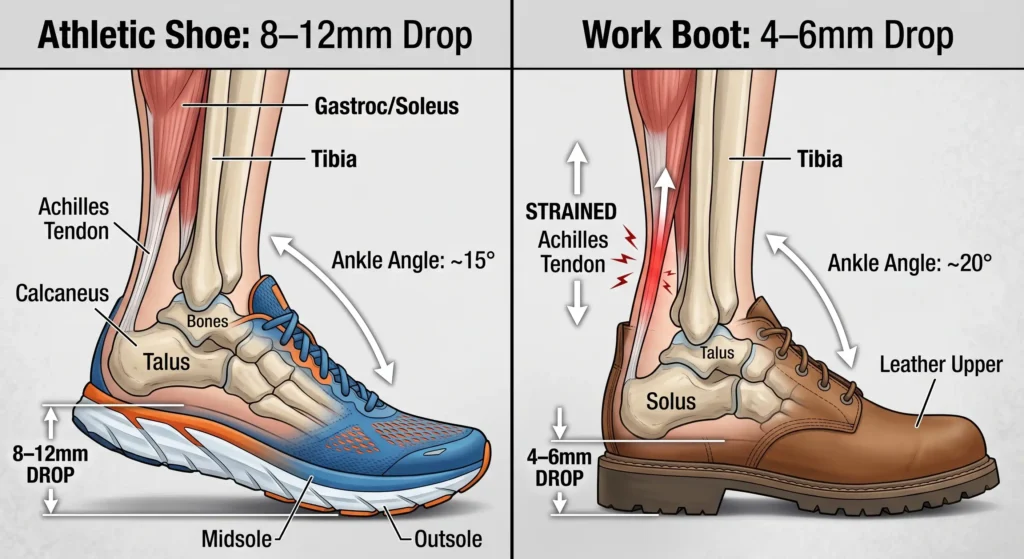
Minimal heel drop. Running shoes typically have 8–12mm of heel-to-toe drop built in. Most work boots have 4–6mm or less. Lower heel drop means the Achilles tendon must stretch further with every step, increasing the load on the tendon throughout the shift.
Rigid sole. The stiff sole of a work boot limits natural foot flexion during the gait cycle. The foot cannot roll through the push-off phase as freely as it would in a flexible shoe, which places more demand on the calf and Achilles tendon to generate forward propulsion.
Hard floor surfaces. Concrete, tile, and warehouse flooring provide no shock absorption. Every step transmits impact directly up through the foot and into the tendon. Eight hours on concrete is a very different load profile from eight hours on grass or a running track.
Limited ventilation. Sealed work boots trap heat and moisture, which softens the insole material faster than in ventilated athletic shoes. An insole that starts at 9mm of lift may be providing 5mm after three months of daily wear in a sealed boot.
Tom worked 10-hour shifts as a warehouse supervisor on concrete floors. He developed mid-portion Achilles tendonitis after switching from cushioned athletic shoes to steel-toed work boots required by his new employer. His physiotherapist identified the heel drop difference as the primary trigger, his previous shoes had 10mm of drop, his new boots had 4mm. Adding a 9mm heel lift insole to the boots effectively restored the heel elevation he had lost, and his tendon pain reduced significantly within four weeks.
What Makes a Work Boot Insole Different
The requirements for a work boot insole differ from a running insole in three important ways.
Volume Constraints
Work boots have a fixed internal volume. Unlike running shoes, which have a removable insole that creates space for an aftermarket replacement, many work boots have a thin glued-in liner rather than a true removable insole. Adding a thick aftermarket insole on top of this liner raises the foot inside the boot, which causes two problems: the heel lifts out of the boot with each step (heel slip), and the toes press against the toe cap or steel toe box.
For work boots, the insole must be low-profile, typically under 6mm total thickness at the forefoot, with the heel lift built into the heel section only. A full-length insole with a 9mm heel and a 3mm forefoot provides the lift where it is needed without raising the entire foot.
Durability Under Sustained Load
Running insoles are designed for intermittent high-impact loads over 30–90 minutes. Work boot insoles need to maintain their structure under sustained moderate load for 8–12 hours. EVA foam compresses faster under sustained standing than under running, because the material never fully recovers between steps. A foam insole that provides 9mm of lift on day one may be providing 5mm by month three.
For work boots, look for insoles with a polypropylene or fibreglass shell rather than pure foam construction. The rigid shell maintains its shape under sustained load; the foam layer above it provides cushioning without being the structural element.
Steel Toe Compatibility
Steel-toed boots have a fixed toe box that cannot expand. Any insole that raises the foot inside the boot reduces the clearance between the top of the foot and the steel cap. For workers with wide feet or high insteps, this can cause pressure on the top of the foot before the end of the shift.
The practical test: put the insole in the boot, put the boot on, and walk for 10 minutes. If you feel pressure on the top of your foot or your toes feel crowded, the insole is too thick for that boot. Trim the forefoot section thinner or switch to a heel-only lift rather than a full-length insole.
Good to Know
If your work boot has a glued-in liner rather than a removable insole, you have two options: remove the liner carefully with a flat tool and replace it entirely, or add a thin heel-only lift on top of the liner. Adding a full-length insole on top of a non-removable liner almost always causes heel slip and toe crowding. Check whether the liner is removable before buying a full-length insole.
Insertional vs. Mid-Portion: Which Type Do You Have?
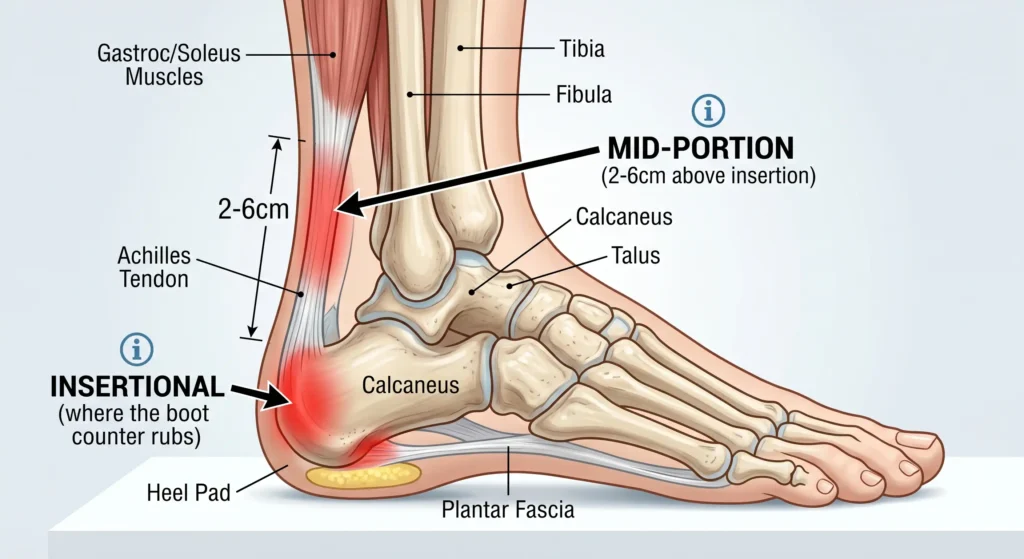
The insole approach differs depending on where your Achilles pain is located. This distinction matters more in work boots than in running shoes because the boot’s rigid back counter can directly aggravate insertional tendonitis.
Insertional tendonitis causes pain right at the back of the heel, at the point where the tendon attaches to the heel bone. The pain is often at the shoe collar line, exactly where a work boot’s rigid back counter sits. For insertional tendonitis, the back counter of the boot is pressing on the most sensitive part of the tendon with every step.
For insertional tendonitis in work boots: use a heel lift to reduce tendon tension, and add a donut-shaped heel pad or cut a relief notch in the insole at the insertion point to remove pressure from the back of the heel. Avoid insoles with a raised heel cup rim that presses against the back of the heel.
Mid-portion tendonitis causes pain 2–6cm above the heel, in the body of the tendon. The boot’s back counter is not directly pressing on the pain point. For mid-portion tendonitis in work boots: arch support to control overpronation combined with a heel lift is the standard approach. The full guide to insoles for Achilles tendonitis covers both types in detail with product recommendations for each.
Recommended Insole Features for Work Boot Achilles Tendonitis
Based on the specific demands of work boot use, look for these features:
Heel lift height: 6–9mm. Enough to meaningfully reduce tendon tension without causing heel slip in a rigid boot. Start at 6mm if the boot has limited volume; move to 9mm if 6mm provides insufficient relief.
Rigid or semi-rigid shell: Polypropylene or fibreglass base that maintains lift height under sustained standing load. Pure foam insoles compress too quickly for work boot use.
Low forefoot profile: Under 5mm at the forefoot to avoid raising the foot against the toe cap. The lift should be concentrated at the heel, tapering to minimal thickness at the ball of the foot.
Moisture management: Work boots trap heat and sweat. An insole with a moisture-wicking top cover reduces the softening effect of moisture on the foam layer and extends the insole’s useful life.
Full-length coverage: Half-length insoles leave the heel sitting in the original boot liner, which may be worn flat. Full-length insoles provide consistent support across the entire foot contact area.
The best insoles for military boots covers insoles designed for exactly this environment, sealed tactical and work boots worn for extended periods on hard surfaces. The requirements for military boots and industrial work boots are nearly identical: durability, low profile, sustained load performance, and heel support.
Managing Achilles Tendonitis During Work Shifts
Insoles address the mechanical load. These habits reduce the cumulative tendon stress across a full shift.
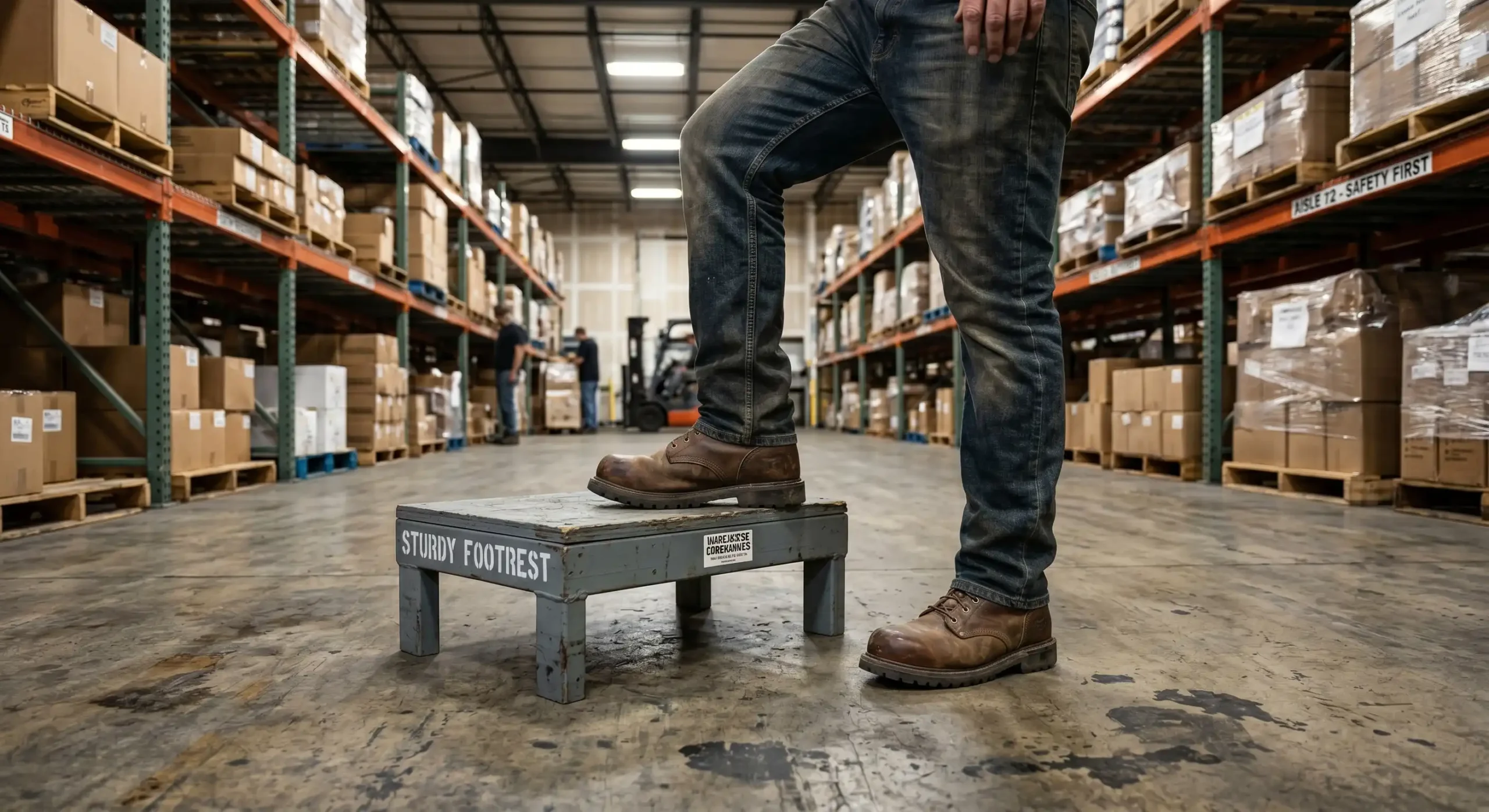
Vary your standing position. Standing with weight evenly distributed on both feet for hours at a time creates sustained static load on the Achilles tendon. Shifting weight, using a footrest, or placing one foot on a low step periodically reduces the sustained tension.
Wear the insoles from the start of the shift. Putting insoles in halfway through a shift after the tendon is already aggravated provides less benefit than wearing them from the first step. The load reduction needs to be consistent across the full shift.
Stretch the calf before and after the shift. Tight calf muscles are a primary risk factor for Achilles tendonitis. A 2-minute calf stretch before starting work and after finishing reduces the resting tension on the tendon. Stand on a step with the heel hanging off the edge and lower slowly, 15 repetitions each side.
Replace insoles on schedule. Work boot insoles compress faster than athletic insoles. Check the heel lift height every three months by pressing firmly on the heel section, if it compresses easily to near-flat, the insole has lost its structural integrity and needs replacing. Most work boot insoles need replacing every 6–9 months with daily use.
Important
If your Achilles tendon pain is severe enough to cause a limp during your shift, or if you notice significant swelling or a palpable gap in the tendon, stop work and seek medical attention. Continuing to work through severe tendon pain risks progressing from tendinopathy to a partial or complete tendon rupture, which requires surgical repair and months of rehabilitation. Insoles are appropriate for managing chronic tendinopathy, not acute tendon injuries.
When to See a Podiatrist
Most work-related Achilles tendonitis responds to insoles, load management, and calf stretching within 6–12 weeks. See a podiatrist if:
- Pain has not improved after 8 weeks of consistent insole use and calf stretching
- You have significant tendon thickening or a palpable nodule in the tendon
- Pain is severe enough to affect your gait or work performance
- You have insertional tendonitis with a visible bony prominence at the back of the heel (Haglund’s deformity), this often requires specific orthotic prescription and sometimes a boot modification
A podiatrist can also assess whether your work boot is contributing to the problem beyond what insoles can address. Some boot designs have back counters that are too rigid or too high for workers with insertional tendonitis, and a boot change may be necessary alongside insole treatment.
Conclusion
Achilles tendonitis in work boots is a mechanical problem with a mechanical solution. The boot’s low heel drop, rigid sole, and hard floor environment create a sustained tendon load that standard work boot liners do not address. A low-profile insole with a 6–9mm heel lift, a rigid shell, and moisture management addresses the primary load factors within the constraints of a sealed work boot.
The key is matching the insole to the boot’s volume. A thick insole that causes heel slip or toe crowding creates new problems while solving the tendon one. Start with a heel-only lift if the boot has limited space, and move to a full-length insole only if the boot has a removable liner with adequate depth.
For workers in tactical or military-style boots, the best insoles for military boots covers the full range of options designed for sealed, rigid footwear worn across long shifts. For a complete overview of insole options across all Achilles tendonitis presentations, the best insoles for tendonitis guide covers every major option with recommendations matched to activity type and tendon location.
Built for boots. Designed for long shifts.
Our military boot insoles combine a firm support shell with heel cushioning, low-profile enough for steel-toed boots, durable enough for 10-hour shifts on concrete.
Find the Right Boot Insole →Free shipping on $50+ · Free returns on all orders
Frequently Asked Questions
Can insoles help Achilles tendonitis in work boots?
Yes. The primary mechanical issue in work boots is low heel drop and poor cushioning, which increases Achilles tendon load during long shifts. A heel lift insole of 6–9mm restores heel elevation and reduces tendon tension. Combined with arch support to control overpronation, a quality insole can significantly reduce tendon pain during and after shifts.
What insoles fit in steel-toed work boots?
Low-profile insoles with a heel lift concentrated at the heel section and a thin forefoot (under 5mm). Thick full-length insoles raise the foot against the steel toe cap and cause pressure on the top of the foot. Check whether your boot has a removable liner; if it does, replace it entirely with a purpose-made work boot insole rather than adding on top of the existing liner.
How often should I replace work boot insoles?
Every 6–9 months with daily use. Work boot insoles compress faster than athletic insoles because they are under sustained standing load rather than intermittent running load. Check the heel section every three months by pressing firmly, if it compresses easily to near-flat, the structural integrity is gone and the insole needs replacing regardless of how it looks on the surface.
Is Achilles tendonitis from standing all day the same as from running?
The tendon pathology is the same, but the load pattern differs. Running creates high-impact intermittent loads; standing creates sustained low-level loads. Both cause cumulative tendon stress, but standing-related tendonitis often responds more slowly because the tendon never fully unloads during the working day. Insoles, calf stretching, and periodic weight shifting during the shift are all important for standing-related tendonitis.
Should I take time off work for Achilles tendonitis?
Complete rest is rarely necessary or practical for work-related Achilles tendonitis. Load management, insoles, calf stretching, varying standing position, and avoiding activities that spike pain, is more effective than stopping work entirely. If pain is severe enough to cause a limp or significantly affect your ability to work, consult a podiatrist before continuing.