Height Increasing Insoles Guide: How Much Height Can You Actually Gain?
Height increasing insoles have become one of the most popular ways to gain height without surgery or uncomfortable footwear. But if you are searching for answers, you probably have the same questions everyone asks: How much height do they actually add? Do they look natural? Are they comfortable enough to wear every day?
The short answer is yes — the right height insoles can add 1 to 3 inches of invisible lift, fit inside your existing shoes, and remain comfortable for all-day wear. This guide covers everything you need to know before making a purchase.
Good to Know
Height increasing insoles work by lifting your heel inside the shoe while keeping your forefoot at a normal level. This creates the appearance of added height without changing your natural walking posture.
What Are Height Increasing Insoles?
Height increasing insoles are specialised shoe inserts designed with a raised heel section that elevates your foot inside the shoe. Unlike standard insoles that focus on arch support or cushioning, height insoles prioritise lift while still providing enough comfort for normal walking.
They work on a simple principle: by lifting your heel 1 to 3 inches higher inside the shoe, your overall height increases by the same amount. The forefoot stays at a natural level, creating a smooth transition that looks natural when you walk.
How Do Height Insoles Work?
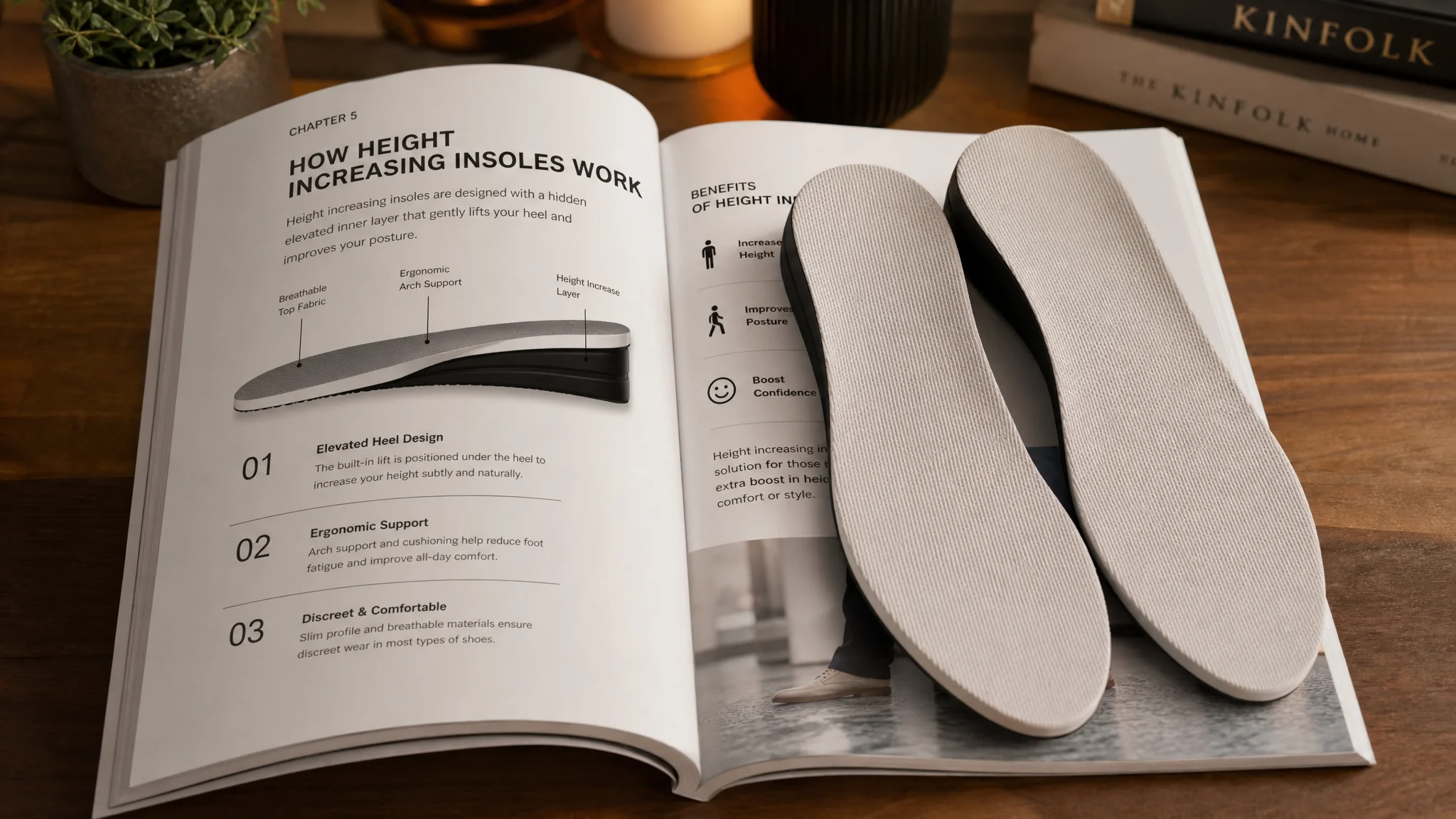
The mechanism is straightforward. A height insole has a wedge shape — thicker at the heel, tapering to thin at the toes. When placed inside a shoe, this wedge lifts your heel and the rear portion of your foot.
The key design elements that make them effective are:
- Graduated lift: The angle is distributed across the full length of the insole, not concentrated at the heel. This prevents the “walking downhill” feeling.
- Heel cup stability: A deep heel cup keeps your foot centred on the lift, preventing slipping that would be both uncomfortable and visible.
- Shock absorption: Multi-layer foam compresses with each step, making the lift feel natural rather than rigid.
Quality height insoles like the RMF-030 Invisible Height Increase Insole use adjustable layered systems. You can start with the full lift or remove layers to find your ideal height.
How Much Height Can You Actually Gain?
Height insoles typically offer three lift ranges:
| Lift Range | Height Gain | Visibility | Best Shoe Types |
|---|---|---|---|
| 1–1.5 inches | Subtle | Unnoticeable to others | Most shoes including casual and dress |
| 2 inches | Moderate | Visible difference | Sneakers, boots, lace-up shoes |
| 2.5–3 inches | Maximum | Noticeable change | Boots, high-tops, deep shoes |
The actual height gain depends on two factors: the insole design and your shoe depth. A 3-inch insole needs a shoe with enough internal depth to accommodate the lift. Boots and high-top sneakers typically offer the most room.
For beginners, we recommend starting with 1–1.5 inches. The adjustment is minimal, and you can work up to higher lifts once your feet and gait adapt.
Are Height Insoles Comfortable?
This is the most common concern, and the answer depends on quality. Cheap height insoles use single-density foam or rigid plastic that becomes uncomfortable after an hour. Quality insoles use multi-layer construction:
- Base layer: Firm EVA foam that provides the lift structure without collapsing.
- Mid layer: Softer memory foam that conforms to your foot shape.
- Top layer: Breathable, moisture-wicking fabric that keeps feet dry.
The RMF-011 Height Increasing Insoles are designed specifically for everyday comfort, using graduated cushioning that supports the whole foot, not just the heel. See the full height insoles for men collection for options.
Who Should Use Height Insoles?
Height insoles work well for:
- Men and women who want a subtle height boost without drawing attention
- People who want to look taller in photos, at events, or in social situations
- Anyone who wants height without surgery or expensive elevator shoes
- Professionals who stand during the day and want both height and comfort
They are not ideal for:
- Athletic performance — running or jumping in height insoles is not recommended
- Very shallow shoes — flats, sandals, and thin dress shoes lack the depth
- People with severe foot conditions — consult a podiatrist first
Height Insoles for Men vs Women
Height insoles are available for both men and women, but there are important differences:
- Men’s height insoles are designed for wider, larger shoe sizes with more forefoot room.
- Women’s height insoles account for different foot proportions — narrower heel, different arch placement, and compatibility with women’s shoe shapes.
RoamingFeet offers dedicated height insoles for women with EVA memory foam construction and adjustable lift layers. The women’s line starts at $22.05, making it an affordable option.
How to Choose the Right Height Insoles
Follow these steps to find the right pair:
- Measure your shoe depth. Remove the existing insole and measure how much vertical space is available. Compare this to the insole height.
- Decide your target lift. Be realistic — 1–2 inches is enough for a visible difference. 3 inches requires deeper shoes.
- Choose adjustable or fixed. Adjustable insoles let you experiment with different heights. Fixed insoles are simpler but less flexible.
- Check the material. Multi-layer EVA or memory foam is worth the investment over basic foam.
How to Wear Height Insoles
Getting the best experience from height insoles comes down to proper use:
- Remove the original insole from your shoes. Wearing both will compress your foot and cause discomfort.
- Insert and test the fit. Walk around your home for 15–30 minutes. Check for slipping, pressure points, or visible bulk.
- Trim if needed. Most insoles are trimmable. Use your original insole as a cutting guide.
- Start with short wear. Wear them for 2–3 hours on the first day. Gradually increase to full-day wear over a week.
Important
Jumping straight to 3-inch lifts without adjustment can cause ankle strain and gait problems. Start with a lower lift and increase gradually over several weeks.
Do Height Insoles Look Natural?
Yes, when worn correctly. The key factors that make height insoles look natural are:
- Full-length design: Distributes the lift across the entire foot, so there is no visible heel wedge.
- Tapered heel: The back of the insole follows the shoe’s heel contour, preventing bulk around the ankle.
- Matching footwear: Lace-up shoes and boots naturally conceal the insole better than slip-ons.
For most people, the difference is noticeable only to them. Others simply see a person who looks slightly taller — they will not see the insole itself.
Ready to find your perfect height insoles?
Browse our full range of men’s and women’s height increasing insoles — up to 3 inches of invisible lift, comfortable enough for all-day wear.
Shop Height Insoles →Free returns on all orders · 30-day money-back guarantee
Frequently Asked Questions
Do height increasing insoles really work?
Yes. Height insoles add 1–3 inches of lift by raising your heel inside the shoe. The effect is immediate and visible — you stand taller as soon as you put them on.
How long do height insoles last?
Quality insoles last 6–12 months with regular use. The EVA foam and memory foam materials gradually compress over time. Replace them when you notice reduced cushioning or lift.
Can you wear height insoles every day?
Yes. Quality height insoles with multi-layer foam are designed for daily wear. Start with shorter periods to let your feet adjust, then increase to full-day use.
Are height insoles safe?
Height insoles are safe for most people when used correctly. The key is choosing the right lift height for your shoe type and giving your feet time to adjust. Consult a podiatrist if you have existing foot conditions.
What is the difference between height insoles and elevator shoes?
Height insoles are inserts that go inside your existing shoes. Elevator shoes have the lift built into the sole. Height insoles cost less ($22–$39 vs $100–$300+), work with multiple pairs of shoes, and are invisible inside lace-up footwear.
Can I wear height insoles with any shoes?
Height insoles work best with shoes that have removable insoles and enough depth. Boots, sneakers, and lace-up shoes are ideal. See our guide to height insoles for different shoe types for detailed compatibility advice.