Height Insoles for Different Shoe Types: Sneakers, Boots, Dress Shoes & More
Not all shoes work well with height insoles. The amount of lift you can achieve and how discreet it looks depends almost entirely on the shoe you choose.
Some shoes — like boots — can handle 3 inches of lift without anyone knowing. Others — like loafers — are limited to 1 inch. And some shoes simply will not work at all.
This guide breaks down how height insoles perform in every common shoe type, so you know exactly what to expect before you buy.
Good to Know
The best shoes for height insoles have three features: removable insoles, good internal depth, and a heel counter that sits at or above the ankle bone. Boots meet all three criteria better than any other shoe type.
Shoe Compatibility Quick Reference
| Shoe Type | Max Discreet Lift | Comfort | Discretion | Best For |
|---|---|---|---|---|
| Lace-up boots | 3 inches | ★★★★★ | ★★★★★ | Maximum lift, everyday wear |
| High-top sneakers | 2.5–3 inches | ★★★★☆ | ★★★★☆ | Casual style, moderate lift |
| Low-top sneakers | 2 inches | ★★★★☆ | ★★★☆☆ | Daily casual use |
| Lace-up casual shoes | 1.5–2 inches | ★★★☆☆ | ★★★★☆ | Smart casual, office |
| Loafers | 1–1.5 inches | ★★☆☆☆ | ★★★☆☆ | Business casual |
| Dress shoes | 1–1.5 inches | ★★☆☆☆ | ★★☆☆☆ | Formal occasions |
| Flats | Not recommended | — | — | Avoid |
| Sandals | Not recommended | — | — | Avoid |
Boots — Best for Height Insoles
Boots are the gold standard for height insoles. The deep internal space, high ankle construction, and removable insole make them capable of handling up to 3 inches of lift with complete discretion.
Why boots work so well: The ankle shaft of a boot extends above the heel, which means there is no visible transition between the insole and the shoe. The lift is completely hidden inside the boot. The internal depth also means there is plenty of room for the insole without compressing your foot.
Maximum discreet lift: 3 inches. Most lace-up boots can handle the full range of height insoles. Some combat and work boots have even more internal space.
Best boot styles for height insoles: – Combat boots (most internal depth) – Hiking boots (good depth, removable insoles) – Chelsea boots (moderate depth — up to 2 inches) – Fashion boots (varies by construction)
Tips for boots: Remove the original insole before inserting height insoles. If the boot has a thick factory insole, removing it can add another 0.25–0.5 inches of usable space.
Sneakers — Versatile and Practical
Sneakers are the second-best option for height insoles. Most modern sneakers have removable insoles and enough depth for moderate lift.
Low-top sneakers: These handle up to 2 inches well. The lower ankle means the insole is less concealed than in boots, but lace-up construction keeps the fit secure. Best for everyday casual wear with 1.5–2 inches of lift.
High-top sneakers: These approach boot-level performance. The higher ankle collar helps conceal the insole, and many high-tops have generous internal space. Can handle up to 2.5–3 inches depending on the design.
Best sneaker styles: – Running shoes (most depth, best cushioning) – High-top basketball sneakers (good depth, ankle coverage) – Casual lace-up sneakers (moderate depth) – Skate shoes (variable — check internal space)
Lace-Up Casual Shoes
Lace-up casual shoes — think desert boots, chukkas, and oxfords — offer moderate compatibility. They typically have removable insoles and enough depth for 1.5–2 inches of lift.
Considerations: Casual shoes often have less internal depth than boots or sneakers. Check that your heel does not rise above the heel counter when the insole is inserted. If it does, the insole is too thick for that shoe.
Maximum discreet lift: 1.5–2 inches.
Loafers and Slip-Ons
Loafers are tricky. They lack laces, which means your foot can slide forward on the incline created by the insole. Most loafers also have limited internal depth.
If you want to wear height insoles with loafers, stick to 1–1.5 inches of lift. Look for loafers with a heel counter that grips your foot securely to prevent slipping.
Maximum discreet lift: 1–1.5 inches.
Dress Shoes
Dress shoes present the biggest challenge. Most are shallow, have thin sole construction, and are designed for a slim profile that does not accommodate extra material.
Can you wear height insoles with dress shoes? Yes, but only with limitations. Stick to 1 inch of lift. The shoe must have a removable insole. Oxfords and derbies with laces work better than slip-on dress shoes.
For formal events where you need more than 1 inch, elevator shoes (with built-in external lift) may be a better option than trying to force a height insole into a shallow dress shoe.
Important
Never force a height insole into a shoe that is too tight. If the shoe visibly bulges at the heel or across the top, the insole is too thick. This not only ruins the discretion but can damage the shoe and cause foot pain.
Shoes to Avoid
Some shoes simply will not work with height insoles:
Flats and ballet-style shoes: Zero internal depth. The insole would be visible and uncomfortable.
Sandals and open-toe shoes: The insole would be exposed. Not suitable for any height insole.
Very narrow shoes: The extra material causes bulging and discomfort on the sides.
Shoes with non-removable insoles: If the factory insole is glued in and cannot be removed, there will not be enough room for both. Removing a glued-insole risks tearing the shoe lining.
How to Test Shoe Compatibility
Before committing to height insoles for a specific pair of shoes, run this quick test:
- Remove the original insole from the shoe.
- Insert the height insole and place your foot in the shoe.
- Lace or fasten the shoe normally.
- Check: can you wiggle your toes freely? If not, the shoe is too shallow.
- Check: does the heel of your foot feel stable, or does it lift above the heel counter? If it lifts, the insole is too thick.
- Look at the shoe from behind. Is there any visible bulge at the heel? If yes, try a lower lift or a different shoe.
Matching Insoles to Shoes
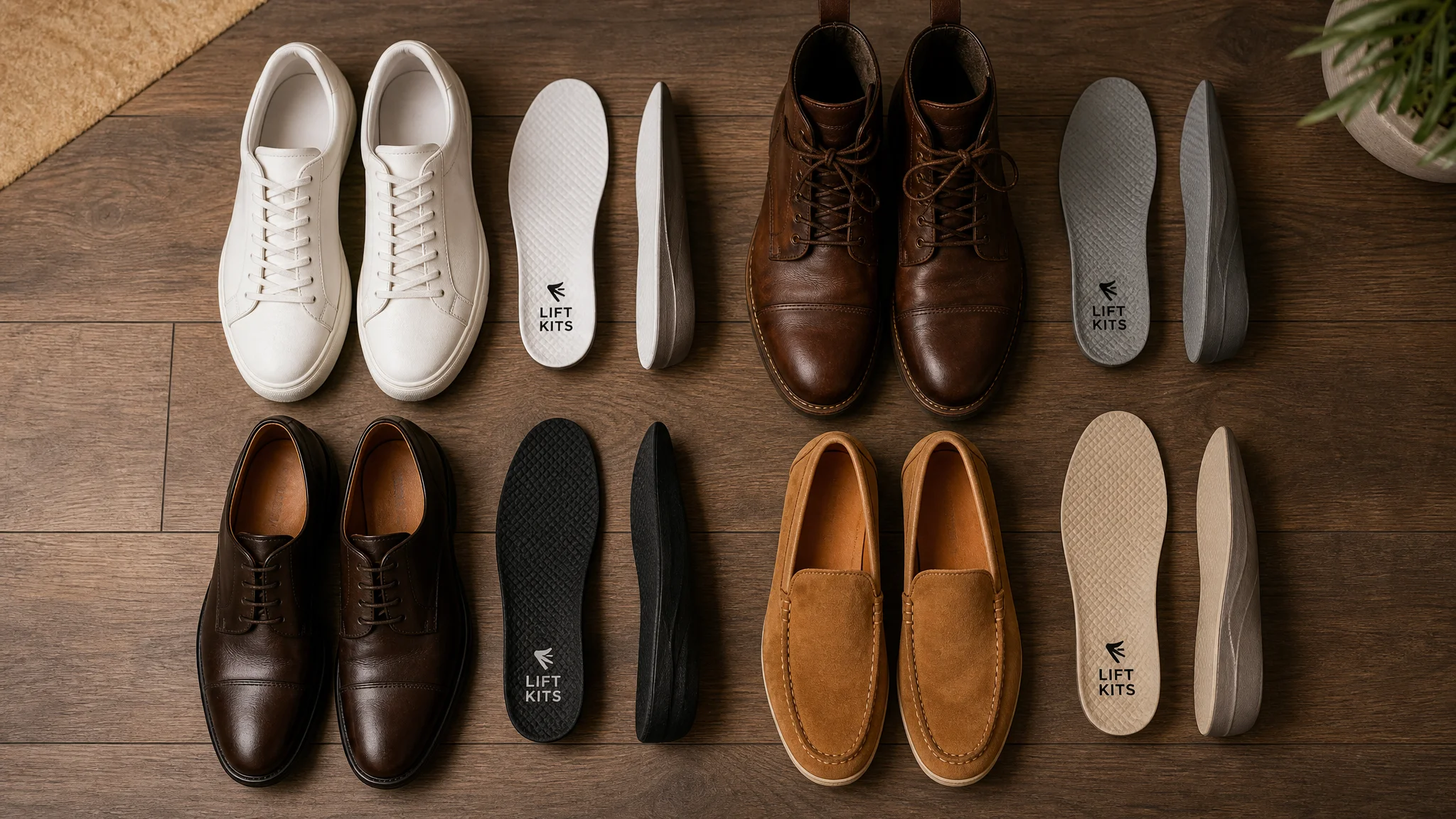
The RMF-030 Invisible Height Increase Insole works well in boots and high-top sneakers up to 3 inches. The RMF-011 Height Increasing Insoles suit everyday sneakers and casual shoes at 2–2.5 inches. For loafers and dress shoes, stick with lower-lift options.
Browse the full range of height increasing insoles to find the right match for your shoe collection.
Not sure which shoe works best?
All RoamingFeet height insoles come with a 30-day money-back guarantee. Try them in your favourite shoes — if they do not fit, return them free.
Shop Height Insoles →Free returns on all orders · 30-day money-back guarantee
Frequently Asked Questions
What type of shoe is best for height insoles?
Lace-up boots are the best choice for height insoles. They offer the most internal depth, the best concealment, and can handle up to 3 inches of lift comfortably and discreetly.
Can you wear height insoles with dress shoes?
Yes, but only with 1–1.5 inches of lift. The shoe must have a removable insole and adequate depth. Oxfords and derbies with laces work better than slip-on dress shoes.
Do height insoles work in loafers?
Loafers can work with 1–1.5 inches of lift, but they are not ideal. The lack of laces means your foot may slide forward on the incline. Look for loafers with a secure heel fit.
Can I wear height insoles in running shoes?
Yes. Running shoes typically have good internal depth and removable insoles. They can handle 1.5–2 inches of lift comfortably. Avoid actually running in them — height insoles are for walking and standing.
What shoes hide 3 inch height insoles?
Combat boots, hiking boots, and high-top sneakers are the only shoes that can fully conceal 3-inch height insoles. The deep internal space and high ankle construction keep the lift invisible.
Do height insoles work with boots?
Yes. Boots are the best footwear for height insoles. They provide the most internal depth and the best concealment. Most boots can handle 2–3 inches of lift depending on the design.