Sesamoiditis vs Metatarsalgia: Key Differences Explained
Sesamoiditis vs Metatarsalgia: Key Differences Explained
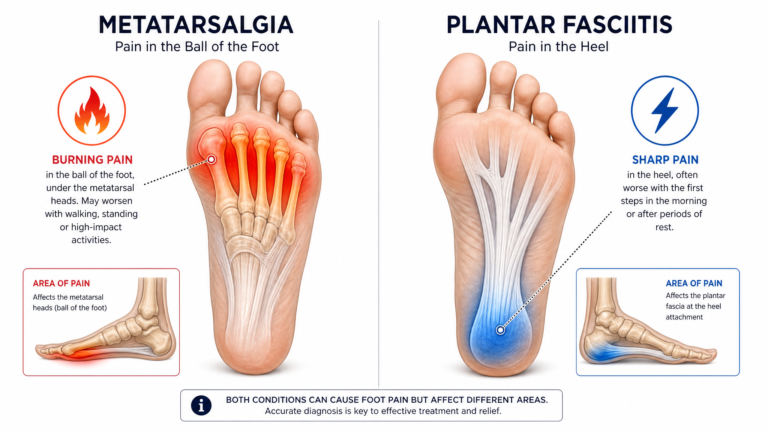
Sesamoiditis and metatarsalgia are two conditions that are often confused because both cause pain in the front of the foot. However, they involve different structures and require different treatment approaches. Sesamoiditis affects the two tiny sesamoid bones under the big toe joint, while metatarsalgia involves inflammation of the metatarsal heads across the ball of the foot. This guide explains how to tell them apart and how to treat each effectively.
Key Takeaways
- Sesamoiditis pain is specifically under the big toe joint; metatarsalgia pain spans the entire ball of the foot
- Sesamoiditis worsens with toe-off (push-off during walking); metatarsalgia hurts more during standing and weight-bearing
- A simple self-test — pressing on the sesamoid area vs pressing on the metatarsal heads — can usually distinguish them
- Sesamoiditis often requires a sesamoid cutout in orthotics; metatarsalgia responds better to a metatarsal dome
- Treatment differs: sesamoiditis needs offloading of the big toe joint; metatarsalgia needs broad forefoot pressure redistribution
Understanding Sesamoiditis
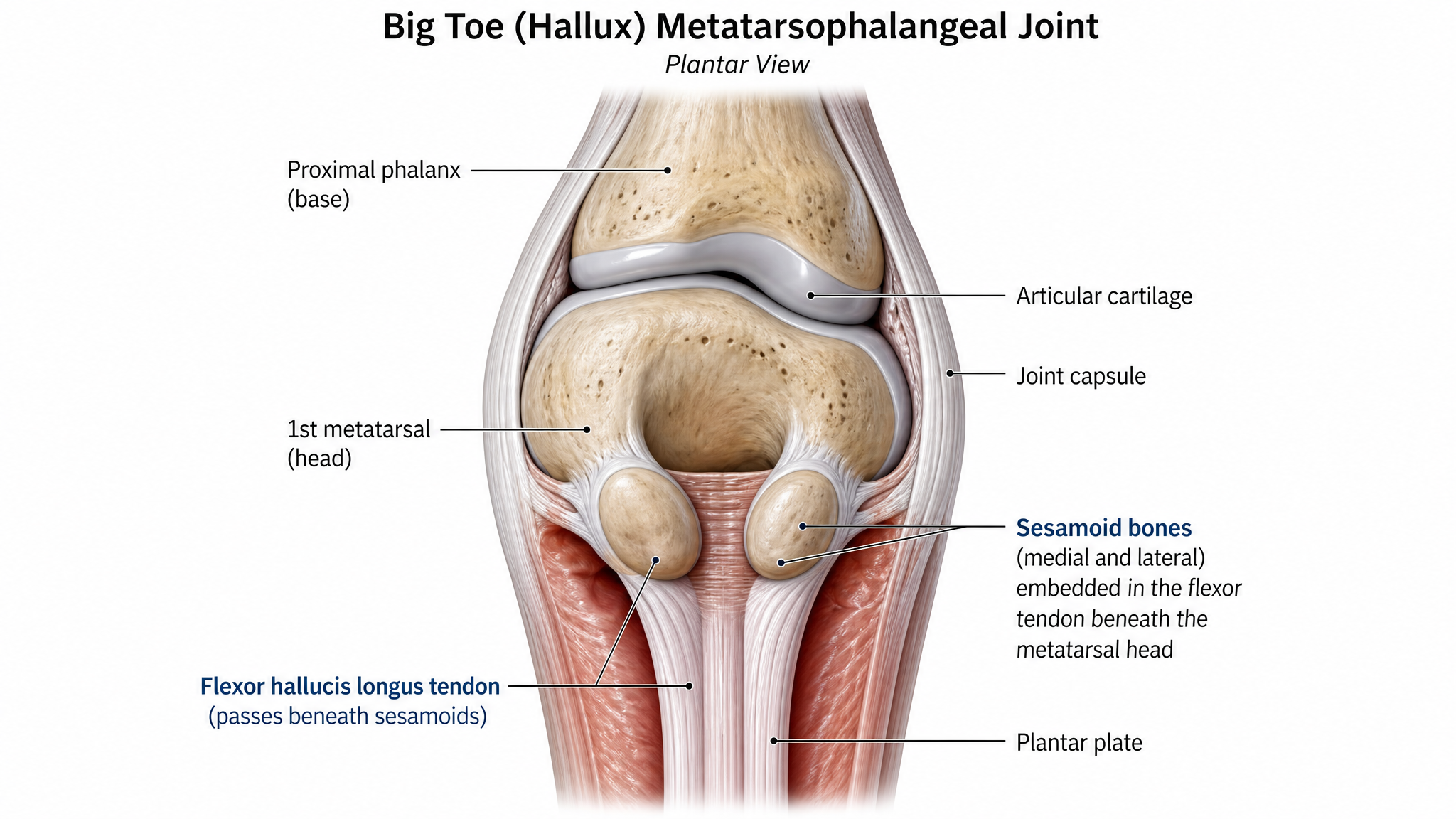
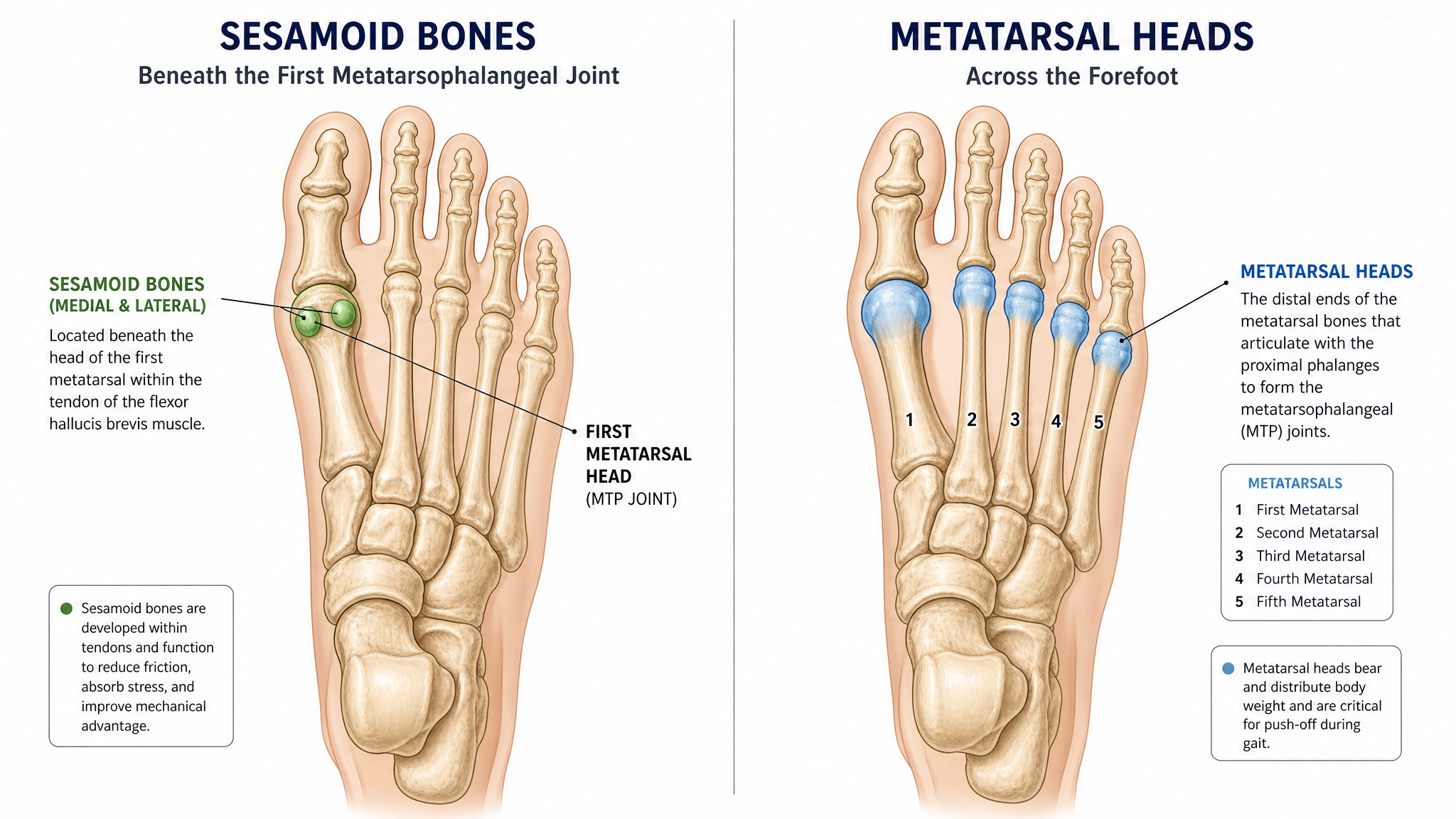
The sesamoid bones are two tiny, pea-shaped bones embedded in the flexor hallucis brevis tendon under the big toe joint. They act as a pulley, increasing the mechanical advantage of the tendon and helping to bear the weight of the body during walking and running.
Sesamoiditis is inflammation of these bones and the surrounding tendon. It typically develops from repetitive overuse — activities that repeatedly load the big toe joint, such as running, dancing, or jumping.
Key features of sesamoiditis:
– Pain specifically under the big toe joint (the first metatarsophalangeal joint)
– Pain that worsens during push-off (the toe-off phase of walking)
– Difficulty or pain when pointing the big toe upward (dorsiflexion)
– Localized tenderness when pressing directly on the sesamoid bones
– May be accompanied by swelling in the area under the big toe
Understanding Metatarsalgia
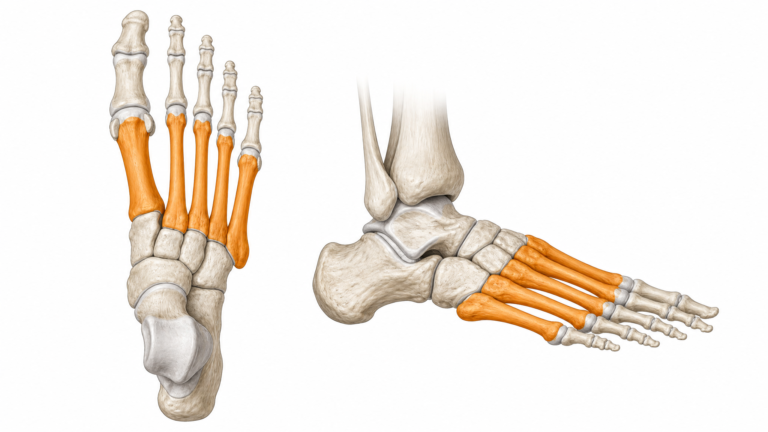
Metatarsalgia, as covered in our complete guide, is a general term for pain and inflammation in the ball of the foot involving the metatarsal heads — the knobby ends of the five metatarsal bones.
Key features of metatarsalgia:
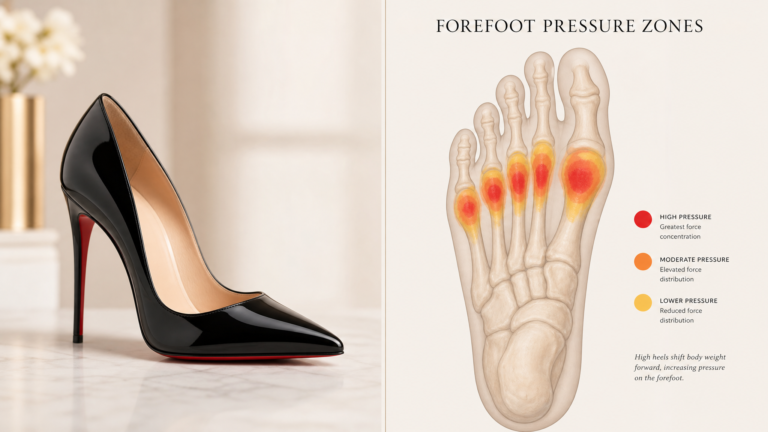
– Burning or aching pain across the entire ball of the foot, not just under the big toe
– Sensation of “walking on pebbles”
– Pain that worsens with standing and walking
– Tenderness when pressing on the metatarsal heads
– Pain that eases with rest
Key Differences at a Glance
| Factor | Sesamoiditis | Metatarsalgia |
|---|---|---|
| Pain location | Under the big toe joint | Across the entire ball of the foot |
| Pain type | Dull ache, sharp with toe-off | Burning, aching, “walking on pebbles” |
| Aggravated by | Push-off, toe extension | Standing, walking, forefoot pressure |
| Affected bones | Sesamoids (under 1st metatarsal) | Metatarsal heads (2nd–4th most common) |
| Swelling | Possible under big toe | Rare |
| Common in | Runners, dancers, athletes | Runners, over-40s, heel wearers |
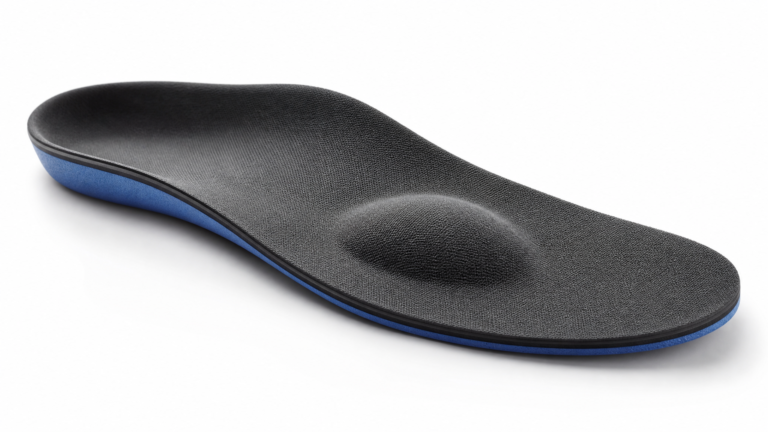
| Orthotic solution | Sesamoid cutout/depression | Metatarsal dome/pad |
The Self-Test: Sesamoiditis vs Metatarsalgia
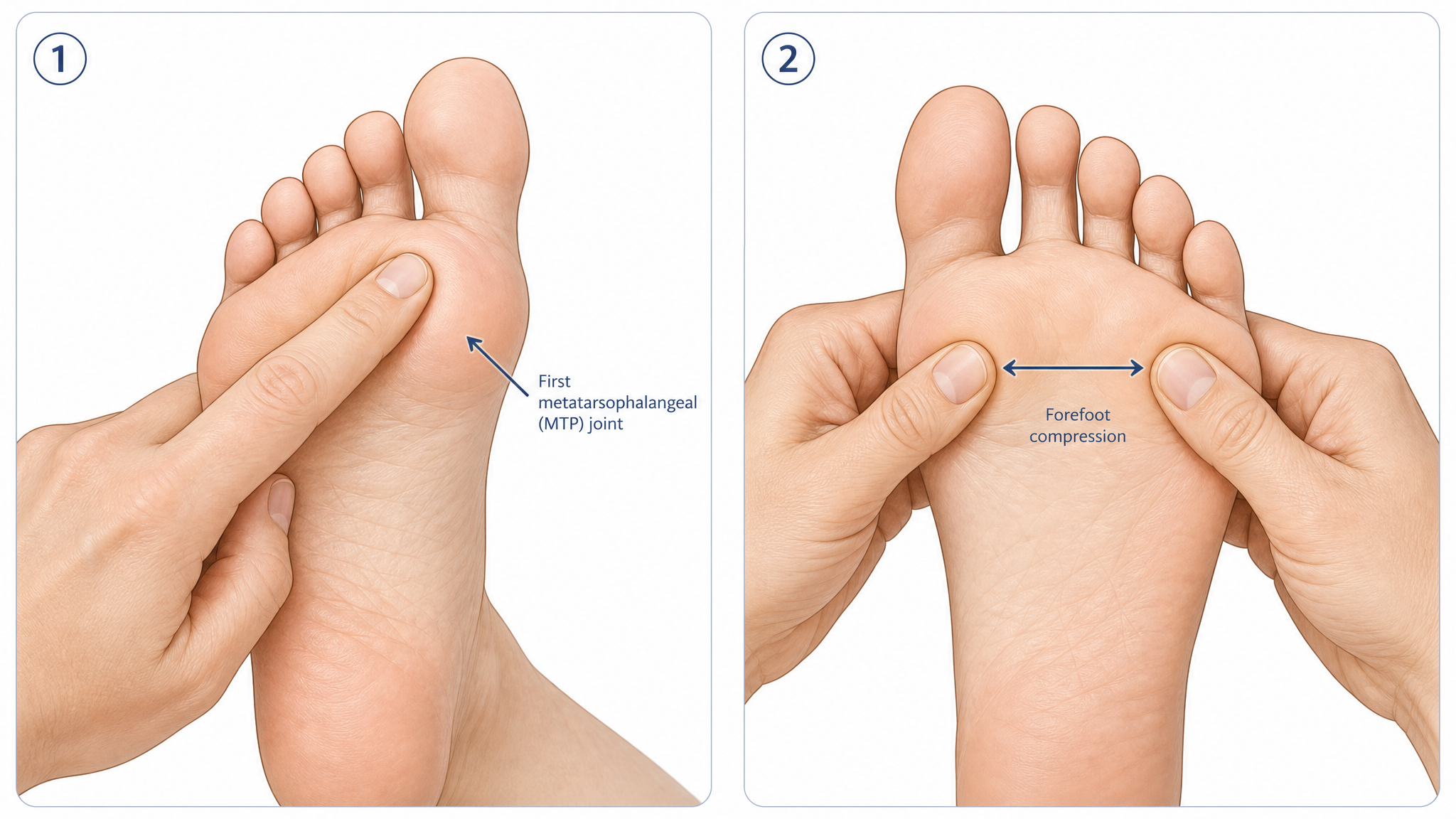
You can distinguish these conditions with a simple self-exam:
Step 1: Locate the pain. While sitting, press firmly on the area directly under your big toe joint (where the sesamoid bones are). Then press on the area behind your second, third, and fourth toes (the metatarsal heads). If the pain is significantly worse under the big toe, sesamoiditis is more likely. If the pain is across the broad forefoot, metatarsalgia is more likely.
Step 2: Test with movement. Stand up and slowly rise onto your toes. Sesamoiditis typically hurts during this push-off motion. Then stand normally and shift your weight forward onto your forefoot. Metatarsalgia typically hurts more during static weight-bearing on the forefoot.
Step 3: Check for toe comfort. While sitting, gently pull your big toe upward (extension). If this reproduces your pain, sesamoiditis is more likely. Metatarsalgia is less affected by big toe movement.
Quick Note
Sesamoiditis and metatarsalgia can coexist. If you have pain under the big toe joint AND across the forefoot, you may have both conditions simultaneously. This is not uncommon in runners and dancers, where the forefoot is subjected to repetitive high-impact loading.
How Sesamoiditis Can Be a More Serious Condition
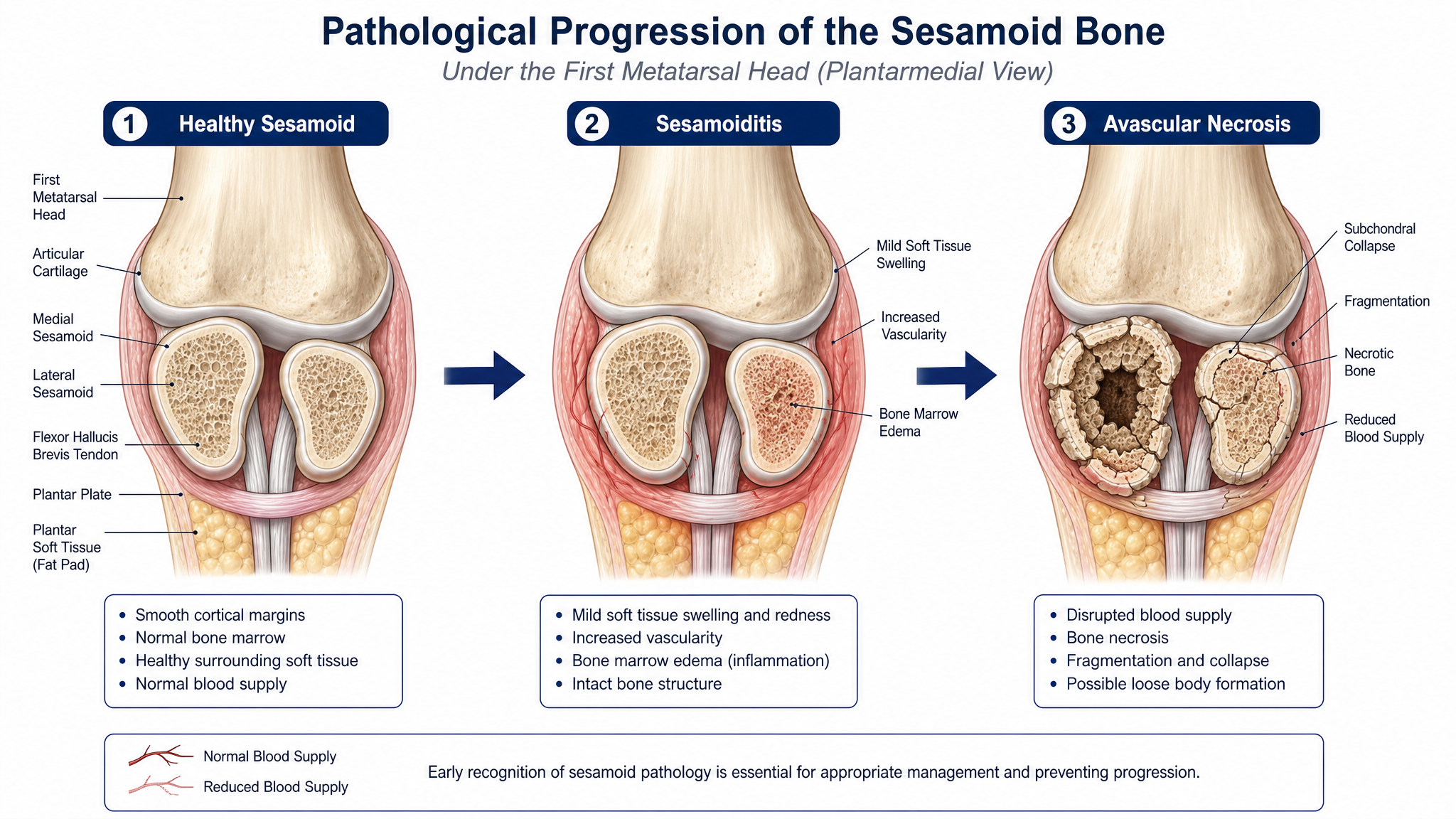
While metatarsalgia is usually straightforward to treat, sesamoiditis deserves more careful attention for two reasons:
Sesamoid fractures. The sesamoid bones can fracture from acute trauma or stress fractures from repetitive loading. A fracture produces sharp, persistent pain under the big toe that does not improve with rest. Sesamoid fractures require immobilization and sometimes surgical treatment.
Avascular necrosis (AVN). The sesamoid bones have a limited blood supply, making them vulnerable to avascular necrosis — death of bone tissue due to disrupted blood flow. Sesamoid AVN is described in recent literature as an “overlooked cause of forefoot pain in athletes” with diagnostic delays averaging 6–12 months. AVN requires MRI for diagnosis and may require surgical removal of the affected sesamoid.
If your pain is specifically under the big toe joint and does not improve with 4 weeks of conservative treatment, see a podiatrist for imaging.
Treatment Differences
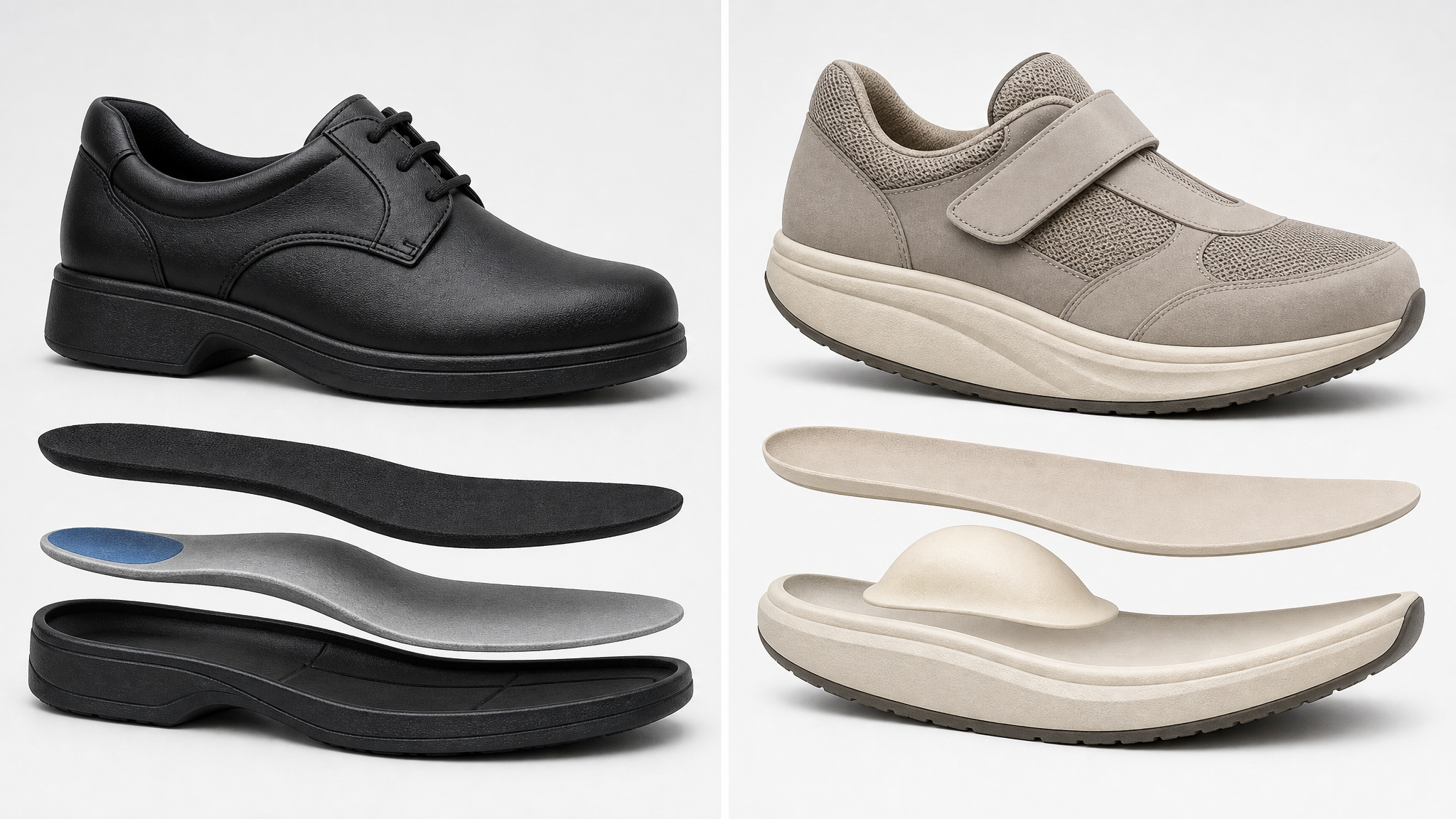
Treating Sesamoiditis
Sesamoiditis treatment focuses on offloading the sesamoid bones:
- Footwear with stiff soles. Rigid soles limit the amount of big toe extension during walking, reducing load on the sesamoids. Carbon plate inserts are very effective.
- Sesamoid cutout orthotics. Custom or OTC orthotics with a cutout or depression under the sesamoid area remove pressure from the bones. This is different from a metatarsal pad and is specific to sesamoid issues.
- Activity modification. Reduce or eliminate high-impact activities that load the big toe joint. Switch to cycling or swimming during recovery.
- Ice therapy. Ice under the big toe joint for 15 minutes after activity.
- Taping. Specific taping techniques can offload the sesamoid area during activity.
Treating Metatarsalgia
Metatarsalgia treatment focuses on redistributing forefoot pressure broadly:
- Metatarsal pad insoles. A raised dome behind the metatarsal heads lifts and separates the bones, reducing pressure. The best insoles for ball of foot pain feature built-in metatarsal domes.
- Wide toe box shoes. Allows the metatarsal heads to spread naturally.
- Rocker sole shoes. Reduces forefoot flexion during walking.
- Calf stretching. Addresses the mechanical driver of forefoot pressure.
- Activity modification. Reduces high-impact loading during the acute phase.
Can the Same Insoles Help Both Conditions?
Partially. The key difference is that sesamoiditis requires offloading of the sesamoid bones under the big toe, while metatarsalgia requires lifting the metatarsal heads.
Standard metatarsalgia insoles with a metatarsal dome may help sesamoiditis indirectly by redistributing some pressure away from the forefoot, but they do not provide specific sesamoid offloading. For sesamoiditis, you need either:
- An insole with a sesamoid cutout (a depression under the big toe joint)
- A full-length insole with a firm base and a metatarsal pad that lifts the forefoot proximal enough to reduce big toe joint pressure
For combined sesamoiditis and metatarsalgia, custom orthotics are often the best solution, as they can incorporate both a sesamoid cutout and a metatarsal dome in the correct positions.
When to See a Podiatrist
See a podiatrist if:
– You have sharp pain under the big toe joint that does not improve with 4 weeks of rest
– There is swelling or bruising under the big toe
– You cannot move your big toe through its full range of motion
– The pain came on suddenly after an injury
– You have tried conservative treatment for both conditions without improvement
A podiatrist can perform imaging (X-ray, ultrasound, or MRI) to distinguish between sesamoiditis, sesamoid fracture, and sesamoid AVN — and prescribe the appropriate orthotic or treatment.
Important
If you have pain specifically under the big toe joint that persists despite rest, ask your doctor specifically about sesamoid AVN (avascular necrosis). Standard X-rays often appear normal in early AVN, and the condition can progress if not diagnosed and treated promptly. MRI is the gold standard for diagnosis.
Conclusion
Sesamoiditis and metatarsalgia are different conditions that require different treatment approaches. Sesamoiditis affects the sesamoid bones under the big toe joint and needs specific offloading of that area. Metatarsalgia affects the metatarsal heads across the forefoot and responds to broader pressure redistribution with metatarsal pads. If you are unsure which condition you have, use the location of your pain as a guide — pain under the big toe joint suggests sesamoiditis; pain across the forefoot suggests metatarsalgia.
Get the right support for your condition.
Our orthotic insoles with metatarsal support provide effective relief for metatarsalgia and help manage forefoot pressure.
Free returns on all orders · 30-day money-back guarantee
Frequently Asked Questions
Can sesamoiditis turn into metatarsalgia?
Not directly, but the same activities that cause sesamoiditis (high-impact loading, poor footwear) can also cause metatarsalgia. They frequently coexist in runners and dancers.
Is sesamoiditis more serious than metatarsalgia?
Potentially yes. Metatarsalgia is usually straightforward to treat with conservative measures. Sesamoiditis can be more challenging because the sesamoids have limited blood supply, making them slower to heal. Sesamoid fractures and avascular necrosis are more serious complications that require specific treatment.
Do I need different shoes for sesamoiditis vs metatarsalgia?
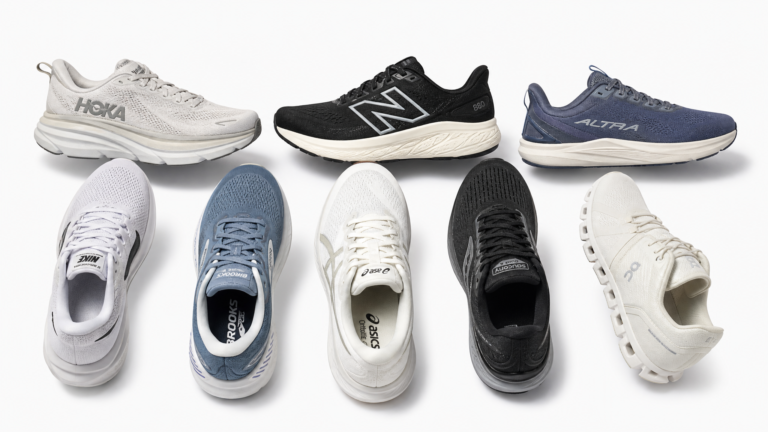
Sesamoiditis responds best to stiff-soled shoes that limit big toe extension. Metatarsalgia responds best to rocker sole shoes with cushioned midsoles. Both conditions benefit from wide toe boxes.
Can I run with sesamoiditis?
Running with active sesamoiditis is not recommended, as the repetitive loading can worsen the inflammation and increase the risk of sesamoid fracture or AVN. Switch to low-impact cross-training until symptoms resolve.
How long does sesamoiditis take to heal?
Sesamoiditis typically takes 4–8 weeks with consistent conservative treatment. Chronic cases or those involving sesamoid fractures or AVN may take 3–6 months or longer.