How Long Does Metatarsalgia Take to Heal? Recovery Timeline
How Long Does Metatarsalgia Take to Heal? Recovery Timeline
If you are dealing with ball of foot pain, the first question is usually: “How long will this take to heal?” The answer depends on several factors — how long you have had symptoms, what is causing them, and how consistently you apply treatment. This guide provides a realistic recovery timeline and explains what you can do to speed up healing.
Key Takeaways
- Acute metatarsalgia (symptoms less than 4 weeks): 2–4 weeks to significant improvement
- Subacute cases (4–12 weeks of symptoms): 4–8 weeks of consistent treatment
- Chronic cases (over 3 months): 8–16 weeks, may require professional treatment
- Treatment consistency is the single biggest factor in recovery speed
- Most people need 4–6 weeks of daily care before noticing substantial improvement
Metatarsalgia Recovery Timeline
Recovery from metatarsalgia follows a predictable pattern when treated correctly. Here is what to expect at each stage.
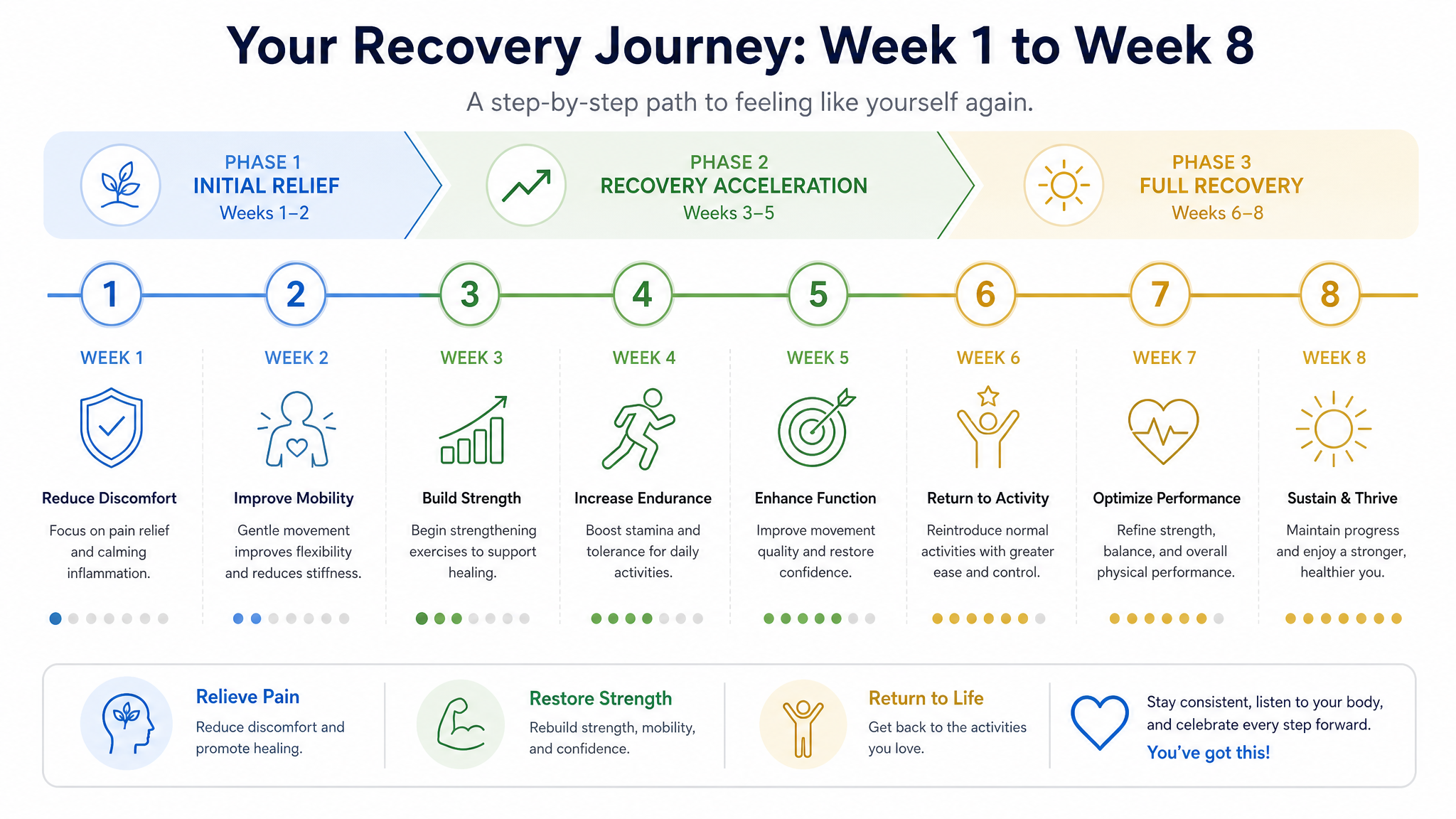
Week 1–2: Initial Relief Phase

What to expect. During the first two weeks of consistent treatment, you should notice a reduction in daily pain. The sharp, burning sensation during walking begins to dull. You may still feel discomfort after long periods of standing or at the end of the day, but it should be less intense than before treatment started.
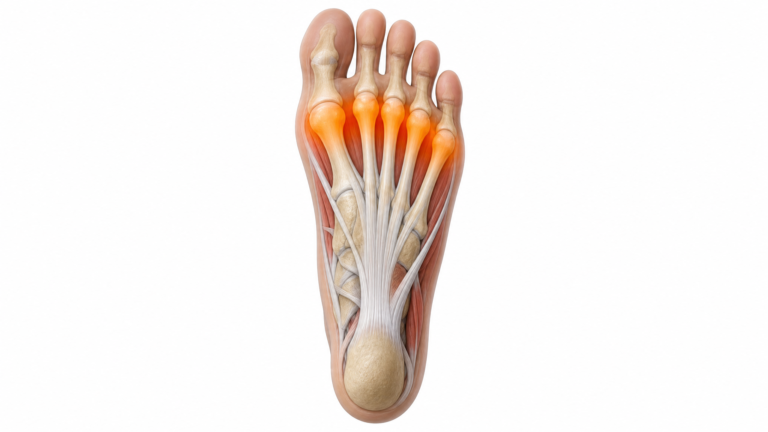
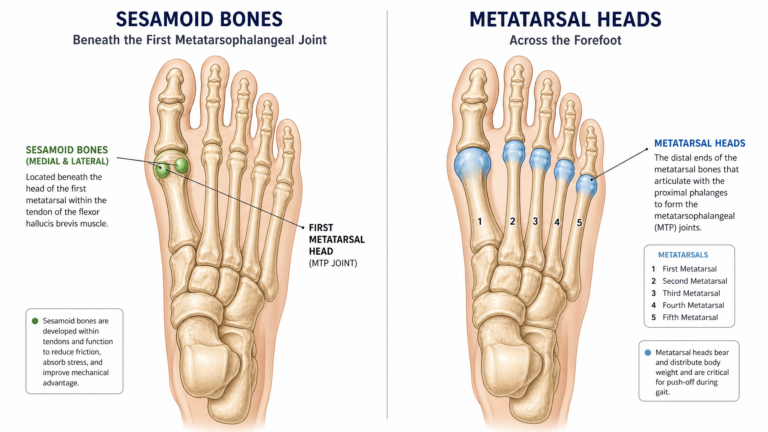
What is happening. The metatarsal heads are beginning to recover from inflammation. Supportive insoles with metatarsal pads are reducing pressure on the painful area. Your feet are also adapting to the new support — this is the break-in period for insoles.
What to do. Wear supportive insoles consistently in all shoes. Begin daily calf stretching. Switch to shoes with wide toe boxes and rocker soles. Reduce high-impact activities. Apply ice to the forefoot for 15 minutes after activity if there is residual discomfort.
Warning signs. If your pain is worse after two weeks of treatment, either the treatment approach is wrong or the diagnosis may be incorrect. Revisit your footwear and insole positioning.
Week 3–4: Recovery Acceleration
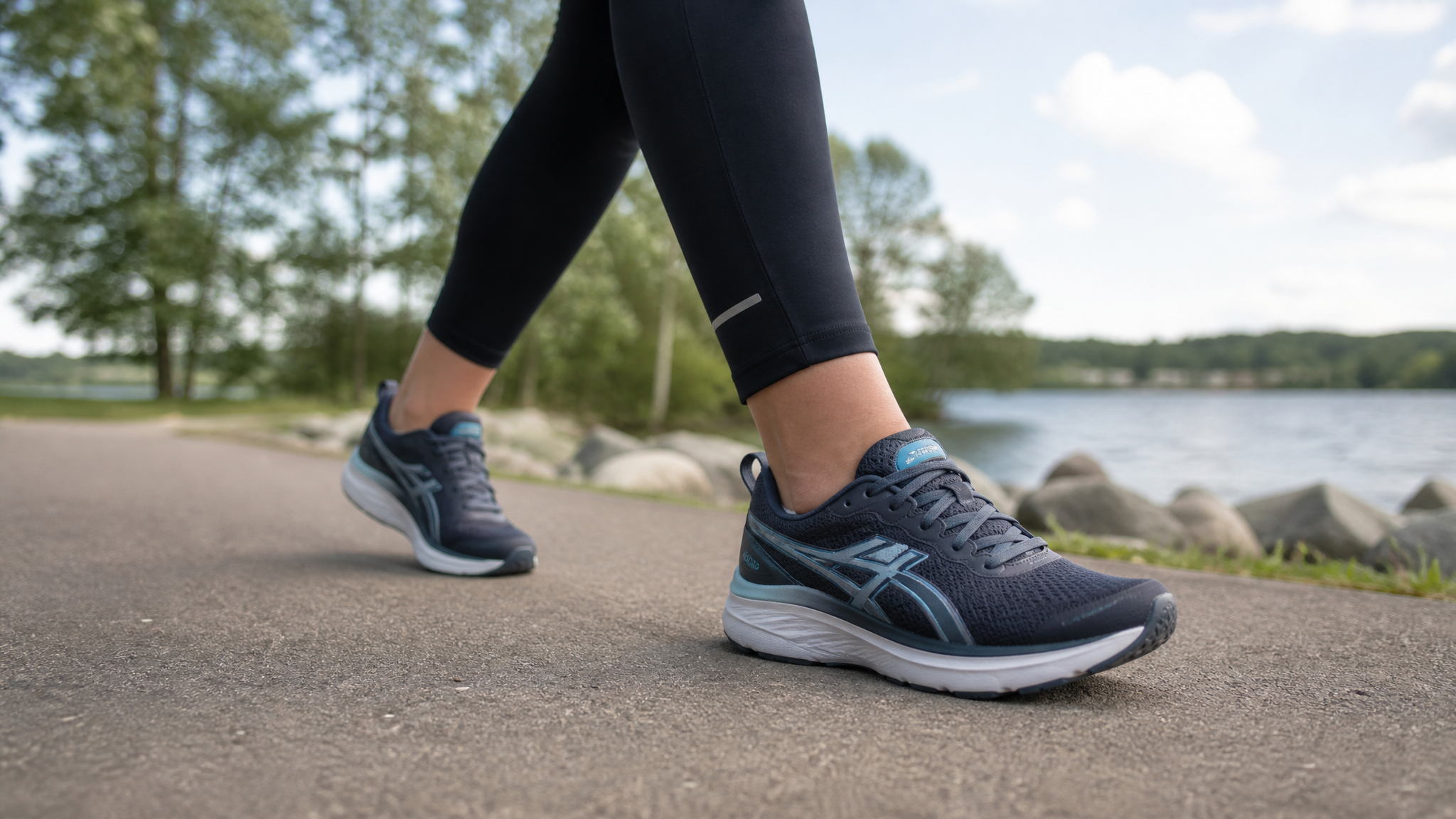
What to expect. By weeks three and four, most people notice substantial improvement. Pain during normal walking should be significantly reduced or gone. You may still feel discomfort during high-impact activities or after very long days on your feet.
What is happening. The inflammation in the metatarsal heads is resolving. Your foot mechanics are improving as the insoles provide consistent support and your calf muscles begin to lengthen from daily stretching.
What to do. Continue daily stretching and insole use. If you have been avoiding high-impact activities, you can begin a gradual return — start with short sessions and monitor how your foot responds. Add strengthening exercises such as towel curls and marble pickups.
Week 5–8: Full Recovery
What to expect. By week six to eight, most people with mild to moderate metatarsalgia are pain-free during normal daily activities. High-impact activities may still cause mild discomfort, but this should continue to decrease with time.
What is happening. The inflammation has resolved. Your foot has adapted to the improved support. The mechanical factors driving the condition (tight calves, weak intrinsics) are improving through consistent stretching and strengthening.
What to do. Gradually return to full activity levels. Continue using supportive insoles as a preventive measure — stopping insole use often leads to symptom return. Maintain a maintenance stretching routine (3–4 times per week) to prevent tight calves from recurring.
Beyond 8 Weeks: When Recovery Is Slow
If you have been consistent with treatment for 8 weeks and still have significant pain, several factors may be at play:
- The underlying cause has not been correctly identified. What feels like metatarsalgia may be predislocation syndrome, a neuroma, or another condition.
- The mechanical contributors are severe. Very tight calves, advanced flat feet, or significant foot structure issues may require physical therapy or custom orthotics.
- You are not giving your feet adequate recovery time. Continuing high-impact activities without modification can prevent healing.
- Your footwear is still problematic. Even occasional wear of unsupportive shoes can undo progress.
At this point, see a podiatrist for a thorough evaluation. You may need imaging, custom orthotics, or specific treatment for an underlying condition that standard metatarsalgia treatment does not address.
Factors That Affect Recovery Speed
Treatment Consistency
This is the single most important factor. Wearing supportive insoles every day produces much faster results than wearing them intermittently. Daily stretching is more effective than stretching once or twice a week. Fifteen minutes of daily care is more effective than an hour of treatment once a week.
Duration of Symptoms Before Treatment
The longer you have had metatarsalgia before starting treatment, the longer recovery takes. Acute cases (less than 4 weeks) often resolve in 2–4 weeks. Chronic cases (over 3 months) can take 8–16 weeks because the tissues have been inflamed longer and compensatory gait patterns are more established.
Underlying Cause
Metatarsalgia caused by overuse or poor footwear responds quickly when those factors are addressed. Metatarsalgia driven by foot structure issues (high arches, flat feet) may require longer treatment because the underlying mechanics need ongoing support rather than a one-time fix.
Activity Level
Continuing high-impact activities during the acute phase slows recovery significantly. Each impact event re-inflames the metatarsal heads, resetting the healing clock. Reducing impact during the first 2–4 weeks of treatment accelerates recovery.
Footwear Compliance
Wearing supportive shoes and insoles consistently is essential. Even a few hours in unsupportive shoes — thin flats, dress shoes, worn-out sneakers — can reverse days of progress.
Quick Note
Recovery is not linear. You may have good days and bad days, especially in the first 2–3 weeks. This is normal. Do not interpret a bad day as a sign that treatment is not working — it takes time for inflammation to resolve and tissues to adapt.
How to Speed Up Metatarsalgia Recovery
Start with the Right Insoles
Insoles with a metatarsal dome are the most effective first-line treatment. The metatarsal pad lifts and separates the metatarsal heads, reducing pressure by 20–40%. Choose full-length insoles that combine metatarsal support with firm arch support.
Address Tight Calves Immediately
Tight calves are one of the most common — and most overlooked — contributors to metatarsalgia. Start calf stretching on day one. The straight-leg calf stretch targets the gastrocnemius; the bent-knee version targets the soleus. Hold each for 30 seconds, repeat 3 times per side, twice daily.
Modify Your Activity
Reduce high-impact activities for the first 2–4 weeks. Switch to swimming, cycling, or elliptical training. When you return to impact activities, increase intensity gradually — no more than 10% increase per week.
Ice After Activity
If your forefoot is tender after walking or activity, ice it for 15 minutes. Roll a frozen water bottle under your foot — this combines ice therapy with gentle massage. Do not ice for more than 15 minutes at a time.
Fix Your Shoes
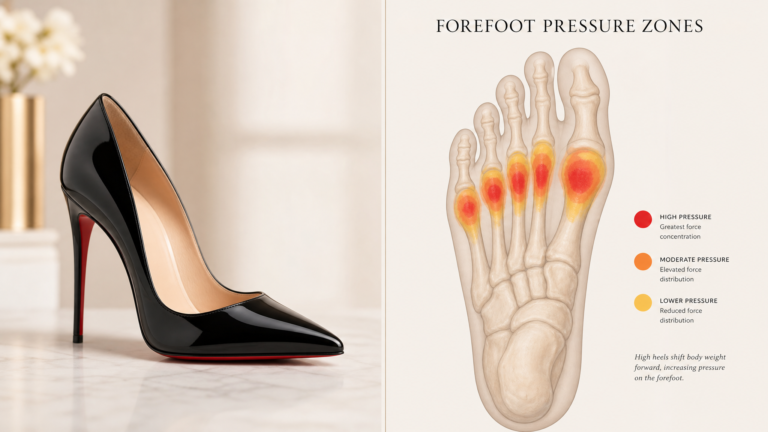
Ensure all your daily shoes have wide toe boxes, rocker soles, and adequate cushioning. Replace worn-out shoes. Avoid high heels and narrow shoes entirely during recovery.
Recovery Time by Severity
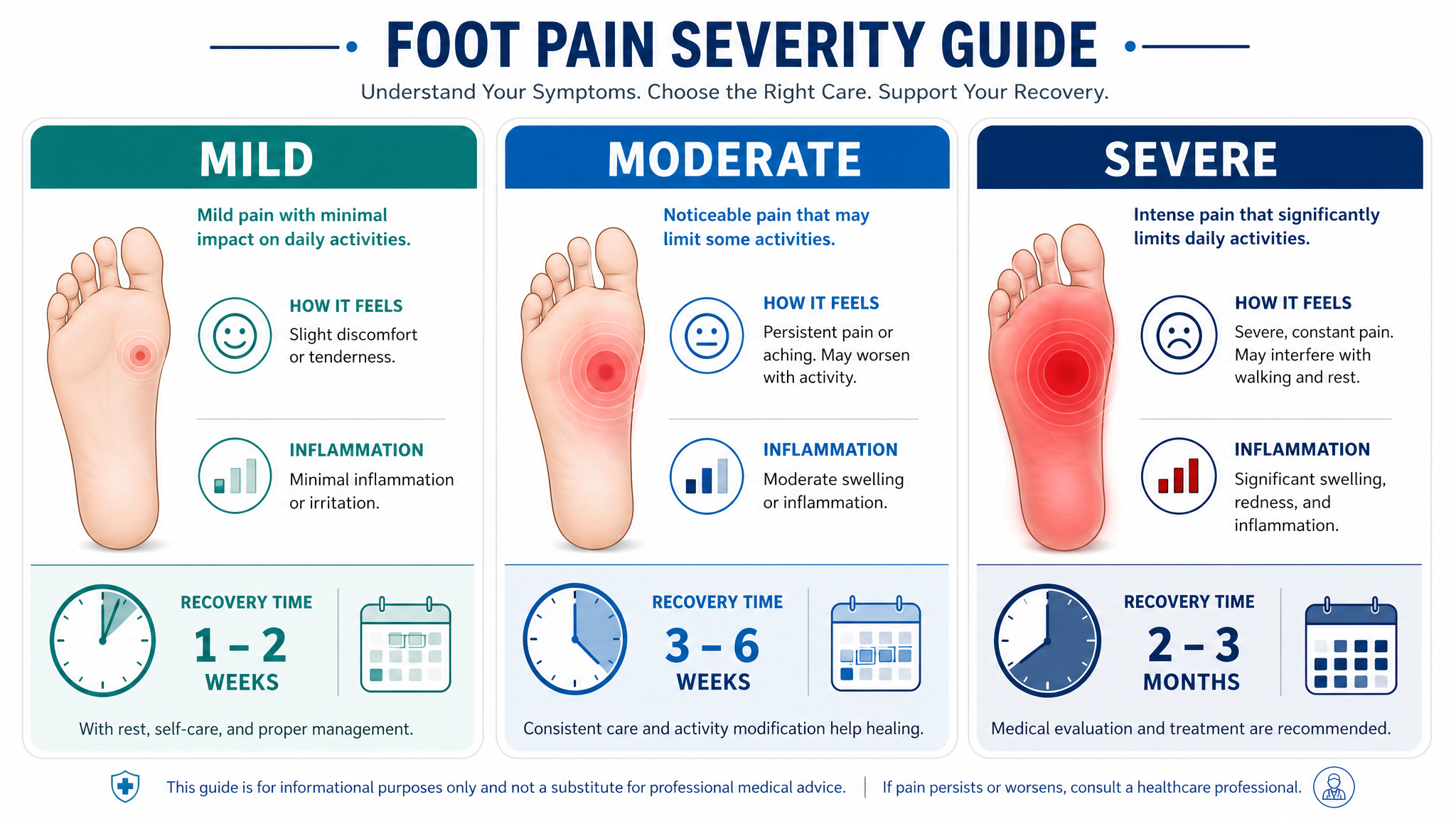
Mild Metatarsalgia
Symptoms: Occasional discomfort after long periods on your feet, easily relieved by rest. No pain during normal walking.
Recovery time: 1–3 weeks with supportive insoles and improved footwear.
Moderate Metatarsalgia
Symptoms: Daily pain during walking and standing. Noticeable discomfort at the end of most days. Some activity modification needed.
Recovery time: 4–8 weeks with consistent insole use, stretching, and activity modification.
Severe Metatarsalgia
Symptoms: Pain with every step. Difficulty walking normally. Significant tenderness when pressing on the metatarsal heads. Pain that disrupts sleep.
Recovery time: 8–16 weeks, often requiring insoles plus physical therapy or custom orthotics.
Preventing Recurrence
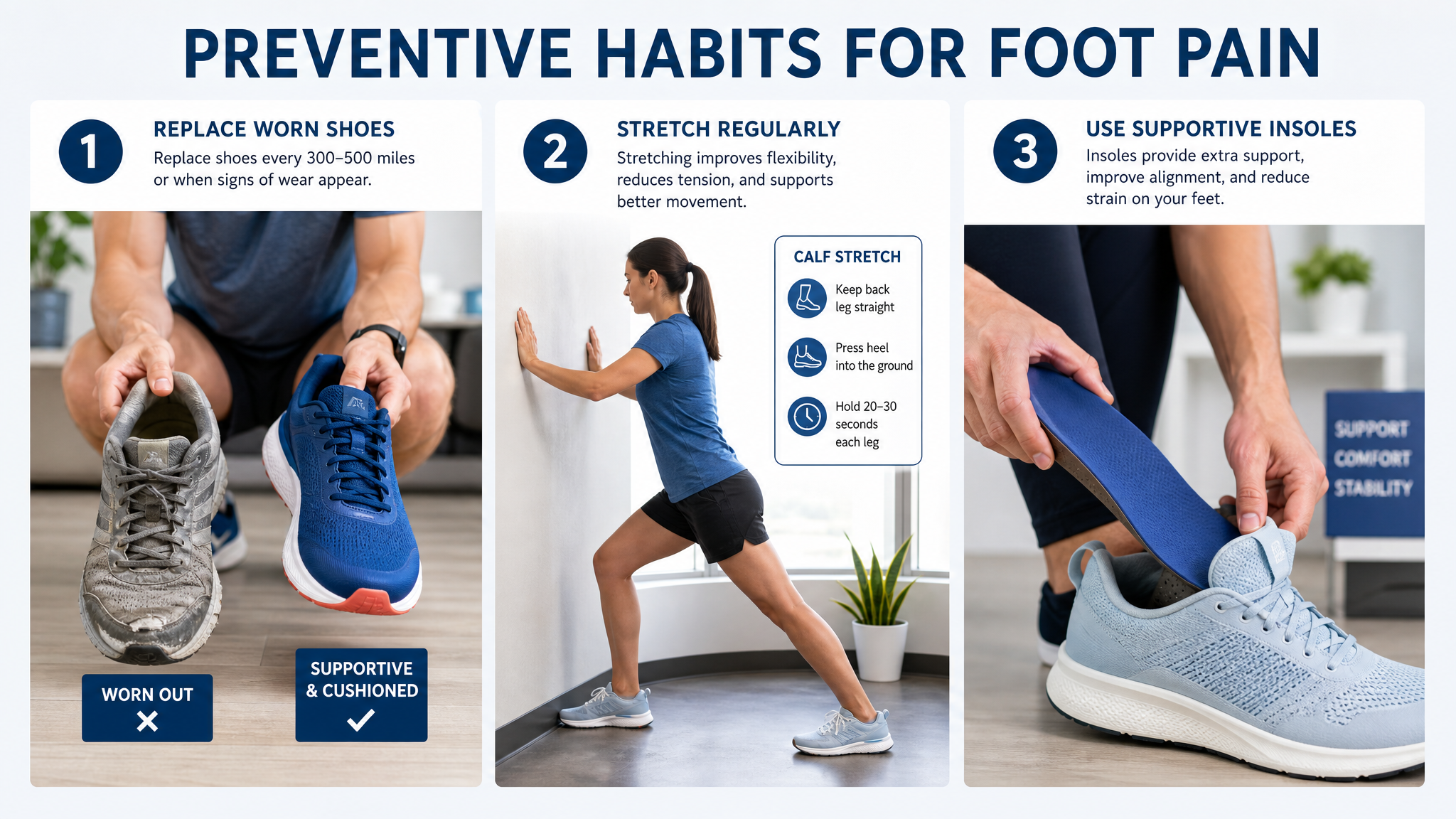
Once your metatarsalgia has resolved, these steps help prevent it from returning:
- Continue using supportive insoles — stopping insole use is the most common cause of recurrence
- Maintain calf flexibility — stretch your calves 3–4 times per week as a maintenance habit
- Keep your intrinsic foot muscles strong — do towel curls or marble pickups twice a week
- Replace shoes regularly — worn shoes lose the cushioning and support your forefoot needs
- Avoid prolonged periods in unsupportive footwear — keep supportive shoes for daily wear
Important
Metatarsalgia has a significant recurrence rate — up to 50% within 2 years according to some studies — primarily because people stop using supportive measures once the pain resolves. Think of metatarsalgia like eyeglasses: the condition does not go away; you simply manage it with ongoing support.
Conclusion
Most people with metatarsalgia improve significantly within 4–8 weeks of consistent treatment. The key factors are wearing supportive insoles with metatarsal pads daily, stretching tight calves, wearing proper shoes, and modifying high-impact activity during the acute phase. Recovery is faster when treatment starts early and is applied consistently. If you have been treating metatarsalgia for 8 weeks without improvement, see a podiatrist for a more specific diagnosis.
Start your recovery today with the right support.
Our orthotic insoles with metatarsal domes provide the foundation for faster metatarsalgia recovery.
Free returns on all orders · 30-day money-back guarantee
Frequently Asked Questions
Can metatarsalgia go away on its own?
Mild cases may improve with rest and better footwear, but most cases require active treatment. The underlying mechanical factors — tight calves, poor footwear, foot structure issues — do not resolve on their own. Without addressing the cause, symptoms typically return when normal activity resumes.
How long should I rest with metatarsalgia?
Complete rest is not necessary and may slow recovery by deconditioning the foot muscles. Instead, modify your activity: reduce high-impact activities for 2–4 weeks, but continue walking and low-impact activities as tolerated. The key is to avoid the specific activities that aggravate your pain while maintaining general mobility.
Will metatarsalgia get worse if I keep walking on it?
Walking in supportive shoes with metatarsal insoles is fine and may help maintain mobility. Walking in unsupportive footwear — thin soles, narrow toe boxes, or high heels — will aggravate the condition and slow healing.
How do I know if my metatarsalgia is healing?
Signs of healing include: less pain during normal walking, longer periods before discomfort develops, reduced tenderness when pressing on the metatarsal heads, and being able to stand for longer periods without pain. Recovery is gradual — look for week-over-week improvement rather than day-over-day changes.
When should I see a podiatrist for metatarsalgia?
See a podiatrist if: your pain has not improved after 8 weeks of consistent conservative treatment, the pain is severe enough to alter your walking pattern, you have significant swelling or bruising, or you have diabetes or peripheral neuropathy.