Metatarsalgia vs Plantar Fasciitis: Key Differences Explained
Metatarsalgia vs Plantar Fasciitis: Key Differences Explained
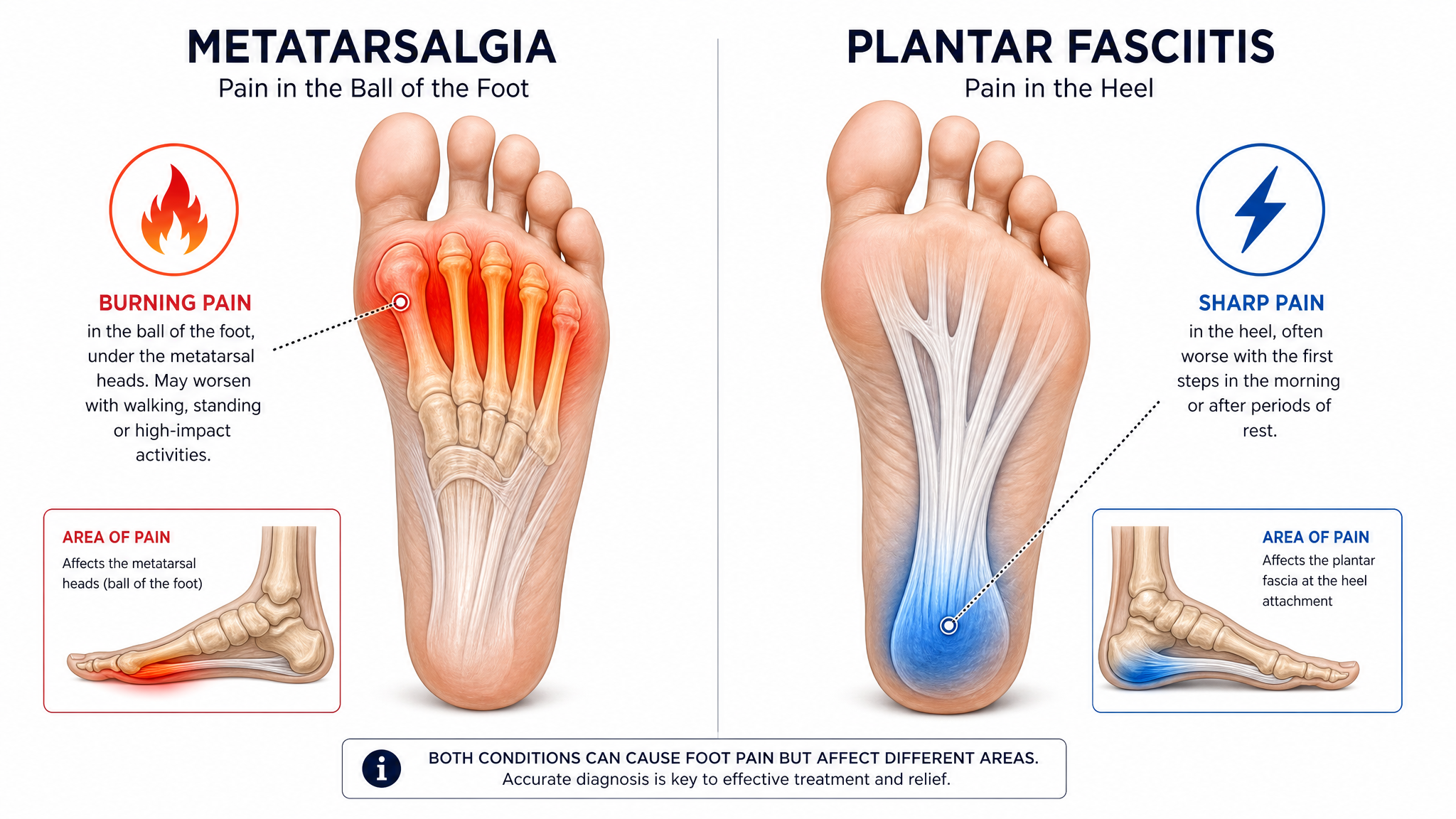
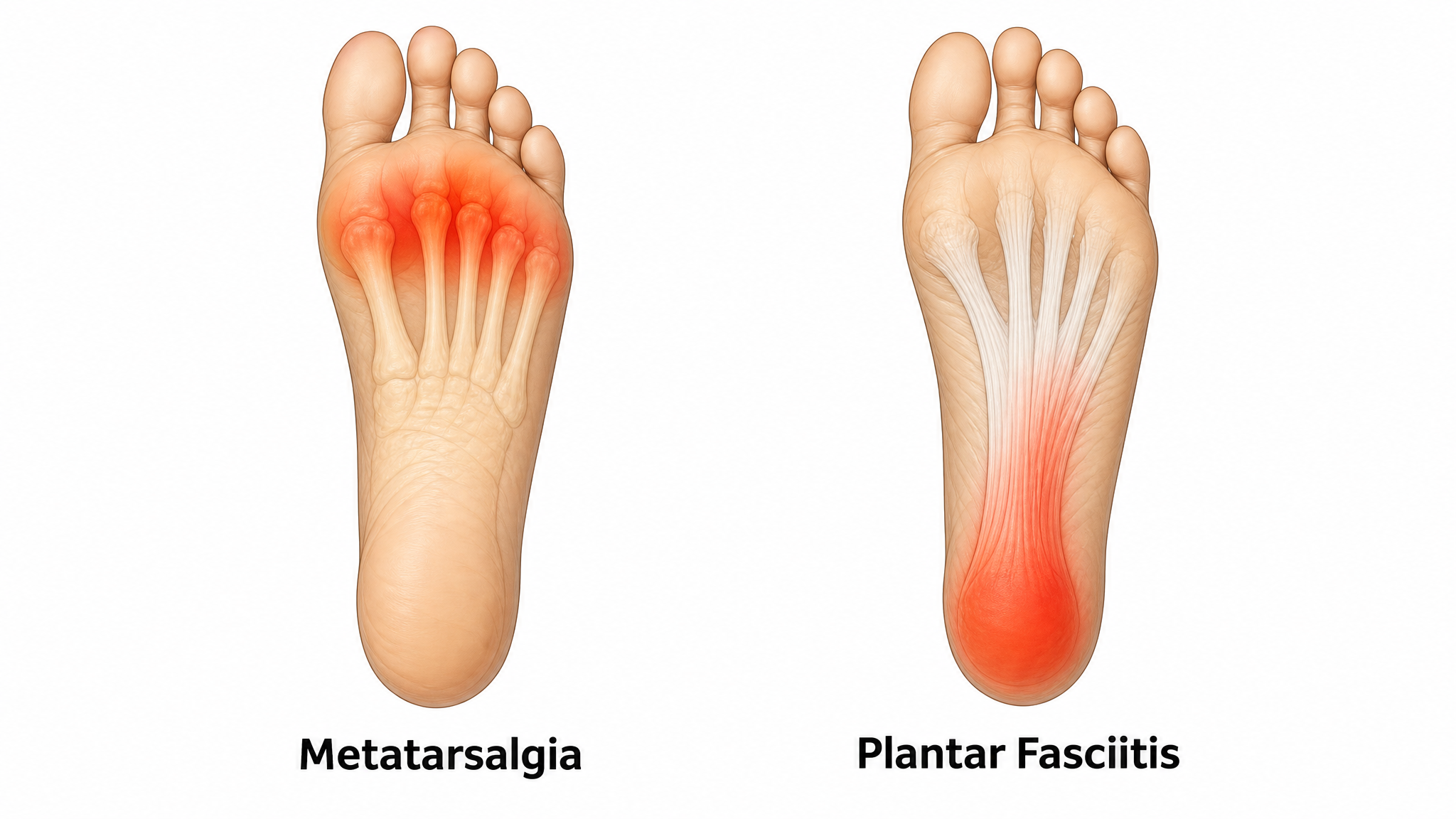
Metatarsalgia and plantar fasciitis are two of the most common foot conditions, and they are often confused because both involve pain in the bottom of the foot. However, they affect different structures and produce pain in different locations. Metatarsalgia causes pain in the ball of the foot (forefoot), while plantar fasciitis causes pain in the heel and arch. This guide explains how to tell them apart and how to treat each effectively.
Key Takeaways
- Location is the key difference: metatarsalgia hurts in the forefoot (ball of foot); plantar fasciitis hurts in the heel and arch
- Plantar fasciitis is typically worst with the first steps in the morning; metatarsalgia worsens throughout the day with activity
- Both conditions often involve tight calf muscles, but the pain manifests in different areas
- Both respond well to supportive insoles — but the specific support features differ
- You can have both conditions simultaneously, especially if you have flat feet or tight calves
Understanding Plantar Fasciitis
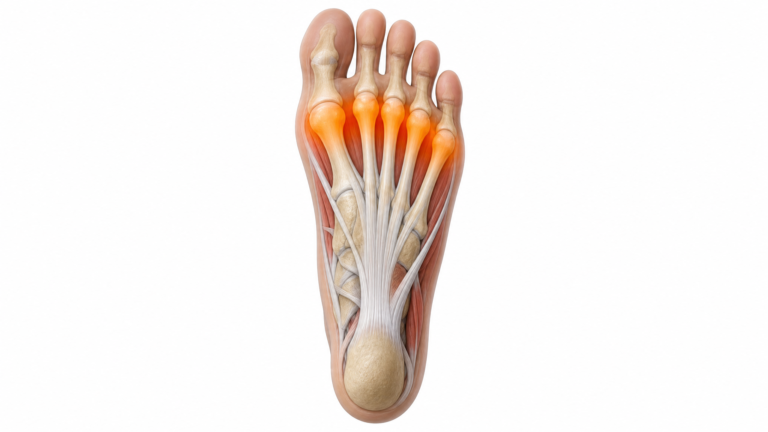
Plantar fasciitis is inflammation of the plantar fascia — a thick band of connective tissue that runs from the heel bone to the toes, supporting the arch of the foot.
Key features of plantar fasciitis:
– Sharp, stabbing pain in the heel, especially with the first steps in the morning
– Pain along the arch of the foot
– Pain that eases after a few minutes of walking but may return after prolonged standing or activity
– Tenderness when pressing on the heel or along the arch
– Tightness in the calf muscles
Plantar fasciitis develops when the plantar fascia is subjected to repetitive strain, typically from overpronation (flat feet), tight calves, or excessive standing on hard surfaces.
Understanding Metatarsalgia
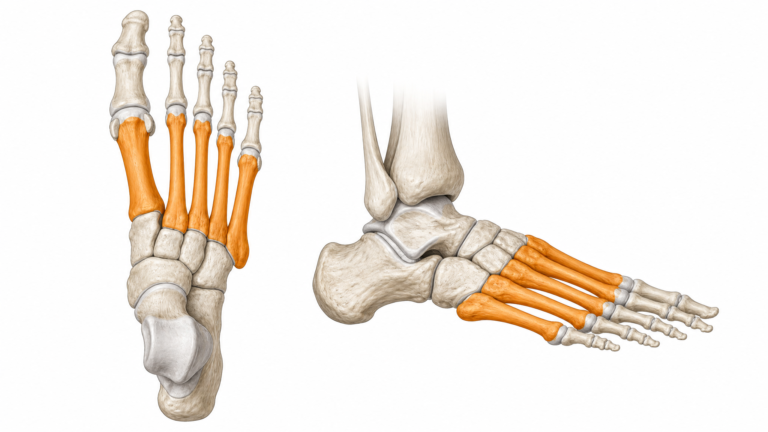
Metatarsalgia, as covered in our complete guide, is pain and inflammation in the ball of the foot involving the metatarsal heads — the knobby ends of the five long metatarsal bones.
Key features of metatarsalgia:
– Burning or aching pain across the ball of the foot (forefoot)
– Sensation of “walking on pebbles”
– Pain that worsens with standing, walking, and running
– Pain that eases with rest
– Tenderness when pressing on the metatarsal heads
Key Differences at a Glance
| Factor | Metatarsalgia | Plantar Fasciitis |
|---|---|---|
| Pain location | Ball of foot (forefoot) | Heel and arch |
| Pain type | Burning, aching, “walking on pebbles” | Sharp, stabbing |
| Worst time | End of the day, after activity | First steps in the morning |
| Pain with rest | Eases with rest | May return after rest (post-static dyskinesia) |
| Affected structure | Metatarsal heads (bones) | Plantar fascia (connective tissue) |
| Tenderness | Under metatarsal heads | Heel and arch |
| Common cause | High-impact activity, footwear | Flat feet, overpronation, tight calves |
The Key Distinguishing Feature: Pain Timing
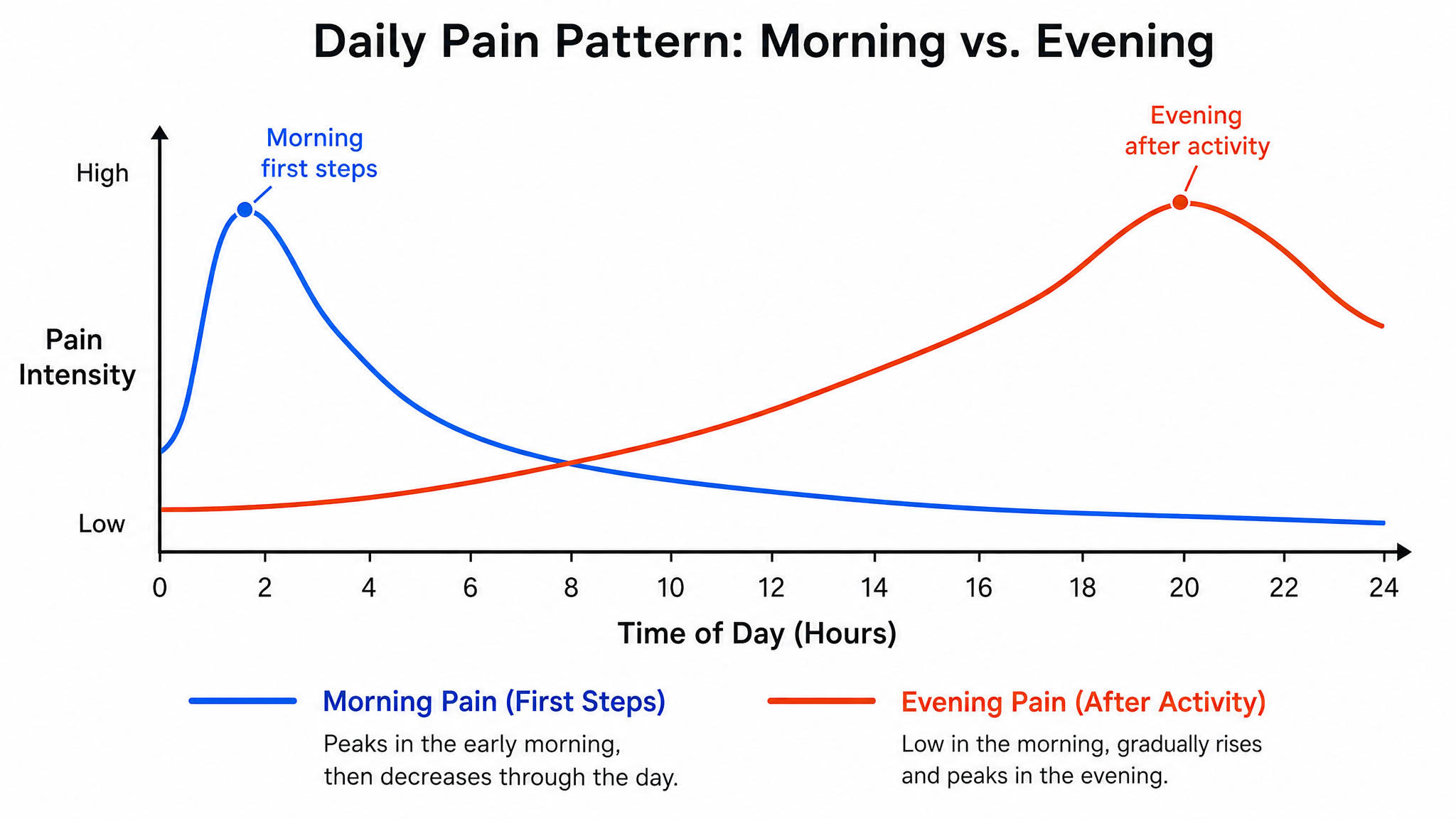
The single most reliable way to distinguish metatarsalgia from plantar fasciitis is the timing of the pain:
Plantar fasciitis is characteristically worst with the first steps in the morning or after periods of inactivity. This is called “post-static dyskinesia.” The plantar fascia tightens during rest, and the first stretch of walking pulls on the inflamed attachment at the heel, causing sharp pain. The pain typically eases after a few minutes as the tissue warms up.
Metatarsalgia follows the opposite pattern. The pain is minimal in the morning and worsens throughout the day with standing and walking. The metatarsal heads accumulate pressure with each step, so the pain builds as the day goes on.
If your foot hurts most when you first get out of bed, you likely have plantar fasciitis. If your foot hurts most at the end of the day after being on your feet, you likely have metatarsalgia.
Other Distinguishing Factors
Pain Location
Plantar fasciitis pain is usually in the heel — specifically the bottom or front of the heel bone where the plantar fascia attaches. It can also radiate along the arch. Metatarsalgia pain is in the forefoot — the padded area behind the toes.
A simple test: press firmly on your heel. If that reproduces your pain, it is likely plantar fasciitis. Press on the ball of your foot (behind your toes). If that reproduces your pain, it is likely metatarsalgia.
Response to Stretching
Calf stretching often provides immediate relief for plantar fasciitis because it reduces tension on the plantar fascia. For metatarsalgia, calf stretching helps long-term by reducing forefoot pressure, but the immediate effect is less noticeable.
Associated Conditions
Plantar fasciitis is strongly associated with flat feet and overpronation. Metatarsalgia is associated with both high arches and flat feet, tight calves, and high-impact activities.
How the Conditions Are Connected
Metatarsalgia and plantar fasciitis frequently coexist because they share common risk factors:
Tight calf muscles. Tight calves contribute to both conditions. For plantar fasciitis, tight calves increase tension on the plantar fascia. For metatarsalgia, tight calves limit ankle motion and increase forefoot loading.
Flat feet. Overpronation from flat feet strains the plantar fascia (contributing to plantar fasciitis) and alters weight transfer through the forefoot (contributing to metatarsalgia).
Improper footwear. Shoes with poor support contribute to both conditions by allowing abnormal foot mechanics.
Excess body weight. Higher body weight increases load on both the plantar fascia and the metatarsal heads.
When the conditions coexist, treating one often helps the other — which is why supportive insoles that address both arch support and forefoot pressure are particularly valuable.
Quick Note
Because metatarsalgia and plantar fasciitis share common causes, treating one condition often reduces symptoms of the other. The most effective approach addresses both: supportive insoles, calf stretching, proper footwear, and activity modification.
Treatment Differences
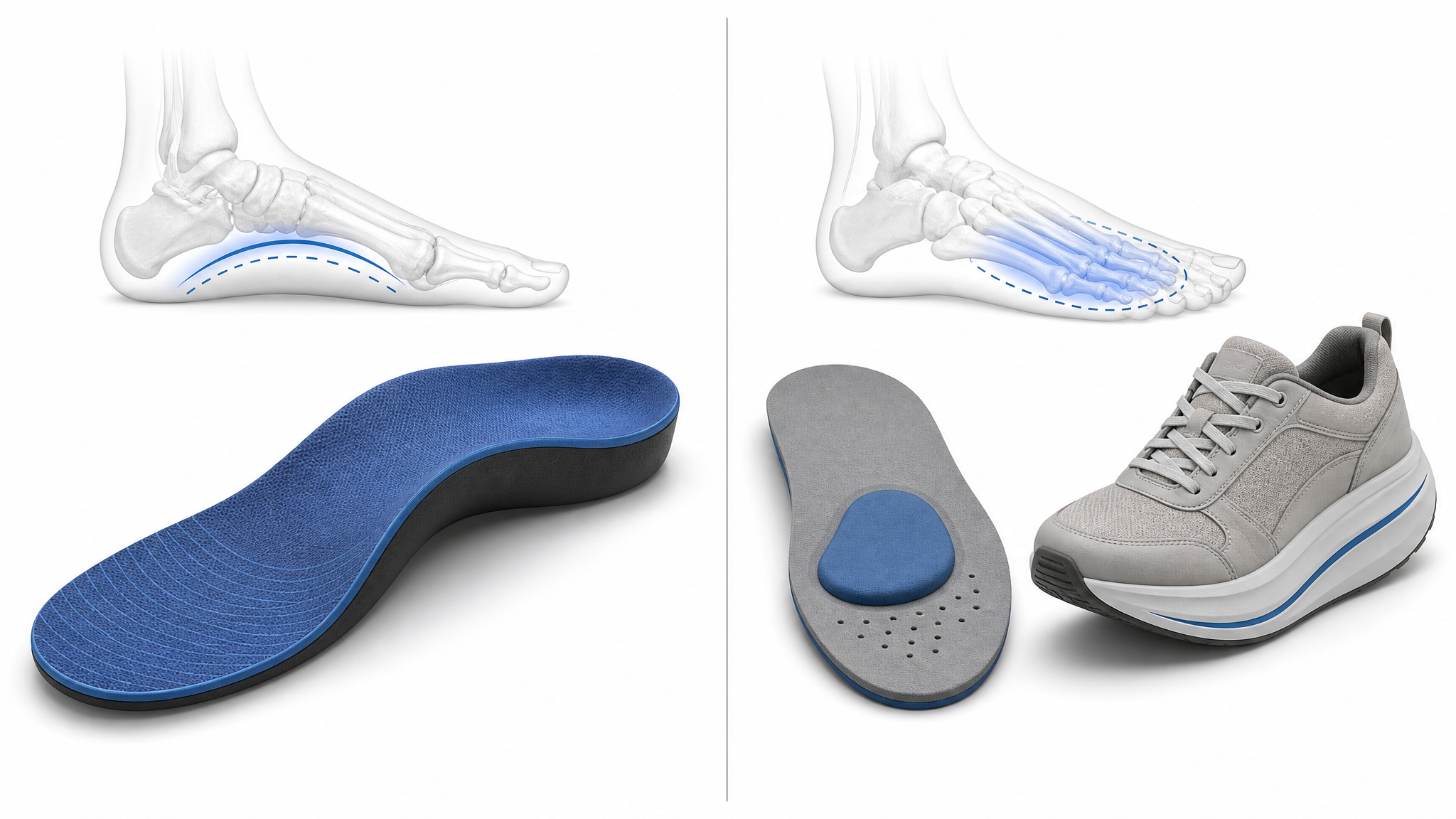
Treating Plantar Fasciitis
Plantar fasciitis treatment focuses on reducing tension on the plantar fascia:
- Arch support insoles. Firm arch support reduces strain on the plantar fascia. The best flat feet and fallen arches insoles provide the support needed for plantar fasciitis.
- Calf stretching. The single most effective exercise for plantar fasciitis. Stretch both the straight-leg and bent-knee versions.
- Night splints. Keep the plantar fascia stretched overnight, reducing morning pain.
- Rolling. Rolling a frozen water bottle or tennis ball under the arch provides massage and ice therapy.
- Avoid walking barefoot. Barefoot walking on hard surfaces strains the plantar fascia significantly.
Treating Metatarsalgia
Metatarsalgia treatment focuses on redistributing forefoot pressure:
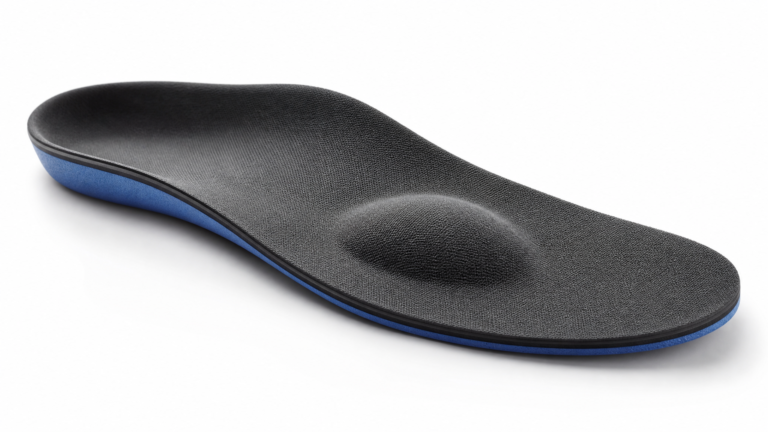
- Metatarsal pad insoles. A raised dome behind the metatarsal heads lifts and separates the bones. The best insoles for ball of foot pain feature built-in metatarsal domes.
- Wide toe box shoes. Allows natural forefoot splay.
- Rocker sole shoes. Reduces forefoot flexion during walking.
- Calf stretching. Reduces forefoot pressure by improving ankle range of motion.
- Ice therapy. Particularly effective for metatarsalgia. Roll a frozen water bottle under the forefoot.
Treating Both Conditions Simultaneously
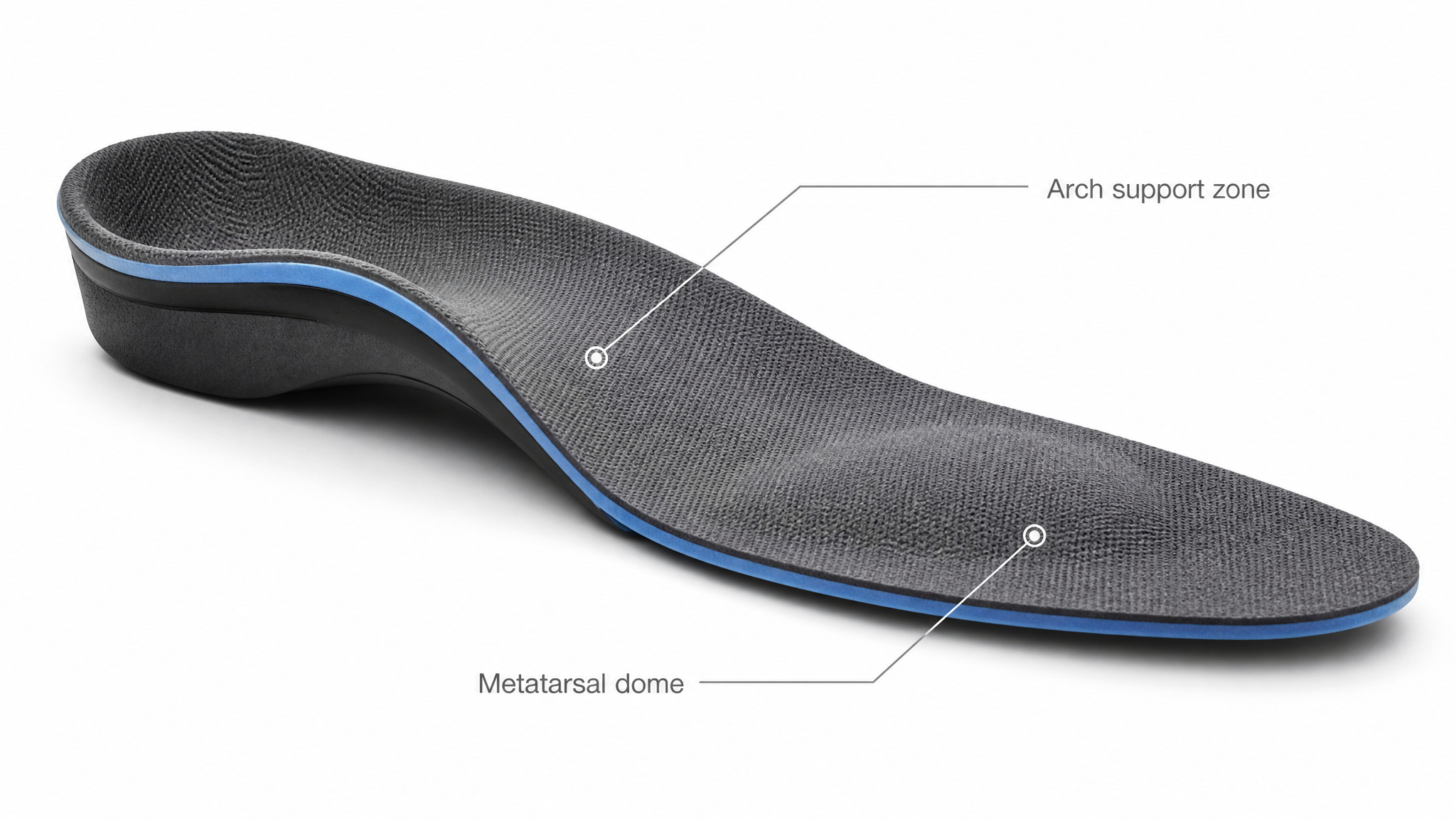
If you have both conditions, the treatment overlap makes management easier:
- Supportive insoles with both arch support and a metatarsal pad address both conditions
- Calf stretching helps both conditions
- Supportive footwear with wide toe boxes benefits both
- Activity modification helps manage symptoms of both
When to See a Podiatrist
See a podiatrist if:
– You are unsure whether you have metatarsalgia, plantar fasciitis, or both
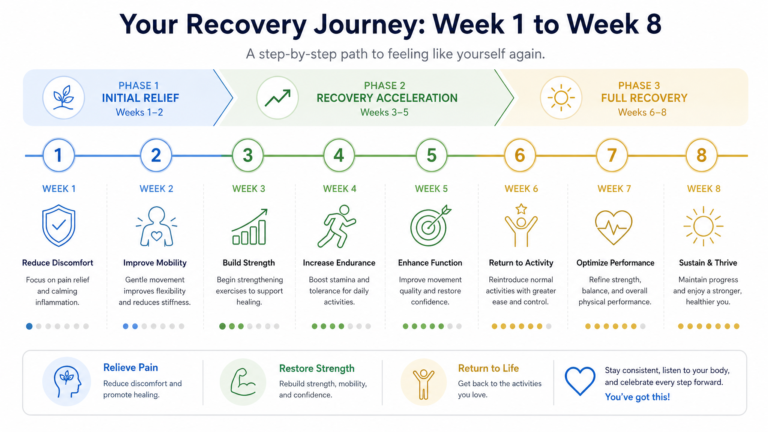
– Your pain does not improve after 6–8 weeks of conservative treatment
– The pain is severe enough to alter your walking pattern
– You have significant swelling or bruising
– You have diabetes or peripheral neuropathy
Important
While both conditions are generally straightforward to treat, persistent heel pain that does not respond to treatment may indicate a heel spur, nerve entrapment, or stress fracture. Similarly, persistent forefoot pain may indicate a neuroma, plantar plate injury, or stress fracture. If standard treatment does not work, get a proper diagnosis with imaging.
Conclusion
Metatarsalgia and plantar fasciitis are different conditions affecting different parts of the foot, but they share common causes and frequently coexist. Plantar fasciitis causes sharp heel pain that is worst with the first steps in the morning. Metatarsalgia causes burning forefoot pain that worsens throughout the day. Both respond well to supportive insoles, calf stretching, and proper footwear — but the specific insole features differ. Plantar fasciitis needs arch support; metatarsalgia needs a metatarsal pad. If you have both, look for insoles that combine both features.
Find relief for both conditions with the right insoles.
Our orthotic insoles provide arch support for plantar fasciitis and metatarsal support for forefoot pain — all in one insole.
Free returns on all orders · 30-day money-back guarantee
Frequently Asked Questions
Can plantar fasciitis spread to the ball of the foot?
Plantar fasciitis does not directly spread to the forefoot, but the same factors that cause plantar fasciitis (tight calves, flat feet, poor footwear) can also cause metatarsalgia. Having both conditions simultaneously is common.
Is walking bad for plantar fasciitis?
Walking in supportive shoes with arch support insoles is fine for plantar fasciitis. Walking barefoot or in unsupportive shoes aggravates the condition by increasing strain on the plantar fascia.
What is worse, metatarsalgia or plantar fasciitis?
Neither is objectively worse — both can range from mild to severe. Plantar fasciitis tends to be more painful in the morning, while metatarsalgia builds throughout the day. Both respond well to conservative treatment.
Can the same insole help both conditions?
Yes. Insoles that combine firm arch support (for plantar fasciitis) with a metatarsal pad (for metatarsalgia) can address both conditions simultaneously. This is especially valuable because the two conditions share common causes and frequently coexist.
How do I know if I have metatarsalgia, plantar fasciitis, or both?
Use the location and timing of your pain: heel pain that is worst in the morning = plantar fasciitis. Forefoot pain that worsens throughout the day = metatarsalgia. If you have both, you likely have both conditions. A podiatrist can provide a definitive diagnosis.