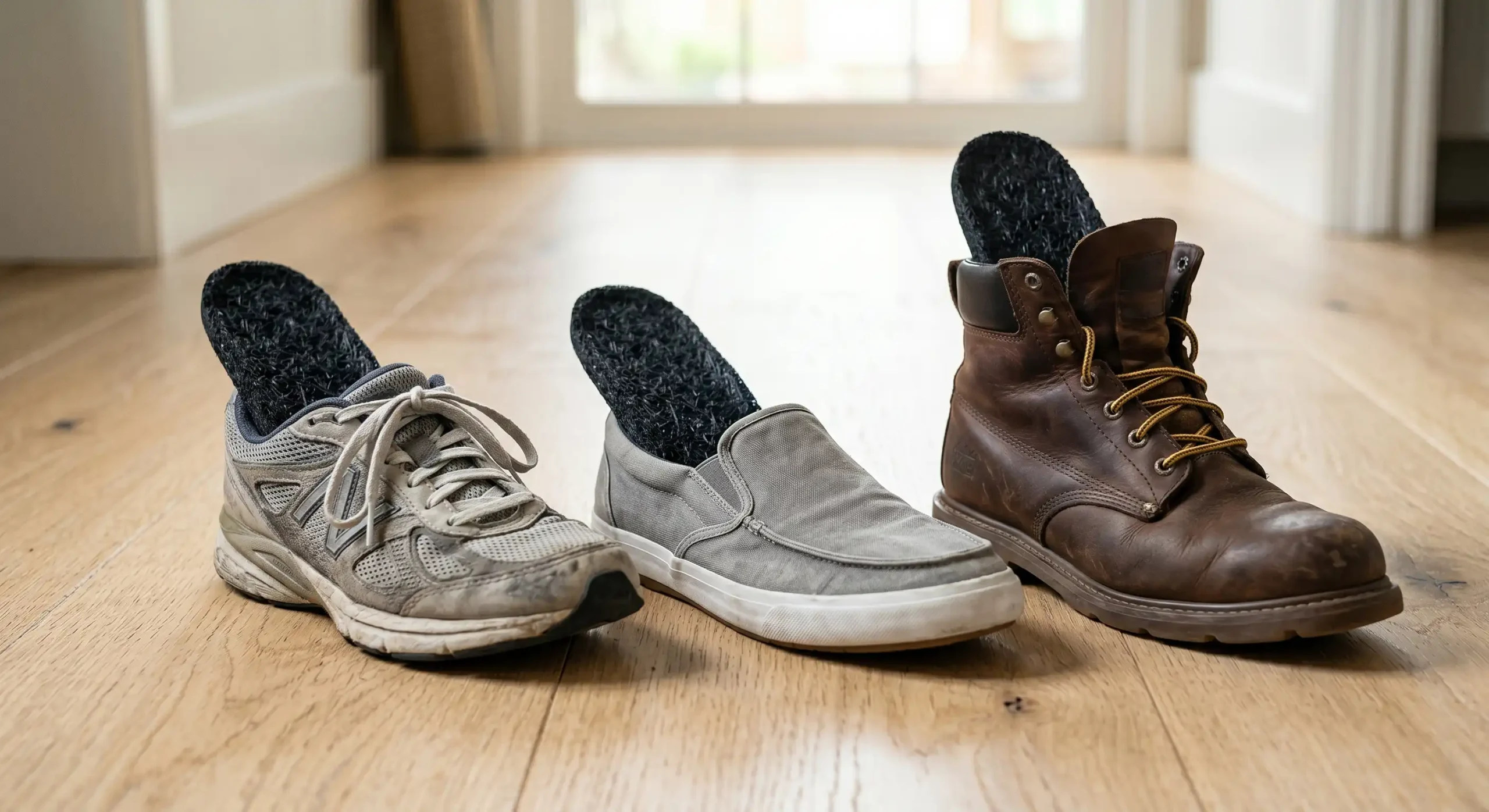
Charcoal Insoles for Odor: Do They Actually Work?
Yes, charcoal insoles work, but the type of charcoal matters and realistic expectations matter more. Bamboo charcoal insoles absorb moisture and inhibit bacterial growth through a passive, continuous process. Activated carbon with zinc pyrithione kills odor-causing bacteria more aggressively. Both outperform standard foam insoles for odor control, but neither eliminates the need for basic shoe hygiene.
The skepticism around charcoal insoles is understandable. The wellness market has trained people to distrust anything with “natural” in the marketing copy. This article explains the actual mechanism, what independent research shows, and what charcoal insoles cannot do, so you can make an informed decision rather than a faith-based one.
Key Takeaways:
- Bamboo charcoal works through absorption; activated carbon works through adsorption and, when combined with zinc pyrithione, direct bacterial killing
- Charcoal insoles reduce foot odor significantly; they do not eliminate the need for foot hygiene or shoe ventilation
- Clinical research on antimicrobial insole materials supports their effectiveness against foot mycoses and odor-causing bacteria
- RoamingFeet’s Bamboo Charcoal Antibacterial Insoles ($26.05) use natural bamboo charcoal with no synthetic antibacterial compounds
- Charcoal insoles last 6-12 months before the material saturates; odor returning despite normal ventilation is the replacement signal
How Charcoal Insoles Work
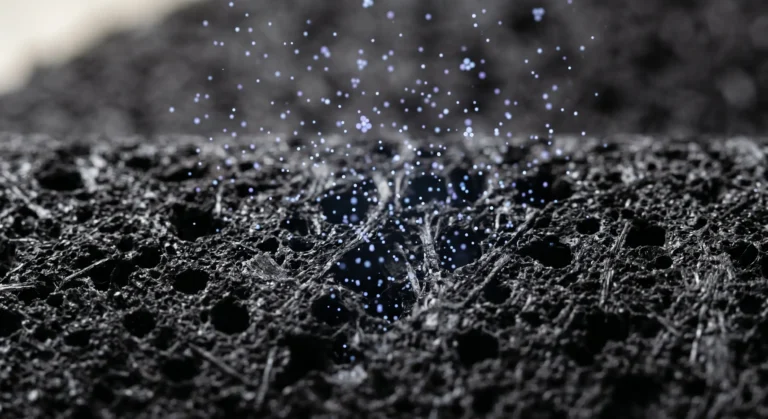
Charcoal’s odor-fighting ability comes from its surface structure, not from any chemical it releases. Both bamboo charcoal and activated carbon are highly porous materials. One gram of activated carbon has a surface area of up to 3,000 square meters. That enormous surface area allows charcoal to capture and hold moisture, gases, and odor compounds within the material itself.
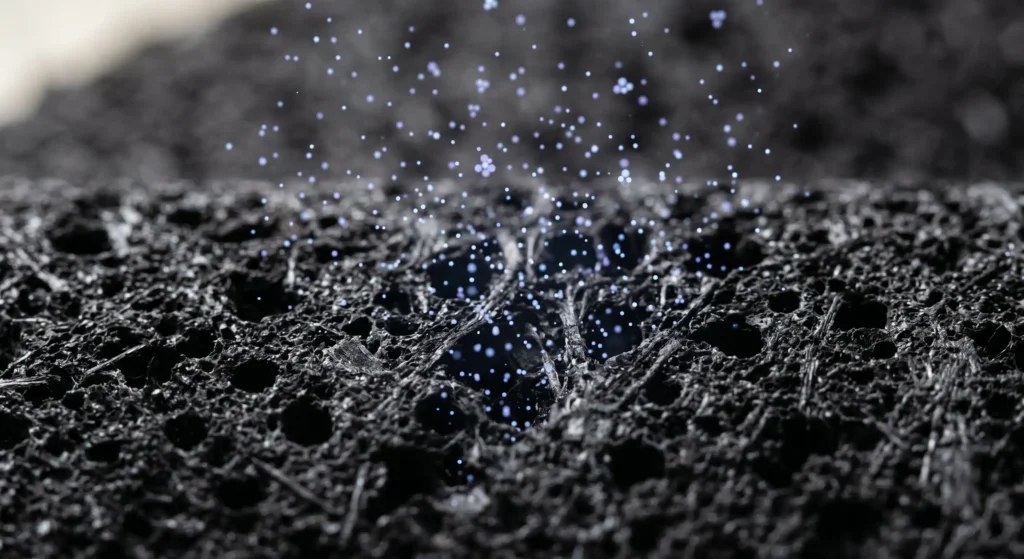
This process is called adsorption (not absorption): molecules adhere to the surface of the charcoal rather than being drawn into it like a sponge. The effect is continuous and passive. No heat activation, no chemical reaction, no external mechanism required. The charcoal simply works as long as pore space remains available.
Bamboo Charcoal vs Activated Charcoal
These two materials are often used interchangeably in product marketing. They are not identical.
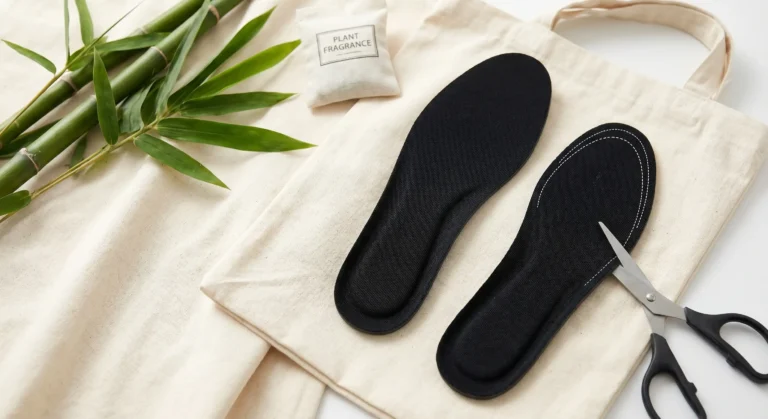
Bamboo charcoal is produced by heating bamboo stalks in a low-oxygen environment at high temperatures. The resulting material has a naturally high porosity and mild natural antibacterial properties. It is biodegradable and contains no added chemical treatments. RoamingFeet’s Bamboo Charcoal Antibacterial Insoles use this material as the core, combined with cloth and cotton for breathability.
Activated carbon (activated charcoal) is processed further to increase its surface area beyond what natural charcoal achieves. It is more aggressive at trapping odor compounds but requires a separate antibacterial agent to address bacteria. That is why products like the Kaps Fresh Carbonex pair activated carbon with zinc pyrithione: the carbon handles odor compounds; the zinc pyrithione kills the bacteria producing them.
For buyers who prefer natural materials without synthetic chemical compounds, bamboo charcoal is the appropriate choice. For severe foot odor where maximum strength matters more than natural composition, activated carbon with zinc pyrithione performs more aggressively.
What the Research Shows
The effectiveness of antimicrobial insole materials is not based solely on manufacturer claims. A clinical study published in the National Library of Medicine on the use of antimicrobial insole materials as a preventive measure against foot mycoses found that antimicrobial insole materials provided meaningful protection against fungal and bacterial foot conditions when used consistently.
The mechanism explains the result. Foot odor and foot fungal infections share the same underlying condition: warm, moist environments inside closed footwear that allow microorganisms to establish. Charcoal insoles address that environment directly. By reducing available moisture and, in the case of bamboo charcoal, providing natural microbial inhibition, they disrupt the conditions that allow odor and infection to develop.
The honest caveat is that most studies on insole materials focus on silver-based antimicrobial treatments, which have a more established research base. Bamboo charcoal’s mechanism is well-understood and supported, but the volume of peer-reviewed research is smaller. For buyers who require the most extensively studied antibacterial material, silver ion insoles have the deeper evidence base. For buyers who prioritize natural materials, bamboo charcoal is the cleaner option with solid real-world performance.
What Charcoal Insoles Do Well
Absorb moisture before bacteria establish. The primary function of bamboo charcoal insoles is passive moisture absorption throughout the wear period. This removes the food source that odor-causing bacteria feed on, reducing bacterial populations without active chemical intervention.
Maintain a neutral odor baseline. Properly functioning bamboo charcoal insoles are odorless. They absorb odor compounds rather than masking them with fragrance. An insole that smells strongly of perfume or chemical freshness is covering the problem. Fresh charcoal insoles smell like nothing at all.
Work continuously without maintenance. There is no activation required and no coating to reapply. The absorption process is ongoing for the full lifespan of the insole, which is typically 6-12 months of daily wear.
Jamie spent three years working in kitchen shoes across 10-hour shifts. He had accepted that his shoes would always smell by the end of service. A coworker recommended bamboo charcoal insoles. Within two weeks, the post-shift odor had dropped noticeably. By the end of the first month, his kitchen shoes were staying fresh between his weekly cleaning routine. The charcoal was handling the moisture accumulation that foam insoles had always left for bacteria to work through overnight.
What Charcoal Insoles Cannot Do
Stop sweat production. Charcoal insoles absorb sweat after it occurs. They do not reduce how much your feet sweat. For plantar hyperhidrosis, the condition where the feet produce far more sweat than temperature regulation requires, charcoal insoles help but need to be paired with other treatment approaches.
Fix odor that lives in the shoe material itself. After years of bacterial accumulation, the foam midsole, fabric lining, and synthetic upper materials of a shoe can hold odor that no insole will address. Charcoal insoles prevent future accumulation; they cannot reverse years of saturation already in the shoe.
Work indefinitely. The pores in charcoal insoles fill with absorbed compounds over time. After 6-12 months of daily wear, the material reaches saturation and stops providing meaningful absorption. At that point, replacement is required. Continuing to use saturated insoles provides no odor benefit.
Replace shoe hygiene. Charcoal insoles extend the time between necessary cleaning but do not eliminate the need for it. Shoes still benefit from 24 hours of drying between wears, and feet still benefit from regular washing.
Charcoal Insoles vs Other Odor-Fighting Options
| Material | Mechanism | Natural | Odor Control | Best For |
|---|---|---|---|---|
| Bamboo charcoal | Absorption, passive inhibition | Yes | Strong | Everyday, sensitive skin |
| Activated carbon + zinc pyrithione | Adsorption, direct bacterial kill | No | Very strong | Severe odor, gym shoes |
| Silver ions | Direct bacterial cell disruption | No | Broad-spectrum | Maximum antibacterial coverage |
| Cedar wood | Essential oil antibacterial | Yes | Moderate | Dress shoes, thin-profile need |
For a full breakdown of how each mechanism compares and which products use them, the best antibacterial insoles guide covers all four in detail including product recommendations at each price point.
Getting the Most from Charcoal Insoles
Three habits compound the effectiveness of charcoal insoles significantly.
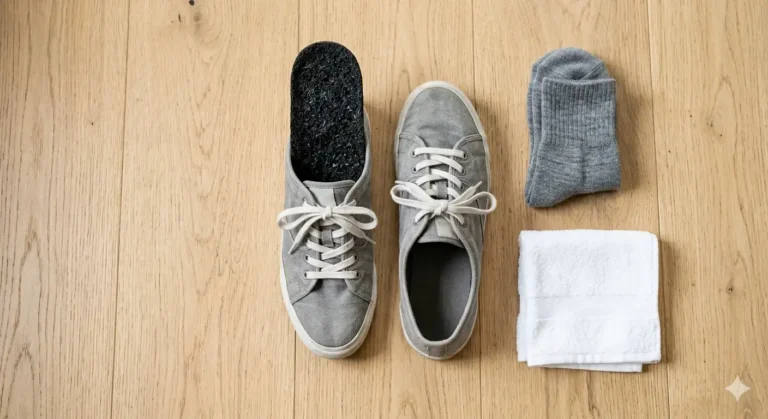
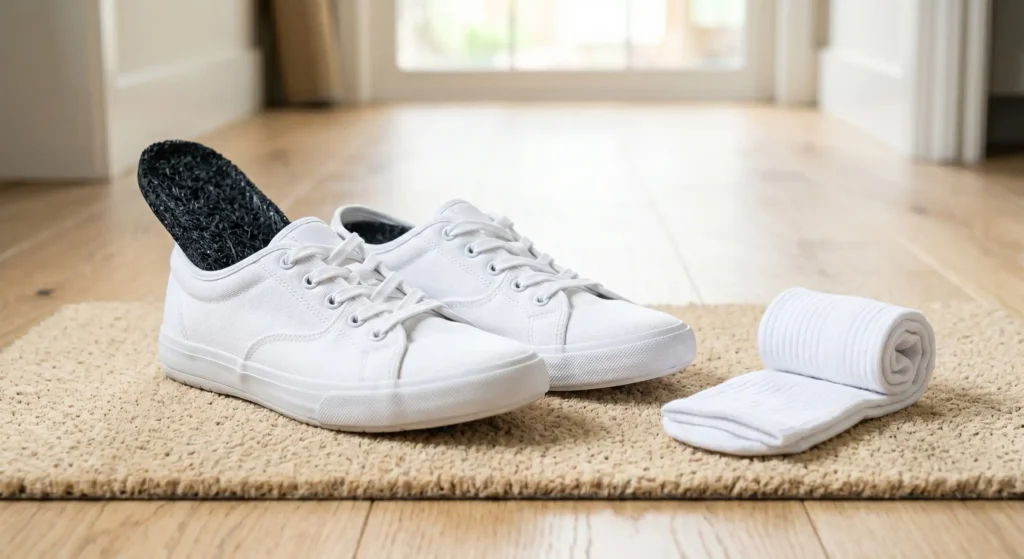
Remove insoles after wearing. Pulling the insole out and leaving it flat in open air after each wear allows absorbed moisture to release from the pores overnight. This effectively resets a portion of the insole’s capacity for the next day. Leaving insoles inside a closed shoe locks in moisture and shortens the insole’s useful life.
Pair with moisture-wicking socks. Cotton socks hold sweat against the skin. Merino wool and synthetic moisture-wicking blends move sweat away from the foot, reducing the total moisture load the insole needs to handle. The combination of moisture-wicking socks and bamboo charcoal insoles is more effective than either alone.
Rotate pairs across multiple shoes. Workers in closed footwear, runners, and anyone whose shoes rarely fully dry benefit from keeping charcoal insoles in multiple pairs and rotating use. Each pair gets full drying time between wears, and the insoles last longer as a result.
For workers in steel-toed or tactical footwear with no airflow, the same logic applies. Insoles for military boots face the most demanding moisture conditions of any footwear category. Bamboo charcoal insoles handle that load through continuous absorption rather than relying on airflow that sealed footwear never provides.
Conclusion
Charcoal insoles work. The mechanism is well understood, the real-world results are consistent, and the skepticism they attract is mostly a product of broader distrust of natural health claims rather than any specific failure of the material.
Bamboo charcoal insoles are the right choice for buyers who want a natural, chemical-free approach to foot odor. Activated carbon with zinc pyrithione is the right choice when maximum odor-killing strength is the priority and synthetic compounds are acceptable. Both outperform standard foam insoles on every metric that matters for odor control.
Replace your charcoal insoles when odor returns despite normal ventilation. That is the signal that pore capacity is exhausted, not that the product does not work.
Bamboo charcoal that actually works.
Natural absorption, no synthetic chemicals, biodegradable construction. Trimmable to fit any shoe from EU 40 to 45.
Shop Bamboo Charcoal Insoles →Free shipping on $50+ · Free returns on all orders
Frequently Asked Questions
Do charcoal insoles actually work for foot odor?
Yes. Charcoal insoles reduce foot odor by absorbing the moisture that odor-causing bacteria feed on. Bamboo charcoal works passively, while activated carbon with zinc pyrithione adds antibacterial action. They significantly reduce odor but do not replace proper hygiene.
How long do charcoal insoles last?
Most charcoal insoles last 6–12 months of daily use. Over time, the material becomes saturated. Replace them when odor returns despite normal shoe care. Air-drying between uses helps extend lifespan.
What is the difference between bamboo charcoal and activated charcoal insoles?
Bamboo charcoal is natural and mildly antibacterial. Activated charcoal has greater surface area for odor absorption but often requires added antibacterial agents. Choose based on whether you prefer natural materials or stronger odor control.
Can charcoal insoles prevent athlete’s foot?
They reduce the risk by controlling moisture and bacterial growth, but they are not a treatment for fungal infections. Medical treatment is required for active cases.
Do charcoal insoles need to be activated or recharged?
No. They work immediately without activation or recharging. Simply use them normally and replace when they lose effectiveness.