
Best Insoles for Sweaty Feet: Stop Moisture Before It Turns to Odor
The best insoles for sweaty feet absorb or wick moisture before bacteria get the chance to break it down into odor. Bamboo charcoal absorbs; silver ions kill bacteria; dual-action formulas do both. Each approach works, but for different levels of sweat and different material preferences.
If your shoes smell by midday regardless of how often you wash your feet, the insole is almost certainly the problem. Standard foam insoles hold moisture against the foot and create exactly the conditions bacteria need to thrive. The right insoles for sweaty feet break that cycle before it starts.
Key Takeaways:
- Sweaty feet are not the cause of foot odor; bacteria feeding on trapped moisture are
- Bamboo charcoal insoles absorb sweat and inhibit bacterial growth without synthetic chemicals
- RoamingFeet’s Bamboo Charcoal Antibacterial Insoles ($26.05) are the best natural option for sweaty feet
- Breathable socks and ventilated shoes multiply insole effectiveness; insoles alone cannot compensate for sealed footwear
- Washable insoles lose antibacterial efficacy faster than absorption-based designs that simply need drying between wears
Why Sweaty Feet Smell (It Is Not the Sweat Itself)
Human feet contain roughly 250,000 sweat glands and produce up to half a pint of perspiration per day. Sweat itself is nearly odorless. The smell comes from bacteria, specifically Staphylococcus, Bacillus, and Micrococcus species, that break down sweat compounds and produce isovaleric acid and other byproducts responsible for foot odor.
Inside a closed shoe, sweat has nowhere to go. The warm, dark, damp environment is ideal for bacterial growth. Standard insoles absorb that moisture into the foam and hold it there, giving bacteria a steady food supply across the entire time your shoe is on.
Insoles for sweaty feet work by interrupting this chain. They either absorb moisture before bacteria establish, actively kill bacteria, or both. That is a fundamentally different function from cushioning insoles, which provide comfort but do nothing about the bacterial environment building inside the shoe.
What to Look for in Insoles for Sweaty Feet
Not every “moisture-wicking” insole actually solves the problem. Understanding what each feature does helps you choose one that matches how much you sweat and what your shoes allow.
Absorption vs. Wicking
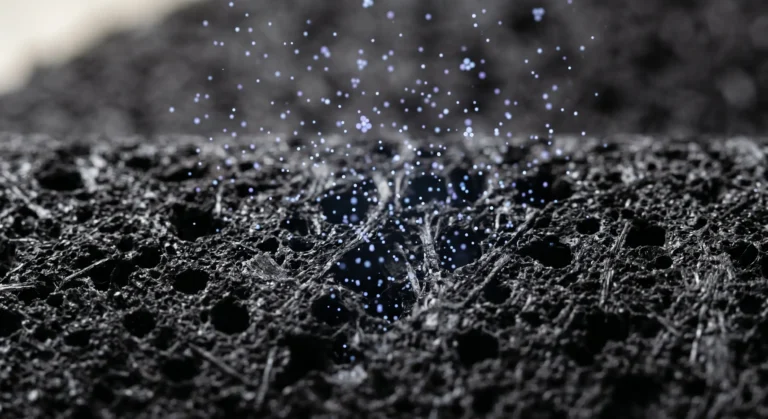
Moisture-absorbing insoles, like bamboo charcoal designs, draw sweat into the insole material itself and hold it away from the foot surface. The absorbed moisture stays out of the warm, foot-level zone where bacteria multiply fastest.
Moisture-wicking insoles move sweat laterally away from the point of contact. They keep the skin drier but do not necessarily prevent bacterial growth in the insole fabric itself.
For sweaty feet, absorption is generally more effective. The goal is to remove moisture from the shoe environment entirely, not just redistribute it across a larger surface.
Antibacterial Properties
Moisture management and antibacterial properties are separate features. An insole can wick sweat but still support bacterial growth in the material. Bamboo charcoal provides passive antibacterial inhibition alongside absorption. Silver ions actively attack bacteria at the cell wall. Products with a dedicated antibacterial mechanism outperform moisture-only designs for odor control.
For a full comparison of how bamboo charcoal, silver ions, activated carbon, and cedar wood each work, the guide to the best antibacterial insoles covers each mechanism in detail.
Breathability
Open-cell foam and perforated top covers allow airflow within the shoe and slow moisture buildup. Solid foam and sealed fabric tops trap heat. Given two otherwise comparable insoles, the one with a perforated or mesh top layer will perform better for sweaty feet in closed footwear.
Washability
Some insoles are marketed as washable, which is convenient, but washing degrades antibacterial coatings faster than normal wear. Absorption-based insoles like bamboo charcoal maintain their function through regular use without needing to be washed. Air-drying fully between wears is more effective than machine washing for extending insole lifespan.
For buyers who also need cushioning alongside moisture control, silicone gel insoles offer excellent shock absorption and can be paired with a thinner antibacterial layer if your shoe has the depth for it.
Best Insoles for Sweaty Feet
Best Overall, RoamingFeet Bamboo Charcoal Antibacterial Insoles
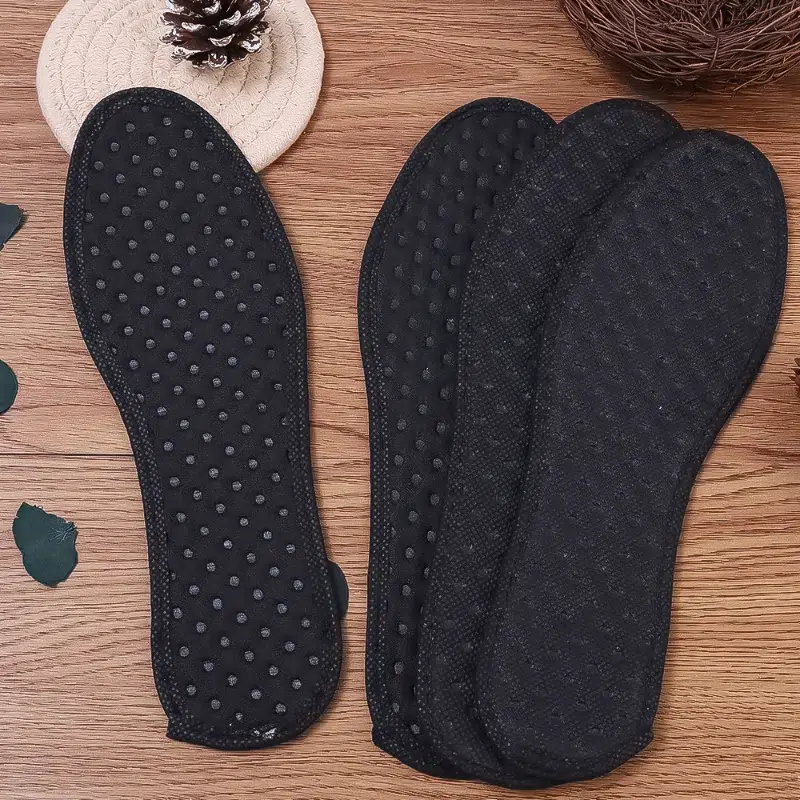
Mechanism: Bamboo charcoal natural absorption Material: Cloth, cotton, plant fragrance Price: 26.05 per pair (49.05 for four pairs) Sizes: EU 40-45, trimmable Best for: Everyday and athletic wear, eco-conscious buyers, sensitive skin
RoamingFeet’s Bamboo Charcoal Antibacterial Insoles are the best insoles for sweaty feet for anyone who wants a natural, chemical-free approach to moisture and odor control. The bamboo charcoal core draws sweat into its porous structure continuously, all day, without releasing synthetic compounds into the shoe. The cotton and cloth construction keeps the foot surface breathable, and the trimmable format fits athletic shoes, work shoes, and casual footwear from a single pair.
Priya works 12-hour nursing shifts in closed-toe hospital shoes. She had tried odor sprays, baking soda, and three different foam insoles over two years. After switching to bamboo charcoal insoles, her shoes stopped developing the post-shift odor that had built up over months of daily use. The charcoal was drawing moisture in before bacteria had the time to establish across a full workday. That is the difference between shoes that smell by noon and shoes that stay fresh through the end of a shift.
At 26.05 per pair, the RoamingFeet insoles sit at the same price as drugstore alternatives that offer no antibacterial function at all. The four-pair bundle brings the per-pair cost to 12.25, practical for rotating across multiple pairs of shoes.
Best for Severe Sweating, Kaps Fresh Carbonex

Mechanism: Activated carbon with zinc pyrithione, dual action Price: Approx. 15-20 Best for: Gym shoes, high-sweat activity, severe foot odor
The Kaps Fresh Carbonex pairs activated carbon for odor absorption with zinc pyrithione, a synthetic antibacterial compound that directly kills odor-causing bacteria. For gym shoes that rarely fully dry between sessions, or work boots with minimal ventilation, this dual approach delivers the strongest odor control available at this price point. The tradeoff is that zinc pyrithione is a synthetic chemical, making it the wrong choice for buyers who prefer natural materials or have sensitive skin.
Best with Arch Support, Powerstep Original
Mechanism: Antimicrobial top coat over dual-layer EVA foam Price: Approx. 40-50 Best for: Sweaty feet combined with flat feet or plantar fasciitis
For buyers managing moisture control alongside a structural foot issue, the Powerstep Original combines an antimicrobial surface treatment with a dual-layer EVA foam base and built-in arch support. If flat feet or heel pain are also factors, a dedicated arch support insoles solution paired with a thinner antibacterial option is worth considering over trying to solve both problems with a single product.
Do You Have Hyperhidrosis or Normal Foot Sweat?
Plantar hyperhidrosis is a condition where the feet produce far more sweat than temperature regulation requires, affecting roughly 3% of the population. Signs include soaking through socks within an hour, leaving wet footprints on floors, and persistent sweating regardless of temperature or activity level.
If that describes your experience, insoles for sweaty feet will help but they are not a complete solution on their own. Prescription-strength antiperspirant foot sprays applied before bed are the standard first-line treatment for hyperhidrosis. A dermatologist or podiatrist can assess whether additional options are appropriate.
For everyone else with normal-to-moderate foot sweat, the right insoles combined with the habits below provide full moisture and odor control without additional intervention.
4 Ways to Multiply Insole Effectiveness
Insoles work harder when the surrounding foot environment supports them. These four adjustments compound the effect of any insole you choose.
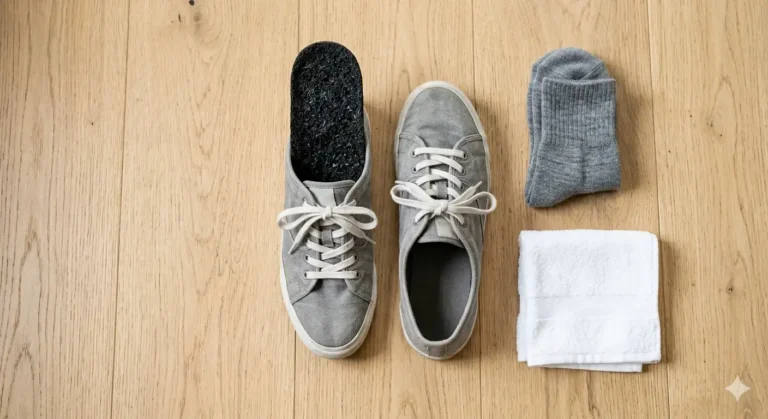
1. Switch to moisture-wicking socks. Merino wool and synthetic moisture-wicking blends move sweat away from skin significantly better than cotton. Cotton retains moisture against the foot throughout a full wear. It is the worst material choice for sweaty feet regardless of which insoles you use.
2. Rotate your shoes. Shoes need at least 24 hours to fully dry between wears. A pair worn two consecutive days never dries completely. Bacterial populations build across consecutive wears because the damp condition never breaks. Adding a second pair and alternating eliminates this entirely.
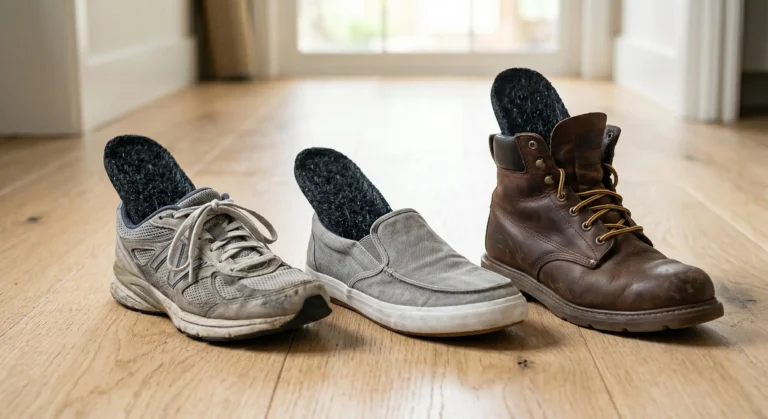
3. Remove insoles and ventilate after wearing. Pulling the tongue open and removing the insole after wear accelerates drying by several hours. Leaving insoles sealed inside a shoe overnight extends the damp period and accelerates bacterial growth into the next morning. This single habit measurably extends insole lifespan.
4. Choose ventilated uppers where possible. Mesh and perforated uppers allow airflow during wear, keeping the internal shoe temperature lower and slowing sweat production. For workers in prescribed footwear with no choice, or for those wearing insoles for military boots where sealed construction is a requirement, the insole carries all of the moisture management load.
Marcus runs 25 miles a week and was replacing running shoes every four months because the odor never washed out. He started rotating three pairs with bamboo charcoal insoles in each. His last pair of running shoes lasted eight months before showing any odor. Rotation gave the insoles recovery time between sessions, and the charcoal handled the moisture accumulation during each run.
Conclusion
The best insoles for sweaty feet address the problem at its source: moisture accumulating inside the shoe and feeding odor-causing bacteria. For most buyers, bamboo charcoal insoles handle this through natural absorption without any synthetic chemicals, making them the right starting point. For severe sweating in high-activity footwear, the Kaps Fresh Carbonex dual-action formula provides stronger protection. For buyers who also need structural support, Powerstep bridges the gap between antimicrobial treatment and arch support.
Pair whichever insole you choose with moisture-wicking socks, a shoe rotation schedule, and post-wear ventilation. The insole does the core work; the surrounding habits determine how well and how long it performs.
Natural moisture control. No synthetic chemicals.
Our Bamboo Charcoal Antibacterial Insoles absorb sweat and inhibit bacterial growth passively, all day, in any shoe. Trimmable to fit, biodegradable, and free of silver nanoparticles.
Shop Bamboo Charcoal Insoles →
Free shipping on $50+ · Free returns on all orders
Frequently Asked Questions
What are the best insoles for sweaty feet? The best insoles for sweaty feet combine moisture absorption with antibacterial properties. Bamboo charcoal insoles absorb sweat before bacteria establish, making them the best natural option. For severe sweating, dual-action insoles combining activated carbon with zinc pyrithione provide stronger protection. The right choice depends on how much you sweat and whether you prefer natural or synthetic materials.
Do insoles actually help with sweaty feet? Yes. The right insoles significantly reduce foot odor by removing moisture from the shoe environment before bacteria have time to multiply. They do not stop sweating, which is a normal function. They interrupt the process that turns sweat into odor. Pairing antibacterial insoles with breathable socks and a shoe rotation schedule provides the most complete result.
How do moisture-absorbing insoles work? Moisture-absorbing insoles, particularly bamboo charcoal designs, draw sweat into the porous structure of the insole material through passive absorption. The absorbed moisture is held within the insole rather than left on the foot surface or in the warm interior of the shoe. This removes the moisture that odor-causing bacteria feed on, which reduces bacterial populations across a full day of wear.
Are bamboo charcoal insoles good for sweaty feet? Yes. Bamboo charcoal is one of the most effective natural materials for sweaty feet because it addresses both problems simultaneously: absorption removes moisture from the shoe environment, and the charcoal’s natural properties inhibit bacterial and fungal growth. It does this without releasing synthetic chemicals, making it suitable for sensitive skin and all-day wear in any shoe type.
How often should I replace insoles for sweaty feet? Most moisture-absorbing and antibacterial insoles last 6-12 months of daily wear before the active material saturates or degrades. Bamboo charcoal fills its pores with absorbed compounds over time. The practical signal to replace is the return of foot odor despite normal shoe ventilation. Rotating two pairs of insoles extends the replacement interval because each pair gets more recovery time between wears.
Can I wash insoles for sweaty feet? You can air-dry most insoles between wears, and some are labeled machine washable. Machine washing removes surface contaminants but also degrades antibacterial coatings faster than regular wear does. Absorption-based insoles like bamboo charcoal maintain their function through normal use without needing to be washed. If your insoles have a specific surface coating, check the manufacturer’s care instructions before washing.
Frequently Asked Questions
What are the best insoles for sweaty feet?
The best insoles for sweaty feet combine moisture absorption with antibacterial properties. Bamboo charcoal insoles absorb sweat before bacteria establish, making them the best natural option. For severe sweating, dual-action insoles combining activated carbon with zinc pyrithione provide stronger protection.
Do insoles actually help with sweaty feet?
Yes. The right insoles reduce foot odor by removing moisture before bacteria multiply. They do not stop sweating but interrupt the process that creates odor. Pairing them with breathable socks and rotating shoes improves results.
How do moisture-absorbing insoles work?
Moisture-absorbing insoles draw sweat into their porous structure, keeping moisture away from the foot and shoe interior. This reduces the environment bacteria need to grow, helping control odor throughout the day.
Are bamboo charcoal insoles good for sweaty feet?
Yes. Bamboo charcoal is highly effective because it absorbs moisture and naturally inhibits bacteria and fungi, making it ideal for odor control without synthetic chemicals.
How often should I replace insoles for sweaty feet?
Most insoles last 6–12 months before their effectiveness declines. Replace them when odor returns despite proper shoe care. Rotating two pairs can extend their lifespan.
Can I wash insoles for sweaty feet?
Some insoles are washable, but washing may reduce antibacterial effectiveness over time. Air-drying between uses is usually enough. Always follow manufacturer instructions if washing is recommended.